FabulousFusionFood's Chilli-based Recipes 14th Page
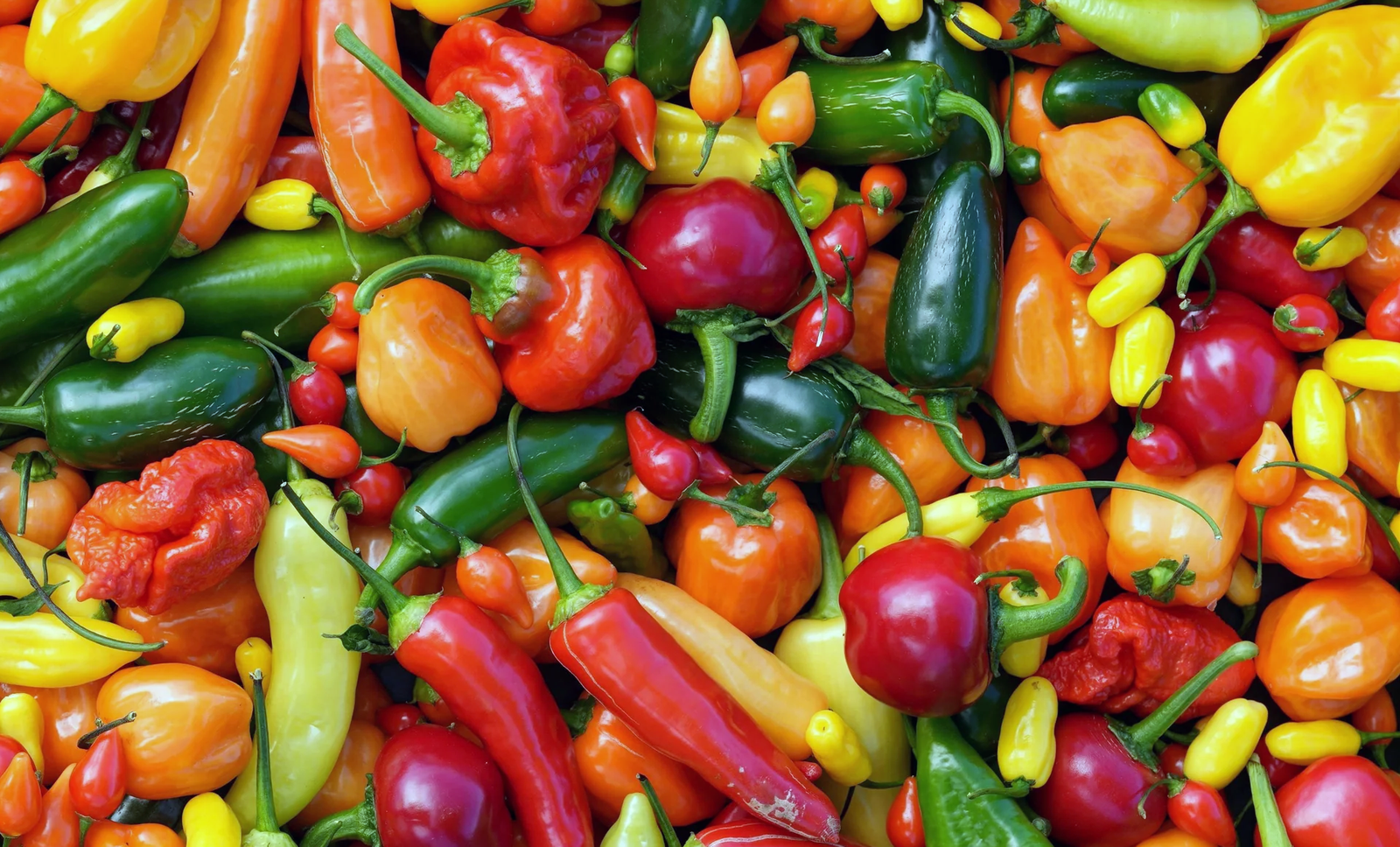 A mixture of different chilli peppers.
Welcome to FabulousFusionFood's Chilli-based Recipes Page — The recipes presented here all contain chilli peppers as a main ingredient. Chillies are the fruit of the chilli plant. Along with black pepper, they are unique spices in that they impart 'heat' to a dish without any associated bitterness. The dried and powdered fruit along with the fresh fruit and the dried fruit are all used as spices. As well as their capsaicin induced heat, chillies (depending on the variety or cultivar) can also imbue a dish with a fruity flavour. Smoked chillies are also used to impart a smokiness as well as heat to a dish.
Chilli peppers, also spelled chile or chili (from Classical Nahuatl chīlli [ˈt͡ʃiːlːi]) and known as hot peppers, are varieties of berry-fruit plants from the genus Capsicum, which are members of the nightshade family Solanaceae, cultivated for their pungency. Chilli peppers are widely used in many cuisines as a spice to add "heat" to dishes. Capsaicin and the related capsaicinoids give chillies their intensity when ingested or applied topically. Chilli peppers exhibit a range of heat and flavours. This diversity is the reason behind the availability of different types of chilli powder, each offering its own taste and heat level.
Chilli peppers originated in Central or South America and were first cultivated in Mexico. European explorers brought chillies back to the Old World in the late 16th century as part of the Columbian Exchange, which led to the cultivation of multiple varieties across the world for food and traditional medicine. Five Capsicum species have been widely cultivated: annuum, baccatum, chinense, frutescens, and pubescens.
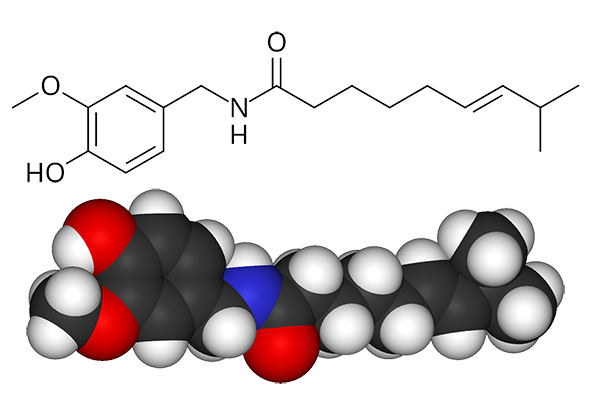 The capsaicin molecule, chemical structure (top) and space-filling model (bottom).
When peppers are consumed by mammals such as humans, capsaicin binds with pain receptors in the mouth and throat, potentially evoking pain via spinal relays to the brainstem and thalamus where heat and discomfort are perceived. However, birds are unable to perceive the hotness and so they can eat some of the hottest peppers. The intensity of the "heat" of chillies is commonly reported in Scoville heat units (SHU), invented by American pharmacist Wilbur Scoville in 1912. Historically, it was a measure of the dilution of an amount of chilli extract added to sugar syrup before its heat becomes undetectable to a panel of tasters; the more it has to be diluted to be undetectable, the more powerful the variety, and therefore the higher the rating. Since the 1980s, spice heat has been assessed quantitatively by high-performance liquid chromatography (HPLC), which measures the concentration of heat-producing capsaicinoids, typically with capsaicin content as the main measure
The alphabetical list of all the chilli-based on this site follows, (limited to 100 recipes per page). There are 2100 recipes in total:
Page 14 of 22
| Nigeria's Mother Sauce Origin: Nigeria | Obe Eja Dindin (Fried Fish Stew) Origin: Nigeria | Pad Krapow Gai (Spicy Basil Chicken) Origin: Thailand |
| Nigerian Catfish Stew Origin: Nigeria | Obe Eja Tutu (Fresh Fish Stew) Origin: Nigeria | Pad Thai Origin: Thailand |
| Nigerian Chicken Gravy Origin: Nigeria | Obe-Onigba (Garden Egg Sauce) Origin: Nigeria | Padavalanga Parippu Curry (Snake Gourd Curry) Origin: India |
| Nigerian Chicken Jollof Rice Origin: Nigeria | Ock-lam (Barbecued Pork with Mushrooms and Beans) Origin: Laos | Pado'lalo' (Spicy coconut Aubergine) Origin: Guam |
| Nigerian Chicken Stew Origin: Nigeria | Ocopa de Camarones (Prawn Ocopa) Origin: Peru | Pado'lalo' (Spicy coconut Aubergine) Origin: Northern Mariana Islands |
| Nigerian Fresh Fish Pepper Soup Origin: Nigeria | Ofadà (Green Soup) Origin: Nigeria | Pakistani Chicken Curry Origin: Pakistan |
| Nigerian Goat Stew Origin: Nigeria | Ofada-Ugba Jollof (Fermented Jollof Rice) Origin: Nigeria | Pakistani Chicken Karahi Origin: Pakistan |
| Nigerian Groundnut Soup Origin: Nigeria | Ofe Achara (Elephant Grass Stew) Origin: Nigeria | Pakistani Curry Masala Powder Origin: Pakistan |
| Nigerian Guinea Fowl Stew Origin: Nigeria | Ofe-Owerri Soup Origin: Nigeria | Pakistani Seekh Kebab Origin: Pakistan |
| Nigerian Guineafowl Pepper Soup Origin: Nigeria | Ogbono Soup Origin: Nigeria | Pakora Thongba (Spicy Pakora Curry) Origin: India |
| Nigerian Meat Pie Origin: Nigeria | Ogbono Soup with Ugwu Origin: Nigeria | Palak Paneer (Paneer with Spinach) Origin: India |
| Nigerian Seasoning Mix Origin: Nigeria | Ogbono Soup with Waterleaf Origin: Nigeria | Palandi Origin: Sri Lanka |
| Nigerian Spiced Chicken Pepper Soup Origin: Nigeria | Ojinguh Jut (Korean Pickled Squid) Origin: Korea | Palandy Origin: Sri Lanka |
| Nigerian Spiced Goat Meat Pepper Soup Origin: Nigeria | Ojojo Origin: Nigeria | Palaver 'Sauce' Origin: West Africa |
| Nigerian Spiced Grasscutter Pepper Soup Origin: Nigeria | Ojojo II Origin: Nigeria | Palaver Chicken Origin: Ghana |
| Nigerian Spiced Mixed Meat Pepper Soup Origin: Nigeria | Okra Relish Origin: Tanzania | Palermo Pizza Sauce Origin: Italy |
| Nigerian Spicy Scrambled Eggs Origin: Nigeria | Okro Soup Origin: Nigeria | Palm Butter Soup Origin: Liberia |
| Nigerian-style Spaghetti Origin: Nigeria | Okwuru Ugba (Okra and Ugba Soup) Origin: Nigeria | Panang Curry Paste Origin: Thailand |
| Nila Bumbu Acar (Sour Spicy Carp) Origin: Indonesia | Old Bay Seasoning Mix Origin: American | Paneer Jalfrezi Origin: Britain |
| Nilgiri Chicken Korma Origin: India | Oleleh Origin: Sierra Leone | Paneer Maza (Chilli Paneer) Origin: India |
| Nimino de Peixe (Nimino of Fish) Origin: Mozambique | Oleleh (Gambian Moi Moi) Origin: Gambia | Paneer Sukka Origin: India |
| Njahi in Coconut Sauce (Kenyan Black Beans in Coconut Sauce) Origin: Kenya | Olio di Peperoncino (Chilli Oil) Origin: Italy | Papadzules Origin: Mexico |
| Nkatenkwan (Ghanaian Peanut Soup) Origin: Ghana | Oman Baharat Origin: Oman | Papeda Kuah Kuning (Papuan Sago with Turmeric Fish Soup) Origin: Papua |
| Nkrakra II (Ghanaian Light Soup) Origin: Ghana | Opor Ayam (Java Chicken Curry) Origin: Indonesia | Papeeta Kari (Green Papaya Curry) Origin: India |
| Nkrakrakwam (Ghanaian Light Soup) Origin: Ghana | Oriental-inspired Haw Sauce Origin: Fusion | Paprika Sauce Origin: Anglo-Indian |
| Nouméa Sauce au Chien Origin: New Caledonia | Otak-otak (Spicy Grilled Nyonya Fish Cakes) Origin: Malaysia | Paradise Salsa Origin: Cayman Islands |
| Num Pa-chok Tirk Ka-chuii (Khmer Noodle Soup with Fingerroot) Origin: Cambodia | Otong Soup Origin: Nigeria | Pargo con Tomate (Snapper with Tomato) Origin: Colombia |
| Nuoc Mam Cham (Fish Dipping Sauce) Origin: Vietnam | Oude Sauce Origin: Britain | Parilla de Pescado (Barbecued Fish) Origin: Equatorial Guinea |
| Nyeleng (Beef and Peanut Gumbo) Origin: Senegal | Oven-baked Jollof Rice Origin: Nigeria | Parthade Origin: India |
| Nyma ye Huku (Zimbabwean Chicken Stew) Origin: Zimbabwe | Oyster Mushroom Tom Yum (Thai Hot and Sour Soup with Oyster Mushrooms) Origin: Thailand | Parthade Curry Origin: India |
| Nyona Penang Assam Laska Origin: Malaysia | Pèpè Soup du Cameroun (Cameroonian Pepper Soup) Origin: Cameroon | Party Jollof Rice Origin: Nigeria |
| Oaxacan Black Beans with Avocado Leaf Origin: Mexico | Pad Gra Prow (Holy Basil Beef) Origin: Thailand | Pasilla Mole Origin: Britain |
| Obe Ata (Red Pepper Sauce) Origin: Nigeria | Pad Kee Mao Origin: Thailand | |
| Obe Ata Dindin (Nigerian Red Sauce) Origin: Nigeria | Pad Kra Pao (Thai Holy Basil Stir Fry with Beef) Origin: Thailand |
Page 14 of 22