FabulousFusionFood's Chilli-based Recipes 11th Page
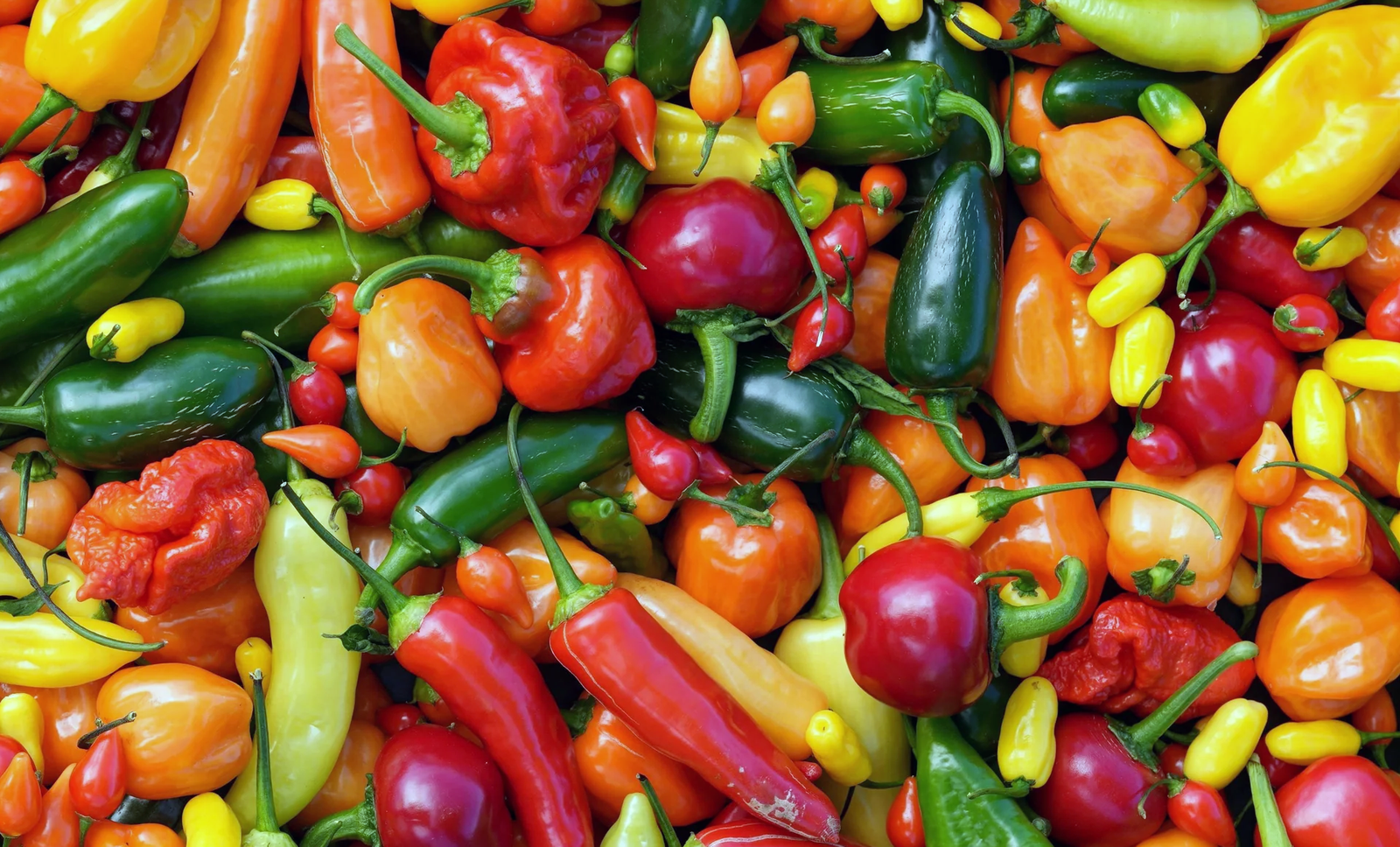 A mixture of different chilli peppers.
Welcome to FabulousFusionFood's Chilli-based Recipes Page — The recipes presented here all contain chilli peppers as a main ingredient. Chillies are the fruit of the chilli plant. Along with black pepper, they are unique spices in that they impart 'heat' to a dish without any associated bitterness. The dried and powdered fruit along with the fresh fruit and the dried fruit are all used as spices. As well as their capsaicin induced heat, chillies (depending on the variety or cultivar) can also imbue a dish with a fruity flavour. Smoked chillies are also used to impart a smokiness as well as heat to a dish.
Chilli peppers, also spelled chile or chili (from Classical Nahuatl chīlli [ˈt͡ʃiːlːi]) and known as hot peppers, are varieties of berry-fruit plants from the genus Capsicum, which are members of the nightshade family Solanaceae, cultivated for their pungency. Chilli peppers are widely used in many cuisines as a spice to add "heat" to dishes. Capsaicin and the related capsaicinoids give chillies their intensity when ingested or applied topically. Chilli peppers exhibit a range of heat and flavours. This diversity is the reason behind the availability of different types of chilli powder, each offering its own taste and heat level.
Chilli peppers originated in Central or South America and were first cultivated in Mexico. European explorers brought chillies back to the Old World in the late 16th century as part of the Columbian Exchange, which led to the cultivation of multiple varieties across the world for food and traditional medicine. Five Capsicum species have been widely cultivated: annuum, baccatum, chinense, frutescens, and pubescens.
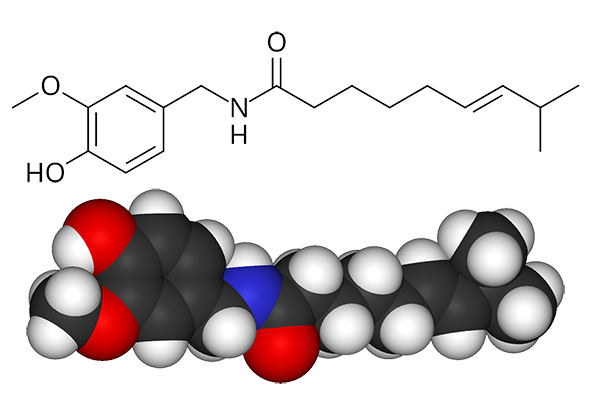 The capsaicin molecule, chemical structure (top) and space-filling model (bottom).
When peppers are consumed by mammals such as humans, capsaicin binds with pain receptors in the mouth and throat, potentially evoking pain via spinal relays to the brainstem and thalamus where heat and discomfort are perceived. However, birds are unable to perceive the hotness and so they can eat some of the hottest peppers. The intensity of the "heat" of chillies is commonly reported in Scoville heat units (SHU), invented by American pharmacist Wilbur Scoville in 1912. Historically, it was a measure of the dilution of an amount of chilli extract added to sugar syrup before its heat becomes undetectable to a panel of tasters; the more it has to be diluted to be undetectable, the more powerful the variety, and therefore the higher the rating. Since the 1980s, spice heat has been assessed quantitatively by high-performance liquid chromatography (HPLC), which measures the concentration of heat-producing capsaicinoids, typically with capsaicin content as the main measure
The alphabetical list of all the chilli-based on this site follows, (limited to 100 recipes per page). There are 2100 recipes in total:
Page 11 of 22
| Korma Masala Origin: India | Lamb Rogan Josh Origin: India | Liberian Pepper Kala Origin: Liberia |
| Koro Owu Soup (Cotton Seed Soup) Origin: Nigeria | Lamb, Apricot and Prune Casserole Origin: African Fusion | Liberian Pepper Sauce Origin: Liberia |
| Koshari (Egyptian lentils) Origin: Egypt | Lao Tam Som (Lao Green Papaya Salad) Origin: Laos | Liberian Split Peas Origin: Liberia |
| Kotor Bay Stewed Fish Origin: Montenegro | Lasary Citron (Lemon Condiment) Origin: Reunion | Liberian-style Fried Cabbage Origin: Liberia |
| Kouti (Cassava Croquettes) Origin: Guinea | Lasary Manga (Mango Condiment) Origin: Madagascar | Lightly-brined Turkey Origin: Britain |
| Kpakpo Shito (Fresh Shitor) Origin: Ghana | Lauki Raita (Bottle Gourd Raita) Origin: India | Lobsgows Gorllewin Affrica (West African Lobscouse) Origin: Welsh |
| Kpala (Jute Leaf Sauce) Origin: Cote dIvoire | Laza Hot Sauce Origin: Kyrgyzstan | Locro de Zapallo Origin: Peru |
| Kpalugu Beef Origin: Ghana | Laza Hot Sauce Origin: China | Logosta Assada (Roasted Lobster) Origin: Guinea-Bissau |
| Krækiberjasaft Chatni (Crowberry Chutney) Origin: Iceland | Laza Hot Sauce Origin: Uzbekistan | Lonumiru Curry Powder Origin: Maldives |
| Krain Krain (Jute Leaf Stew) Origin: Sierra Leone | Laza Hot Sauce Origin: Kazakhstan | Lonumirus (Maldives Chilli Sambal) Origin: Maldives |
| Kuah Kuning (Yellow Gravy Soup) Origin: Papua | Laza Hot Sauce Origin: Russia | Louisiana Cajun Pizza Origin: American |
| Kuchela Origin: Trinidad | Laza Hot Sauce Origin: Turkey | Louisiana Hot Sauce Origin: America |
| Kuka Soup Origin: Nigeria | Le Gaonré au poulet frit (Gaonré with fried chicken) Origin: Burkina Faso | Lourenço Marques Prawns Origin: South Africa |
| Kurmanash Origin: India | Le Goundja (Fish with Aubergines and Cassava Leaves) Origin: Central African Republic | Lowumbo (Ugandan Steamed Fish) Origin: Uganda |
| Kusabi Chutney (Safflower Seed and Tamarind Chutney) Origin: India | Le Koki (Bean Cake) Origin: Chad | Luk Marinovannyi Origin: Georgia |
| Kwacoco with Banga Soup Origin: Cameroon | Le Koki de Cameroun (Cameroonian Bean Cake) Origin: Cameroon | M'Boa com Xima (Pumpkin Leaves in Peanut Sauce with Prawns) Origin: Mozambique |
| Kwahu Nsusua Abomu (Turkey Berry and Fish Stew) Origin: Ghana | Le Kondré Origin: Cameroon | M'hajeb (Filled Pastries) Origin: Algeria |
| Kyinkaafa (Rice with Tomato and Dried Fish) Origin: Ghana | Le Ndolé Camerounais (Cameroonian Ndolé) Origin: Cameroon | M'borokhé (Peanut Sauce with Spinach) Origin: Mali |
| Kyinkyinga (Beef and Liver Kebabs) Origin: Ghana | Le Rougail Boucané (Smoked Pork Rougail) Origin: Reunion | M'tsolola (Fish and Plantain stew in Coconut Milk) Origin: Comoros |
| La Capitaine Sangha (Nile Perch with Red Sauce) Origin: Mali | Le Tô Sauce Gombos (Tô with Okra Sauce) Origin: Burkina Faso | Maïs Grillé (Barbecued Corn Cobs) Origin: Niger |
| Laal Chicken Curry Origin: Britain | Leamington Sauce Origin: British | Maacher Chop (Indian Fish Croquettes) Origin: India |
| Laal Maas (Rajasthani Lamb Curry) Origin: India | Leftover Roast Beef Jalfrezi Origin: Anglo-Indian | Maacouda bil Batata (Potato Omelette) Origin: Tunisia |
| Laap (Beef Salad) Origin: Laos | Leftovers Jalfrezi with Gravy Origin: India | Maafé Origin: Mali |
| Lablabi Origin: Tunisia | Leksour (Lamb Stew on Millet Pancakes) Origin: Mauritania | Maboké de Capitaine (Maboke of Nile Perch) Origin: Central African Republic |
| Lahmacun (Turkish Cypriot-style Pizza) Origin: Northern Cyprus | Lemon Chilli Chicken Origin: Cocos Islands | Maboke (Steamed Nile Perch) Origin: Central African Republic |
| Laj Ntses (Fish Larb) Origin: Laos | Lemongrass Curry Origin: Cambodia | Macanese Choy Sum Origin: Macau |
| Lajiaojiang (Sichuan Sun-pickled Chilli Sauce) Origin: China | Lemongrass Pork with Rice Noodles Origin: Australia | Macaroni Salad Origin: American |
| Laksa Paste Origin: Singapore | Lentil Curry with Rhubarb and Sweet Potatoes Origin: Fusion | Macedonian Ajvar (Macedonian Pepper Relish) Origin: North Macedonia |
| Laksa Paste Origin: Malaysia | Lentil Or Potato Tempering Origin: India | Macher Jhol (Keralan Fish Curry) Origin: India |
| Laksa Paste II Origin: Malaysia | Les Bouchons (Pork Dumplings) Origin: Reunion | Mackerel in Breadfruit Gravy Origin: Liberia |
| Lamb Dhan Saag Origin: India | Lesothan Chakalaka Origin: Lesotho | Madaba (Cassava Leaf and Coconut Stew) Origin: Britain |
| Lamb Jalfrezi Origin: India | Liberian Eggplant Stew Origin: Liberia | Mafé Origin: Senegal |
| Lamb Koftas Origin: North Africa | Liberian Jollof Rice Origin: Liberia | |
| Lamb Paprikash Origin: Hungary | Liberian Jollof Rice Origin: Liberia |
Page 11 of 22