FabulousFusionFood's Chilli-based Recipes 18th Page
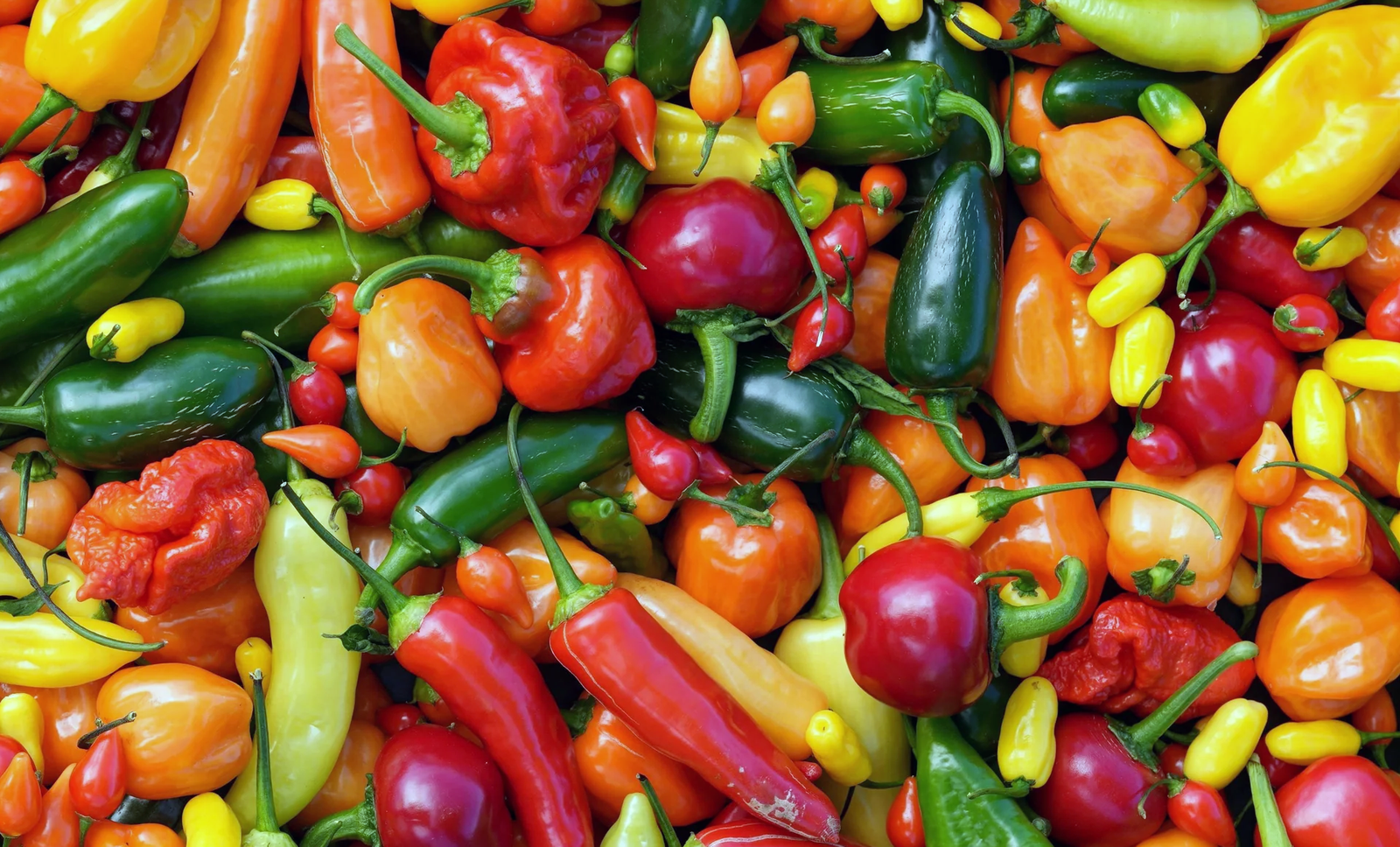 A mixture of different chilli peppers.
Welcome to FabulousFusionFood's Chilli-based Recipes Page — The recipes presented here all contain chilli peppers as a main ingredient. Chillies are the fruit of the chilli plant. Along with black pepper, they are unique spices in that they impart 'heat' to a dish without any associated bitterness. The dried and powdered fruit along with the fresh fruit and the dried fruit are all used as spices. As well as their capsaicin induced heat, chillies (depending on the variety or cultivar) can also imbue a dish with a fruity flavour. Smoked chillies are also used to impart a smokiness as well as heat to a dish.
Chilli peppers, also spelled chile or chili (from Classical Nahuatl chīlli [ˈt͡ʃiːlːi]) and known as hot peppers, are varieties of berry-fruit plants from the genus Capsicum, which are members of the nightshade family Solanaceae, cultivated for their pungency. Chilli peppers are widely used in many cuisines as a spice to add "heat" to dishes. Capsaicin and the related capsaicinoids give chillies their intensity when ingested or applied topically. Chilli peppers exhibit a range of heat and flavours. This diversity is the reason behind the availability of different types of chilli powder, each offering its own taste and heat level.
Chilli peppers originated in Central or South America and were first cultivated in Mexico. European explorers brought chillies back to the Old World in the late 16th century as part of the Columbian Exchange, which led to the cultivation of multiple varieties across the world for food and traditional medicine. Five Capsicum species have been widely cultivated: annuum, baccatum, chinense, frutescens, and pubescens.
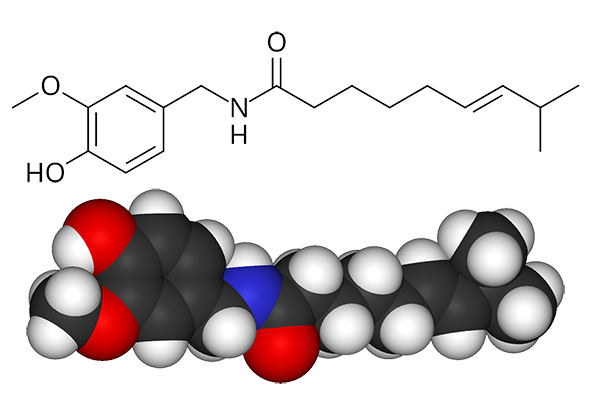 The capsaicin molecule, chemical structure (top) and space-filling model (bottom).
When peppers are consumed by mammals such as humans, capsaicin binds with pain receptors in the mouth and throat, potentially evoking pain via spinal relays to the brainstem and thalamus where heat and discomfort are perceived. However, birds are unable to perceive the hotness and so they can eat some of the hottest peppers. The intensity of the "heat" of chillies is commonly reported in Scoville heat units (SHU), invented by American pharmacist Wilbur Scoville in 1912. Historically, it was a measure of the dilution of an amount of chilli extract added to sugar syrup before its heat becomes undetectable to a panel of tasters; the more it has to be diluted to be undetectable, the more powerful the variety, and therefore the higher the rating. Since the 1980s, spice heat has been assessed quantitatively by high-performance liquid chromatography (HPLC), which measures the concentration of heat-producing capsaicinoids, typically with capsaicin content as the main measure
The alphabetical list of all the chilli-based on this site follows, (limited to 100 recipes per page). There are 2100 recipes in total:
Page 18 of 22
| Sancochi di Galinja (Chicken Stew) Origin: Aruba | Scotch Bonnet Pepper Sauce Origin: Jamaica | Silsi (Eritrean Tomato Sauce) Origin: Eritrea |
| Sanger Yena (Offal Sausages) Origin: Aruba | Sea Aster Rice Origin: British | Simple Mole Poblano Origin: Mexico |
| Sangria Seca Origin: Non-alcoholic | Seafood Chili Origin: American | Sing Mapan Singju (Ginger Flower and Water Dropwort Singju) Origin: India |
| Saramura (Grilled Carp Fillets) Origin: Hungary | Seaweed Vinegar Origin: Canada | Singapore Chilli Sauce Origin: Singapore |
| Sardine Kelaguen Origin: Northern Mariana Islands | Seengre ke Satha Tori Kari (Courgette Curry with Radish Pods) Origin: India | Singapore Hot Sweet chilli Sauce Origin: Singapore |
| Sardine Kelaguen Origin: Guam | Seitan Nyembwe Origin: African Fusion | Sint Maarten Crab Backs Origin: Sint Maarten |
| Sargaborso Leves (Hungarian Yellow Split Pea Soup) Origin: Hungary | Senegalese Vegetable Stew with Millet Origin: Senegal | Sint Maarten Roe Accras Origin: Sint Maarten |
| Sarma (Stuffed Cabbage Leaves) Origin: Serbia | Serekunda Fish Benachin Origin: Gambia | Sint Maarten Stewed Saltfish Origin: Sint-Maarten |
| Sarson ka Saag (Mustard Greens and Spinach Curry) Origin: India | Sertesporkolt (Pork Porkolt) Origin: Hungary | Sisig Origin: Philippines |
| Satan's Fantasy Chili Origin: American | Shakshooka (Egg and Chilli Breakfast) Origin: Libya | Skillet Chicken Con Queso Origin: America |
| Satay Origin: Indonesia | Shakshouka 2 (Chilli, Egg and Tomato Breakfast) Origin: Libya | Slow Cooker Barbacoa Beef Origin: Mexico |
| Satini Mangue Vert (Mauritian Mango Chutney) Origin: Mauritius | Shakshouka 2 (Chilli, Egg and Tomato Breakfast) Origin: Yemen | Slow Cooker Chicken Korma Origin: Britain |
| Satsabeli Bazha (Poultry in Walnut Sauce) Origin: Georgia | Shami Kebab Origin: India | Slow Cooker Salsa Chicken Origin: America |
| Sattu Origin: India | Shata Origin: Sudan-a | Slow Cooker Vegetable Curry Origin: Britain |
| Sauce Arachide de Burkina Faso (Burkinabe Peanut Sauce) Origin: Burkina Faso | Sheftalia Kebab Origin: Cyprus | Slow-cooked Ox Cheek Rendang Origin: Singapore |
| Sauce aux Arachides (Guinean Peanut Sauce) Origin: Guinea | Sherry Pepper Sauce Origin: Bermuda | Slow-roast Lamb Shoulder with Honey, Herbs and Harissa Origin: Britain |
| Sauce Chien Origin: Saint Barthelemy | Shigni (Somali Hot Sauce) Origin: Somalia | Smoked Chillies Origin: Mexico |
| Sauce Chien Origin: Sint Maarten | Shin Ngoa Lap (Spicy Beef Salad) Origin: Laos | Smoked Fish Light Soup Origin: Ghana |
| Sauce d'Adémé aux Fruits de Mer (Seafood with Adémé Sauce) Origin: Togo | Shish Kebabs Origin: Britain | Smoky Prawn Jollof Rice Origin: Nigeria |
| Sauce d'Arachide (Beninese Peanut Sauce) Origin: Benin | Shito (Dark Chilli Sambal) Origin: Ghana | Smoored Fish with Tomatoes Origin: South Africa |
| Sauce de Tamarin Pimentée (Spicy Tamarind Sauce) Origin: Burkina Faso | Shito (Ghanaian Black Chilli Sauce) Origin: Ghana | Smoorsnoek with Cabbage Origin: South Africa |
| Sauce de Tomates Crues (Raw Tomato Sauce) Origin: Benin | Shitor Din Origin: Ghana | Sofrito Origin: Spain |
| Sauce Gbanbouda (Tô with Okra Sauce and Peanuts) Origin: Guinea | Shoko (Nigerian Beef and Spinach) Origin: Nigeria | Sofrito Cubano (Cuban Sofrito) Origin: Cuba |
| Sauce Gombo (Gombo Sauce) Origin: Guinea | Shopska Salad II Origin: Bulgaria | Sokossoko de Rognon (Sokossoko with Kidneys) Origin: Burkina Faso |
| Sauce Gombo et Boeuf (Okra Sauce with Beef) Origin: Burkina Faso | Shuizhu niurou (Spicy Water-boiled Beef) Origin: China | Sokossoko de Viande (Sokossoko with Meat) Origin: Burkina Faso |
| Sauce Gombo Togolaise (Togolese Okra Sauce) Origin: Togo | Shurpa Origin: Uzbekistan | Solachi Kadhi (Kokam Sauce) Origin: India |
| Sauce Gombos Burkinabé (Burkinabe Okra Sauce) Origin: Burkina Faso | Si Byan (Burmese Fish Curry) Origin: Myanmar | Solomon-a-Gundy Origin: Jamaica |
| Sauce Légume Origin: Benin | Siboyo den pika (Onions in Hot Sauce) Origin: Bonaire | Somali-style Liver Origin: Somaliland |
| Sauce piquante créole (Creole Hot Sauce) Origin: Guadeloupe | Sichuan Hot Pot Soup Base Origin: China | Somali-style Liver Origin: Somalia |
| Sauci Yohss (Gambian Mussel Meats in Tomato Sauce with Potatoes) Origin: Gambia | Sierra Leonean Fish Balls Origin: Sierra Leone | Somlar Mochu Sachko (Sour Beef Stew) Origin: Cambodia |
| Savoury Baked Island Chicken Origin: British Virgin Islands | Sierra Leonean Sausage Fried Rice Origin: Sierra Leone | Sonoran Picadillo Origin: Mexico |
| Scallop and Prawn Chu Chee Origin: Thailand | Sierra Leonean White Okra Draw Soup Origin: Sierra Leone | Sopa de calabaza de invierno (Winter Squash Soup) Origin: Paraguay |
| Schug (Middle Eastern Hot Pepper Dip) Origin: Middle East | Sierra Leonian Egusi Soup Origin: Sierra Leone | |
| Scotch Bonnet Hot Sauce Origin: Jamaica | Sigá (Prawn and Okra Stew) Origin: Guinea-Bissau |
Page 18 of 22