FabulousFusionFood's Chilli-based Recipes 7th Page
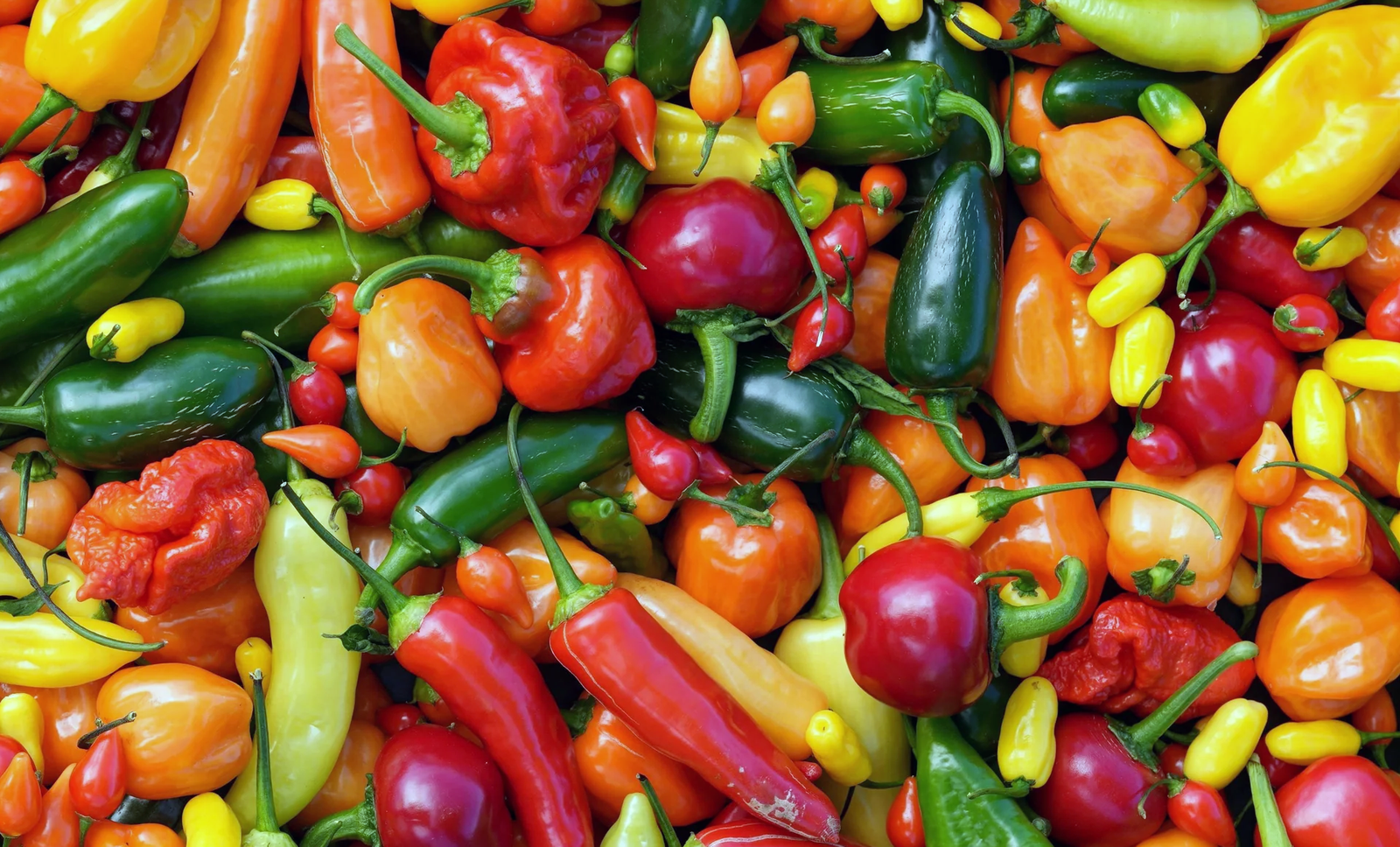 A mixture of different chilli peppers.
Welcome to FabulousFusionFood's Chilli-based Recipes Page — The recipes presented here all contain chilli peppers as a main ingredient. Chillies are the fruit of the chilli plant. Along with black pepper, they are unique spices in that they impart 'heat' to a dish without any associated bitterness. The dried and powdered fruit along with the fresh fruit and the dried fruit are all used as spices. As well as their capsaicin induced heat, chillies (depending on the variety or cultivar) can also imbue a dish with a fruity flavour. Smoked chillies are also used to impart a smokiness as well as heat to a dish.
Chilli peppers, also spelled chile or chili (from Classical Nahuatl chīlli [ˈt͡ʃiːlːi]) and known as hot peppers, are varieties of berry-fruit plants from the genus Capsicum, which are members of the nightshade family Solanaceae, cultivated for their pungency. Chilli peppers are widely used in many cuisines as a spice to add "heat" to dishes. Capsaicin and the related capsaicinoids give chillies their intensity when ingested or applied topically. Chilli peppers exhibit a range of heat and flavours. This diversity is the reason behind the availability of different types of chilli powder, each offering its own taste and heat level.
Chilli peppers originated in Central or South America and were first cultivated in Mexico. European explorers brought chillies back to the Old World in the late 16th century as part of the Columbian Exchange, which led to the cultivation of multiple varieties across the world for food and traditional medicine. Five Capsicum species have been widely cultivated: annuum, baccatum, chinense, frutescens, and pubescens.
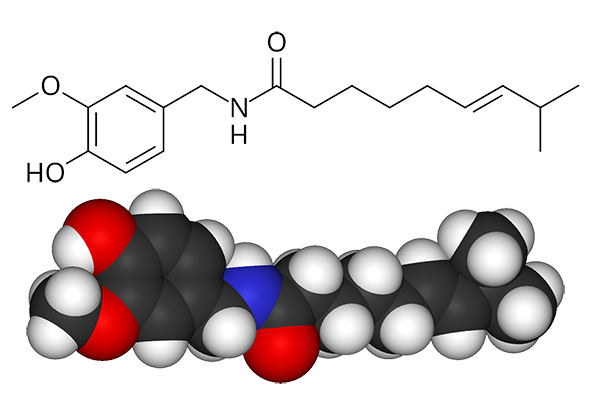 The capsaicin molecule, chemical structure (top) and space-filling model (bottom).
When peppers are consumed by mammals such as humans, capsaicin binds with pain receptors in the mouth and throat, potentially evoking pain via spinal relays to the brainstem and thalamus where heat and discomfort are perceived. However, birds are unable to perceive the hotness and so they can eat some of the hottest peppers. The intensity of the "heat" of chillies is commonly reported in Scoville heat units (SHU), invented by American pharmacist Wilbur Scoville in 1912. Historically, it was a measure of the dilution of an amount of chilli extract added to sugar syrup before its heat becomes undetectable to a panel of tasters; the more it has to be diluted to be undetectable, the more powerful the variety, and therefore the higher the rating. Since the 1980s, spice heat has been assessed quantitatively by high-performance liquid chromatography (HPLC), which measures the concentration of heat-producing capsaicinoids, typically with capsaicin content as the main measure
The alphabetical list of all the chilli-based on this site follows, (limited to 100 recipes per page). There are 2100 recipes in total:
Page 7 of 22
| Doubanjiang (Chilli Bean Sauce) Origin: Taiwan | Enchiladas (Stuffed Tortillas with Chilli Sauce) Origin: Spain | Fish and Snail Sauce Origin: Nigeria |
| Doubanjiang (Sichuan Chilli Bean Sauce) Origin: China | Ensopado Amendoim Kizaka (Kizaka Peanut Stew) Origin: Angola | Fish Dopeaja Origin: Bangladesh |
| Double Bean and Roasted Pepper Chili Origin: Britain | Epicurean Sauce Origin: Britain | Fish Steaks with Barbecue Sauce Origin: Anguilla |
| Dried Fish Bharta Origin: Anglo-Indian | Epis (Haitian Green Seasoning) Origin: Haiti | Fish Stew Origin: Guinea-Bissau |
| Drunken Chili Origin: American | Equatorial Guinea Peanut Sauce Origin: Equatorial Guinea | Fish Vindaye Origin: Mauritius |
| Dry Rice and Fish Origin: Liberia | Eritrean Berbere Spice Origin: Eritrea | Flaming Eggs Origin: Thailand |
| Drying Green Chillies Origin: Mexico | Espinazo en salsa verde con verdolagas (Pork Neck in Tomatillo Sauce with Purslane) Origin: Mexico | Flancitos Origin: Chile |
| Duck Fajitas with Cherry Salsa Origin: Fusion | eSwatini Mango Chutney Origin: eSwatini | Folon Origin: Cameroon |
| Dumplings in Cold Spicy Sauce Origin: Fusion | Ethiopian Berbere Sauce Origin: Ethiopia | Fonio, Sauce Gombo et Crevettes (Fonio, Okra Sauce and Prawns) Origin: Mali |
| Dunguri nda Mo (Rice and Black-eyed Peas) Origin: Niger | Ewa Dodo (Black-eyed peas with Plantains) Origin: Niger | Foubey (Millet Couscous with Moringa) Origin: Niger |
| Durban Fish Masala Origin: South Africa | Ezay (Bhutanese Chilli Condiment) Origin: Bhutan | Foufou de Banane à la Sauce Claire (Plantain Fufu with Clear Sauce) Origin: Mali |
| Durban Leaf Masala Origin: South Africa | Ezme (Spicy Turkish Salad) Origin: Turkey | Foufou Dessi (White Sauce for Fufu) Origin: Togo |
| Durban Mango Atchar Origin: South Africa | Fāfaru (Fermented Coconut Sauce) Origin: Austral Islands | Foufu et Eru (Cameroonian Beef with Cassava Leaves) Origin: Cameroon |
| Durban Masala Origin: South Africa | Fah-Fah (Soupe Djiboutienne) Origin: Djibouti | Fouti Lafidi Origin: Guinea |
| Durban-style Watermelon Rind Curry Origin: South Africa | Fakoye Achoutoob (Beef, Garden Egg and Jute Mallow Leaf Stew) Origin: Mali | Frango com Bagique (Chicken with Spinach) Origin: Guinea-Bissau |
| Eba Piron Rouge (Beef and Red Gari) Origin: Cameroon | Fante-Fante (Ghanaian Fisherman's Stew) Origin: Ghana | Frango com Piri-piri (Piri-piri Chicken) Origin: Mozambique |
| Editan Soup II Origin: Nigeria | Farngo da Terra a Blanta com Baguitchi (Village Chicken with Hibiscus Leaves) Origin: Guinea-Bissau | Frango de Cafreal (Barbecued Chicken) Origin: Mozambique |
| Efere Usung Udia Origin: Nigeria | Fasooleyah Khodra bi Zeit (Saudi Green Bean Salad) Origin: Saudi Arabia | Frango de Churrasco (Barbecued Piri-piri Chicken) Origin: Portugal |
| Efo-riro (Vegetable Stew) Origin: Nigeria | Faten Doya (Nigerian Yam Pottage) Origin: Nigeria | Frango de Churrasco de Guiné (Guinea-Bissau Barbecued Chicken) Origin: Guinea-Bissau |
| Egg Bhurji (Spicy Scrambled Egg) Origin: India | Feijoada (Pork, Black Bean and Sausage Stew) Origin: East Timor | Frango Grelhado Piri Piri (Grilled Chicken with Chillies) Origin: Angola |
| Egg Masala Origin: India | Feijoada à Angolana (Angolan Feijoada) Origin: Angola | Frango Zambeziana (Zambezi Chicken) Origin: Mozambique |
| Egg Pilau Origin: India | Fermented Krill Sauce Origin: Japan | Franks Red Hot Sauce Origin: American |
| Egusi Soup Origin: Nigeria | Fermented Sriracha Sauce Origin: Thailand | French Guiana Sauce Chien Origin: French Guiana |
| Egusi with Efo Origin: Nigeria | Feta Falafel Burger Origin: Fusion | Fresh Fish Pepper Soup Origin: West Africa |
| Ekoki Origin: Cameroon | Feuilles de Manioc (Central African Cassava Leaves) Origin: Central Africa | Fresh Sriracha Chilli Sauce Origin: Thailand |
| Ekuru with Ata Sauce (Steamed Savoury Beans with Ata Sauce) Origin: Nigeria | Fiery Chicken Jalfrezi Origin: Britain | Fresh Tomato Salsa Origin: Spain |
| El Cocido Origin: Spain | Fijian Chicken Curry Origin: Fiji | Fricasée de Gibier (Fricasee of Bushmeat) Origin: French Guiana |
| El Salvador Salsa Roja (Salvadorean Red Sauce) Origin: El Salvador | Fijian Goat Curry Origin: Fiji | Fricassée de Brède Chouchou (Fricassee of Pumpkin Leaves) Origin: Reunion |
| Elumas Curry (Mutton Curry) Origin: Sri Lanka | Fijian Indian Tomato Chutney Origin: Fiji | Fricassée de Brèdes (Fricassee of Amaranth Greens) Origin: Reunion |
| Ema Datshi (Chillies with Cheese) Origin: Bhutan | Filipino Beef Rendang Origin: Philippines | Fricassée de Coq (Chicken Fricassee) Origin: Mauritius |
| Empanada Gallega (Spicy Galician Chicken Empanada) Origin: Spain | Finadene Origin: Guam | Fricassé de ouassous (Fricassée of Freshwater Prawns) Origin: Guadeloupe |
| Empanadas de Atun Fritas (Fried Tuna Empanadas) Origin: Mexico | FionFion Origin: Togo | Fried Ata Sauce Origin: Nigeria |
| Empanadas Method II Origin: Chile | Firigisi za Kuku (Chicken Gizzard Appetizer) Origin: Tanzania | |
| Empress Chili Origin: American | Fish and Dried Mallow Leaf Stew Origin: African Fusion |
Page 7 of 22