FabulousFusionFood's Chilli-based Recipes 19th Page
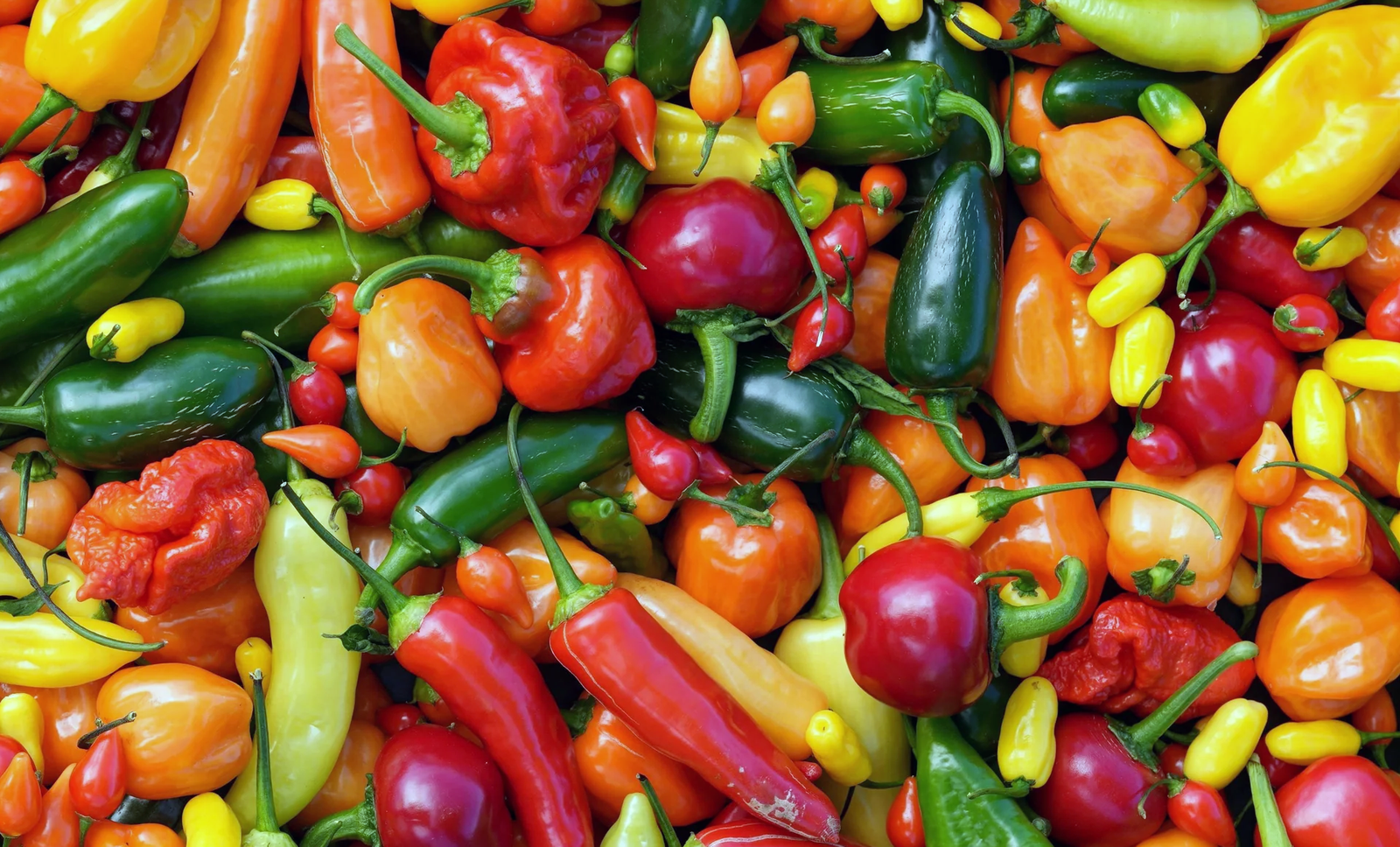 A mixture of different chilli peppers.
Welcome to FabulousFusionFood's Chilli-based Recipes Page — The recipes presented here all contain chilli peppers as a main ingredient. Chillies are the fruit of the chilli plant. Along with black pepper, they are unique spices in that they impart 'heat' to a dish without any associated bitterness. The dried and powdered fruit along with the fresh fruit and the dried fruit are all used as spices. As well as their capsaicin induced heat, chillies (depending on the variety or cultivar) can also imbue a dish with a fruity flavour. Smoked chillies are also used to impart a smokiness as well as heat to a dish.
Chilli peppers, also spelled chile or chili (from Classical Nahuatl chīlli [ˈt͡ʃiːlːi]) and known as hot peppers, are varieties of berry-fruit plants from the genus Capsicum, which are members of the nightshade family Solanaceae, cultivated for their pungency. Chilli peppers are widely used in many cuisines as a spice to add "heat" to dishes. Capsaicin and the related capsaicinoids give chillies their intensity when ingested or applied topically. Chilli peppers exhibit a range of heat and flavours. This diversity is the reason behind the availability of different types of chilli powder, each offering its own taste and heat level.
Chilli peppers originated in Central or South America and were first cultivated in Mexico. European explorers brought chillies back to the Old World in the late 16th century as part of the Columbian Exchange, which led to the cultivation of multiple varieties across the world for food and traditional medicine. Five Capsicum species have been widely cultivated: annuum, baccatum, chinense, frutescens, and pubescens.
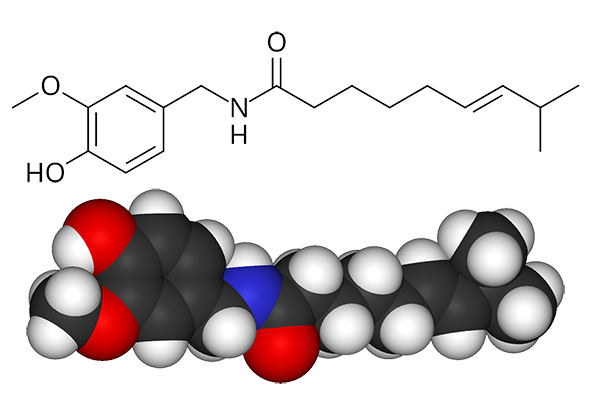 The capsaicin molecule, chemical structure (top) and space-filling model (bottom).
When peppers are consumed by mammals such as humans, capsaicin binds with pain receptors in the mouth and throat, potentially evoking pain via spinal relays to the brainstem and thalamus where heat and discomfort are perceived. However, birds are unable to perceive the hotness and so they can eat some of the hottest peppers. The intensity of the "heat" of chillies is commonly reported in Scoville heat units (SHU), invented by American pharmacist Wilbur Scoville in 1912. Historically, it was a measure of the dilution of an amount of chilli extract added to sugar syrup before its heat becomes undetectable to a panel of tasters; the more it has to be diluted to be undetectable, the more powerful the variety, and therefore the higher the rating. Since the 1980s, spice heat has been assessed quantitatively by high-performance liquid chromatography (HPLC), which measures the concentration of heat-producing capsaicinoids, typically with capsaicin content as the main measure
The alphabetical list of all the chilli-based on this site follows, (limited to 100 recipes per page). There are 2100 recipes in total:
Page 19 of 22
| Sopa Mexicana de Flor de Calabaza (Mexican Pumpkin Flower Soup) Origin: Mexico | Special Curry Powder Origin: South Africa | St Kitts Spicy Plantains Origin: Saint Kitts |
| Sopa Seca (Mexican-style Rice) Origin: Mexico | Special Efo Riro Origin: Nigeria | St Kitts Stewed Fish Origin: Saint Kitts |
| Sopi di Piská (Fish Soup) Origin: Aruba | Spee Chrout (Mustard Green Pickle) Origin: Cambodia | St Lucian Pepper Pot Origin: Saint Lucia |
| Sopi di Piská (Fish Soup) Origin: Bonaire | Spiced Ash Key Pickle Origin: Britain | St. Lucia Jerk Fish with Banana Salsa Origin: Saint Lucia |
| Sopi di Piská (Fish Soup) Origin: Curacao | Spiced Guinea Fowl Peppersoup Origin: Nigeria | Steak with Prego Sauce Origin: Portugal |
| Sorpotel Origin: India | Spiced Lima Beans with Garlic and Coconut Origin: Nepal | Steamed Black-eyed Bean Dumplings Origin: Ghana |
| Sos Ti-malice (Ti-malice Sauce) Origin: Haiti | Spicy Beef and Longevity Noodles Origin: China | Steamed Crawfish Origin: Liberia |
| Soto Ayam Origin: Indonesia | Spicy Black Bean Tacos Origin: Britain | Stew Peas Origin: Jamaica |
| Soto Ayam Origin: Malaysia | Spicy Cheese Log Origin: American | Stewed Chayote with Tomato and Epazote Origin: Mexico |
| Soto Ayam Origin: Singapore | Spicy Chicken Gizzards Origin: South Africa | Stewed Pork with Chickpeas Origin: Fusion |
| Soup Joumou (Haitian Squash Soup) Origin: Haiti | Spicy Chicken Seasoning Mix Origin: American | Sticky Lamb Ribs Origin: Britain |
| Soupa Canja (Okra and Palm Oil Soup) Origin: Gambia | Spicy Chilli Bean Soup Origin: Britain | Stir-fried Red Cabbage, South Indian Style Origin: Fusion |
| Soupe aux pois et la viande (Pea Soup and Meat) Origin: Guinea-Bissau | Spicy Coriander Pesto with Himalayan Balsam Seeds and Lime Origin: Fusion | Stockfish Stew Origin: Nigeria |
| Soupe de Gombo, Sauce Poisson (Okra Soup, Fish Sauce) Origin: Benin | Spicy Lotus Root Stir Fry Origin: China | Street Corn Salsa Origin: America |
| Soupe de Porc Fume (Smoked Pork Soup) Origin: Burkina Faso | Spicy Meatball Pizza Origin: Italy | Street Food Pad Thai Origin: Thailand |
| Soupe Djiboutienne (Djibouti Soup) Origin: Djibouti | Spicy Medlar Chutney Origin: Britain | Stuffed Aubergines Origin: Anglo-Indian |
| Soupe Kandja Origin: Mali | Spicy Mexican-inspired Rice Origin: Fusion | Sugar Bean Curry Origin: South Africa |
| Souphet (Thai Maitake Salad) Origin: Thailand | Spicy Okra Origin: India | Sukuma Wiki Origin: Kenya |
| Soupou Konkoé (Smoked Fish Soup) Origin: Guinea | Spicy Pork Ribs Origin: Britain | Sukuma Wiki Origin: South Sudan |
| Soupou Tehou (Beef Soup) Origin: Guinea | Spicy Prawns and Green Lentils Origin: Fusion | Sunday Stew Origin: Nigeria |
| Soupoukanja (Goat Stew with Okra) Origin: Senegal | Spicy Ranch Dressing Origin: American | Suqaar (Somali Beef Stew) Origin: Somalia |
| Souroundou (Nigerienne Fat Rice) Origin: Niger | Spicy Szechuan Pork Recipe Origin: China | Suriname Hot Pepper Sambal Origin: Suriname |
| Sousi Pa (Fish with Coconut Cream) Origin: Laos | Spicy Tomato Ketchup Origin: Britain | Şurpa (Shurpa) Origin: Turkmenistan |
| South African Curried Peanut Soup Origin: South Africa | Spicy Tomato Salsa Origin: America | Suya Curry Origin: Fusion |
| South African Curry Powder Origin: South Africa | Spicy Turkey and Sausage Kebabs Origin: Britain | Svinsko S Bel Bob (Pork with Beans) Origin: Bulgaria |
| South African Prego Steak Origin: South Africa | Spicy Watermelon Gazpacho Soup Origin: South Africa | Sweet and Sour Fish Patia Origin: India |
| South African Rhus Bukhari Origin: South Africa | Spinach and Peanut Butter Stew Origin: West Africa | Sweet Chilli and Pepper Salsa Origin: Ascension |
| South African Vegetable Biryani Origin: South Africa | Sprats Moju Origin: Sri Lanka | Sweet Chilli Sauce Origin: South Africa |
| Soya (Barbecued Beef) Origin: Cameroon | Sri Lankan Aubergine Curry Origin: Sri Lanka | Sweet Chilli Sauce Origin: New Zealand |
| Spam Kelaguen Origin: Northern Mariana Islands | Sri Lankan Chicken Curry Origin: Sri Lanka | Sweet Chilli Sauce Origin: New Caledonia |
| Spam Kelaguen Origin: Guam | Sri Lankan Toasted Meat Curry Powder Origin: Sri Lanka | Sweet Ginger Sauce Origin: Fusion |
| Spanakorizo (Spinach Rice) Origin: Greece | Sri Lankan-style Mango Curry Origin: Sri Lanka | Sweet Potato Pottage Origin: Nigeria |
| Spanish Prawns Origin: Britain | Srpska Corba ot Graha (Serbian Bean Stew) Origin: Serbia | |
| Spatchcocked Poussin with Lentils and Harissa Origin: Fusion | St Helena Fishcakes Origin: St Helena |
Page 19 of 22