FabulousFusionFood's Guatemalan Recipes Home Page
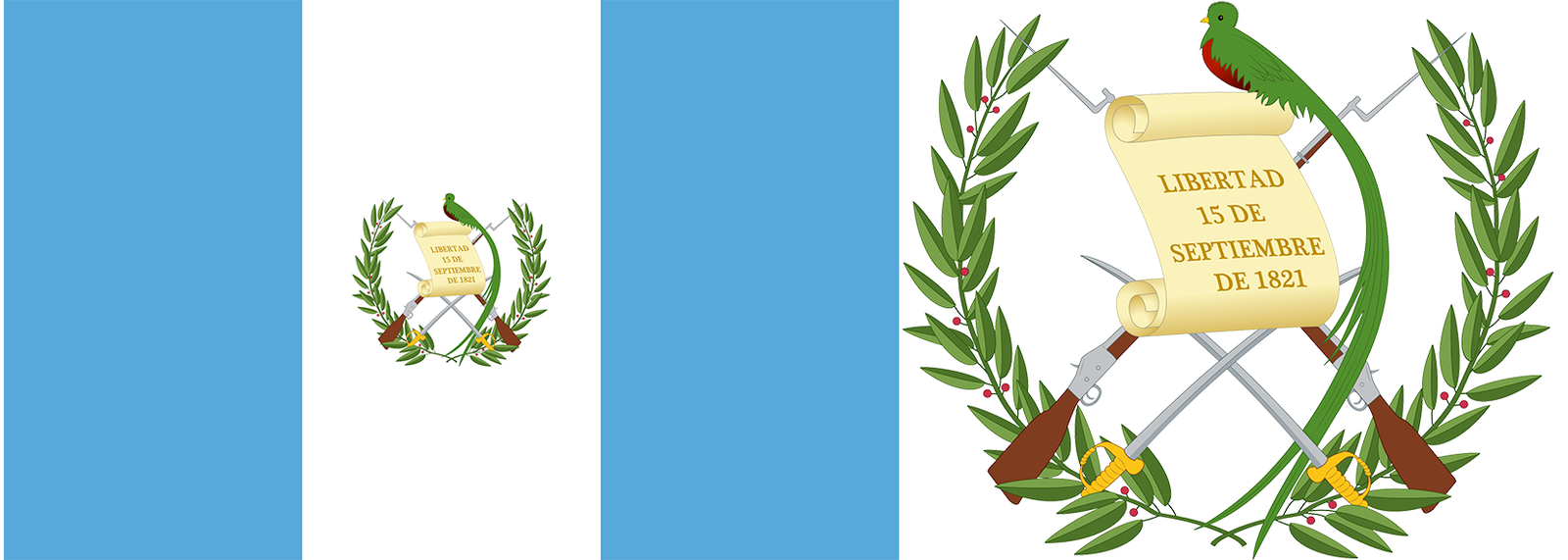 The flag of Guatemala (left) and the coat of arms of Guatemala (right).
Welcome to the summary page for FabulousFusionFood's Costa Rican recipes, part of South America. This page provides links to all the Costa Rican recipes presented on this site, with 8 recipes in total.
This is a continuation of an entire series of pages that will, I hope, allow my visitors to better navigate this site. As well as displaying recipes by name, country and region of origin I am now planning a whole series of pages where recipes can be located by meal type and main ingredient. This page gives a listing of all the Guatemalan recipes added to this site.
Guatemala, (República de Guatemala in Spanish), officially the Republic of Guatemala,[b] is a country in Central America. It is bordered to the north and west by Mexico, to the northeast by Belize, to the east by Honduras, and to the southeast by El Salvador. Spanish is the official language, Mayan is a recognised language and Garifuna and Xinca are recognised regional languages. The capital and largest city is Guatemala City.
Many traditional foods in Guatemalan cuisine are based on Mayan cuisine and prominently feature maize, chilies and black beans as key ingredients. Traditional dishes also include a variety of stews including Kak'ik (Kak-ik), which is a tomato-based stew with turkey, pepian, and cocido. Guatemala is also known for its antojitos, which include small tamales called "chuchitos", fried plantains, and tostadas with tomato sauce, guacamole or black beans. Certain foods are also commonly eaten on certain days of the week; for example, a popular custom is to eat paches (a kind of tamale made from potatoes) on Thursday. Certain dishes are also associated with special occasions, such as fiambre for All Saints' Day on 1 November, or tamales and ponche (fruit punch), which are both very common around Christmas.
Guatemala, officially the Republic of Guatemala, is a country in Central America. It is bordered to the north and west by Mexico, to the northeast by Belize, to the east by Honduras, and to the southeast by El Salvador. It is bounded by the Pacific Ocean to the south and the Gulf of Honduras to the northeast.
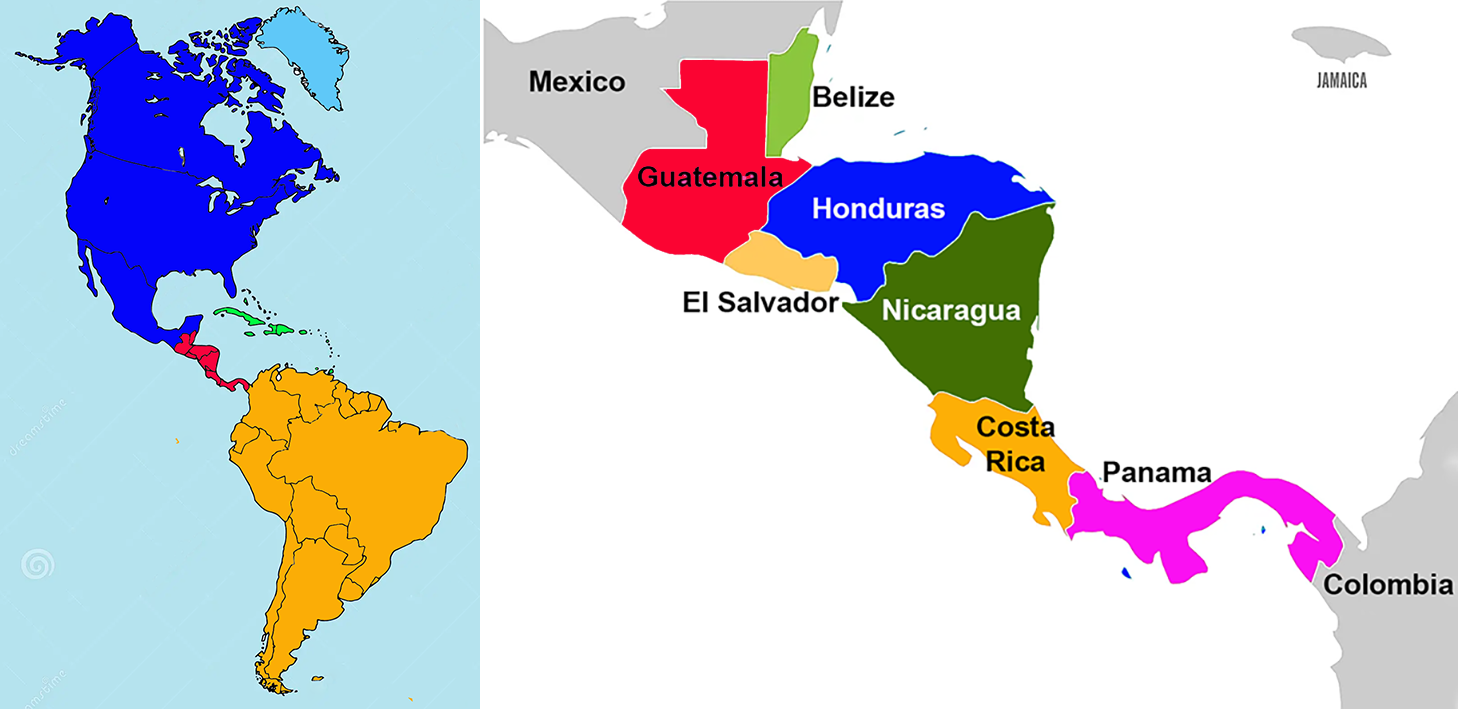 Location of Guatemala in Central America with the land mass of Guatemala
picked out in red.The territory of modern Guatemala hosted the core of the Maya civilization, which extended across Mesoamerica; in the 16th century, most of this was conquered by the Spanish and claimed as part of the viceroyalty of New Spain. Guatemala attained independence from Spain and Mexico in 1821. From 1823 to 1841, it was part of the Federal Republic of Central America. For the latter half of the 19th century, Guatemala suffered instability and civil strife. From the early 20th century, it was ruled by a series of dictators backed by the United States. In 1944, authoritarian leader Jorge Ubico was overthrown by a pro-democratic military coup, initiating a decade-long revolution that led to social and economic reforms. In 1954, a U.S.-backed military coup ended the revolution and installed a dictatorship. From 1960 to 1996, Guatemala endured a bloody civil war fought between the U.S.-backed government and leftist rebels, including genocidal massacres of the Maya population perpetrated by the Guatemalan military. The United Nations negotiated a peace accord, resulting in economic growth and successive democratic elections.
Guatemala's abundance of biologically significant and unique ecosystems includes many endemic species and contributes to Mesoamerica's designation as a biodiversity hotspot. Although rich in export goods, around a quarter of the population (4.6 million) face food insecurity; other major issues include poverty, crime, corruption, drug trafficking, and civil instability.
With an estimated population of around 17.6 million, Guatemala is the most populous country in Central America, the fourth most populous country in North America and the 11th most populous country in the Americas. Its capital and largest city, Guatemala City, is the most populous city in Central America.
Etymology: The name 'Guatemala' comes from the Nahuatl word Cuauhtēmallān, or 'place of many trees', a derivative of the K'iche' Mayan word for 'many trees' or, perhaps more specifically, for the Cuate/Cuatli tree Eysenhardtia. This name was originally used by the Mexica to refer to the Kaqchikel city of Iximche, but was extended to refer to the whole country during the Spanish colonial period.
Many Guatemalan dishes are cooked without the use of cooking oil, with ingredients placed directly on the comal or wrapped in leaves. Many Guatemalan dishes have the suffix '-ik' as part of their name; -ik means chilli in several Mayan languages spoken in the country.
This is a continuation of an entire series of pages that will, I hope, allow my visitors to better navigate this site. As well as displaying recipes by name, country and region of origin I am now planning a whole series of pages where recipes can be located by meal type and main ingredient. This page gives a listing of all the Guatemalan recipes added to this site.
Guatemala, (República de Guatemala in Spanish), officially the Republic of Guatemala,[b] is a country in Central America. It is bordered to the north and west by Mexico, to the northeast by Belize, to the east by Honduras, and to the southeast by El Salvador. Spanish is the official language, Mayan is a recognised language and Garifuna and Xinca are recognised regional languages. The capital and largest city is Guatemala City.
Many traditional foods in Guatemalan cuisine are based on Mayan cuisine and prominently feature maize, chilies and black beans as key ingredients. Traditional dishes also include a variety of stews including Kak'ik (Kak-ik), which is a tomato-based stew with turkey, pepian, and cocido. Guatemala is also known for its antojitos, which include small tamales called "chuchitos", fried plantains, and tostadas with tomato sauce, guacamole or black beans. Certain foods are also commonly eaten on certain days of the week; for example, a popular custom is to eat paches (a kind of tamale made from potatoes) on Thursday. Certain dishes are also associated with special occasions, such as fiambre for All Saints' Day on 1 November, or tamales and ponche (fruit punch), which are both very common around Christmas.
Guatemala, officially the Republic of Guatemala, is a country in Central America. It is bordered to the north and west by Mexico, to the northeast by Belize, to the east by Honduras, and to the southeast by El Salvador. It is bounded by the Pacific Ocean to the south and the Gulf of Honduras to the northeast.
Location of Guatemala in Central America with the land mass of Guatemalapicked out in red.
Guatemala's abundance of biologically significant and unique ecosystems includes many endemic species and contributes to Mesoamerica's designation as a biodiversity hotspot. Although rich in export goods, around a quarter of the population (4.6 million) face food insecurity; other major issues include poverty, crime, corruption, drug trafficking, and civil instability.
With an estimated population of around 17.6 million, Guatemala is the most populous country in Central America, the fourth most populous country in North America and the 11th most populous country in the Americas. Its capital and largest city, Guatemala City, is the most populous city in Central America.
Etymology: The name 'Guatemala' comes from the Nahuatl word Cuauhtēmallān, or 'place of many trees', a derivative of the K'iche' Mayan word for 'many trees' or, perhaps more specifically, for the Cuate/Cuatli tree Eysenhardtia. This name was originally used by the Mexica to refer to the Kaqchikel city of Iximche, but was extended to refer to the whole country during the Spanish colonial period.
Guatemalan Cuisine:
Most traditional foods in Guatemalan cuisine are based on Maya cuisine, with Spanish influence, and prominently feature corn, chilies and beans as key ingredients. Guatemala is famously home to the Hass avocado. There are also foods that are commonly eaten on certain days of the week. For example, it is a popular custom to eat paches (a kind of tamale made from potatoes) on Thursday. Certain dishes are also associated with special occasions, such as fiambre for All Saints Day on November 1 and tamales, which are common around Christmas.Many Guatemalan dishes are cooked without the use of cooking oil, with ingredients placed directly on the comal or wrapped in leaves. Many Guatemalan dishes have the suffix '-ik' as part of their name; -ik means chilli in several Mayan languages spoken in the country.
Guatemala's National Dishes:
Below are listed the dishes considered to be Guatemala's national foods along with links to the recipes for those dishes:| Pepián Origin: Guatemala |
The alphabetical list of all the Guatemalan recipes on this site follows, (limited to 100 recipes per page). There are 8 recipes in total:
Page 1 of 1
| Pepián Origin: Guatemala | Corn Tortilla Origin: Guatemala | Pepián Origin: Guatemala |
| Arroz con Pollo Guatemalteco (Chicken with Rice, Guatemalan Style) Origin: Guatemala | Flan (Guatemalan Caramel Custard) Origin: Guatemala | Picado de Rábano (Radish Salad) Origin: Guatemala |
| Chicharrónes (Guatemalan Pork Rinds) Origin: Guatemala | Guatemalan Cucumber Soup Origin: Guatemala |
Page 1 of 1