FabulousFusionFood's Virgin Islander Recipes Home Page
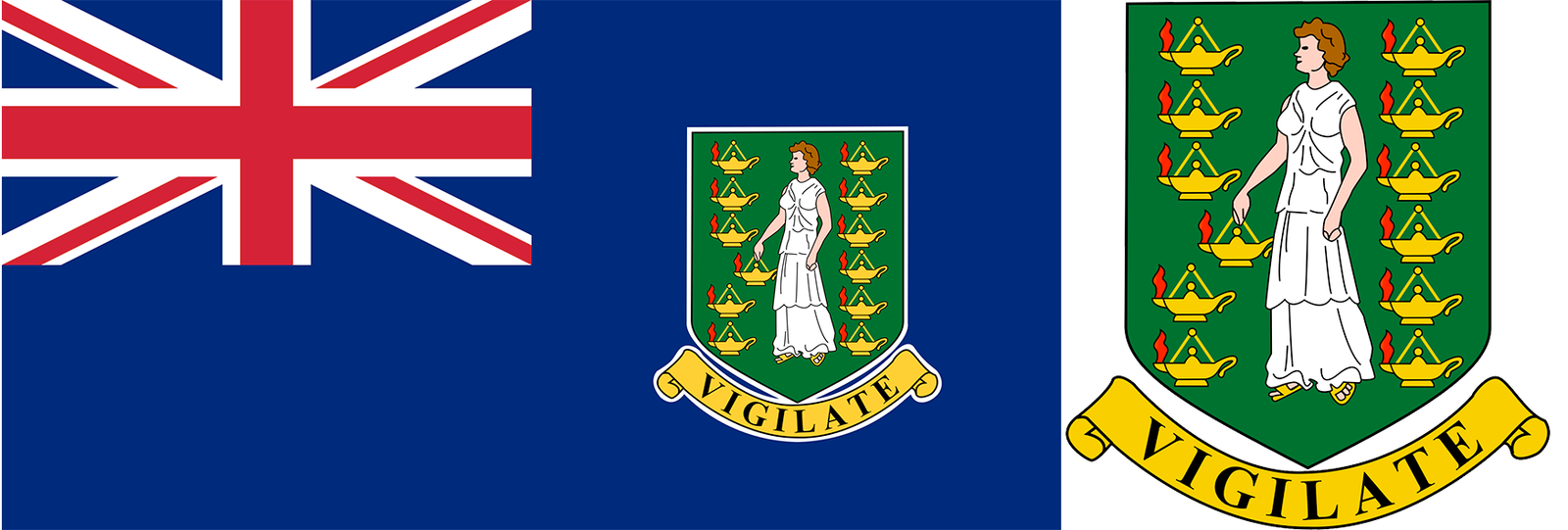 The flag of the British Virgin Islands (left) and the coat of
arms of the British Virgin Islands (right).
Welcome to the summary page for FabulousFusionFood's Virgin Islander recipes, part of the Caribbean. This page provides links to all the British Virgin Islander recipes presented on this site, with 17 recipes in total.
This is a continuation of an entire series of pages that will, I hope, allow my visitors to better navigate this site. As well as displaying recipes by name, country and region of origin I am now planning a whole series of pages where recipes can be located by meal type and main ingredient. This page gives a listing of all the Virgin Islander recipes added to this site.
The British Virgin Islands (BVI) are a British Overseas Territory in the Caribbean, to the east of Puerto Rico and the US Virgin Islands and north-west of Anguilla. Road Town (on Tortola) is the capital and largest city.
British Virgin Islands cuisine tends to be spicy and hearty. Many of the foods are imported due to an acquired taste for foreign foods. Local farmers grow fruit and vegetables along with the rearing of animals. Their goods are sold in local open-air markets, while supermarkets tend to carry only imported foods. Upscale restaurants often cater to tourists, serving a combination of North American dishes with tropical twists as well as local cuisine.
The British Virgin Islands (BVI), officially the Virgin Islands, are a British Overseas Territory in the Caribbean, to the east of Puerto Rico and the US Virgin Islands and north-west of Anguilla. The islands are geographically part of the Virgin Islands archipelago and are located in the Leeward Islands of the Lesser Antilles and part of the West Indies.
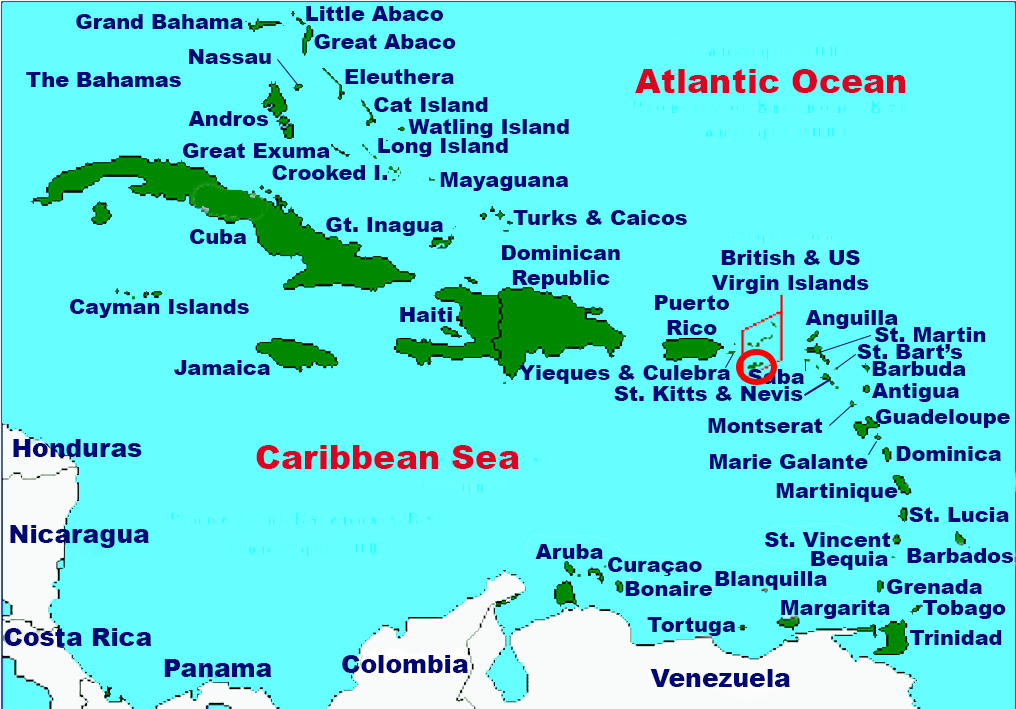 Image of the Caribbean with the location of the British Virgin Islands picked out
and circled, a blow-up map of the British Virgin Islands is show, inset.The British Virgin Islands consist of the main islands of Tortola, Virgin Gorda, Anegada and Jost Van Dyke, along with more than 50 other smaller islands and cays. About 16 of the islands are inhabited. The capital, Road Town, is on Tortola, the largest island, which is about 20 km (12 mi) long and 5 km (3 mi) wide. The islands had a population of 28,054 at the 2010 Census, of whom 23,491 lived on Tortola; current estimates put the population at 35,802 (July 2018).
The economy of the territory is overwhelmingly dominated by tourism and financial services. In terms of financial services, the territory is known as a leading hub for tax evasion and concealment of assets.
British Virgin Islanders are British Overseas Territories citizens and, since 2002, also British citizens.
Etymology: The islands were named 'Santa Úrsula y las Once Mil Vírgenes' by Christopher Columbus in 1493 after the legend of Saint Ursula and the 11,000 virgins. The name was later shortened to 'the Virgin Islands'.
The official name of the territory is still simply the 'Virgin Islands', but the prefix 'British' is often used. This is commonly believed to distinguish it from the neighbouring American territory which changed its name from the 'Danish West Indies' to 'Virgin Islands of the United States' in 1917. However, local historians have disputed this, pointing to a variety of publications and public records dating from between 21 February 1857 and 12 September 1919 where the territory is referred to as the British Virgin Islands. British Virgin Islands government publications continue to begin with the name 'The territory of the Virgin Islands', and the territory's passports simply refer to the 'Virgin Islands', and all laws begin with the words 'Virgin Islands'. Moreover, the territory's Constitutional Commission has expressed the view that 'every effort should be made' to encourage the use of the name 'Virgin Islands'. But various public and quasi-public bodies continue to use the name 'British Virgin Islands' or 'BVI', including BVI Finance, BVI Electricity Corporation, BVI Tourist Board, BVI Athletic Association, BVI Bar Association and others.
In 1968 the British Government issued a memorandum requiring that the postage stamps in the territory should say 'British Virgin Islands' (whereas previously they had simply stated 'Virgin Islands'), a practice which is still followed today. This was likely to prevent confusion following on from the adoption of US currency in the territory in 1959, and the references to US currency on the stamps of the territory.
Notable dishes include:
Fungi (pronounced foon-gee) is a main staple of the traditional Virgin Islands diet. It consists of cornmeal that has been boiled and cooked to a thick consistency along with okra. Fungi are usually eaten with boiled fish or saltfish.
Callaloo (sometimes spelled kallaloo) is a soup made from callaloo bush/leaf, often substituted with spinach. It consists of various meats and okra, and is boiled to a thick stew consistency.
Because of inter-Caribbean migration, many foods from other Caribbean countries have been adopted into the Virgin Islands culinary culture. For example, a popular dish is roti, of Indo-Trinidadian origin, which consists of curried vegetables and meat wrapped in a paper-thin dough.
This is a continuation of an entire series of pages that will, I hope, allow my visitors to better navigate this site. As well as displaying recipes by name, country and region of origin I am now planning a whole series of pages where recipes can be located by meal type and main ingredient. This page gives a listing of all the Virgin Islander recipes added to this site.
The British Virgin Islands (BVI) are a British Overseas Territory in the Caribbean, to the east of Puerto Rico and the US Virgin Islands and north-west of Anguilla. Road Town (on Tortola) is the capital and largest city.
British Virgin Islands cuisine tends to be spicy and hearty. Many of the foods are imported due to an acquired taste for foreign foods. Local farmers grow fruit and vegetables along with the rearing of animals. Their goods are sold in local open-air markets, while supermarkets tend to carry only imported foods. Upscale restaurants often cater to tourists, serving a combination of North American dishes with tropical twists as well as local cuisine.
The British Virgin Islands (BVI), officially the Virgin Islands, are a British Overseas Territory in the Caribbean, to the east of Puerto Rico and the US Virgin Islands and north-west of Anguilla. The islands are geographically part of the Virgin Islands archipelago and are located in the Leeward Islands of the Lesser Antilles and part of the West Indies.
Image of the Caribbean with the location of the British Virgin Islands picked outand circled, a blow-up map of the British Virgin Islands is show, inset.
The economy of the territory is overwhelmingly dominated by tourism and financial services. In terms of financial services, the territory is known as a leading hub for tax evasion and concealment of assets.
British Virgin Islanders are British Overseas Territories citizens and, since 2002, also British citizens.
Etymology: The islands were named 'Santa Úrsula y las Once Mil Vírgenes' by Christopher Columbus in 1493 after the legend of Saint Ursula and the 11,000 virgins. The name was later shortened to 'the Virgin Islands'.
The official name of the territory is still simply the 'Virgin Islands', but the prefix 'British' is often used. This is commonly believed to distinguish it from the neighbouring American territory which changed its name from the 'Danish West Indies' to 'Virgin Islands of the United States' in 1917. However, local historians have disputed this, pointing to a variety of publications and public records dating from between 21 February 1857 and 12 September 1919 where the territory is referred to as the British Virgin Islands. British Virgin Islands government publications continue to begin with the name 'The territory of the Virgin Islands', and the territory's passports simply refer to the 'Virgin Islands', and all laws begin with the words 'Virgin Islands'. Moreover, the territory's Constitutional Commission has expressed the view that 'every effort should be made' to encourage the use of the name 'Virgin Islands'. But various public and quasi-public bodies continue to use the name 'British Virgin Islands' or 'BVI', including BVI Finance, BVI Electricity Corporation, BVI Tourist Board, BVI Athletic Association, BVI Bar Association and others.
In 1968 the British Government issued a memorandum requiring that the postage stamps in the territory should say 'British Virgin Islands' (whereas previously they had simply stated 'Virgin Islands'), a practice which is still followed today. This was likely to prevent confusion following on from the adoption of US currency in the territory in 1959, and the references to US currency on the stamps of the territory.
Virgin Islander Cuisine:
Traditional food tends to be spicy and hearty. Many of the foods are imported due to an acquired taste for foreign foods. Local farmers grow fruits and vegetables along with the rearing of animals. Their goods are sold in local open-air markets, while supermarkets tend to carry only imported foods. Upscale restaurants often cater to tourists, serving a combination of North American dishes with tropical twists as well as local cuisine. An example of this is the addition of mango and Caribbean spices to salmon, a non-tropical fish.Notable dishes include:
Fungi (pronounced foon-gee) is a main staple of the traditional Virgin Islands diet. It consists of cornmeal that has been boiled and cooked to a thick consistency along with okra. Fungi are usually eaten with boiled fish or saltfish.
Callaloo (sometimes spelled kallaloo) is a soup made from callaloo bush/leaf, often substituted with spinach. It consists of various meats and okra, and is boiled to a thick stew consistency.
Because of inter-Caribbean migration, many foods from other Caribbean countries have been adopted into the Virgin Islands culinary culture. For example, a popular dish is roti, of Indo-Trinidadian origin, which consists of curried vegetables and meat wrapped in a paper-thin dough.
British Virgin Islands' National Dishes:
Below are listed the dishes considered to be British Virgin Islands' national foods along with links to the recipes for those dishes:| Fried Fish with Fungi Origin: British Virgin Islands | Okra Fungi Origin: British Virgin Islands | Virgin Islands Pates Origin: British Virgin Islands |
The alphabetical list of all the Virgin Islander recipes on this site follows, (limited to 100 recipes per page). There are 17 recipes in total:
Page 1 of 1
| Fried Fish with Fungi Origin: British Virgin Islands | Conch Fritters Origin: British Virgin Islands | Rum Cake Origin: British Virgin Islands |
| Okra Fungi Origin: British Virgin Islands | Crab Cakes Origin: British Virgin Islands | Saltfish Buljolde Origin: British Virgin Islands |
| Virgin Islands Pates Origin: British Virgin Islands | Fried Fish with Fungi Origin: British Virgin Islands | Savoury Baked Island Chicken Origin: British Virgin Islands |
| British Virgin Islands Peas Soup Origin: British Virgin Islands | Johnny Cakes Origin: British Virgin Islands | Turn Cornmeal Origin: British Virgin Islands |
| Callaloo Soup Origin: British Virgin Islands | Okra Fungi Origin: British Virgin Islands | Virgin Island Roti Origin: British Virgin Islands |
| Caribbean Rice and Beans Origin: British Virgin Islands | Red Grout Dessert Origin: British Virgin Islands |
Page 1 of 1