FabulousFusionFood's Africa Recipes Home Page
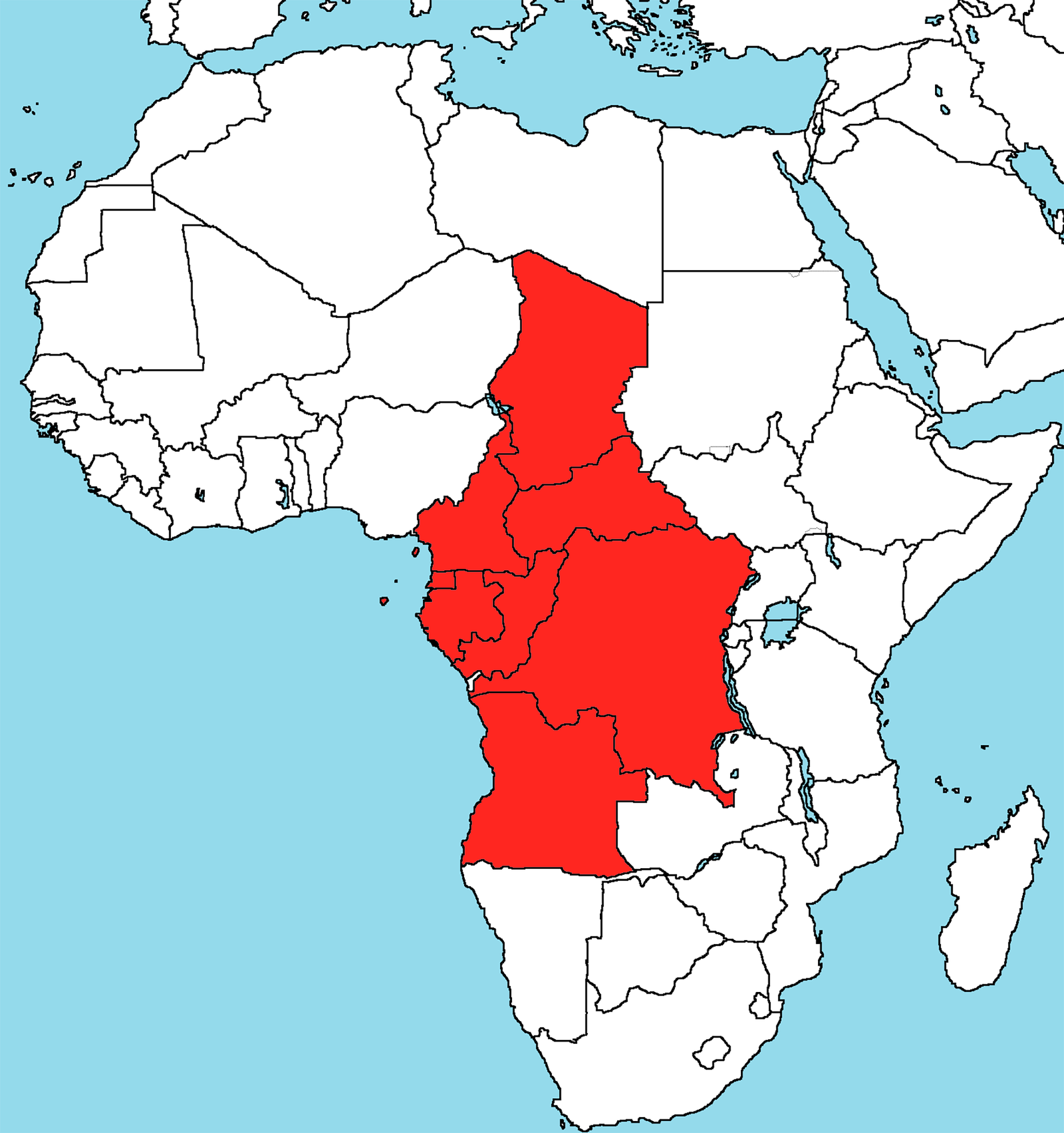 The map of Africa with the 9 countries of Central Africa shown.
Welcome to the summary page for FabulousFusionFood's Central Africa recipes. This page provides links to all the Central Africa recipes presented on this site, with 658 recipes in total.
These recipes, for the major part, originate in Central Africa. Otherwise they are fusion recipes with major Central African influences.
Central Africa (also known as Middle Africa) is the region of Africa that straddles the Equator and is drained largely by the Congo River system. The landscapes of Central Africa are most often wide plateaus, which are smooth in the central part and etched at the periphery. The interior basin of the Congo River is joined to the Atlantic Ocean by a narrow neck traversing ridges parallel to the coast. The basin contains some marshlands in the region where the Congo, Ubangi, Likouala, and Sangha rivers converge and where Lakes Mai-Ndombe and Tumba are found. Its major part, however, consists of drier surfaces (low plateaus or alluvial terraces). The Congo River basin has historically been ecologically significant to the populations of Central Africa, serving as an important supra-regional organization in Central Africa.
Archeological finds in Central Africa have been made which date back over 100,000 years. According to Zagato and Holl, there is evidence of iron smelting in the Central African Republic that may date back to 3000 to 2500 BCE. Extensive walled settlements have recently been found in Northeast Nigeria, approximately 60 km southwest of Lake Chad dating to the first millennium BCE.
Trade and improved agricultural techniques supported more sophisticated societies, leading to the early civilizations of West Africa: Sao, Kanem, Bornu, Shilluk, Baguirmi, and Wadai. Around 2500 BCE, Bantu migrants had reached the Great Lakes Region in Central Africa. Halfway through the first millennium BCE, the Bantu had also settled as far south as what is now Angola.
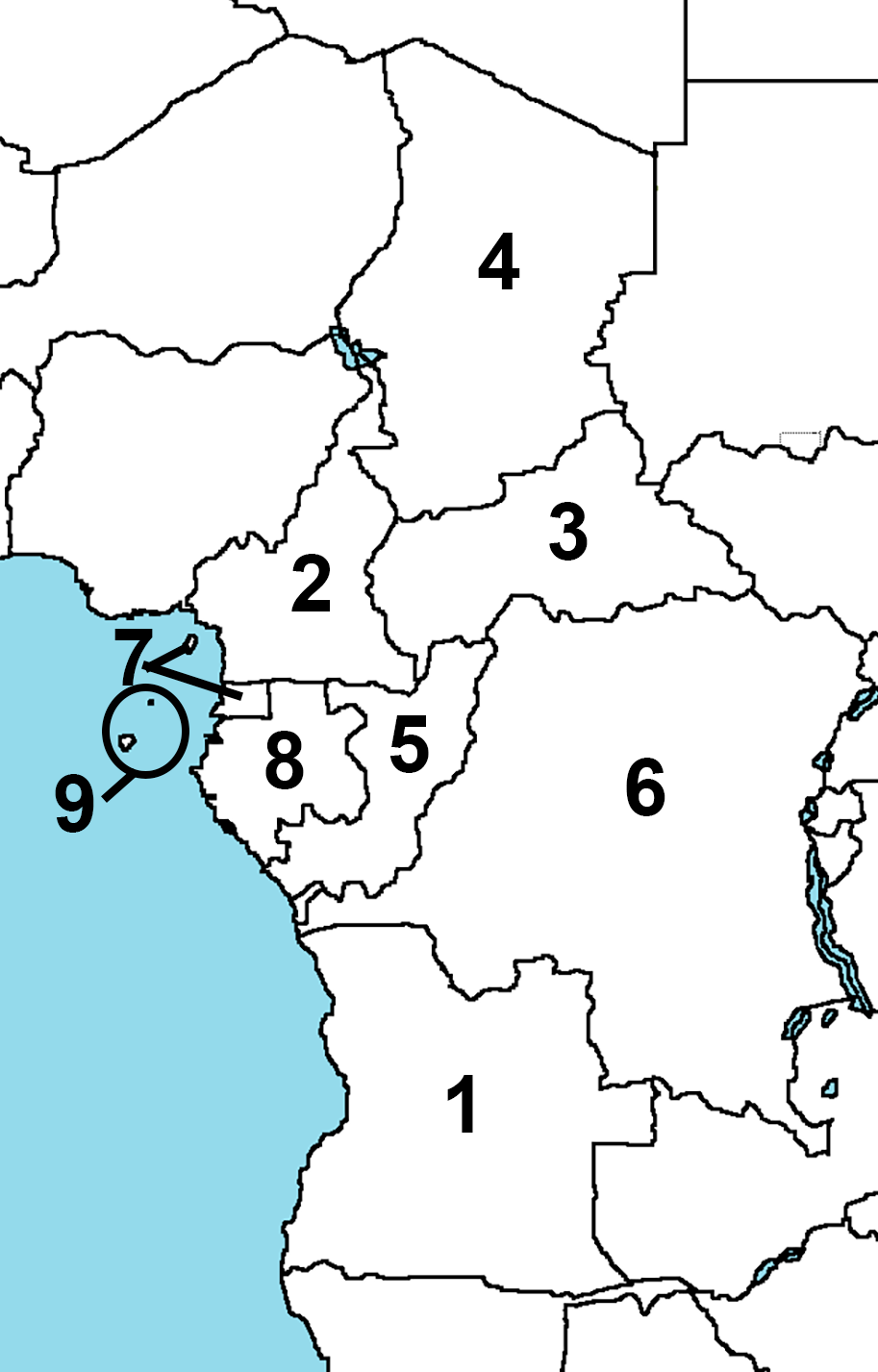 Map of Central Africa with the 9 nations numbered. The corresponding
countries are : 1: Angola; 2: Cameroon; 3: Central African
Republic; 4: Chad; 5: Republic of the Congo; 6: Democratic Republic
of the Congo; 7: Equatorial Guinea; 8: Gabon; 9: São Tomé and PríncipeFollowing the Bantu Migration, Central Africa is primarily inhabited by Native African or Bantu peoples and Bantu languages predominate. These include the Mongo, Kongo and Luba peoples. Central Africa also includes many Nilo-Saharan and Niger-Congo Ubangian communities: in north western Central Africa the Nilo-Saharan Kanuri predominate. Most of the Ubangian speakers in Africa (often grouped with Niger-Congo) are also found in Central Africa, such as the Gbaya, Banda and Zande, in northern Central Africa.
Africa is highly biodiverse; it is the continent with the largest number of megafauna species, as it was least affected by the extinction of the Pleistocene megafauna. However, Africa also is heavily affected by a wide range of environmental issues, including desertification, deforestation, water scarcity and pollution. These entrenched environmental concerns are expected to worsen as climate change impacts Africa. The UN Intergovernmental Panel on Climate Change has identified Africa as the continent most vulnerable to climate change.
This region has received culinary influence of the Swahilis (culture that evolved via the combination of Bantu, Yemeni, Omani and Indian cultures) during the trans-Saharan slave trade. Swahili culinary influences can be found in dishes such as mandazi, pilaf rice, kachumbari, sambusa, and kuku paka.
Central African cuisine has also been influenced by the Portuguese, by way of the Kongo and Ndongo Kingdoms. Salt fish was introduced following trade in the late 17th century, and the Kikongo term for salt fish, makayabu, comes from the term bacalhau.
The Portuguese culinary influence is especially prominent in Angola, Sao Tomé and Equatorial Guinea. Central Africa has also been influenced by the cuisine of the regions East, West and Southern Africa because of their close proximity, e.g. babuté or bobotie is shared with the south, nyama choma with the east and gombos with West Africa.
In Central Africa, a variety of crops are grown, including yams, cassava, bananas and plantains, sweet potatoes, and cocoyams. These crops have become staples in the diet of many people in Central Africa. Fufu-like starchy foods are usually made from fermented cassava roots, but they can also be made with plantain, corn maize and yam. Fufu is served buffet-style with grilled meat, fish, stews, greens and piment. A variety of local ingredients are used while preparing other dishes, like spinach stew cooked with tomato, peppers, chilies, onions, and peanut butter.[14] Eastern central Africa is also one of the few regions in Africa that uses potatoes as one of its main bases, since potatoes grow easily in the region.
Cassava plants are also consumed as cooked greens. Groundnut (peanut) stew is also prepared, containing chicken, okra, ginger, and other spices. Beef and chicken are favourite meat dishes, but game meat preparations containing crocodile, elephant, antelope and warthog are also served occasionally.
Central Africa is sub-divided into 9 countries according to the United Nations geoscheme for Africa. These countries are as follows:
These recipes, for the major part, originate in Central Africa. Otherwise they are fusion recipes with major Central African influences.
Central Africa (also known as Middle Africa) is the region of Africa that straddles the Equator and is drained largely by the Congo River system. The landscapes of Central Africa are most often wide plateaus, which are smooth in the central part and etched at the periphery. The interior basin of the Congo River is joined to the Atlantic Ocean by a narrow neck traversing ridges parallel to the coast. The basin contains some marshlands in the region where the Congo, Ubangi, Likouala, and Sangha rivers converge and where Lakes Mai-Ndombe and Tumba are found. Its major part, however, consists of drier surfaces (low plateaus or alluvial terraces). The Congo River basin has historically been ecologically significant to the populations of Central Africa, serving as an important supra-regional organization in Central Africa.
Archeological finds in Central Africa have been made which date back over 100,000 years. According to Zagato and Holl, there is evidence of iron smelting in the Central African Republic that may date back to 3000 to 2500 BCE. Extensive walled settlements have recently been found in Northeast Nigeria, approximately 60 km southwest of Lake Chad dating to the first millennium BCE.
Trade and improved agricultural techniques supported more sophisticated societies, leading to the early civilizations of West Africa: Sao, Kanem, Bornu, Shilluk, Baguirmi, and Wadai. Around 2500 BCE, Bantu migrants had reached the Great Lakes Region in Central Africa. Halfway through the first millennium BCE, the Bantu had also settled as far south as what is now Angola.
Map of Central Africa with the 9 nations numbered. The correspondingcountries are : 1: Angola; 2: Cameroon; 3: Central African
Republic; 4: Chad; 5: Republic of the Congo; 6: Democratic Republic
of the Congo; 7: Equatorial Guinea; 8: Gabon; 9: São Tomé and Príncipe
Africa is highly biodiverse; it is the continent with the largest number of megafauna species, as it was least affected by the extinction of the Pleistocene megafauna. However, Africa also is heavily affected by a wide range of environmental issues, including desertification, deforestation, water scarcity and pollution. These entrenched environmental concerns are expected to worsen as climate change impacts Africa. The UN Intergovernmental Panel on Climate Change has identified Africa as the continent most vulnerable to climate change.
Food and Cuisine
Central Africa expands from the Tibesti Mountains in the north to the vast rainforest basin of the Congo River, the highlands of Kivu and the savannah of Katanga.This region has received culinary influence of the Swahilis (culture that evolved via the combination of Bantu, Yemeni, Omani and Indian cultures) during the trans-Saharan slave trade. Swahili culinary influences can be found in dishes such as mandazi, pilaf rice, kachumbari, sambusa, and kuku paka.
Central African cuisine has also been influenced by the Portuguese, by way of the Kongo and Ndongo Kingdoms. Salt fish was introduced following trade in the late 17th century, and the Kikongo term for salt fish, makayabu, comes from the term bacalhau.
The Portuguese culinary influence is especially prominent in Angola, Sao Tomé and Equatorial Guinea. Central Africa has also been influenced by the cuisine of the regions East, West and Southern Africa because of their close proximity, e.g. babuté or bobotie is shared with the south, nyama choma with the east and gombos with West Africa.
In Central Africa, a variety of crops are grown, including yams, cassava, bananas and plantains, sweet potatoes, and cocoyams. These crops have become staples in the diet of many people in Central Africa. Fufu-like starchy foods are usually made from fermented cassava roots, but they can also be made with plantain, corn maize and yam. Fufu is served buffet-style with grilled meat, fish, stews, greens and piment. A variety of local ingredients are used while preparing other dishes, like spinach stew cooked with tomato, peppers, chilies, onions, and peanut butter.[14] Eastern central Africa is also one of the few regions in Africa that uses potatoes as one of its main bases, since potatoes grow easily in the region.
Cassava plants are also consumed as cooked greens. Groundnut (peanut) stew is also prepared, containing chicken, okra, ginger, and other spices. Beef and chicken are favourite meat dishes, but game meat preparations containing crocodile, elephant, antelope and warthog are also served occasionally.
Central Africa is sub-divided into 9 countries according to the United Nations geoscheme for Africa. These countries are as follows:
Central Africa
| Arms | Flag | Name of Territory | Capital | Name in Official Language(s) |
|---|---|---|---|---|
 |
 |
Angola | Luanda | Angola |
 |
 |
Cameroon | Yaoundé | Cameroun/Kamerun |
 |
 |
Central African Republic | Bangui | Ködörösêse tî Bêafrîka/République centrafricaine |
 |
 |
Chad | N'Djamena | تشاد (Tšād)/Tchad |
 |
 |
Republic of the Congo | Brazzaville | Congo/Kôngo/Kongó |
 |
 |
Democratic Republic of the Congo | Kinshasa | République démocratique du Congo |
 |
 |
Equatorial Guinea | Malabo | Guinea Ecuatorial/Guinée Équatoriale/Guiné Equatorial |
 |
 |
Gabon | Libreville | Gabon |
 |
 |
São Tomé and Príncipe | São Tomé | São Tomé e Príncipe |
The alphabetical list of all the African recipes on this site follows, (limited to 100 recipes per page). There are 658 recipes in total:
Page 1 of 7
| Abobora de Camarao (Prawn Abobora) Origin: Angola | Banana Peel Flour Origin: South Africa | Bread Cups Origin: South Africa |
| Achu and Ndza Nikka (Cameroonian Achu Yellow Soup) Origin: Cameroon | Banda (Smoked fish in Peanut Sauce) Origin: Chad | Brined and Braaied Christmas Turkey Origin: South Africa |
| Achu Spice Blend Origin: Cameroon | Bangaou Origin: Chad | Brochette de Poisson Tchadienne (Chadian Fish Kebabs) Origin: Chad |
| Açucarinhas (Coconut and Sugar Biscuits) Origin: Sao Tome | Barbecued Kibbeh Origin: African Fusion | Bzaar Origin: North Africa |
| African Chicken Wings Origin: African Fusion | Bean and Almond Salad Origin: South Africa | Caçarola de Frango com Cominho (Chicken Casserole with Cumin) Origin: Angola |
| African Crêpes Origin: Cameroon | Beef and Mushrooms in Peanut Sauce Origin: Central African Republic | Caakiri Origin: West Africa |
| African Fish Curry Powder Origin: West Africa | Beef and Potato Soup Origin: South Africa | Cabbage Bredie Origin: South Africa |
| African Hot Sauce Origin: sub-Saharan Africa | Beef Braised in Rooibos Tea with Sweet Potatoes Origin: South Africa | Cafréal de Cordeiro (Lamb Cafréal) Origin: Angola |
| African Stew Curry Powder Origin: West Africa | Beef Cameroon Origin: Cameroon | Cafréal de Poulet (Chicken Cafréal) Origin: Angola |
| African-style Barbecue Sauce Origin: African Fusion | Beignets de Bananes (Banana Fritters) Origin: Central African Republic | Cailles au Paprika (Quails in Paprika Sauce) Origin: Chad |
| Afrikaanse Yakhni Origin: South Africa | Beignets de Manioc (Cassava Fritters) Origin: Cameroon | Cailles Grillées au Piment et Gingembre (Grilled Quail with Chilli and Ginger) Origin: Congo |
| Akwadu (Baked Bananas with Lemon Juice and Coconut) Origin: Equatorial Guinea | Beignets Farcis (Stuffed Fritters) Origin: Cameroon | Calulu Origin: Sao Tome |
| Albóndigas de Sardinas (Sardine Meatballs) Origin: Equatorial Guinea | Benne-seed Wafers Origin: West Africa | Calulu Carne Seca (Dried Meat Calulu) Origin: Angola |
| Alloco de Cameroun (Cameroonian Alloco) Origin: Cameroon | Biltong Origin: Southern Africa | Calulu de Cabara (Goat Meat Calulu) Origin: Angola |
| Aloco Camerounais (Cameroonian Aloco) Origin: Cameroon | Biltong Pâté Origin: South Africa | Calulu de Peixe (Fish Calulu) Origin: Angola |
| Amarula No-bake Cheesecake Origin: South Africa | Biscoitos De Mel (Honey Biscuits) Origin: Angola | Camaro Grelhado com Molho Cru (Grilled Prawns with Raw Sauce) Origin: Angola |
| Angolan Prego no Pão (Angolan Prego Rolls) Origin: Angola | Bo-Kaap Kerrie (Cape Malay Curry) Origin: South Africa | Cameroon Fried Rice Origin: Cameroon |
| Angu de Banana (Banana Mash) Origin: Sao Tome | Bo-Kaap Kerrie Poeier (Cape Malay Curry Powder) Origin: South Africa | Cameroon Lamb Curry Origin: Cameroon |
| Apple and Pear Harvest Pie Origin: South Africa | Bobó Frito (Sao Tomean Chicken Croquettes) Origin: Sao Tome | Cameroon Spice Powder Origin: Cameroon |
| Apricot Blatjang Origin: South Africa | Bobófrito (Sao Tomean Fried Fish) Origin: Sao Tome | Cameroon-style Barbecue Chicken Origin: Cameroon |
| Arroz de Coco e Papaia (Rice with Coconut and Papaya) Origin: Angola | Bobófrito (Fried Bananas) Origin: Sao Tome | Cameroonian All-purpose Green Spice Marinade Origin: Cameroon |
| Arroz doce (Sao Tomean Rice Pudding) Origin: Sao Tome | Bobotie (Curried Meat Loaf) Origin: South Africa | Cameroonian Burning Fish Origin: Cameroon |
| Arroz Integral com Mantiega de Amendoim e Bananas (Brown Rice with Peanut Mantiega and Bananas) Origin: Angola | Bobotie Pancakes Origin: South Africa | Cameroonian Egusi Pudding Origin: Cameroon |
| Askoek Origin: South Africa | Boerwors Maalvleis Kerrie (Boerwors Minced Meat Curry) Origin: South Africa | Cameroonian Jellof Rice Origin: Cameroon |
| Atchar Origin: Southern Africa | Boeuf aux Chocolat Gabonnaise (Beef with Gabon Chocolate) Origin: Gabon | Cameroonian Jollof Rice Origin: Cameroon |
| Atok Ohwono (Dried Fish in Peanut Sauce) Origin: Equatorial Guinea | Boeuf aux Graines de Courge (Beef with Egusi Seeds) Origin: Cameroon | Canard au curry (Curried Duck) Origin: DR-Congo |
| Aubergine, Sweet Potato and Chickpea Balti Origin: South Africa | Boeuf et Feuilles de Manioc (Beef and Cassava Greens in Peanut Sauce) Origin: Gabon | Canja de Angola (Angolan Canja) Origin: Angola |
| Avena de Gari (Gari Porridge) Origin: Equatorial Guinea | Bolo de Ananás (Angolan Pineapple Cake) Origin: Angola | Canjica Origin: Sao Tome |
| Bâton de Manioc (Cassava Sticks) Origin: Central Africa | Boule de Petit Mil (Fonio Balls) Origin: Chad | Canjica Origin: Sao Tome |
| Bâton de Manioc Camerounaise (Cameroonian-style Cassava Sticks) Origin: Cameroon | Boulettes de Viande (Beef Meatballs) Origin: Cameroon | Cape Curry Powder Origin: South Africa |
| Bachalu à Gomes (Salt Cod with Potatoes) Origin: Angola | Braaied Balti Prawn Parcels with Spinach Rice Origin: South Africa | Cape Gooseberry Jam Origin: African Fusion |
| Baked Bananas Gabon Origin: Gabon | Braaied Coffee-spiced Steak Origin: South Africa | Cape Gooseberry Muffins Origin: South Africa |
| Baked Beans with Nigerian Seasonings Origin: African Fusion | Braaied Giant Wild Prawns with Peanuts and Coconut Origin: South Africa | |
| Banana Curry Chutney Origin: South Africa | Braaied Snoek Origin: South Africa |
Page 1 of 7