FabulousFusionFood's Sierra Leonean recipes Home Page
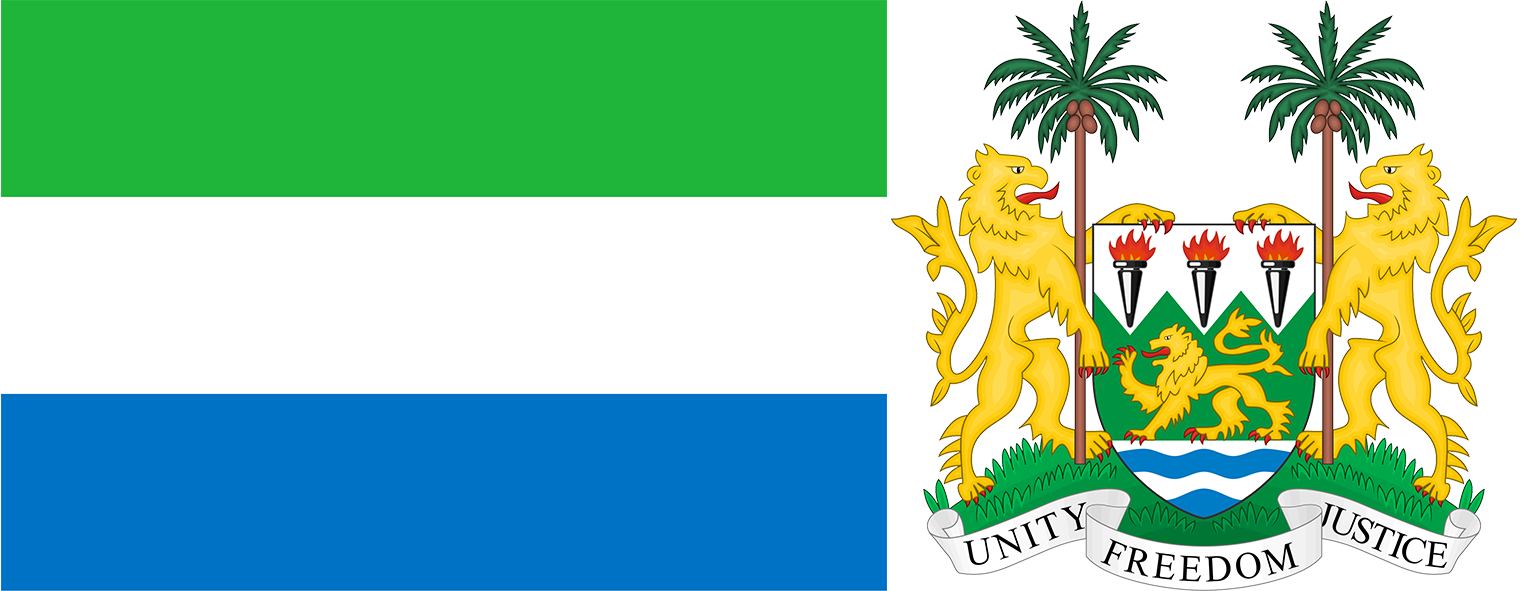 The flag of Sierra Leone (left) and the Coat of Arms (right).
Welcome to the summary page for FabulousFusionFood's Sierra Leone recipes, part of the African Continent. This page provides links to all the Sierra Leonean recipes presented on this site, with 44 recipes in total.
Sierra Leone; officially: the Republic of Sierra Leone whose name is aopted from the Portuguese name for the country: Serra Leoa (literally 'Lion Mountains') gained independence from Britain on April 27th, 1961. The capital Freetown was founded in 1787 by the Sierra Leone Company as a home for enslaved Africans who had fought for the British in the American Revolutionary War. In 1808, Freetown became a British Crown Colony, and in 1896, the interior of the country became a British Protectorate. From 1991 to 2002, Sierra Leone suffered greatly under the devastating effects of rebel activities, which were stopped by UN and British forces disarming 17,000 militia and rebels. Sierra Leone has been at peace since 2002. The population of Sierra Leone comprises about sixteen ethnic groups; each with its own language and costume, the two largest of these being the Mende, and Temne, each comprises 30% of the population.
Sierra Leone is a coastal country with numerous rivers. As such fish is an important part of the diet, as are native carbohydrate sources such as cassava, yams, plantains, bananas, red palm oil and peanuts. Citrus fruit are grown in plantations and are an important part of the diet. The staple of the Sierra Leonean meals is rice, which is mostly combined with light or thick soups, stews or various kinds of meat. A typical stew includes dried fish, meat, vegetables, chillies and greens. Locally produced cocoa is often used in the country's desserts and drinks.
Sierra Leone, officially officially the Republic of Sierra Leone (Ripɔblik fɔ Siera Liɔn in Krio), is a country on the southwest coast of West Africa. It is bordered to the southeast by Liberia and by Guinea to the north. Its land area is 71,740 km2. It has a tropical climate and environments ranging from savannahs to rainforests. As of the 2023 census, Sierra Leone has a population of 8,908,040. Freetown is both its capital and its largest city. The country is divided into five administrative regions, which are further subdivided into 16 districts.
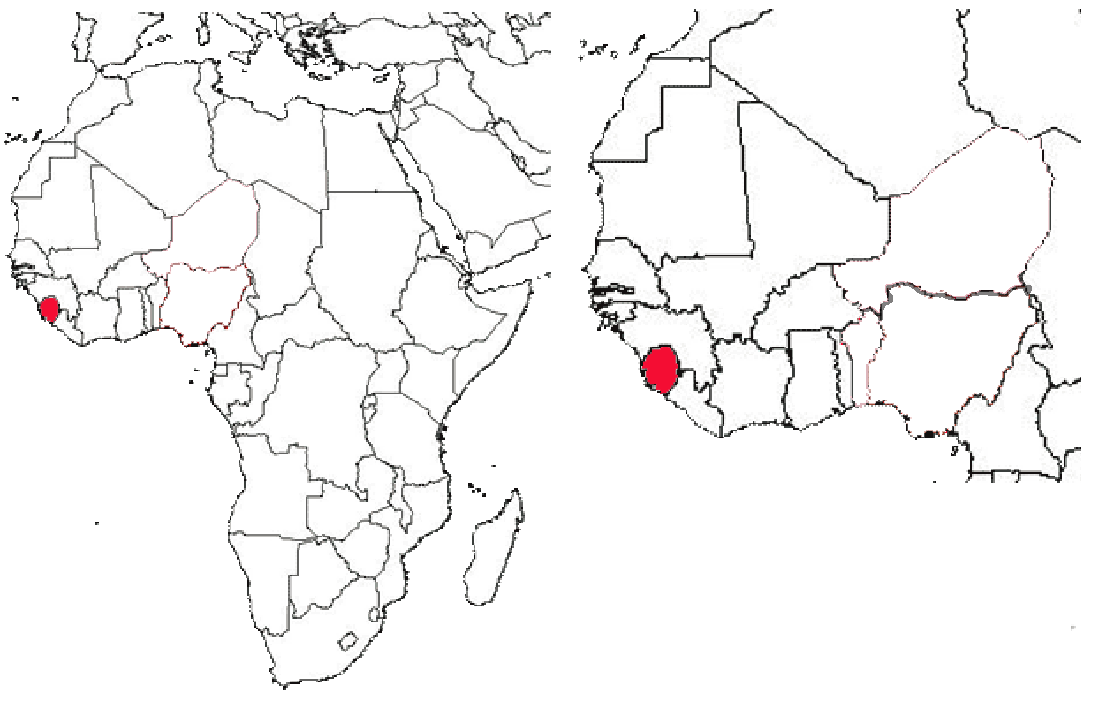 The image above shows Sierra Leone (red) in relation to Africa (left) and West Africa (right).Sierra Leone's current territorial configuration was established in two phases: in 1808, the coastal Sierra Leone Colony was founded as a place to resettle returning Africans after the abolition of the slave trade; then in 1896, the inland Protectorate was created as a result of the Berlin Conference of 1884–1885. This led to the formal recognition of the territory as the Sierra Leone Colony and Protectorate. Sierra Leone attained independence from the United Kingdom in 1961 under the leadership of Prime Minister Sir Milton Margai of the Sierra Leone People's Party (SLPP). In 1971, under Prime Minister Siaka Stevens of the All People's Congress (APC), the country adopted a new constitution, transforming Sierra Leone into a presidential republic, with Stevens as the inaugural president. In 1978, Stevens declared the APC to be the sole legally recognized party. In 1985, he was succeeded by Joseph Saidu Momoh. Momoh's enactment of a new constitution in 1991 reintroduced a multi-party system. That same year, a protracted civil war broke out between the government and the Revolutionary United Front (RUF) rebel group. The conflict, characterized by multiple coups d'état, persisted for 11 years. Intervention by ECOMOG forces and later by the United Kingdom resulted in the defeat of the RUF in 2002, ushering in a period of relative stability. The two major political parties that remain are the APC and the SLPP.
Sierra Leone is a presidential republic, with a unicameral parliament and a directly elected president. It is a secular state. Its constitution provides for the separation of state and religion and freedom of conscience (which encompasses both freedom of thought and religion). Muslims constitute three-quarters of the population, and there is a significant Christian minority. Notably, religious tolerance is very high: it is both a social norm and part of the nation's cultural identity.
Sierra Leone is a culturally diverse country, home to approximately 18 ethnic groups, with the Temne and Mende peoples being predominant. The Creole people, descendants of freed African-American, Afro-Caribbean slaves and liberated Africans, constitute about 1.2% of the population. English is the official language, while Krio is the lingua franca, spoken by 97% of the population. The country is rich with natural resources, notably diamonds, gold, bauxite and aluminium.
Sierra Leone derives its name from the Lion Mountains near its capital, Freetown. Originally named Serra Leoa (Portuguese for 'lioness mountains') by Portuguese explorer Pedro de Sintra in 1462, the modern name is derived from the Venetian spelling, which was introduced by Venetian explorer Alvise Cadamosto and subsequently adopted by other European mapmakers.
Palm oil and peanuts are also widely eaten, and while yams are found in Sierra Leone, they are not a mainstay of the diet as they are in other parts of West Africa. Other staples of the Sierra Leonean diet are bananas, cinnamon, coconut, ginger, okra, plantains and tamarind.
Stews are a fundamental part of Sierra Leone's cuisine, with cassava leaves having been called the country's national dish. Stew is often served with jollof rice, white rice or snacks such as plantain, akara, yam or cassava. Groundnut stew, also called peanut stew or peanut soup, often has chicken and vegetables included. This is often served to families as a large meal.
Sierra Leone; officially: the Republic of Sierra Leone whose name is aopted from the Portuguese name for the country: Serra Leoa (literally 'Lion Mountains') gained independence from Britain on April 27th, 1961. The capital Freetown was founded in 1787 by the Sierra Leone Company as a home for enslaved Africans who had fought for the British in the American Revolutionary War. In 1808, Freetown became a British Crown Colony, and in 1896, the interior of the country became a British Protectorate. From 1991 to 2002, Sierra Leone suffered greatly under the devastating effects of rebel activities, which were stopped by UN and British forces disarming 17,000 militia and rebels. Sierra Leone has been at peace since 2002. The population of Sierra Leone comprises about sixteen ethnic groups; each with its own language and costume, the two largest of these being the Mende, and Temne, each comprises 30% of the population.
Sierra Leone is a coastal country with numerous rivers. As such fish is an important part of the diet, as are native carbohydrate sources such as cassava, yams, plantains, bananas, red palm oil and peanuts. Citrus fruit are grown in plantations and are an important part of the diet. The staple of the Sierra Leonean meals is rice, which is mostly combined with light or thick soups, stews or various kinds of meat. A typical stew includes dried fish, meat, vegetables, chillies and greens. Locally produced cocoa is often used in the country's desserts and drinks.
Sierra Leone, officially officially the Republic of Sierra Leone (Ripɔblik fɔ Siera Liɔn in Krio), is a country on the southwest coast of West Africa. It is bordered to the southeast by Liberia and by Guinea to the north. Its land area is 71,740 km2. It has a tropical climate and environments ranging from savannahs to rainforests. As of the 2023 census, Sierra Leone has a population of 8,908,040. Freetown is both its capital and its largest city. The country is divided into five administrative regions, which are further subdivided into 16 districts.
The image above shows Sierra Leone (red) in relation to Africa (left) and West Africa (right).Sierra Leone is a presidential republic, with a unicameral parliament and a directly elected president. It is a secular state. Its constitution provides for the separation of state and religion and freedom of conscience (which encompasses both freedom of thought and religion). Muslims constitute three-quarters of the population, and there is a significant Christian minority. Notably, religious tolerance is very high: it is both a social norm and part of the nation's cultural identity.
Sierra Leone is a culturally diverse country, home to approximately 18 ethnic groups, with the Temne and Mende peoples being predominant. The Creole people, descendants of freed African-American, Afro-Caribbean slaves and liberated Africans, constitute about 1.2% of the population. English is the official language, while Krio is the lingua franca, spoken by 97% of the population. The country is rich with natural resources, notably diamonds, gold, bauxite and aluminium.
Sierra Leone derives its name from the Lion Mountains near its capital, Freetown. Originally named Serra Leoa (Portuguese for 'lioness mountains') by Portuguese explorer Pedro de Sintra in 1462, the modern name is derived from the Venetian spelling, which was introduced by Venetian explorer Alvise Cadamosto and subsequently adopted by other European mapmakers.
Sierra Leonean Cuisine
The most commonly eaten food in Sierra Leone is rice, which is typically served as part of every meal eaten, and is considered so ubiquitous that many Sierra Leoneans consider that a meal is not complete without it. Another popular staple food is cassava, which is pounded to make fufu; the leaves of the cassava are cooked into a green stewPalm oil and peanuts are also widely eaten, and while yams are found in Sierra Leone, they are not a mainstay of the diet as they are in other parts of West Africa. Other staples of the Sierra Leonean diet are bananas, cinnamon, coconut, ginger, okra, plantains and tamarind.
Stews are a fundamental part of Sierra Leone's cuisine, with cassava leaves having been called the country's national dish. Stew is often served with jollof rice, white rice or snacks such as plantain, akara, yam or cassava. Groundnut stew, also called peanut stew or peanut soup, often has chicken and vegetables included. This is often served to families as a large meal.
Sierra Leone's National Dishes:
Below are listed the dishes considered to be Sierra Leone's national foods along with links to the recipes for those dishes:| Cassava Leaf Stew Origin: Sierra Leone |
The alphabetical list of all Sierra Leonean recipes on this site follows, (limited to 100 recipes per page). There are 44 recipes in total:
Page 1 of 1
| Cassava Leaf Stew Origin: Sierra Leone | Kamuna Origin: Sierra Leone | Sierra Leonean Chicken and Sweet Potato Stew Origin: Sierra Leone |
| Banana Akara Origin: Sierra Leone | Kanyah Origin: Sierra Leone | Sierra Leonean Fish Balls Origin: Sierra Leone |
| Benne Cake (Sesame Seed Wafers) Origin: Sierra Leone | King Driver (Sierra Leonean Shortbread) Origin: Sierra Leone | Sierra Leonean Ginger Beer Origin: Sierra Leone |
| Binch Akara (Sierra Leonean Bean Fritters) Origin: Sierra Leone | Krain Krain (Jute Leaf Stew) Origin: Sierra Leone | Sierra Leonean Ginger Cake Origin: Sierra Leone |
| Bottom Belleh (Sierra Leonean Deep Fried Fish Pasties) Origin: Sierra Leone | Oleleh Origin: Sierra Leone | Sierra Leonean Pancakes Origin: Sierra Leone |
| Bulgur Wan Pot Origin: Sierra Leone | Pemahun Origin: Sierra Leone | Sierra Leonean Pork Fried Rice Origin: Sierra Leone |
| Cassava Bread Origin: Sierra Leone | Pepper Chicken Origin: Sierra Leone | Sierra Leonean Rice Bread Origin: Sierra Leone |
| Cassava Leaf Stew Origin: Sierra Leone | Plasas Origin: Sierra Leone | Sierra Leonean Sausage Fried Rice Origin: Sierra Leone |
| Cassava Life Origin: Sierra Leone | Plasas (Sierra Leonean Chicken Peanut Stew) Origin: Sierra Leone | Sierra Leonean Style Couscous Origin: Sierra Leone |
| Chicken Pepper Soup Origin: Sierra Leone | Rice and Sesame Seed Soup Origin: Sierra Leone | Sierra Leonean White Okra Draw Soup Origin: Sierra Leone |
| Cinnamon Spiced Jollof Rice Origin: Sierra Leone | Saffe (Mutton and Cassava Leaf Stew) Origin: Sierra Leone | Sierra Leonian Egusi Soup Origin: Sierra Leone |
| Fish-in-bata Origin: Sierra Leone | Salone-style Kibbeh Origin: Sierra Leone | Sierra Leonian Rice Bread Origin: Sierra Leone |
| Granat Cake (Sierra Leonean Peanut Brittle) Origin: Sierra Leone | Salone-style Scotch Eggs Origin: Sierra Leone | Yebeh (Yam and Fish in Red Palm Oil) Origin: Sierra Leone |
| Grannat Chop Origin: Sierra Leone | Sierra Leone Fish Cake Origin: Sierra Leone | Yebeh (White Yam Porridge) Origin: Sierra Leone |
| Hoontoo (Sierra Leonean Steamed Beef and Polenta Dumplings) Origin: Sierra Leone | Sierra Leone Rice Akara Origin: Sierra Leone |
Page 1 of 1