FabulousFusionFood's Turkmen Recipes Home Page
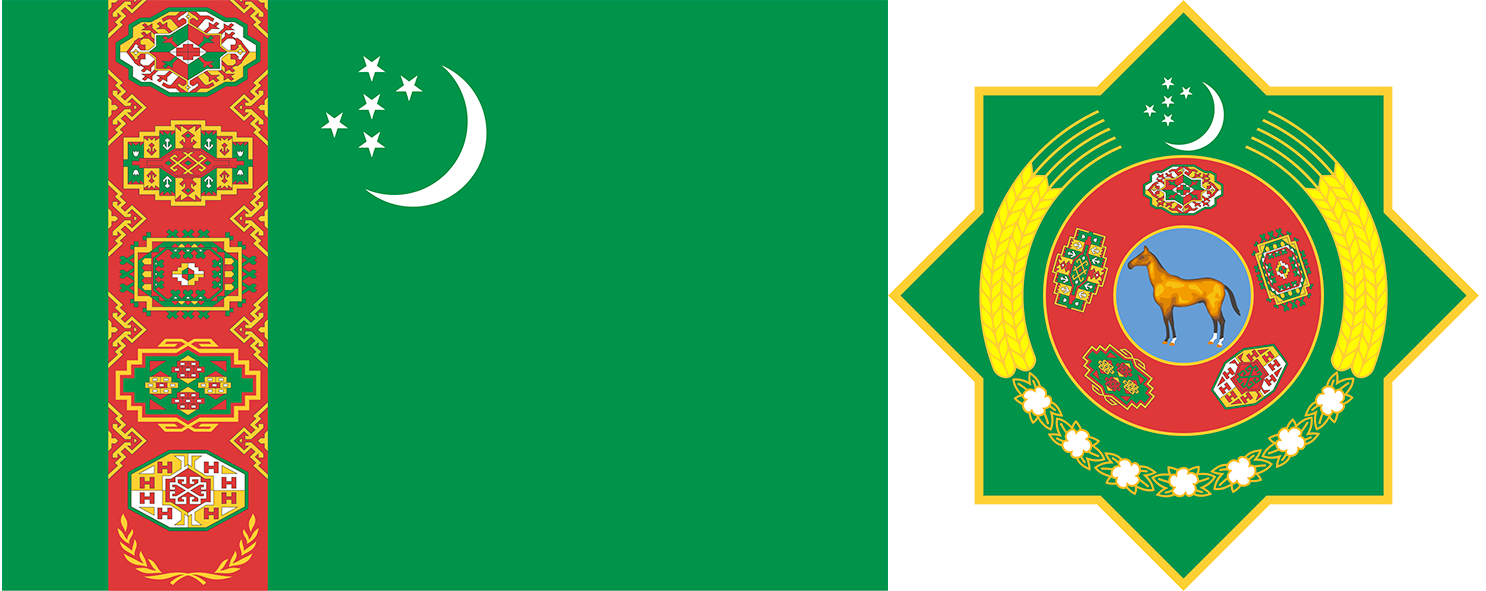 The flag of Turkmenistan (left) and the emblem of Turkmenistan (right).
Welcome to the summary page for FabulousFusionFood's Turkmen recipes, part of Asia. This page provides links to all the Turkmen recipes presented on this site, with 17 recipes in total.
This is a continuation of an entire series of pages that will, I hope, allow my visitors to better navigate this site. As well as displaying recipes by name, country and region of origin I am now planning a whole series of pages where recipes can be located by meal type and main ingredient. This page gives a listing of all the Turkmen recipes added to this site.
Turkmenistan (Türkmenistan in Turkmen) is a landlocked country in Central Asia, bordered by Kazakhstan to the northwest, Uzbekistan to the north, east and northeast, Afghanistan to the southeast, Iran to the south and southwest, and the Caspian Sea to the west. Ashgabat is the capital and largest city.
Turkmen cuisine, the cuisine of Turkmenistan, is similar to that of the rest of Central Asia. Turkmen seminomadic culture revolved around animal husbandry, especially sheep herding, and accordingly Turkmen cuisine is noted for its focus on meat, particularly mutton and lamb. Turkmen cuisine does not generally use spices or seasonings other than salt and black pepper, and is typically cooked with large amounts of widely available cottonseed oil.
Turkmenistan is a landlocked country in Central Asia, bordered by Kazakhstan to the northwest, Uzbekistan to the north, east and northeast, Afghanistan to the southeast, Iran to the south and southwest, and the Caspian Sea to the west. It is one of six independent Turkic states. Ashgabat is the capital and largest city. With over 7 million people, Turkmenistan is the 35th most-populous country in Asia and has the lowest population of the Central Asian republics while being one of the most sparsely populated nations on the Asian continent.
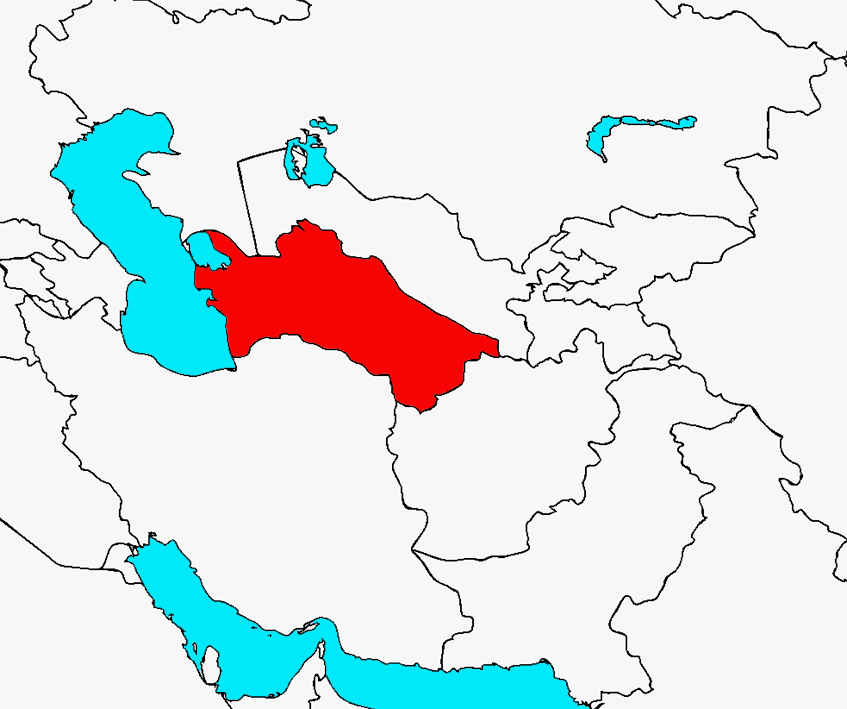 Location of Turkmenistan in Central Asia with the land mass of Turkmenistan
picked out in red.Turkmenistan has long served as a thoroughfare for several empires and cultures. Merv is one of the oldest oasis-cities in Central Asia, and was once among the biggest cities in the world. It was also one of the great cities of the Islamic world and an important stop on the Silk Road. Annexed by the Russian Empire in 1881, Turkmenistan figured prominently in the anti-Bolshevik movement in Central Asia. In 1925, Turkmenistan became a constituent republic of the Soviet Union, the Turkmen Soviet Socialist Republic (Turkmen SSR); it became independent after the dissolution of the Soviet Union in 1991.
The country is widely criticized for its poor human rights, including for its treatment of minorities, and its lack of press and religious freedoms. Since the independence declared from the Soviet Union in 1991, Turkmenistan has been ruled by repressive totalitarian regimes: that of President for Life Saparmurat Niyazov (also known as Türkmenbaşy or 'Head of the Turkmens') until his death in 2006; Gurbanguly Berdimuhamedow, who became president in 2007 after winning a non-democratic election (who had been the minister of health, vice-president, and then acting president previously); and his son Serdar, who won a subsequent 2022 presidential election described by international observers as neither free nor fair, and now shares power with his father.
Turkmenistan possesses the world's fifth largest reserves of natural gas. Most of the country is covered by the Karakum Desert. From 1993 to 2019, citizens received government-provided electricity, water and natural gas free of charge. Turkmenistan is an observer state in the Organisation of Turkic States, the Türksoy community and a member of the United Nations.
Etymology: The name of Turkmenistan (Turkmen: Türkmenistan) can be divided into two components: the ethnonym Türkmen and the Persian suffix -stan meaning 'place of' or 'country'. The name 'Turkmen' comes from Turk, plus the Sogdian suffix -men, meaning 'almost Turk', in reference to their status outside the Turkic dynastic mythological system
Muslim chroniclers like Ibn Kathir suggested that the etymology of Turkmenistan came from the words Türk and iman (Arabic: إيمان, lit. 'faith/belief'); this is in reference to a massive conversion to Islam of two hundred thousand households in the year 971.
Turkmenistan declared its independence from the Soviet Union after the independence referendum in 1991. As a result, the constitutional law was adopted on 27 October of that year and Article 1 established the new name of the state: Turkmenistan (Türkmenistan / Түркменистан). A common name for the Turkmen SSR was Turkmenia (Russian: Туркмения, romanization: Turkmeniya), used in some reports of the country's independence.
A description of Turkmen foods presented at an annual culinary festival included '...more than 15 kinds of soup, meat and fish delicacies, ruddy ichlekli (meat pies), appetizing gutaps with different fillings (pumpkin, spinach), crumbly pilaf, kelle bash ayak and chekdirme, whole roasted lamb, kakmach, hearty yarma, numerous salads, traditional pishme, as well as sweets...' At a formal ribbon-cutting ceremony for new housing, the offerings included '...all kinds of meat, poultry and fish dishes, cereals, vegetables and gourds, soups, culinary products made of dough, dairy products and drinks prepared according to ancient recipes. These include tamdyrlama, ichlekli, yarma, dograma, different kinds of pilaf, çorba, somsa, pishme, süzme, çal, agaran and much else'.
Shashlyk (Turkmen: çişlik), skewered chunks of mutton, lamb, chicken, or sometimes fish, grilled over charcoal and garnished with raw sliced onion and a special vinegar-based sauce, is served in restaurants and often sold in the street. Shashlyk from pork and beef was introduced during the Russian Imperial period, and is easily found in major cities. Kebabs of ground meat are commonly prepared from beef and occasionally camel. Kakmach (Turkmen: kakmaç) is preserved, dried meat prepared in individual portions or strips. Kakmach may be fried in fat or baked in a tandoor, but it is traditionally dried like jerky in the hot desert sun. Gowurma is deep-fat-fried meat in bite-sized chunks, typically cooked in a cauldron (Turkmen: gazan, a large hemispherical iron pot placed over an open fire). Gowurma is used in various soups and can be eaten hot or cold, or put up for later use.
A wide variety of filled pies and dumplings are available in restaurants and bazaars. Manty are steamed dumplings filled with ground meat, onions or pumpkin. Typical fried dishes include somsa, gutap (often filled with spinach), fitchi (fitçi), börek, and ichlekli (içlekli). These are popular with travelers and taxi drivers, as they can be eaten quickly on the run, and are often sold at roadside stands.
This is a continuation of an entire series of pages that will, I hope, allow my visitors to better navigate this site. As well as displaying recipes by name, country and region of origin I am now planning a whole series of pages where recipes can be located by meal type and main ingredient. This page gives a listing of all the Turkmen recipes added to this site.
Turkmenistan (Türkmenistan in Turkmen) is a landlocked country in Central Asia, bordered by Kazakhstan to the northwest, Uzbekistan to the north, east and northeast, Afghanistan to the southeast, Iran to the south and southwest, and the Caspian Sea to the west. Ashgabat is the capital and largest city.
Turkmen cuisine, the cuisine of Turkmenistan, is similar to that of the rest of Central Asia. Turkmen seminomadic culture revolved around animal husbandry, especially sheep herding, and accordingly Turkmen cuisine is noted for its focus on meat, particularly mutton and lamb. Turkmen cuisine does not generally use spices or seasonings other than salt and black pepper, and is typically cooked with large amounts of widely available cottonseed oil.
Turkmenistan is a landlocked country in Central Asia, bordered by Kazakhstan to the northwest, Uzbekistan to the north, east and northeast, Afghanistan to the southeast, Iran to the south and southwest, and the Caspian Sea to the west. It is one of six independent Turkic states. Ashgabat is the capital and largest city. With over 7 million people, Turkmenistan is the 35th most-populous country in Asia and has the lowest population of the Central Asian republics while being one of the most sparsely populated nations on the Asian continent.
Location of Turkmenistan in Central Asia with the land mass of Turkmenistanpicked out in red.
The country is widely criticized for its poor human rights, including for its treatment of minorities, and its lack of press and religious freedoms. Since the independence declared from the Soviet Union in 1991, Turkmenistan has been ruled by repressive totalitarian regimes: that of President for Life Saparmurat Niyazov (also known as Türkmenbaşy or 'Head of the Turkmens') until his death in 2006; Gurbanguly Berdimuhamedow, who became president in 2007 after winning a non-democratic election (who had been the minister of health, vice-president, and then acting president previously); and his son Serdar, who won a subsequent 2022 presidential election described by international observers as neither free nor fair, and now shares power with his father.
Turkmenistan possesses the world's fifth largest reserves of natural gas. Most of the country is covered by the Karakum Desert. From 1993 to 2019, citizens received government-provided electricity, water and natural gas free of charge. Turkmenistan is an observer state in the Organisation of Turkic States, the Türksoy community and a member of the United Nations.
Etymology: The name of Turkmenistan (Turkmen: Türkmenistan) can be divided into two components: the ethnonym Türkmen and the Persian suffix -stan meaning 'place of' or 'country'. The name 'Turkmen' comes from Turk, plus the Sogdian suffix -men, meaning 'almost Turk', in reference to their status outside the Turkic dynastic mythological system
Muslim chroniclers like Ibn Kathir suggested that the etymology of Turkmenistan came from the words Türk and iman (Arabic: إيمان, lit. 'faith/belief'); this is in reference to a massive conversion to Islam of two hundred thousand households in the year 971.
Turkmenistan declared its independence from the Soviet Union after the independence referendum in 1991. As a result, the constitutional law was adopted on 27 October of that year and Article 1 established the new name of the state: Turkmenistan (Türkmenistan / Түркменистан). A common name for the Turkmen SSR was Turkmenia (Russian: Туркмения, romanization: Turkmeniya), used in some reports of the country's independence.
Turkmen Cuisine:
Turkmen cuisine, the cuisine of Turkmenistan, is similar to that of the rest of Central Asia. Turkmen seminomadic culture revolved around animal husbandry, especially sheep herding, and accordingly Turkmen cuisine is noted for its focus on meat, particularly mutton and lamb. urkmen cuisine does not generally use spices or seasonings other than salt and black pepper, and is typically cooked with large amounts of widely available cottonseed oil.A description of Turkmen foods presented at an annual culinary festival included '...more than 15 kinds of soup, meat and fish delicacies, ruddy ichlekli (meat pies), appetizing gutaps with different fillings (pumpkin, spinach), crumbly pilaf, kelle bash ayak and chekdirme, whole roasted lamb, kakmach, hearty yarma, numerous salads, traditional pishme, as well as sweets...' At a formal ribbon-cutting ceremony for new housing, the offerings included '...all kinds of meat, poultry and fish dishes, cereals, vegetables and gourds, soups, culinary products made of dough, dairy products and drinks prepared according to ancient recipes. These include tamdyrlama, ichlekli, yarma, dograma, different kinds of pilaf, çorba, somsa, pishme, süzme, çal, agaran and much else'.
Shashlyk (Turkmen: çişlik), skewered chunks of mutton, lamb, chicken, or sometimes fish, grilled over charcoal and garnished with raw sliced onion and a special vinegar-based sauce, is served in restaurants and often sold in the street. Shashlyk from pork and beef was introduced during the Russian Imperial period, and is easily found in major cities. Kebabs of ground meat are commonly prepared from beef and occasionally camel. Kakmach (Turkmen: kakmaç) is preserved, dried meat prepared in individual portions or strips. Kakmach may be fried in fat or baked in a tandoor, but it is traditionally dried like jerky in the hot desert sun. Gowurma is deep-fat-fried meat in bite-sized chunks, typically cooked in a cauldron (Turkmen: gazan, a large hemispherical iron pot placed over an open fire). Gowurma is used in various soups and can be eaten hot or cold, or put up for later use.
A wide variety of filled pies and dumplings are available in restaurants and bazaars. Manty are steamed dumplings filled with ground meat, onions or pumpkin. Typical fried dishes include somsa, gutap (often filled with spinach), fitchi (fitçi), börek, and ichlekli (içlekli). These are popular with travelers and taxi drivers, as they can be eaten quickly on the run, and are often sold at roadside stands.
Turkmenistan's National Dishes:
Below are listed the dishes considered to be Turkmenistan's national foods along with links to the recipes for those dishes:| Beshbarmak Origin: Turkmenistan | Dograma II Origin: Turkmenistan |
| Dograma (Meat and Pasta Dish) Origin: Turkmenistan | Turkmen Kebap Origin: Turkmenistan |
The alphabetical list of all the Turkmen recipes on this site follows, (limited to 100 recipes per page). There are 17 recipes in total:
Page 1 of 1
| Beshbarmak Origin: Turkmenistan | Çişlik (Shashlyk) Origin: Turkmenistan | Lagman Origin: Turkmenistan |
| Dograma (Meat and Pasta Dish) Origin: Turkmenistan | Çörek (Turkmen Bread) Origin: Turkmenistan | Lagman Spice Blend Origin: Turkmenistan |
| Dograma II Origin: Turkmenistan | Dograma (Meat and Pasta Dish) Origin: Turkmenistan | Mantı (Turkmen lamb dumplings) Origin: Turkmenistan |
| Turkmen Kebap Origin: Turkmenistan | Dograma II Origin: Turkmenistan | Pishme (Turkmen Dough Fritters) Origin: Turkmenistan |
| Ayran (Turkmen Buttermilk) Origin: Turkmenistan | Hazelnut Crescents Origin: Turkmenistan | Pişme (Turkmen Fried Bread Snack) Origin: Turkmenistan |
| Beshbarmak Origin: Turkmenistan | Kädili Gutap (Butternut Squash Pastries) Origin: Turkmenistan |
Page 1 of 1