FabulousFusionFood's Kyrgyz Recipes Home Page
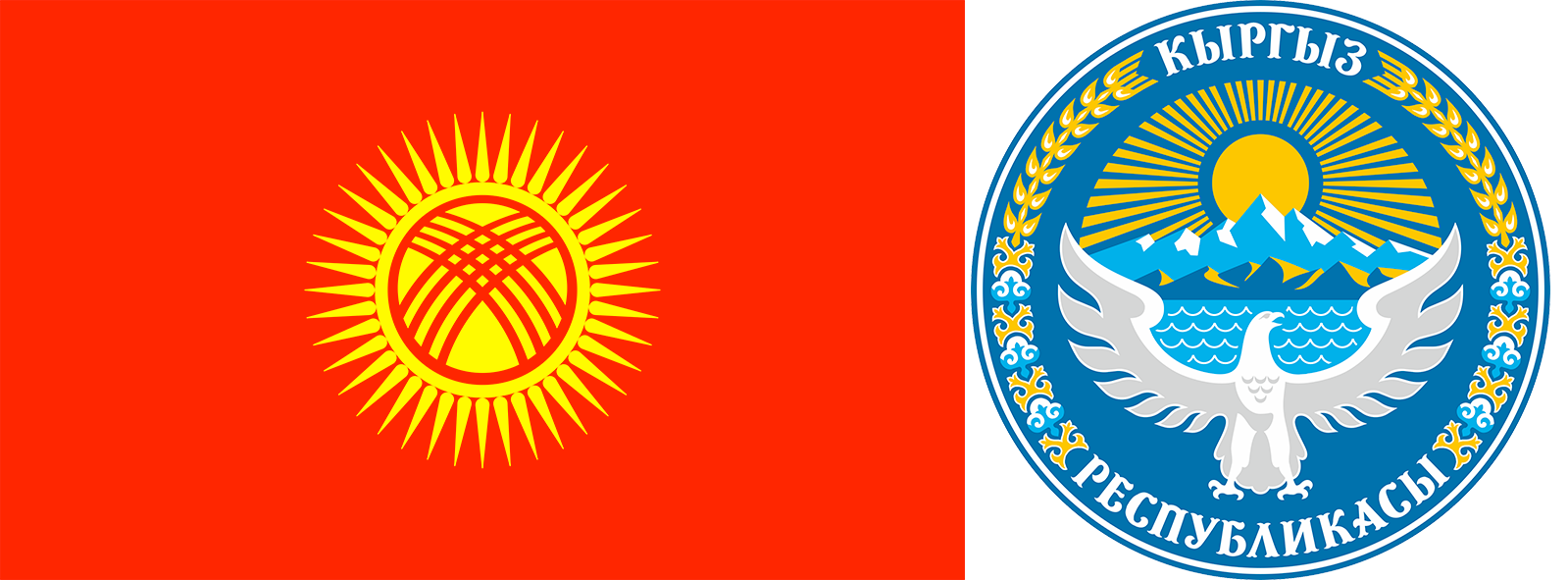 The flag of Kyrgyzstan (left) and the emblem of Kyrgyzstan (right).
Welcome to the summary page for FabulousFusionFood's Kyrgyz recipes, part Asia. This page provides links to all the Kyrgyz recipes presented on this site, with 16 recipes in total.
This is a continuation of an entire series of pages that will, I hope, allow my visitors to better navigate this site. As well as displaying recipes by name, country and region of origin I am now planning a whole series of pages where recipes can be located by meal type and main ingredient. This page gives a listing of all the Kyrgyz recipes added to this site.
Kyrgyzstan (Кыргыз Республикасы in Kyrgyz and Кыргызская Республика in Russian) is a landlocked country in Central Asia, lying in the Tian Shan and Pamir mountain ranges. It is bordered by Kazakhstan to the north, Uzbekistan to the west, Tajikistan to the south, and China to the east and southeast. Bishkek is the capital and largest city.
Kyrgyz cuisine is the cuisine of the Kyrgyz, who comprise a majority of the population of Kyrgyzstan. The cuisine is similar in many aspects to that of their neighbours. Traditional Kyrgyz food revolves around mutton, beef and horse meat, as well as various dairy products. The preparation techniques and major ingredients have been strongly influenced by the nation's historically nomadic way of life. Thus, many cooking techniques are conducive to the long-term preservation of food. Mutton and beef are the favourite meats, although in modern times many Kyrgyz are unable to afford them regularly.
Kyrgyzstan officially the Kyrgyz Republic, is a landlocked country in Central Asia, lying in the Tian Shan and Pamir mountain ranges. It is bordered by Kazakhstan to the north, Uzbekistan to the west, Tajikistan to the south, and China to the east and southeast. Bishkek is the capital and largest city. Ethnic Kyrgyz make up the majority of the country's over 7 million people, followed by significant minorities of Uzbeks and Russians.
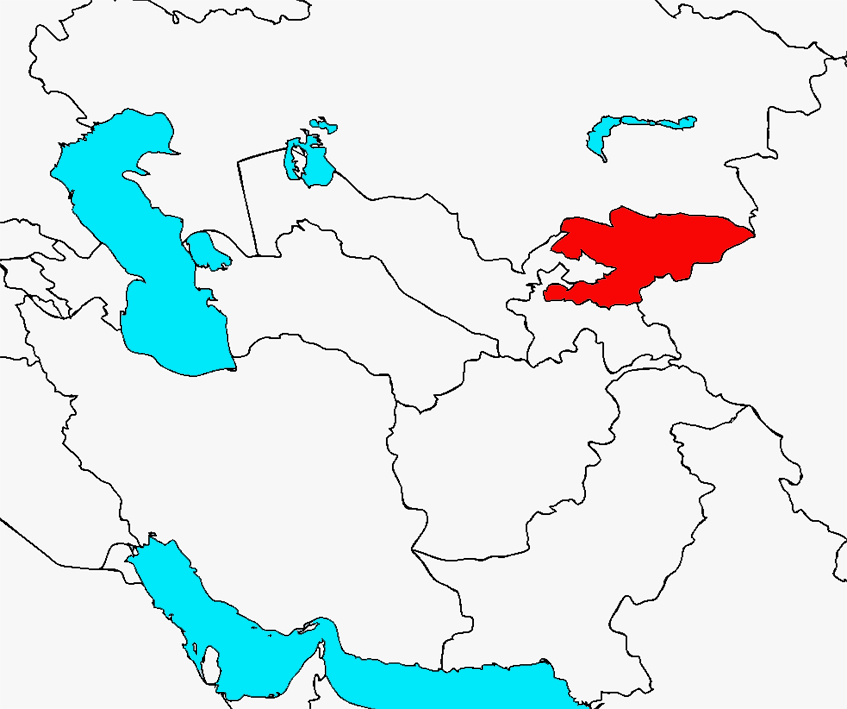 Location of Kyrgyzstan in Central Asia with the land mass of Kyrgyzstan
picked out in red.Kyrgyzstan's history spans a variety of cultures and empires. Although geographically isolated by its highly mountainous terrain, Kyrgyzstan has been at the crossroads of several great civilizations as part of the Silk Road along with other commercial routes. Inhabited by a succession of tribes and clans, Kyrgyzstan has periodically fallen under larger domination, for example the Turkic nomads, who trace their ancestry to many Turkic states. It was first established as the Yenisei Kyrgyz Khaganate. Later, in the 13th century, Kyrgyzstan was conquered by the Mongol Empire and under several Mongol dynasties; it regained independence, but was later invaded by the Dzungar Khanate. After the fall of Dzhungars, Kyrgyz and Kipchaks were an integral part of Kokand Khanate.
In 1876, Kyrgyzstan became part of the Russian Empire, and in 1936, the Kirghiz Soviet Socialist Republic was formed to become a constituent republic of the Soviet Union. Following Mikhail Gorbachev's democratic reforms in the USSR, in 1990 pro-independence candidate Askar Akayev was elected president. On 31 August 1991, Kyrgyzstan declared independence from the USSR and a democratic government was established. Kyrgyzstan attained sovereignty as a nation state after the breakup of the Soviet Union in 1991.
After independence, Kyrgyzstan was officially a unitary presidential republic. Following the Tulip Revolution it became a unitary parliamentary republic; however, it gradually developed an executive president and was governed as a semi-presidential republic before reverting to a presidential system in 2021. Throughout its existence, the country has continued to endure ethnic conflicts, revolts, economic troubles, transitional governments and political conflict.
Etymology: There are many theories about the origin of the word Kyrgyz. One proposed etymology is that it means 'forty tribes', which may refer to the forty clans of Manas, a legendary hero who united forty regional clans. The Persian suffix -Stan means 'place of'.
The 40-ray sun on the flag of Kyrgyzstan is a reference to those same forty tribes and the graphical element in the sun's center depicts the wooden crown, called tunduk, of a yurt—a portable dwelling traditionally used by nomads in the steppes of Central Asia.
The country's official name is Kyrgyz Republic, used in international arenas and foreign relations. In the English-speaking world, the spelling Kyrgyzstan is commonly used, while its former name Kirghizia is rarely used.
Kyrgyzstan is home to many different nationalities and their various cuisines. In larger cities, such as Bishkek, Osh, Jalal-Abad, and Karakol, various national and international cuisines can be found. Non-Kyrgyz cuisines that are particularly common and popular in Kyrgyzstan include Uyghur, Dungan, Uzbek, and Turkish cuisines, representing the largest minorities in the country.
The majority of Kazakh cuisine is tört tülik mal (төрт түлiк мал) – four kinds of cattle (i.e. four kinds of meat): horses, camels, cows, and sheep. Horse and camel meat are the two main types of festive meats, with horse being the main and camel being not as common for festivities (as camels in Kazakhstan are not as common as horses). Sheep and cow meat are more common meats and are eaten more in everyday life.
Meat in various forms has always been an essential part of Kyrgyz cuisine. Among the most popular meat dishes are horse-meat sausages (qazı or chuchuk), roasted sheep's liver, beshbarmak (a dish containing boiled and shredded meat with thin noodles), and various other delicacies made from horse meat.
Common types of bread (Kyrgyz: нан [nɑn]) available in Kyrgyzstan include Central Asian flatbread (nan), and thick, sturdy Turkish breads. Central Asian flat bread is cooked over coals in tandoori (Kyrgyz: тандыр [tɑndɯr]) ovens, and is round and relatively flat. More traditional bread products include qattama and boorsoq, two types of fried bread.
This is a continuation of an entire series of pages that will, I hope, allow my visitors to better navigate this site. As well as displaying recipes by name, country and region of origin I am now planning a whole series of pages where recipes can be located by meal type and main ingredient. This page gives a listing of all the Kyrgyz recipes added to this site.
Kyrgyzstan (Кыргыз Республикасы in Kyrgyz and Кыргызская Республика in Russian) is a landlocked country in Central Asia, lying in the Tian Shan and Pamir mountain ranges. It is bordered by Kazakhstan to the north, Uzbekistan to the west, Tajikistan to the south, and China to the east and southeast. Bishkek is the capital and largest city.
Kyrgyz cuisine is the cuisine of the Kyrgyz, who comprise a majority of the population of Kyrgyzstan. The cuisine is similar in many aspects to that of their neighbours. Traditional Kyrgyz food revolves around mutton, beef and horse meat, as well as various dairy products. The preparation techniques and major ingredients have been strongly influenced by the nation's historically nomadic way of life. Thus, many cooking techniques are conducive to the long-term preservation of food. Mutton and beef are the favourite meats, although in modern times many Kyrgyz are unable to afford them regularly.
Kyrgyzstan officially the Kyrgyz Republic, is a landlocked country in Central Asia, lying in the Tian Shan and Pamir mountain ranges. It is bordered by Kazakhstan to the north, Uzbekistan to the west, Tajikistan to the south, and China to the east and southeast. Bishkek is the capital and largest city. Ethnic Kyrgyz make up the majority of the country's over 7 million people, followed by significant minorities of Uzbeks and Russians.
Location of Kyrgyzstan in Central Asia with the land mass of Kyrgyzstanpicked out in red.
In 1876, Kyrgyzstan became part of the Russian Empire, and in 1936, the Kirghiz Soviet Socialist Republic was formed to become a constituent republic of the Soviet Union. Following Mikhail Gorbachev's democratic reforms in the USSR, in 1990 pro-independence candidate Askar Akayev was elected president. On 31 August 1991, Kyrgyzstan declared independence from the USSR and a democratic government was established. Kyrgyzstan attained sovereignty as a nation state after the breakup of the Soviet Union in 1991.
After independence, Kyrgyzstan was officially a unitary presidential republic. Following the Tulip Revolution it became a unitary parliamentary republic; however, it gradually developed an executive president and was governed as a semi-presidential republic before reverting to a presidential system in 2021. Throughout its existence, the country has continued to endure ethnic conflicts, revolts, economic troubles, transitional governments and political conflict.
Etymology: There are many theories about the origin of the word Kyrgyz. One proposed etymology is that it means 'forty tribes', which may refer to the forty clans of Manas, a legendary hero who united forty regional clans. The Persian suffix -Stan means 'place of'.
The 40-ray sun on the flag of Kyrgyzstan is a reference to those same forty tribes and the graphical element in the sun's center depicts the wooden crown, called tunduk, of a yurt—a portable dwelling traditionally used by nomads in the steppes of Central Asia.
The country's official name is Kyrgyz Republic, used in international arenas and foreign relations. In the English-speaking world, the spelling Kyrgyzstan is commonly used, while its former name Kirghizia is rarely used.
Kyrgyz Cuisine:
Traditional Kyrgyz food revolves around mutton, beef and horse meat, as well as various dairy products. The preparation techniques and major ingredients have been strongly influenced by the nation's historically nomadic way of life. Thus, many cooking techniques are conducive to the long-term preservation of food. Mutton and beef are the favorite meats, although in modern times many Kyrgyz are unable to afford them regularly.Kyrgyzstan is home to many different nationalities and their various cuisines. In larger cities, such as Bishkek, Osh, Jalal-Abad, and Karakol, various national and international cuisines can be found. Non-Kyrgyz cuisines that are particularly common and popular in Kyrgyzstan include Uyghur, Dungan, Uzbek, and Turkish cuisines, representing the largest minorities in the country.
The majority of Kazakh cuisine is tört tülik mal (төрт түлiк мал) – four kinds of cattle (i.e. four kinds of meat): horses, camels, cows, and sheep. Horse and camel meat are the two main types of festive meats, with horse being the main and camel being not as common for festivities (as camels in Kazakhstan are not as common as horses). Sheep and cow meat are more common meats and are eaten more in everyday life.
Meat in various forms has always been an essential part of Kyrgyz cuisine. Among the most popular meat dishes are horse-meat sausages (qazı or chuchuk), roasted sheep's liver, beshbarmak (a dish containing boiled and shredded meat with thin noodles), and various other delicacies made from horse meat.
Common types of bread (Kyrgyz: нан [nɑn]) available in Kyrgyzstan include Central Asian flatbread (nan), and thick, sturdy Turkish breads. Central Asian flat bread is cooked over coals in tandoori (Kyrgyz: тандыр [tɑndɯr]) ovens, and is round and relatively flat. More traditional bread products include qattama and boorsoq, two types of fried bread.
Kyrgyzstan's National Dishes:
Below are listed the dishes considered to be Kyrgyzstan's national foods along with links to the recipes for those dishes:| Beshbarmak (Meat and Pasta Dish) Origin: Kyrgyzstan | Kuurdak (Stewed Meat, Onions and Potatoes) Origin: Kyrgyzstan |
The alphabetical list of all the Kyrgyz recipes on this site follows, (limited to 100 recipes per page). There are 16 recipes in total:
Page 1 of 1
| Beshbarmak (Meat and Pasta Dish) Origin: Kyrgyzstan | Kurut Origin: Kyrgyzstan | Lagman Origin: Kyrgyzstan |
| Kuurdak (Stewed Meat, Onions and Potatoes) Origin: Kyrgyzstan | Kuurdak (Stewed Meat, Onions and Potatoes) Origin: Kyrgyzstan | Lagman Spice Blend Origin: Kyrgyzstan |
| Ashlyamfu (Noodles, Stew and Omelette) Origin: Kyrgyzstan | Kyrgyz Plov Origin: Kyrgyzstan | Laza Hot Sauce Origin: Kyrgyzstan |
| Beshbarmak (Meat and Pasta Dish) Origin: Kyrgyzstan | Kyrgyz Roast Chicken Spice Blend Origin: Kyrgyzstan | Manti (Steamed Kyrgyz Dumplings) Origin: Kyrgyzstan |
| Chmeli-Suneli Origin: Kyrgyzstan | Kyrgyz Shashlik Origin: Kyrgyzstan | Pelmeni (Kyrgyz Mutton Dumplings) Origin: Kyrgyzstan |
| Forei (Trout) Origin: Kyrgyzstan |
Page 1 of 1