FabulousFusionFood's Iraqi Recipes Home Page
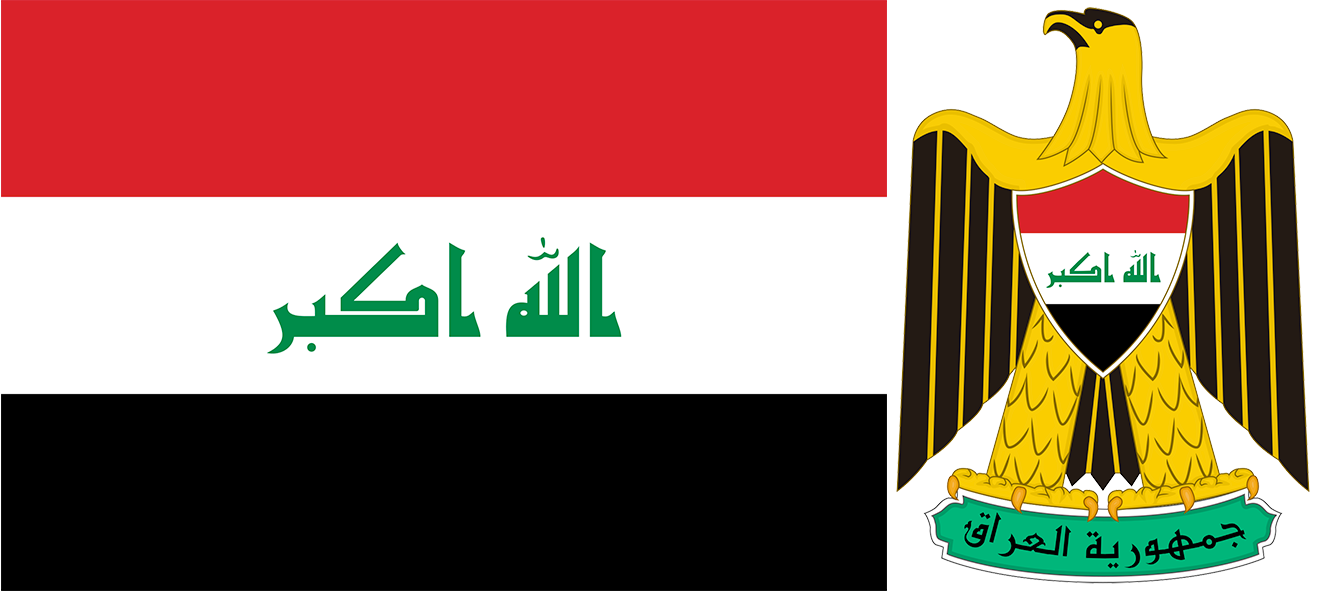 The flag of Iraq (left) and the emblem of Iraq (right).
Welcome to the summary page for FabulousFusionFood's Iraqi recipes, part Asia. This page provides links to all the Iraqi recipes presented on this site, with 17 recipes in total.
This is a continuation of an entire series of pages that will, I hope, allow my visitors to better navigate this site. As well as displaying recipes by name, country and region of origin I am now planning a whole series of pages where recipes can be located by meal type and main ingredient. This page gives a listing of all the Iraqi recipes added to this site. Baku is the capital and largest city.
Iraq (جُمْهُورِيَّة ٱلْعِرَاق (Jumhūriyyat al-ʿIrāq in Arabic), کۆماری عێراق (Komarî Êraq in Kurdish)), is a country in West Asia. It is bordered by Saudi Arabia to the south, Turkey to the north, Iran to the east, the Persian Gulf and Kuwait to the southeast, Jordan to the southwest, and Syria to the west. Baghdad, home to over 8 million people, is the capital city and the largest in the country.
Iraqi cuisine can be traced back some 10,000 years – to the Sumerians, Akkadians, Babylonians, Assyrians and Ancient Persians. Tablets found in ancient ruins in Iraq show recipes prepared in the temples during religious festivals – the first cookbooks in the world. Ancient Iraq, or Mesopotamia, was home to many sophisticated and highly advanced civilisations, in all fields of knowledge – including the culinary arts. However, it was in the medieval era when Baghdad was the capital of the Abbasid Caliphate that the Iraqi kitchen reached its zenith. Today the cuisine of Iraq reflects this rich inheritance as well as strong influences from the culinary traditions of neighbouring Turkey, Iran and the Greater Syria area.
Iraq officially the Republic of Iraq, is a country in West Asia. It is bordered by Saudi Arabia to the south, Turkey to the north, Iran to the east, the Persian Gulf and Kuwait to the southeast, Jordan to the southwest, and Syria to the west. The country covers an area of 438,317 square kilometres (169,235 sq mi) and has a population of over 46 million, making it the 58th largest country by area and the 31st most populous in the world. Baghdad, home to over 8 million people, is the capital city and the largest in the country.
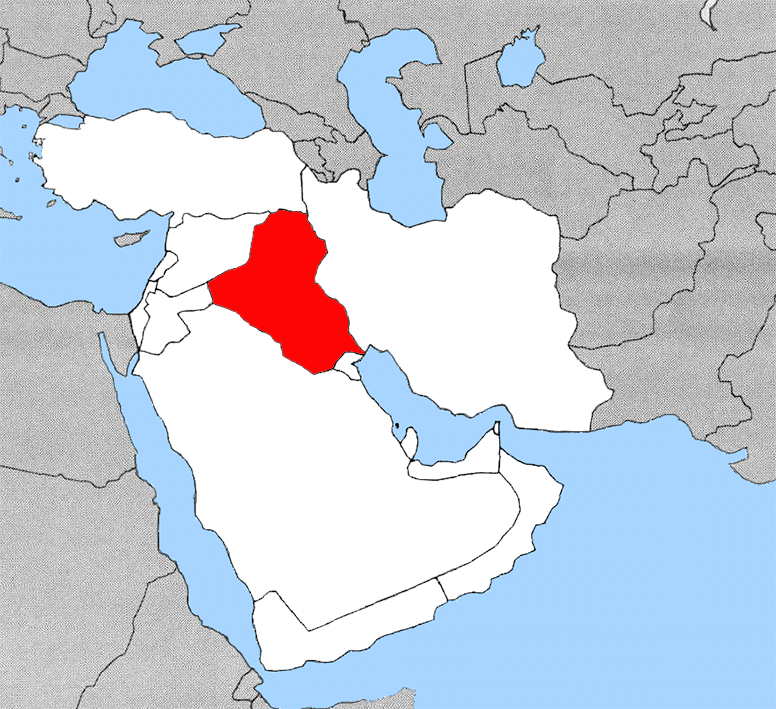 Location of Iraq in West Asia with the land mass of Iraq
picked out in red.Starting in the 6th millennium BC, the fertile plains between Iraq's Tigris and Euphrates rivers, referred to as Mesopotamia, fostered the rise of early cities, civilisations, and empires including Sumer, Akkad, and Assyria. Known as the cradle of civilisation, Mesopotamia saw the invention of writing systems, mathematics, navigation, timekeeping, a calendar, astrology, the wheel, the sailboat, and a law code. After the Muslim conquest of Mesopotamia, Baghdad became the capital of the Abbasid Caliphate and a global cultural and intellectual hub during the Islamic Golden Age, home to institutions such as the House of Wisdom. Following the city's destruction by the Mongols in 1258, the region faced a prolonged decline due to plagues and successive empires. Additionally, Iraq holds religious significance in Christianity, Judaism, Yazidism, and Mandaeism.
Since independence in 1932, Iraq has experienced spells of significant economic and military growth alongside periods of instability and conflict. It was part of the Ottoman Empire until the end of World War I. Mandatory Iraq was then established by the British in 1921. It transitioned into an independent kingdom in 1932. Following a coup in 1958, Iraq became a republic, first led by Abdul Karim Qasim, followed by Abdul Salam Arif and Abdul Rahman Arif. The Ba'ath Party took power in 1968, establishing a one-party state under Ahmed Hassan al-Bakr and later Saddam Hussein, who presided over war against Iran from 1980 to 1988 and then invaded Kuwait in 1990. In 2003, a U.S.-led coalition forces invaded and occupied Iraq, overthrowing Saddam and triggering an insurgency and sectarian violence. The conflict, known as the Iraq War, ended in 2011. From 2013 to 2017, Iraq faced another war with the rise and defeat of the Islamic State. Today post-war conflict continues at a lower scale, hampering stability alongside the rising influence of Iran.
A federal parliamentary republic, Iraq is considered an emerging middle power. It is home to a diverse population, geography and wildlife. Most Iraqis are Muslim, while significant minorities include Christians, Mandaeans, Yazidis, Yarsanis and Jews. Iraqis are ethnically diverse; mostly Arabs, as well as Kurds, Turkmen, Yazidis, Assyrians, Armenians, Domcs, and Shabakis. Arabic and Kurdish are the official languages of Iraq, while Suret, Turkish and Mandaic are spoken regionally. Iraq, home to one of the largest oil reserves in the world, has a significant oil and gas industry. It is also popular for its agriculture and tourism. At present, Iraq is rebuilding with foreign support.
Etymology: There are several suggested origins for the name. One dates to the Sumerian city of Uruk and is thus ultimately of Sumerian origin. Another possible etymology for the name is from the Middle Persian word erāg, meaning 'lowlands'. An Arabic folk etymology for the name is 'deeply rooted, well-watered; fertile'.
During the medieval period, there was a region called ʿIrāq ʿArabī ('Arabian Iraq') for Lower Mesopotamia and ʿIrāq ʿAjamī ('Persian Iraq'), for the region now situated in Central and Western Iran. The term historically included the plain south of the Hamrin Mountains and did not include the northernmost and westernmost parts of the modern territory of Iraq. Prior to the middle of the 19th century, the term Eyraca Arabica was commonly used to describe Iraq. The term Sawad was also used in early Islamic times for the region of the alluvial plain of the Tigris and Euphrates rivers.
As an Arabic word, عراق ʿirāq means 'hem', 'shore', 'bank', or 'edge', so that the name by folk etymology came to be interpreted as 'the escarpment', such as at the south and east of the Jazira Plateau, which forms the northern and western edge of the 'al-Iraq arabi' area. The Arabic pronunciation is [ʕiˈrɑːq]. In English, it is either /ɪˈrɑːk/ (the only pronunciation listed in the Oxford English Dictionary and the first one in Merriam-Webster's Online Dictionary) or /ɪˈræk/ (listed first by MQD, the American Heritage Dictionary, and the Random House Dictionary.
When the British established the Hashemite king on 23 August 1921, Faisal I of Iraq, the official English name of the country changed from Mesopotamia to the endonymic Iraq. Since January 1992, the official name of the state is 'Republic of Iraq' (Jumhūriyyat al-ʿIrāq), reaffirmed in the 2005 Constitution.
However, it was in the Islamic Golden Age when Baghdad was the capital of the Abbasid Caliphate that the Iraqi kitchen reached its zenith. Today, the cuisine of Iraq reflects this rich inheritance, as well as strong influences from the culinary traditions of neighbouring Persia, Turkey, and the Syria region. Some popular dishes include Kebab (often marinated with garlic, lemon, and spices, then grilled), Gauss (grilled meat sandwich wrap, similar to Döner kebab), Bamieh (lamb, okra, and tomato stew), Quzi (lamb with rice, almonds, raisins, and spices), and salad in pita, Kubbah (minced meat ground with bulghur wheat, or rice and spices), Masgûf (grilled fish with pepper and tamarind), and Maqluba (a rice, lamb, tomato, and aubergine dish). Stuffed vegetable dishes such as Dolma and Mahshi are also popular. Machbous is also a popular dish in the south and south east of Iraq.
Some characteristic ingredients of Iraqi cuisine include – vegetables such as aubergine, tomato, okra, onion, potato, courgette, garlic, peppers and chilli, cereals such as rice, bulgur wheat and barley, pulses and legumes such as lentils, chickpeas and cannellini, fruits such as dates, raisins, apricots, figs, grapes, melon, pomegranate and citrus fruits, especially lemon and lime. Similarly with other countries of Western Asia, chicken and especially lamb are the favourite meats. Most dishes are served with rice – usually Basmati, grown in the marshes of southern Iraq. Bulgur wheat is used in many dishes, having been a staple in the country since the days of the Ancient Assyrians.
This is a continuation of an entire series of pages that will, I hope, allow my visitors to better navigate this site. As well as displaying recipes by name, country and region of origin I am now planning a whole series of pages where recipes can be located by meal type and main ingredient. This page gives a listing of all the Iraqi recipes added to this site. Baku is the capital and largest city.
Iraq (جُمْهُورِيَّة ٱلْعِرَاق (Jumhūriyyat al-ʿIrāq in Arabic), کۆماری عێراق (Komarî Êraq in Kurdish)), is a country in West Asia. It is bordered by Saudi Arabia to the south, Turkey to the north, Iran to the east, the Persian Gulf and Kuwait to the southeast, Jordan to the southwest, and Syria to the west. Baghdad, home to over 8 million people, is the capital city and the largest in the country.
Iraqi cuisine can be traced back some 10,000 years – to the Sumerians, Akkadians, Babylonians, Assyrians and Ancient Persians. Tablets found in ancient ruins in Iraq show recipes prepared in the temples during religious festivals – the first cookbooks in the world. Ancient Iraq, or Mesopotamia, was home to many sophisticated and highly advanced civilisations, in all fields of knowledge – including the culinary arts. However, it was in the medieval era when Baghdad was the capital of the Abbasid Caliphate that the Iraqi kitchen reached its zenith. Today the cuisine of Iraq reflects this rich inheritance as well as strong influences from the culinary traditions of neighbouring Turkey, Iran and the Greater Syria area.
Iraq officially the Republic of Iraq, is a country in West Asia. It is bordered by Saudi Arabia to the south, Turkey to the north, Iran to the east, the Persian Gulf and Kuwait to the southeast, Jordan to the southwest, and Syria to the west. The country covers an area of 438,317 square kilometres (169,235 sq mi) and has a population of over 46 million, making it the 58th largest country by area and the 31st most populous in the world. Baghdad, home to over 8 million people, is the capital city and the largest in the country.
Location of Iraq in West Asia with the land mass of Iraqpicked out in red.
Since independence in 1932, Iraq has experienced spells of significant economic and military growth alongside periods of instability and conflict. It was part of the Ottoman Empire until the end of World War I. Mandatory Iraq was then established by the British in 1921. It transitioned into an independent kingdom in 1932. Following a coup in 1958, Iraq became a republic, first led by Abdul Karim Qasim, followed by Abdul Salam Arif and Abdul Rahman Arif. The Ba'ath Party took power in 1968, establishing a one-party state under Ahmed Hassan al-Bakr and later Saddam Hussein, who presided over war against Iran from 1980 to 1988 and then invaded Kuwait in 1990. In 2003, a U.S.-led coalition forces invaded and occupied Iraq, overthrowing Saddam and triggering an insurgency and sectarian violence. The conflict, known as the Iraq War, ended in 2011. From 2013 to 2017, Iraq faced another war with the rise and defeat of the Islamic State. Today post-war conflict continues at a lower scale, hampering stability alongside the rising influence of Iran.
A federal parliamentary republic, Iraq is considered an emerging middle power. It is home to a diverse population, geography and wildlife. Most Iraqis are Muslim, while significant minorities include Christians, Mandaeans, Yazidis, Yarsanis and Jews. Iraqis are ethnically diverse; mostly Arabs, as well as Kurds, Turkmen, Yazidis, Assyrians, Armenians, Domcs, and Shabakis. Arabic and Kurdish are the official languages of Iraq, while Suret, Turkish and Mandaic are spoken regionally. Iraq, home to one of the largest oil reserves in the world, has a significant oil and gas industry. It is also popular for its agriculture and tourism. At present, Iraq is rebuilding with foreign support.
Etymology: There are several suggested origins for the name. One dates to the Sumerian city of Uruk and is thus ultimately of Sumerian origin. Another possible etymology for the name is from the Middle Persian word erāg, meaning 'lowlands'. An Arabic folk etymology for the name is 'deeply rooted, well-watered; fertile'.
During the medieval period, there was a region called ʿIrāq ʿArabī ('Arabian Iraq') for Lower Mesopotamia and ʿIrāq ʿAjamī ('Persian Iraq'), for the region now situated in Central and Western Iran. The term historically included the plain south of the Hamrin Mountains and did not include the northernmost and westernmost parts of the modern territory of Iraq. Prior to the middle of the 19th century, the term Eyraca Arabica was commonly used to describe Iraq. The term Sawad was also used in early Islamic times for the region of the alluvial plain of the Tigris and Euphrates rivers.
As an Arabic word, عراق ʿirāq means 'hem', 'shore', 'bank', or 'edge', so that the name by folk etymology came to be interpreted as 'the escarpment', such as at the south and east of the Jazira Plateau, which forms the northern and western edge of the 'al-Iraq arabi' area. The Arabic pronunciation is [ʕiˈrɑːq]. In English, it is either /ɪˈrɑːk/ (the only pronunciation listed in the Oxford English Dictionary and the first one in Merriam-Webster's Online Dictionary) or /ɪˈræk/ (listed first by MQD, the American Heritage Dictionary, and the Random House Dictionary.
When the British established the Hashemite king on 23 August 1921, Faisal I of Iraq, the official English name of the country changed from Mesopotamia to the endonymic Iraq. Since January 1992, the official name of the state is 'Republic of Iraq' (Jumhūriyyat al-ʿIrāq), reaffirmed in the 2005 Constitution.
Iraqi Cuisine:
Iraqi cuisine or Mesopotamian cuisine has a long history going back some 10,000 years – to the Sumerians, Babylonians, Assyrians, and Ancient Persians. Tablets found in ancient ruins in Iraq show recipes prepared in the temples during religious festivals - the first cookbooks in the world. Ancient Iraq, or Mesopotamia was home to a sophisticated and highly advanced civilization, in all fields of knowledge - including the culinary arts.However, it was in the Islamic Golden Age when Baghdad was the capital of the Abbasid Caliphate that the Iraqi kitchen reached its zenith. Today, the cuisine of Iraq reflects this rich inheritance, as well as strong influences from the culinary traditions of neighbouring Persia, Turkey, and the Syria region. Some popular dishes include Kebab (often marinated with garlic, lemon, and spices, then grilled), Gauss (grilled meat sandwich wrap, similar to Döner kebab), Bamieh (lamb, okra, and tomato stew), Quzi (lamb with rice, almonds, raisins, and spices), and salad in pita, Kubbah (minced meat ground with bulghur wheat, or rice and spices), Masgûf (grilled fish with pepper and tamarind), and Maqluba (a rice, lamb, tomato, and aubergine dish). Stuffed vegetable dishes such as Dolma and Mahshi are also popular. Machbous is also a popular dish in the south and south east of Iraq.
Some characteristic ingredients of Iraqi cuisine include – vegetables such as aubergine, tomato, okra, onion, potato, courgette, garlic, peppers and chilli, cereals such as rice, bulgur wheat and barley, pulses and legumes such as lentils, chickpeas and cannellini, fruits such as dates, raisins, apricots, figs, grapes, melon, pomegranate and citrus fruits, especially lemon and lime. Similarly with other countries of Western Asia, chicken and especially lamb are the favourite meats. Most dishes are served with rice – usually Basmati, grown in the marshes of southern Iraq. Bulgur wheat is used in many dishes, having been a staple in the country since the days of the Ancient Assyrians.
Iraq's National Dishes:
Below are listed the dishes considered to be Iraq's national foods along with links to the recipes for those dishes:| Chicken Machbous (Chicken Machboos) Origin: Iraq | Iraqi Kababs Origin: Iraq | Quzi (Iraqi Lamb over Rice) Origin: Iraq |
| Iraqi Adana Kebab Origin: Iraq | Koozy II (Leg of Lamb) Origin: Iraq | |
| Iraqi Dolma Origin: Iraq | Masghouf (Iraqi Grilled Fish) Origin: Iraq |
The alphabetical list of all the Iraqi recipes on this site follows, (limited to 100 recipes per page). There are 17 recipes in total:
Page 1 of 1
| Chicken Machbous (Chicken Machboos) Origin: Iraq | Quzi (Iraqi Lamb over Rice) Origin: Iraq | Helawat al Jazr (Sweet Carrots with Cardamom) Origin: Iraq |
| Iraqi Adana Kebab Origin: Iraq | Aruk Khass (Lettuce Fritters) Origin: Iraq | Iraqi Adana Kebab Origin: Iraq |
| Iraqi Dolma Origin: Iraq | Baba Ghanoush Origin: Iraq | Iraqi Dolma Origin: Iraq |
| Iraqi Kababs Origin: Iraq | Bamieh (Okra Stew) Origin: Iraq | Iraqi Kababs Origin: Iraq |
| Koozy II (Leg of Lamb) Origin: Iraq | Chebeh Rubyan (Prawn Balls) Origin: Iraq | Iraqi Khobz Origin: Iraq |
| Masghouf (Iraqi Grilled Fish) Origin: Iraq | Chicken Machbous (Chicken Machboos) Origin: Iraq |
Page 1 of 1