FabulousFusionFood's Taiwanese Recipes Home Page
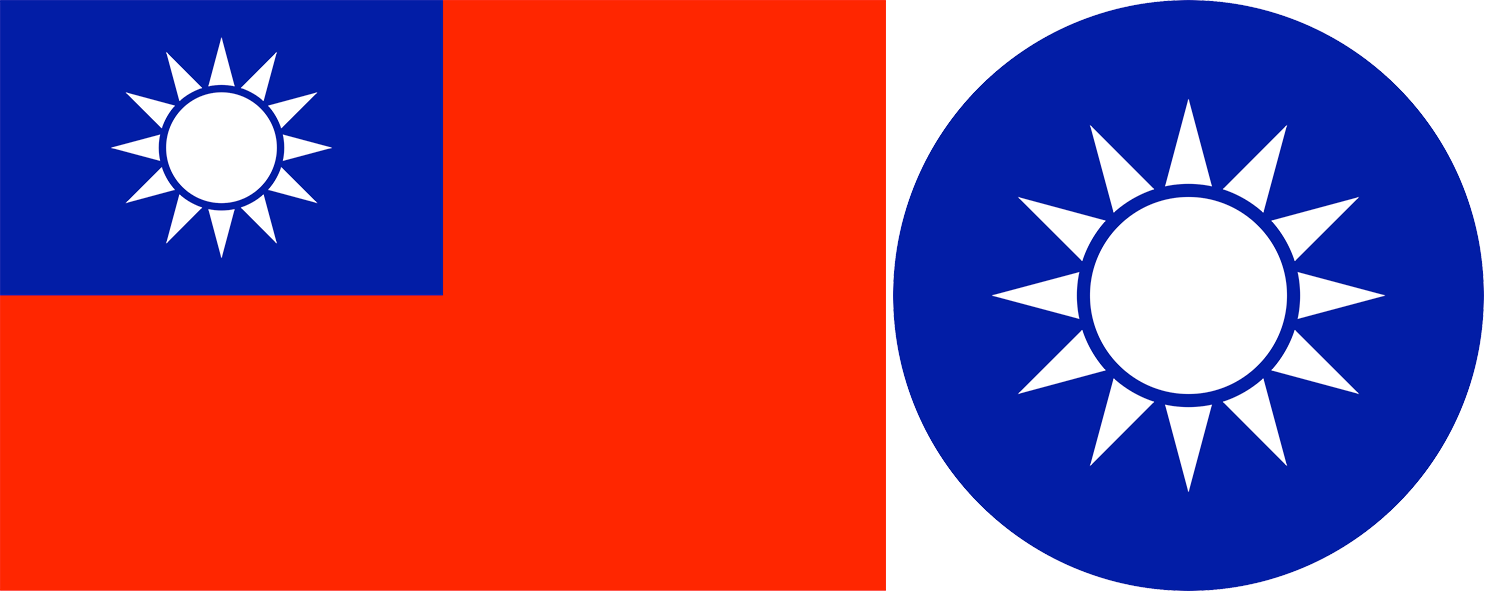 The flag of Taiwan (left) and the emblem of Taiwan (right).
Welcome to the summary page for FabulousFusionFood's Taiwanese recipes, part of the Asian continent. This page provides links to all the Taiwanese recipes presented on this site, with 11 recipes in total.
This is a continuation of an entire series of pages that will, I hope, allow my visitors to better navigate this site. As well as displaying recipes by name, country and region of origin I am now planning a whole series of pages where recipes can be located by meal type and main ingredient. This page gives a listing of all the Taiwanese recipes added to this site.
These recipes, for the major part, originate in Taiwanese. Otherwise they are fusion recipes with major Taiwanese components.
Taiwan, officially the Republic of China (ROC) [中華民國 (Chinese), Zhōnghuá Mínguó (Pinyin)] is a country in East Asia. The main island of Taiwan, also known as Formosa, lies between the East and South China Seas in the northwestern Pacific Ocean, with the People's Republic of China (PRC) to the northwest, Japan to the northeast, and the Philippines to the south. It has an area of 35,808 square kilometres (13,826 square miles), with mountain ranges dominating the eastern two-thirds and plains in the western third, where its highly urbanized population is concentrated. The combined territories under ROC control consist of 168 islands in total covering 36,193 square kilometres (13,974 square miles). The largest metropolitan area is formed by Taipei (the capital), New Taipei City, and Keelung. With around 23.9 million inhabitants, Taiwan is among the most densely populated countries.
 Location of Taiwan in Asia with Taiwan picked out in red and circled.Taiwan has been settled for at least 25,000 years. Ancestors of Taiwanese indigenous peoples settled the island around 6,000 years ago. In the 17th century, large-scale Han Chinese immigration began under Dutch colonial rule and continued under the Kingdom of Tungning, the first predominantly Han Chinese state in Taiwanese history. The island was annexed in 1683 by the Qing dynasty and ceded to the Empire of Japan in 1895. The Republic of China, which had overthrown the Qing in 1912 under the leadership of Sun Yat-sen, assumed control following the surrender of Japan in World War II. But with the loss of mainland China to the Communists in the Chinese Civil War, the government moved to Taiwan in 1949 under the Kuomintang (KMT).
The political status of Taiwan is contentious. Despite being a founding member, the ROC no longer represents China as a member of the United Nations after UN members voted in 1971 to recognize the PRC instead. The ROC maintained its claim to be the sole legitimate representative of China and its territory until 1991, when it ceased to regard the Chinese Communist Party as a rebellious group and acknowledged its control over mainland China. Taiwan is claimed by the PRC, which refuses to establish diplomatic relations with countries that recognise the ROC. Taiwan maintains official diplomatic relations with 11 out of 193 UN member states and the Holy See. Many others maintain unofficial diplomatic ties through representative offices and institutions that function as de facto embassies and consulates. International organizations in which the PRC participates either refuse to grant membership to Taiwan or allow it to participate on a non-state basis. Domestically, the major political contention is between the Pan-Blue Coalition, who favors eventual Chinese unification under the ROC and promoting a pan-Chinese identity, contrasted with the Pan-Green Coalition, which favors eventual Taiwanese independence and promoting a Taiwanese identity; in the 21st century, both sides have moderated their positions to broaden their appeal.
Etymology: In his Daoyi Zhilüe (1349), Wang Dayuan used 'Liuqiu' as a name for the island, or the part of it closest to Penghu. Elsewhere, the name was used for the Ryukyu Islands in general or Okinawa specifically; the name Ryūkyū is the Japanese form of Liúqiú. The name also appears in the Book of Sui (636) and other early works, but scholars cannot agree on whether these references are to the Ryukyus, Taiwan or even Luzon
The name Formosa (福爾摩沙) dates from 1542, when Portuguese sailors noted it on their maps as Ilha Formosa (Portuguese for 'beautiful island'). The name Formosa eventually 'replaced all others in European literature' and remained in common use among English speakers into the 20th century. In 1603, a Chinese expedition fleet anchored at a place in Taiwan called Dayuan, a variant of 'Taiwan'. In the early 17th century, the Dutch East India Company established a commercial post at Fort Zeelandia (modern-day Anping) on a coastal sandbar called 'Tayouan', after their ethnonym for a nearby Taiwanese aboriginal tribe, possibly Taivoan people.
Use of the current Chinese name (臺灣 / 台灣) became official as early as 1684 during the Qing dynasty with the establishment of Taiwan Prefecture centered in modern-day Tainan. Through its rapid development the entire Taiwanese mainland eventually became known as 'Taiwan'.
Taiwanese culinary history is murky and is intricately tied to patterns of migration and colonization. Local and international Taiwanese cuisine, including its history, is a politically contentious topic. Famous Taiwanese dishes include Taiwanese beef noodle soup, Gua bao, Zongzi, Khong bah png, Taiwanese fried chicken, oyster vermicelli, Sanbeiji, and Aiyu jelly. Bubble tea, created in Taiwan in the 1980s, has now become popular globally. In 2014, The Guardian called Taiwanese night markets the 'best street food markets in the world'. The Michelin Guide began reviewing restaurants in Taiwan in 2018.
Taiwan's cuisine is tied to its history of colonization and modern politics makes the description of Taiwanese cuisine difficult. As Taiwan developed economically fine dining became increasingly popular. Taiwanese cuisine has significant regional variations. Night markets in Taiwan form a significant part of the food culture. Vegetarian and vegan food are very common. Taiwanese cuisine is popular around the world with some items like bubble tea and Taiwanese fried chicken becoming global phenomena.
This is a continuation of an entire series of pages that will, I hope, allow my visitors to better navigate this site. As well as displaying recipes by name, country and region of origin I am now planning a whole series of pages where recipes can be located by meal type and main ingredient. This page gives a listing of all the Taiwanese recipes added to this site.
These recipes, for the major part, originate in Taiwanese. Otherwise they are fusion recipes with major Taiwanese components.
Taiwan, officially the Republic of China (ROC) [中華民國 (Chinese), Zhōnghuá Mínguó (Pinyin)] is a country in East Asia. The main island of Taiwan, also known as Formosa, lies between the East and South China Seas in the northwestern Pacific Ocean, with the People's Republic of China (PRC) to the northwest, Japan to the northeast, and the Philippines to the south. It has an area of 35,808 square kilometres (13,826 square miles), with mountain ranges dominating the eastern two-thirds and plains in the western third, where its highly urbanized population is concentrated. The combined territories under ROC control consist of 168 islands in total covering 36,193 square kilometres (13,974 square miles). The largest metropolitan area is formed by Taipei (the capital), New Taipei City, and Keelung. With around 23.9 million inhabitants, Taiwan is among the most densely populated countries.
Location of Taiwan in Asia with Taiwan picked out in red and circled.The political status of Taiwan is contentious. Despite being a founding member, the ROC no longer represents China as a member of the United Nations after UN members voted in 1971 to recognize the PRC instead. The ROC maintained its claim to be the sole legitimate representative of China and its territory until 1991, when it ceased to regard the Chinese Communist Party as a rebellious group and acknowledged its control over mainland China. Taiwan is claimed by the PRC, which refuses to establish diplomatic relations with countries that recognise the ROC. Taiwan maintains official diplomatic relations with 11 out of 193 UN member states and the Holy See. Many others maintain unofficial diplomatic ties through representative offices and institutions that function as de facto embassies and consulates. International organizations in which the PRC participates either refuse to grant membership to Taiwan or allow it to participate on a non-state basis. Domestically, the major political contention is between the Pan-Blue Coalition, who favors eventual Chinese unification under the ROC and promoting a pan-Chinese identity, contrasted with the Pan-Green Coalition, which favors eventual Taiwanese independence and promoting a Taiwanese identity; in the 21st century, both sides have moderated their positions to broaden their appeal.
Etymology: In his Daoyi Zhilüe (1349), Wang Dayuan used 'Liuqiu' as a name for the island, or the part of it closest to Penghu. Elsewhere, the name was used for the Ryukyu Islands in general or Okinawa specifically; the name Ryūkyū is the Japanese form of Liúqiú. The name also appears in the Book of Sui (636) and other early works, but scholars cannot agree on whether these references are to the Ryukyus, Taiwan or even Luzon
The name Formosa (福爾摩沙) dates from 1542, when Portuguese sailors noted it on their maps as Ilha Formosa (Portuguese for 'beautiful island'). The name Formosa eventually 'replaced all others in European literature' and remained in common use among English speakers into the 20th century. In 1603, a Chinese expedition fleet anchored at a place in Taiwan called Dayuan, a variant of 'Taiwan'. In the early 17th century, the Dutch East India Company established a commercial post at Fort Zeelandia (modern-day Anping) on a coastal sandbar called 'Tayouan', after their ethnonym for a nearby Taiwanese aboriginal tribe, possibly Taivoan people.
Use of the current Chinese name (臺灣 / 台灣) became official as early as 1684 during the Qing dynasty with the establishment of Taiwan Prefecture centered in modern-day Tainan. Through its rapid development the entire Taiwanese mainland eventually became known as 'Taiwan'.
Taiwanese Cuisine:
Taiwanese cuisine (Chinese: 臺灣料理; pinyin: Táiwān liàolǐ; Pe̍h-ōe-jī: Tâi-oân liāu-lí or 臺灣菜; Táiwāncài; Tâi-oân-chhài) is a popular style of food with several variations, including Chinese and that of Taiwanese indigenous peoples, with the earliest cuisines known of being the indigenous ones. With over a hundred years of historical development, southern Fujian cuisine has had the most profound impact on mainstream Taiwanese cuisine but it has also been influenced by Hakka cuisine, the cuisines of the waishengren (people of other provinces), and Japanese cuisineTaiwanese culinary history is murky and is intricately tied to patterns of migration and colonization. Local and international Taiwanese cuisine, including its history, is a politically contentious topic. Famous Taiwanese dishes include Taiwanese beef noodle soup, Gua bao, Zongzi, Khong bah png, Taiwanese fried chicken, oyster vermicelli, Sanbeiji, and Aiyu jelly. Bubble tea, created in Taiwan in the 1980s, has now become popular globally. In 2014, The Guardian called Taiwanese night markets the 'best street food markets in the world'. The Michelin Guide began reviewing restaurants in Taiwan in 2018.
Taiwan's cuisine is tied to its history of colonization and modern politics makes the description of Taiwanese cuisine difficult. As Taiwan developed economically fine dining became increasingly popular. Taiwanese cuisine has significant regional variations. Night markets in Taiwan form a significant part of the food culture. Vegetarian and vegan food are very common. Taiwanese cuisine is popular around the world with some items like bubble tea and Taiwanese fried chicken becoming global phenomena.
Taiwan's National Dishes:
Below are listed the dishes considered to be Taiwan's national foods along with links to the recipes for those dishes:| Lu Rou Fan (Taiwanese Braised Pork Rice Bowl) Origin: Taiwan | Taiwanese Beef Noodle Soup Origin: Taiwan |
The alphabetical list of all Taiwanese recipes on this site follows, (limited to 100 recipes per page). There are 11 recipes in total:
Page 1 of 1
| Lu Rou Fan (Taiwanese Braised Pork Rice Bowl) Origin: Taiwan | Doubanjiang (Chilli Bean Sauce) Origin: Taiwan | Shacha Sauce Origin: Taiwan |
| Taiwanese Beef Noodle Soup Origin: Taiwan | Lu Rou Fan (Taiwanese Braised Pork Rice Bowl) Origin: Taiwan | Taiwan Pickled Cabbage Origin: Taiwan |
| Chinese-style Meatballs Origin: Taiwan | Rou Zao Fan (Taiwanese Braised Minced Pork) Origin: Taiwan | Taiwanese Beef Noodle Soup Origin: Taiwan |
| Dim Sum Dumplings Origin: Taiwan | Sacha Sauce Origin: Taiwan |
Page 1 of 1