FabulousFusionFood's Palestinian Recipes Home Page
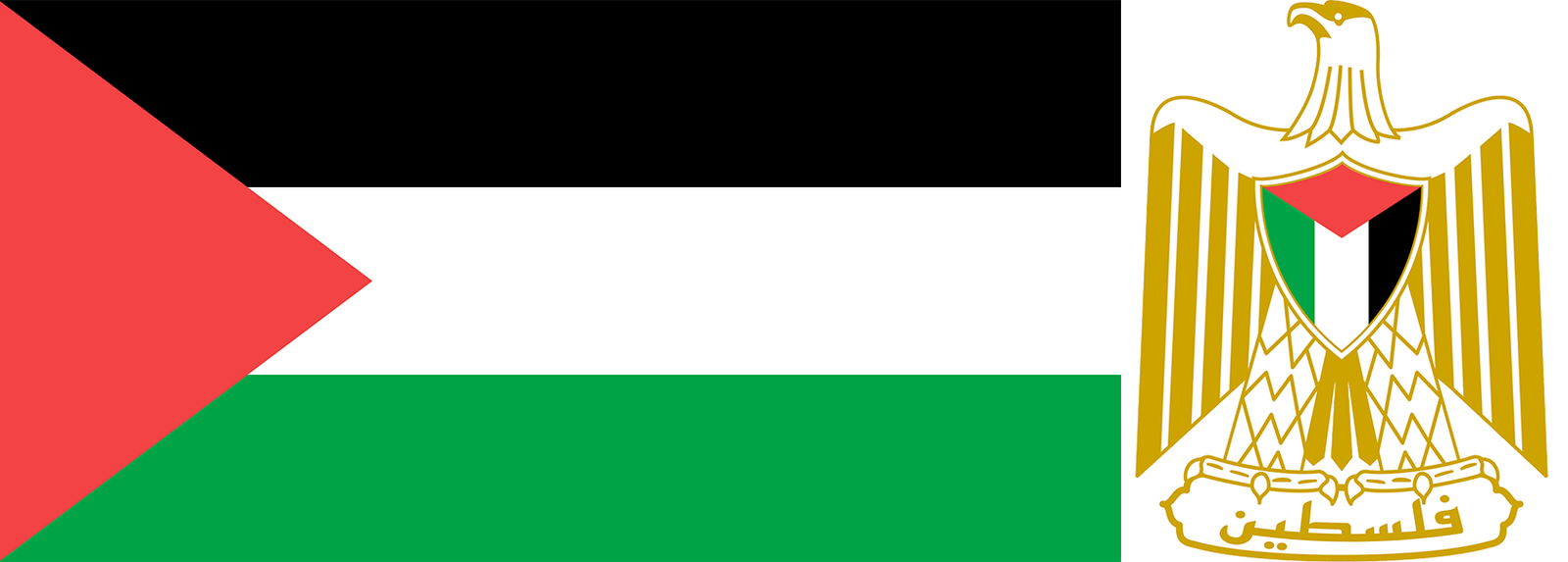 The flag of Palestine (left) and the emblem of Palestine (right).
Welcome to the summary page for FabulousFusionFood's Palestinian recipes, part Asia. This page provides links to all the Palestinian recipes presented on this site, with 11 recipes in total.
This is a continuation of an entire series of pages that will, I hope, allow my visitors to better navigate this site. As well as displaying recipes by name, country and region of origin I am now planning a whole series of pages where recipes can be located by meal type and main ingredient. This page gives a listing of all the Palestinian recipes added to this site. is a country in West Asia. Recognized by 147 of the UN's 193 member states, it encompasses the Israeli-occupied West Bank, including East Jerusalem, and the Gaza Strip, collectively known as the occupied Palestinian territories.
Palestine (دولة فلسطين (Dawlat Filasṭīn in Arabic)), is a country in West Asia. Recognized by 147 of the UN's 193 member states, it encompasses the Israeli-occupied West Bank, including East Jerusalem, and the Gaza Strip, collectively known as the occupied Palestinian territories.
Palestine's history of rule by many different empires is reflected in Palestinian cuisine, which has benefited from various cultural contributions and exchanges. Generally speaking, modern Palestinian dishes have been influenced by the rule of three major Islamic groups: the Arabs, the Persian-influenced Arabs, and the Turks. The original Bedouin Arabs in Syria and Palestine had simple culinary traditions primarily based on the use of rice, lamb and yogurt, as well as dates.
Palestine officially the State of Palestine, is a country in West Asia. Recognized by 147 of the UN's 193 member states, it encompasses the Israeli-occupied West Bank, including East Jerusalem, and the Gaza Strip, collectively known as the occupied Palestinian territories. The territories share the vast majority of their borders with Israel, with the West Bank bordering Jordan to the east and the Gaza Strip bordering Egypt to the southwest. It has a total land area of 6,020 square kilometres while its population exceeds five million. Its proclaimed capital is Jerusalem, while Ramallah serves as its de facto administrative centre. Gaza City was its largest city prior to evacuations in 2023.
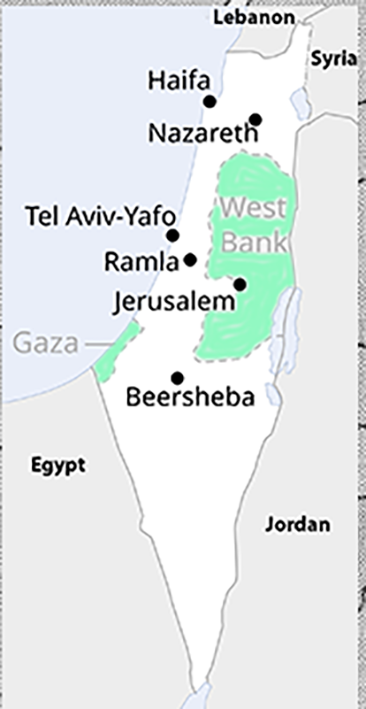 Location of Palestine in West Asia in relation to Israel
with the West Bank and Gaza Strip picked out in light green.Situated at a continental crossroad, the Palestine region was ruled by various empires and experienced various demographic changes from antiquity to the modern era. It was treading ground for the Nile and Mesopotamian armies and merchants from North Africa, China and India. The region has religious significance. The ongoing Israeli–Palestinian conflict dates back to the rise of the Zionist movement, supported by the United Kingdom during World War I. The war saw Britain occupying Palestine from the Ottoman Empire, where it set up Mandatory Palestine under the auspices of the League of Nations. Increased Jewish immigration led to intercommunal conflict between Jews and Palestinian Arabs, which escalated into a civil war in 1947 after a proposed partitioning by the United Nations was rejected by the Palestinians.
The 1948 Palestine war saw the forcible displacement of a majority of the Arab population, and consequently the establishment of Israel; these events are referred to by Palestinians as the Nakba ('catastrophe'). In the Six-Day War in 1967, Israel occupied the West Bank and the Gaza Strip, which had been held by Jordan and Egypt respectively. The Palestine Liberation Organization (PLO) declared independence in 1988. In 1993, the PLO signed the Oslo Accords with Israel, creating limited PLO governance in the West Bank and Gaza Strip through the Palestinian Authority (PA). Israel withdrew from Gaza in its unilateral disengagement in 2005, but the territory is still considered to be under military occupation and has been blockaded by Israel. In 2007, internal divisions between political factions led to a takeover of Gaza by Hamas. Since then, the West Bank has been governed in part by the Fatah-led PA, while the Gaza Strip has remained under the control of Hamas.
Israel has constructed large settlements in the occupied West Bank and East Jerusalem since 1967, which currently house more than 670,000 Israeli settlers, which are illegal under international law. Attacks by Hamas-led armed groups in October 2023 in Israel were followed by the Gaza war, which has caused large-scale loss of life, mass population displacement, a humanitarian crisis, and an imminent famine in the Gaza Strip. According to a United Nations special committee, Amnesty International, and other experts and human rights organisations, Israel has committed genocide against the Palestinian people during its ongoing invasion and bombing of the Gaza Strip.
Some of the challenges to Palestine include ineffective government, Israeli occupation, a blockade, restrictions on movement, Israeli settlements and settler violence, as well as an overall poor security situation. The questions of Palestine's borders, legal and diplomatic status of Jerusalem, and the right of return of Palestinian refugees remain unsolved. Despite these challenges, the country maintains an emerging economy and sees frequent tourism. Arabic is the official language of the country. While the majority of Palestinians practice Islam, Christianity also has a presence. Palestine is also a member of several international organizations, including the Arab League and the Organization of Islamic Cooperation.
Etymology: The term 'Palestine' (in Latin, Palæstina) comes via ancient Greek from a Semitic toponym for the general area dating back to the late second millennium BCE, a reflex of which is also to be found in the Biblical ethnonym Philistines. The term 'Palestine' has been used to refer to the area at the southeast corner of the Mediterranean Sea beside Syria. In the 5th century BCE, in his work The Histories, Herodotus used the term to describe a 'district of Syria, called Palaistine' in which Phoenicians interacted with other maritime peoples.[
The cuisine of the Ottoman Empire, which incorporated Palestine as one of its provinces between 1517 and 1918, was partially made up of what had become by then a rich Arab cuisine. After the Crimean War, many foreign communities (namely the Bosnians, Greeks, French and Italians) began settling in the area; Jerusalem, Jaffa and Bethlehem were the most popular destinations for these groups. The cuisine of these communities, particularly those of the Balkans, contributed to the character of Palestinian cuisine. Nonetheless, until the 1950s and 1960s, the staple diet for many rural Palestinian families revolved around olive oil, oregano (za'atar) and bread, baked in a simple oven called a taboon.
This is a continuation of an entire series of pages that will, I hope, allow my visitors to better navigate this site. As well as displaying recipes by name, country and region of origin I am now planning a whole series of pages where recipes can be located by meal type and main ingredient. This page gives a listing of all the Palestinian recipes added to this site. is a country in West Asia. Recognized by 147 of the UN's 193 member states, it encompasses the Israeli-occupied West Bank, including East Jerusalem, and the Gaza Strip, collectively known as the occupied Palestinian territories.
Palestine (دولة فلسطين (Dawlat Filasṭīn in Arabic)), is a country in West Asia. Recognized by 147 of the UN's 193 member states, it encompasses the Israeli-occupied West Bank, including East Jerusalem, and the Gaza Strip, collectively known as the occupied Palestinian territories.
Palestine's history of rule by many different empires is reflected in Palestinian cuisine, which has benefited from various cultural contributions and exchanges. Generally speaking, modern Palestinian dishes have been influenced by the rule of three major Islamic groups: the Arabs, the Persian-influenced Arabs, and the Turks. The original Bedouin Arabs in Syria and Palestine had simple culinary traditions primarily based on the use of rice, lamb and yogurt, as well as dates.
Palestine officially the State of Palestine, is a country in West Asia. Recognized by 147 of the UN's 193 member states, it encompasses the Israeli-occupied West Bank, including East Jerusalem, and the Gaza Strip, collectively known as the occupied Palestinian territories. The territories share the vast majority of their borders with Israel, with the West Bank bordering Jordan to the east and the Gaza Strip bordering Egypt to the southwest. It has a total land area of 6,020 square kilometres while its population exceeds five million. Its proclaimed capital is Jerusalem, while Ramallah serves as its de facto administrative centre. Gaza City was its largest city prior to evacuations in 2023.
Location of Palestine in West Asia in relation to Israelwith the West Bank and Gaza Strip picked out in light green.
The 1948 Palestine war saw the forcible displacement of a majority of the Arab population, and consequently the establishment of Israel; these events are referred to by Palestinians as the Nakba ('catastrophe'). In the Six-Day War in 1967, Israel occupied the West Bank and the Gaza Strip, which had been held by Jordan and Egypt respectively. The Palestine Liberation Organization (PLO) declared independence in 1988. In 1993, the PLO signed the Oslo Accords with Israel, creating limited PLO governance in the West Bank and Gaza Strip through the Palestinian Authority (PA). Israel withdrew from Gaza in its unilateral disengagement in 2005, but the territory is still considered to be under military occupation and has been blockaded by Israel. In 2007, internal divisions between political factions led to a takeover of Gaza by Hamas. Since then, the West Bank has been governed in part by the Fatah-led PA, while the Gaza Strip has remained under the control of Hamas.
Israel has constructed large settlements in the occupied West Bank and East Jerusalem since 1967, which currently house more than 670,000 Israeli settlers, which are illegal under international law. Attacks by Hamas-led armed groups in October 2023 in Israel were followed by the Gaza war, which has caused large-scale loss of life, mass population displacement, a humanitarian crisis, and an imminent famine in the Gaza Strip. According to a United Nations special committee, Amnesty International, and other experts and human rights organisations, Israel has committed genocide against the Palestinian people during its ongoing invasion and bombing of the Gaza Strip.
Some of the challenges to Palestine include ineffective government, Israeli occupation, a blockade, restrictions on movement, Israeli settlements and settler violence, as well as an overall poor security situation. The questions of Palestine's borders, legal and diplomatic status of Jerusalem, and the right of return of Palestinian refugees remain unsolved. Despite these challenges, the country maintains an emerging economy and sees frequent tourism. Arabic is the official language of the country. While the majority of Palestinians practice Islam, Christianity also has a presence. Palestine is also a member of several international organizations, including the Arab League and the Organization of Islamic Cooperation.
Etymology: The term 'Palestine' (in Latin, Palæstina) comes via ancient Greek from a Semitic toponym for the general area dating back to the late second millennium BCE, a reflex of which is also to be found in the Biblical ethnonym Philistines. The term 'Palestine' has been used to refer to the area at the southeast corner of the Mediterranean Sea beside Syria. In the 5th century BCE, in his work The Histories, Herodotus used the term to describe a 'district of Syria, called Palaistine' in which Phoenicians interacted with other maritime peoples.[
Palestinian Cuisine:
Palestine's history of rule by many different empires is reflected in Palestinian cuisine, which has benefited from various cultural contributions and exchanges. Generally speaking, modern Palestinian dishes have been influenced by the rule of three major Islamic groups: the Arabs, the Persian-influenced Arabs, and the Turks. The original Bedouin Arabs in Syria and Palestine had simple culinary traditions primarily based on the use of rice, lamb and yogurt, as well as dates.The cuisine of the Ottoman Empire, which incorporated Palestine as one of its provinces between 1517 and 1918, was partially made up of what had become by then a rich Arab cuisine. After the Crimean War, many foreign communities (namely the Bosnians, Greeks, French and Italians) began settling in the area; Jerusalem, Jaffa and Bethlehem were the most popular destinations for these groups. The cuisine of these communities, particularly those of the Balkans, contributed to the character of Palestinian cuisine. Nonetheless, until the 1950s and 1960s, the staple diet for many rural Palestinian families revolved around olive oil, oregano (za'atar) and bread, baked in a simple oven called a taboon.
Palestine's National Dishes:
Below are listed the dishes considered to be Palestine's national foods along with links to the recipes for those dishes:| Makluba (Upside Down Dish) Origin: Palestine | Musakhan (Chicken with Sumac and Caramelized Onions) Origin: Palestine | Palestinian Chickpea Falafel Origin: Palestine |
The alphabetical list of all the Palestinian recipes on this site follows, (limited to 100 recipes per page). There are 11 recipes in total:
Page 1 of 1
| Makluba (Upside Down Dish) Origin: Palestine | Freekeh Mfalfaleh (Palestinian Freekeh Pilaf) Origin: Palestine | Musakhkhan (Baked Chicken and Onions With Sumac) Origin: Palestine |
| Musakhan (Chicken with Sumac and Caramelized Onions) Origin: Palestine | Makluba (Upside Down Dish) Origin: Palestine | Palestinian Cardamom Coffee Origin: Palestine |
| Palestinian Chickpea Falafel Origin: Palestine | Markouk Origin: Palestine | Palestinian Chickpea Falafel Origin: Palestine |
| Baba Ghanoush Origin: Palestine | Musakhan (Chicken with Sumac and Caramelized Onions) Origin: Palestine |
Page 1 of 1