FabulousFusionFood's Indonesia Recipes Home Page
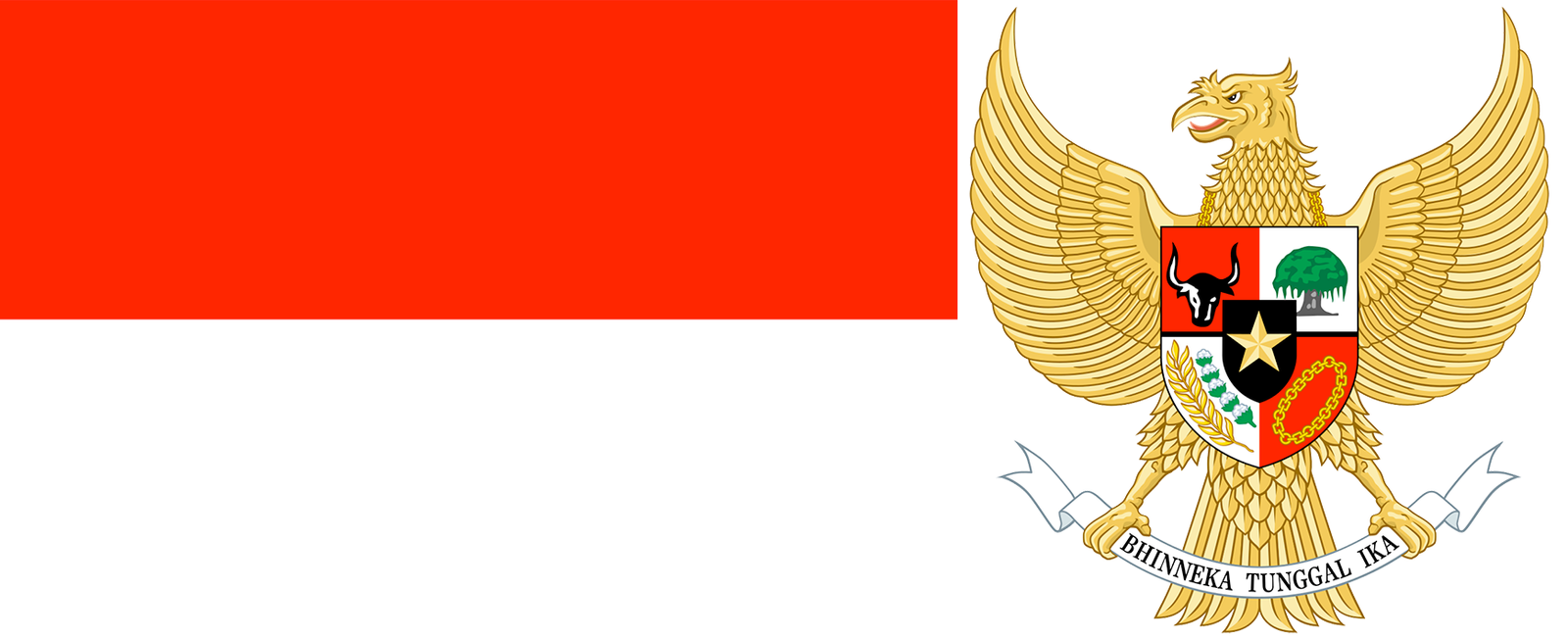 The flag of Indonesia (left) and the national emblem Indonesia (right).
Welcome to the summary page for FabulousFusionFood's Indonesian recipes, part of Southeast Asia. This page provides links to all the Indonesian recipes presented on this site, with 49 recipes in total.
These recipes, for the major part, originate in Indonesia. Otherwise they are fusion recipes with major Indonesian influences.
Indonesia officially the Republic of Indonesia, (Indonesian: Republik Indonesia) is a country in Southeast Asia and Oceania between the Indian and Pacific oceans. It consists of over 17,000 islands, including Sumatra, Java, Sulawesi, and parts of Borneo and New Guinea. Indonesia is the world's largest archipelagic state and the 14th-largest country by area, at 1,904,569 square kilometres (735,358 square miles). With over 279 million people, Indonesia is the world's fourth-most-populous country and the most populous Muslim-majority country. Java, the world's most populous island, is home to more than half of the country's population.
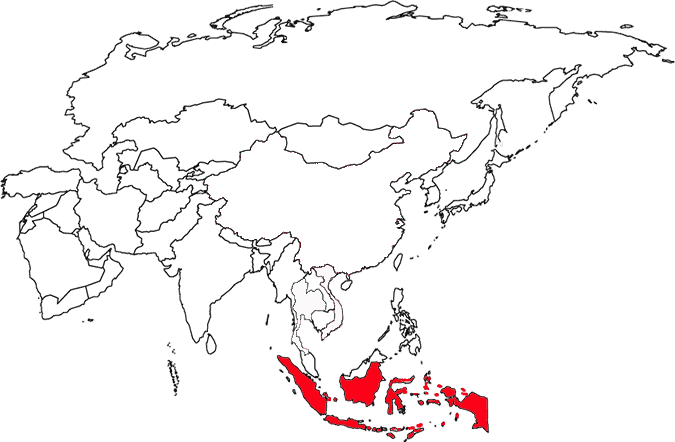 The image above shows a view of Indonesia (in red) in relation to Asia.Indonesia is a presidential republic with an elected legislature. It has 38 provinces, of which nine have special autonomous status. The country's capital, Jakarta, is the world's second-most-populous urban area. Indonesia shares land borders with Papua New Guinea, East Timor, and the eastern part of Malaysia, as well as maritime borders with Singapore, Vietnam, Thailand, the Philippines, Australia, Palau, and India. Despite its large population and densely populated regions, Indonesia has vast areas of wilderness with the world's second-highest levels of biodiversity after Brazil.
The Indonesian archipelago has been a valuable region for trade since at least the seventh century when the Srivijaya and later Majapahit Kingdoms traded with entities from mainland China and the Indian subcontinent. Local rulers gradually absorbed foreign influences from the early centuries, and Hindu and Buddhist kingdoms flourished. Sunni traders and Sufi scholars later brought Islam, and European powers fought one another to monopolise trade in the Spice Islands of Maluku during the Age of Discovery. Following three and a half centuries of Dutch colonialism, Indonesia secured its independence after World War II. Indonesia's history has since been turbulent, with challenges posed by natural disasters, corruption, separatism, a democratisation process, and periods of rapid economic growth.
Indonesia consists of thousands of distinct native ethnic and hundreds of linguistic groups, with Javanese being the largest. A shared identity has developed with the motto 'Bhinneka Tunggal Ika' ('Unity in Diversity' literally, 'many, yet one'), defined by a national language, cultural diversity, religious pluralism within a Muslim-majority population, and a history of colonialism and rebellion against it. The economy of Indonesia is the world's 16th-largest by nominal GDP and the 7th-largest by PPP. It is the world's third-largest democracy, a regional power, and is considered a middle power in global affairs. The country is a member of several multilateral organisations, including the United Nations, World Trade Organization, G20, and a founding member of the Non-Aligned Movement, Association of Southeast Asian Nations, East Asia Summit, D-8, APEC, and the Organisation of Islamic Cooperation.
Etymology: The name Indonesia derives from the Greek words Indos (Ἰνδός) and nesos (νῆσος), meaning 'Indian islands'. The name dates back to the 19th century, far predating the formation of independent Indonesia. In 1850, George Windsor Earl, an English ethnologist, proposed the terms Indunesians—and, his preference, Malayunesians—for the inhabitants of the ;Indian Archipelago or Malay Archipelago;. In the same publication, one of his students, James Richardson Logan, used Indonesia as a synonym for Indian Archipelago.[15][16] Dutch academics writing in East Indies publications were reluctant to use Indonesia. They preferred Malay Archipelago (Dutch: Maleische Archipel); the Netherlands East Indies (Nederlandsch Oost Indië), popularly Indië; the East (de Oost); and Insulinde.
After 1900, Indonesia became more common in academic circles outside the Netherlands, and native nationalist groups adopted it for political expression.[17] Adolf Bastian of the University of Berlin popularized the name through his book Indonesien oder die Inseln des Malayischen Archipels, 1884–1894. The first native scholar to use the name was Ki Hajar Dewantara when in 1913, he established a press bureau in the Netherlands, Indonesisch Pers-bureau.
Some popular dishes such as nasi goreng, gado-gado, sate, and soto are ubiquitous and considered national dishes. The Ministry of Tourism, however, chose tumpeng as the official national dish in 2014, describing it as binding the diversity of various culinary traditions.[347] Other popular dishes include rendang, one of the many Minangkabau cuisines along with dendeng and gulai. Another fermented food is oncom, similar in some ways to tempeh but uses a variety of bases (not only soy), created by different fungi, and is prevalent in West Java.
These recipes, for the major part, originate in Indonesia. Otherwise they are fusion recipes with major Indonesian influences.
Indonesia officially the Republic of Indonesia, (Indonesian: Republik Indonesia) is a country in Southeast Asia and Oceania between the Indian and Pacific oceans. It consists of over 17,000 islands, including Sumatra, Java, Sulawesi, and parts of Borneo and New Guinea. Indonesia is the world's largest archipelagic state and the 14th-largest country by area, at 1,904,569 square kilometres (735,358 square miles). With over 279 million people, Indonesia is the world's fourth-most-populous country and the most populous Muslim-majority country. Java, the world's most populous island, is home to more than half of the country's population.
The image above shows a view of Indonesia (in red) in relation to Asia.The Indonesian archipelago has been a valuable region for trade since at least the seventh century when the Srivijaya and later Majapahit Kingdoms traded with entities from mainland China and the Indian subcontinent. Local rulers gradually absorbed foreign influences from the early centuries, and Hindu and Buddhist kingdoms flourished. Sunni traders and Sufi scholars later brought Islam, and European powers fought one another to monopolise trade in the Spice Islands of Maluku during the Age of Discovery. Following three and a half centuries of Dutch colonialism, Indonesia secured its independence after World War II. Indonesia's history has since been turbulent, with challenges posed by natural disasters, corruption, separatism, a democratisation process, and periods of rapid economic growth.
Indonesia consists of thousands of distinct native ethnic and hundreds of linguistic groups, with Javanese being the largest. A shared identity has developed with the motto 'Bhinneka Tunggal Ika' ('Unity in Diversity' literally, 'many, yet one'), defined by a national language, cultural diversity, religious pluralism within a Muslim-majority population, and a history of colonialism and rebellion against it. The economy of Indonesia is the world's 16th-largest by nominal GDP and the 7th-largest by PPP. It is the world's third-largest democracy, a regional power, and is considered a middle power in global affairs. The country is a member of several multilateral organisations, including the United Nations, World Trade Organization, G20, and a founding member of the Non-Aligned Movement, Association of Southeast Asian Nations, East Asia Summit, D-8, APEC, and the Organisation of Islamic Cooperation.
Etymology: The name Indonesia derives from the Greek words Indos (Ἰνδός) and nesos (νῆσος), meaning 'Indian islands'. The name dates back to the 19th century, far predating the formation of independent Indonesia. In 1850, George Windsor Earl, an English ethnologist, proposed the terms Indunesians—and, his preference, Malayunesians—for the inhabitants of the ;Indian Archipelago or Malay Archipelago;. In the same publication, one of his students, James Richardson Logan, used Indonesia as a synonym for Indian Archipelago.[15][16] Dutch academics writing in East Indies publications were reluctant to use Indonesia. They preferred Malay Archipelago (Dutch: Maleische Archipel); the Netherlands East Indies (Nederlandsch Oost Indië), popularly Indië; the East (de Oost); and Insulinde.
After 1900, Indonesia became more common in academic circles outside the Netherlands, and native nationalist groups adopted it for political expression.[17] Adolf Bastian of the University of Berlin popularized the name through his book Indonesien oder die Inseln des Malayischen Archipels, 1884–1894. The first native scholar to use the name was Ki Hajar Dewantara when in 1913, he established a press bureau in the Netherlands, Indonesisch Pers-bureau.
Indonesian Cuisine:
Indonesian cuisine is one of the world's most diverse, vibrant, and colourful, full of intense flavour.[344] Many regional cuisines exist, often based upon indigenous culture and foreign influences such as Chinese, European, Middle Eastern, and Indian precedents.[345] Rice is the leading staple food and is served with side dishes of meat and vegetables. Spices (notably chilli), coconut milk, fish and chicken are fundamental ingredients.Some popular dishes such as nasi goreng, gado-gado, sate, and soto are ubiquitous and considered national dishes. The Ministry of Tourism, however, chose tumpeng as the official national dish in 2014, describing it as binding the diversity of various culinary traditions.[347] Other popular dishes include rendang, one of the many Minangkabau cuisines along with dendeng and gulai. Another fermented food is oncom, similar in some ways to tempeh but uses a variety of bases (not only soy), created by different fungi, and is prevalent in West Java.
Indonesia's National Dishes:
Below are listed the dishes considered to be Indonesia's national foods along with links to the recipes for those dishes:| Beef Rendang Origin: Indonesia | Nasi Kuning (Yellow Rice) Origin: Indonesia | Soto Ayam Origin: Indonesia |
| Gado Gado with Sambal Kacang Origin: Indonesia | Nasi Tumpeng Origin: Indonesia | |
| Mutton Rendang Origin: Indonesia | Satay Origin: Indonesia |
The alphabetical list of all the Indonesia recipes on this site follows, (limited to 100 recipes per page). There are 49 recipes in total:
Page 1 of 1
| Beef Rendang Origin: Indonesia | Daging Bumbu Bali Origin: Indonesia | Nasi Goreng Istimewa (Fried Rice Breakfast) Origin: Indonesia |
| Gado Gado with Sambal Kacang Origin: Indonesia | Gado Gado with Sambal Kacang Origin: Indonesia | Nasi Goreng Jawa (Javanese Fried Rice) Origin: Indonesia |
| Mutton Rendang Origin: Indonesia | Gulai Lemak (Beef Spicy Stew) Origin: Indonesia | Nasi Impit (Compressed Rice Cakes) Origin: Indonesia |
| Nasi Kuning (Yellow Rice) Origin: Indonesia | Hot Green Tamarind Chicken Origin: Indonesia | Nasi Kuning (Yellow Rice) Origin: Indonesia |
| Nasi Tumpeng Origin: Indonesia | Indonesian Black Squid Curry Origin: Indonesia | Nasi Tumpeng Origin: Indonesia |
| Satay Origin: Indonesia | Indonesian Curry Spice Paste Origin: Indonesia | Nila Bumbu Acar (Sour Spicy Carp) Origin: Indonesia |
| Soto Ayam Origin: Indonesia | Indonesian Island-style Curry Powder Origin: Indonesia | Opor Ayam (Java Chicken Curry) Origin: Indonesia |
| Acar (Indonesian cucumber pickles) Origin: Indonesia | Indonesian Peanut Sauce Origin: Indonesia | Opor Ayam Jawa (Javanese Coconut Curry Chicke) Origin: Indonesia |
| Ayam Bumbu Rujak (Chicken with Rujak Gravy) Origin: Indonesia | Indonesian Soufflé Omelette Origin: Indonesia | Pepes Ikan (Fish in Curry Sauce) Origin: Indonesia |
| Ayam Panggang (Grilled Whole Chicken) Origin: Indonesia | Javanese Sambal Bajak (Javanese Hot Sauce) Origin: Indonesia | Perkedel Kentang (Potato Patties) Origin: Indonesia |
| Bakwan Jagung (Indonesian Corn Fritters) Origin: Indonesia | Kare Ayam Jawa (Javanese Chicken Curry) Origin: Indonesia | Pesmol (Mackerel with Bell Pepper in a Coconut and Chilli Sauce) Origin: Indonesia |
| Bebotok Sapi (Indonesian Meatloaf) Origin: Indonesia | Kari Kambing (Mutton or Goat Curry) Origin: Indonesia | Rujak (Spicy Fruit Salad) Origin: Indonesia |
| Beef Rendang Origin: Indonesia | Kecap Manis Origin: Indonesia | Sagu Keju (Indonesian Cheese Biscuits) Origin: Indonesia |
| Bihun Goreng (Fried Glass Noodles) Origin: Indonesia | Kelia Ayam (Indonesian Chicken Curry) Origin: Indonesia | Sambal Kacang (Indonesian Peanut Sauce) Origin: Indonesia |
| Bumbu Kuning (Base Indonesian Yellow Spice Paste) Origin: Indonesia | Lupis (Sticky Rice Rolls with Palm Sugar Syrup) Origin: Indonesia | Sambal Olek Origin: Indonesia |
| Bumbu Merah (Base Indonesian Red Spice Paste) Origin: Indonesia | Mutton Rendang Origin: Indonesia | Sarikayo Telor (Steamed Egg and Coconut Milk Pudding) Origin: Indonesia |
| Dadar Jagung (Prawn and Corn Fritters) Origin: Indonesia | Nasi Goreng (Fried Rice) Origin: Indonesia | Satay Origin: Indonesia |
Page 1 of 1