FabulousFusionFood's Stew Recipes 25th Page
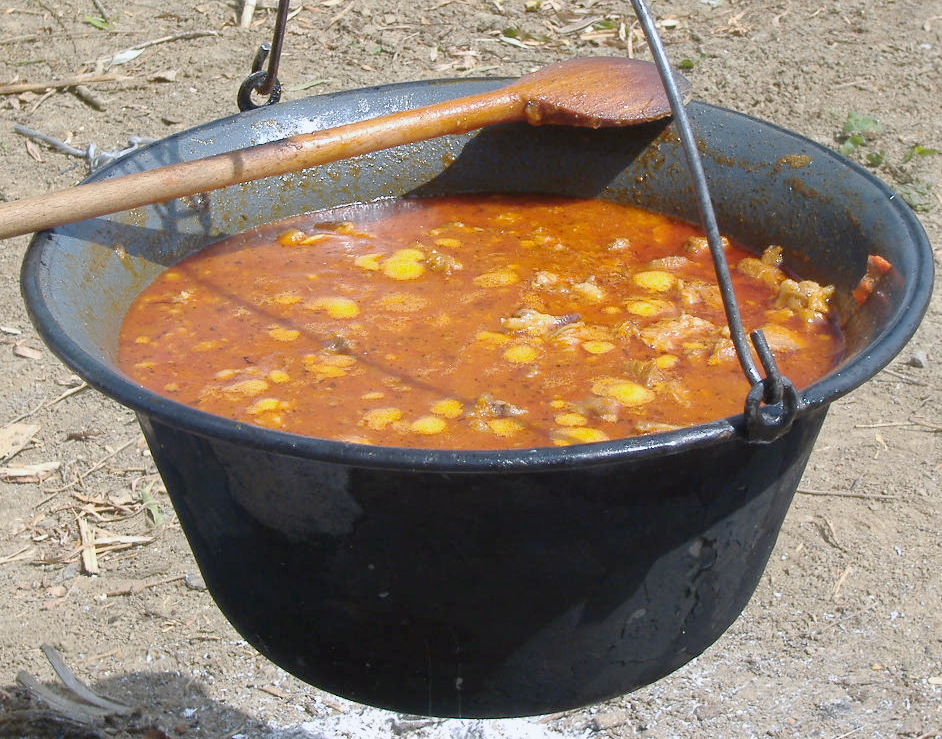 Classic goulash cooking outdoors in a traditional bogrács.
Welcome to FabulousFusionFood's Stew Recipes Page — Stews represent a combination of solid food ingredients that have been cooked in liquid and served in the resultant gravy. Ingredients can include any combination of vegetables and may include meat, especially tougher meats suitable for slow-cooking, such as beef, pork, venison, rabbit, lamb, poultry, sausages, and seafood. While water can be used as the stew-cooking liquid, stock is also common. A small amount of red wine or other alcohol is sometimes added for flavour. Seasonings and flavourings may also be added. Stews are typically cooked at a relatively low temperature (simmered, not boiled), allowing flavours to mingle.
Stews have been around almost nearly as long as humans have been cooking. All you need is a vessel to hold your ingredients and water and a means of heating that vessel. It can be as simple as a leather bag with stones heated in a fire dropped into it. So stews were almost certainly prepared during the Paleolithic and Neolithic periods, if not earlier. Once you have clay or metal pots you can prepare stews next to or set directly over a fire. Stews are low-maintenance cookery, generally not requiring that the cooking pot be observed continuously. The slow cooking is also ideal for tenderizing tougher cuts of meat (neck, shin, tail etc). As these also tend to be the most flavoursome parts of animals, this also means that stews can be extremely flavourful. Stews also pair well with the local staple: potatoes, rice, bread, yams, cassava etc.
Even in hunter-gatherer societies stews are useful in that the slow cooking can make the most of tough meat and it can be combined with foraged grains, leafy greens, nuts and starchy tubers to yield a flavourful, low maintenance and nutritious meal. With the advent of agriculture almost all grains are amenable to stewing and combining grains and legumes in a stew provides a ready way to gain all the essential amino acids that humans (particularly children) require.
The boiling process of making stews also helps sterilize the ingredients, killing harmful bacteria and viruses. It can also help neutralize harmful chemicals, such as the cyanogenic compounds in bitter cassava and helps reduce bitterness in leafy greens, making the food both safer to eat and more palatable. The addition of flavouring ingredients (fruit, spices, herbs) during the cooking process can also alter the flavours of stews, making them more palatable and more appealing. This is particularly the case when adding components with high umami content (certain fish, seaweed, cruciferous vegetables, beans, soy sauce, mushrooms etc).
It is little wonder that, taken globally, the list of stews presented on this site is a long one.
Some stews border on soups and the definition of whether a dish is a soup or a stew. A good example of this is Welsh cawl which can be served with more liquid as a soup or can be thickened as a stew and served with bread and/or potatoes. Most curries, due to their long, slow cooking and blend of ingredients can also be considered a subtype of stew.
Pretty much every culture on earth has a classic stew that's a major part of its cultural culinary repertoire. I have viewed and collected recipes for many of these on my travels. These and other classic stews from around the world are collected and presented here.
The alphabetical list of all the stew recipes on this site follows, (limited to 100 recipes per page). There are 2743 recipes in total:
Page 25 of 28
| Souse Origin: Saint Lucia | Stewed Beef in Coconut Milk with Dumplings Origin: Trinidad | Sukuma Wiki Origin: Kenya |
| Sousi Pa (Fish with Coconut Cream) Origin: Laos | Stewed Beeff (Stewed Beef) Origin: England | Sukuma Wiki Origin: South Sudan |
| South African Cape Malay Curry Origin: South Africa | Stewed Duck and Turnips Origin: British | Summer Lamb Casserole Origin: Britain |
| South African Rhus Bukhari Origin: South Africa | Stewed Japanese Knotweed and Angelica Origin: Britain | Summer Vegetable Stew Origin: Britain |
| South African Vegetable Biryani Origin: South Africa | Stewed Oxtail Origin: Zimbabwe | Sunday Stew Origin: Nigeria |
| Southern Style Pot of Greens Origin: American | Stewed Partridge Origin: Britain | Superkanja Origin: Gambia |
| Southern Succotash Origin: America | Stewed Pork in Red Sauce Origin: Sao Tome | Suqaar (Somali Beef Stew) Origin: Somalia |
| Spanachorizo (Rice Pilaff with Spinach) Origin: Cyprus | Stewed Pork with Chickpeas Origin: Fusion | Suriname Masala Chicken Origin: Suriname |
| Spanagh Geragoor (Spinach and Rice Stew) Origin: Armenia | Stewed Rhubarb and Angelica Origin: Britain | Şurpa (Shurpa) Origin: Turkmenistan |
| Sphondylos Elixatos (Boiled Parsnips) Origin: Roman | Stewed Smoked, Sun-dried Fish Origin: Montenegro | Suss-Saures Rotkraut (Sweet and Sour Red Cabbage) Origin: Germany |
| Spiced Guinea Fowl Peppersoup Origin: Nigeria | Stewed Taro Leaves Origin: Palau | Suya Beef Heart Curry with Beans and Wild Greens Origin: Fusion |
| Spiced Lima Beans with Garlic and Coconut Origin: Nepal | Stewed Venison Origin: British | Svelkonik Origin: Belarus |
| Spicy Braised Cabbage Origin: Tanzania | Stiw Cig Oen Cymreig (Welsh Lamb Stew) Origin: Welsh | Svinsko S Bel Bob (Pork with Beans) Origin: Bulgaria |
| Spicy Chicken Gizzards Origin: South Africa | Stiw Eidion Cymreig (Welsh Beef Stew) Origin: Welsh | Swahili Aubergine Curry Origin: East Africa |
| Spicy Potatoes Origin: Ireland | Stiw Pysgotwr (Fisherman's Stew) Origin: Welsh | Sweet Coconut Pumpkin with Pandan Leaves Origin: Kiribati |
| Spicy Pumpkin and Aubergine Stew Origin: Morocco | Stockfish Stew Origin: Nigeria | Sweet Potato and Peanut Curry Origin: Fusion |
| Spinach and Peanut Butter Stew Origin: West Africa | Stone Age Venison and Bulrush Stew Origin: Ancient | Sweet Potato Pottage Origin: Nigeria |
| Spinach and Simsim Origin: Uganda | Stoved Chicken Origin: Scotland | Sweet Potato Stew Origin: African Fusion |
| Springbok Potjekos Origin: South Africa | Stoved Howtowdie wi' Drappit Eggs Origin: Scotland | Sweet Potatoes with Groundnuts Origin: Zambia |
| Squash Stuffed with Freekah and Peppers Origin: Lebanon | Stovies Origin: Scotland | Székely Gulyas (Székely Goulash) Origin: Hungary |
| Sri Lanka Style Jackfruit Seed Curry Origin: Sri Lanka | Stracotto alla Romana Origin: Italy | Szalonnas Savanyu K'pszta (Sauerkraut with Bacon) Origin: Hungary |
| Sri Lankan Chicken Curry Origin: Sri Lanka | Strawberry and Raspberry Fruit Compote Origin: British | Szeged Gulyasz (Pork Goulash with Sauerkraut) Origin: Czech |
| Sri Lankan Curried Okra Origin: Sri Lanka | Studenetz (Jellied Ham Hocks) Origin: Ukraine | Szureti Birkaporkolt (Mutton Porkolt) Origin: Hungary |
| Sri Lankan Dal Origin: Sri Lanka | Stufato del Pescatore (Italian Fisherman's Stew) Origin: Italy | Tô Origin: Burkina Faso |
| Sri Lankan Fish Curry Origin: Sri Lanka | Stuffat Tal-Fenek (Rabbit Stew) Origin: Malta | T'fina Aricha (Beef and Wheat Stew) Origin: Tunisia |
| Srpska Corba ot Graha (Serbian Bean Stew) Origin: Serbia | Stuffat Tal-Qarnit (Octopus Stew) Origin: Malta | Tabah Moostafah (Tagine of Marrakech Lamb) Origin: Morocco |
| St Columba's Broth Origin: Ancient | Stuffed Pheasant Breasts with Prune Sauce Origin: Scotland | Tacos de Comida Callejera (Mexican Street-food Tacos) Origin: Mexico |
| St Helena Curry and Rice Origin: St Helena | Sua Pana Origin: Rotuma | Tadjine Zdef (Mutton and Cheese Tagine) Origin: Benin |
| St Kitts Seasoned Breadfruit Origin: Saint Kitts | Suaasat Origin: Greenland | Tagalia Origin: South Sudan |
| St Kitts Stewed Fish Origin: Saint Kitts | Suafa’i (Samoan Hot Banana and Sago Pudding) Origin: Samoa | Tagin Lisan 'asfur (Orzo Casserole) Origin: Egypt |
| St Lucian Pepper Pot Origin: Saint Lucia | Suani Tadjine (Kitchen Garden Tagine) Origin: Algeria | Tagine Almaaz bil Beleh (Goat Tagine with Dates) Origin: Morocco |
| Steak Cooked in Milk Origin: Malawi | Succotash Origin: America | Tagine bal Ghalmi wa Aflour (Lamb Tagine with Broad Beans) Origin: Morocco |
| Steamed Crawfish Origin: Liberia | Sudanese Rice Origin: Sudan | |
| Stew Peas Origin: Jamaica | Sugar Bean Curry Origin: South Africa |
Page 25 of 28