FabulousFusionFood's Stew Recipes 28th Page
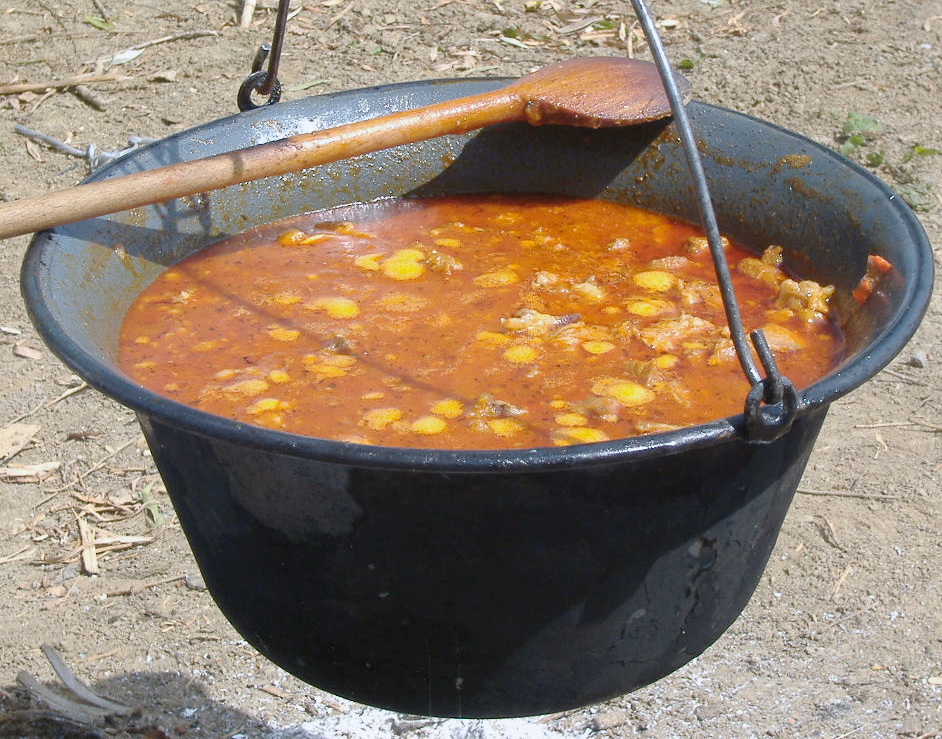 Classic goulash cooking outdoors in a traditional bogrács.
Welcome to FabulousFusionFood's Stew Recipes Page — Stews represent a combination of solid food ingredients that have been cooked in liquid and served in the resultant gravy. Ingredients can include any combination of vegetables and may include meat, especially tougher meats suitable for slow-cooking, such as beef, pork, venison, rabbit, lamb, poultry, sausages, and seafood. While water can be used as the stew-cooking liquid, stock is also common. A small amount of red wine or other alcohol is sometimes added for flavour. Seasonings and flavourings may also be added. Stews are typically cooked at a relatively low temperature (simmered, not boiled), allowing flavours to mingle.
Stews have been around almost nearly as long as humans have been cooking. All you need is a vessel to hold your ingredients and water and a means of heating that vessel. It can be as simple as a leather bag with stones heated in a fire dropped into it. So stews were almost certainly prepared during the Paleolithic and Neolithic periods, if not earlier. Once you have clay or metal pots you can prepare stews next to or set directly over a fire. Stews are low-maintenance cookery, generally not requiring that the cooking pot be observed continuously. The slow cooking is also ideal for tenderizing tougher cuts of meat (neck, shin, tail etc). As these also tend to be the most flavoursome parts of animals, this also means that stews can be extremely flavourful. Stews also pair well with the local staple: potatoes, rice, bread, yams, cassava etc.
Even in hunter-gatherer societies stews are useful in that the slow cooking can make the most of tough meat and it can be combined with foraged grains, leafy greens, nuts and starchy tubers to yield a flavourful, low maintenance and nutritious meal. With the advent of agriculture almost all grains are amenable to stewing and combining grains and legumes in a stew provides a ready way to gain all the essential amino acids that humans (particularly children) require.
The boiling process of making stews also helps sterilize the ingredients, killing harmful bacteria and viruses. It can also help neutralize harmful chemicals, such as the cyanogenic compounds in bitter cassava and helps reduce bitterness in leafy greens, making the food both safer to eat and more palatable. The addition of flavouring ingredients (fruit, spices, herbs) during the cooking process can also alter the flavours of stews, making them more palatable and more appealing. This is particularly the case when adding components with high umami content (certain fish, seaweed, cruciferous vegetables, beans, soy sauce, mushrooms etc).
It is little wonder that, taken globally, the list of stews presented on this site is a long one.
Some stews border on soups and the definition of whether a dish is a soup or a stew. A good example of this is Welsh cawl which can be served with more liquid as a soup or can be thickened as a stew and served with bread and/or potatoes. Most curries, due to their long, slow cooking and blend of ingredients can also be considered a subtype of stew.
Pretty much every culture on earth has a classic stew that's a major part of its cultural culinary repertoire. I have viewed and collected recipes for many of these on my travels. These and other classic stews from around the world are collected and presented here.
The alphabetical list of all the stew recipes on this site follows, (limited to 100 recipes per page). There are 2910 recipes in total:
Page 28 of 30
| Tiga Dégué (Beef in Peanut Sauce) Origin: Mali | To stew tripe Origin: British | Tsebhi Birsen (Spicy Lentils) Origin: Eritrea |
| Tiga Dégué au Poisson Fumé (Smoked Fish in Peanut Sauce) Origin: Mali | To Stewe Tripes Origin: British | Tsebhi Derho (Spicy Chicken) Origin: Eritrea |
| Tigadeguena (Chicken in Peanut Sauce) Origin: Mali | To toss up cold veal white Origin: British | Tsebhi Sega (Spicy Minced Meat) Origin: Eritrea |
| Tigadèguèna II (Chicken and Vegetable Peanut Stew) Origin: Mali | To Warm up Cold Beef Origin: British | Tsebhi Shiro (Spicy Peanuts) Origin: Eritrea |
| Tiguadege Na Origin: Mali | Tobago Curry Crab and Dumplings Origin: India | Tsuivan (Stewed Vegetables, Meat and Fresh Noodles) Origin: Mongolia |
| Tinolang Manok (Chicken Ginger Stew) Origin: Philippines | Toborgee Beans Origin: Liberia | Tuh'u (Mesopotamian Lamb and Beetroot Stew) Origin: Mesopotamia |
| Tiopu Kuru (Breadfruit Stew) Origin: Cook Islands | Tolma (Cabbage Stuffed with Lamb) Origin: Georgia | Tukasu (Mutton Stew with Dumplings) Origin: Mali |
| Tishreeb Hummus (Chickpea Casserole) Origin: Iraq | Tom Brown Origin: Nigeria | Tuna alla Favignana (Favignana Tuna) Origin: Italy |
| To dress a lamb's head Origin: British | Tomatillo and Beef Curry Origin: Fusion | Tuna with Safran and Coconut Milk (Tuna with Cumin and Coconut Milk) Origin: Seychelles |
| To Dress Barbel Origin: British | Tomato Keema (Tomato and Beef Curry) Origin: Pakistan | Tunisian Byesar (Tunisian Broad Bean Dip) Origin: Tunisia |
| To Dress Pig's Fry Origin: British | Tomato Rice Origin: India | Tunisian Spiced Lamb Balls Origin: Tunisia |
| To force cucumbers Origin: British | Tomato-less Jollof Rice Origin: Nigeria | Tunisian Vegetable Couscous Origin: Tunisia |
| To fricasey rabbits, lamb, sweetbreads, or tripe Origin: British | Topside Pot Roast with Port and Root Vegetables Origin: Britain | Turbot in Kerala Red Curry Sauce Origin: India |
| To Fricasey White Meat Origin: Britain | Toscanita de Ciuperci (Sautéd Mushrooms) Origin: Romania | Turkey Beanpot Origin: Britain |
| To hash a calf's head Origin: British | Toto-kena Misy Anana sy Voanjo (Greens with Peanuts and Minced Beef) Origin: Madagascar | Turkey Curry with Yams Origin: Fusion |
| To hash a calf's head white Origin: British | Toulouse Ragôut Origin: British | Turkey Etouffee Origin: American |
| To hash cold mutton Origin: British | Touo du Niger (Nigerienne Touo) Origin: Niger | Turkey Leftovers Curry Origin: Britain |
| To hash mutton like venison Origin: British | Tourlu (Armenian Vegetable Casserole) Origin: Armenia | Turkey Leftovers Hotpot Origin: Britain |
| To make a brown fricasey Origin: British | Traditional Pot Roast Origin: Britain | Turkey Vindaloo Curry Origin: Fusion |
| To make a ragoo of onions Origin: British | Traditional Sloppy Joes Origin: American | Türlü (Meat, Vegetable and Okra Stew) Origin: Armenia |
| To make collops of cold beef Origin: British | Trey Kho Manor (Caramelized Fish with Pineapple) Origin: Cambodia | Türlüh (Mixed Vegetable Stew) Origin: Armenia |
| To make plum-porridge for Christmas Origin: British | Trini Curried Pork Origin: Trinidad | Tuscan Sausage Gnocchi Origin: Britain |
| To make wardens in conserve Origin: British | Trini Plantain Curry Origin: Trinidad | Tutu (Cornmeal Porridge with Black-eyed Peas) Origin: Aruba |
| To Make White Fricasey Origin: Britain | Trinidad Chicken Pelau Origin: Trinidad | Tuvaluan Fish Curry Origin: Tuvalu |
| To mince veal Origin: British | Trinidad Crab and Callaloo Origin: Trinidad | Tweed Kettle Origin: Scotland |
| To ragoo a breast of veal Origin: British | Trinidad Curried Pineapple Rice Origin: Trinidad | Udang Masak Lemak Nenas (Pineapple Prawn Curry) Origin: Malaysia |
| To ragoo a leg of mutton Origin: British | Trinidadian Chicken Curry Origin: Trinidad | Ugandan Curried Potatoes Origin: Uganda |
| To ragoo cucumbers Origin: British | Trinidadian Curried Goat Origin: Trinidad | Ugandan Matooke Origin: Uganda |
| To ragoo hogs feet and ears Origin: British | Trinidadian Pepper Pot Origin: Trinidad | Ugandan Smoked Fish Stew Origin: Uganda |
| To Ragout a Knuckle of Veal Origin: British | Trinidadian Turkey Curry Origin: Trinidad | Ujeni Ndiwo Origin: Malawi |
| To stew capons in white broth Origin: British | Tripe and Onions Origin: England | Ukwa (Breadfruit Porridge) Origin: Nigeria |
| To stew cucumbers Origin: British | Trondro Gasy (Tilapia in Tomato Sauce) Origin: Madagascar | Umngqusho (Samp and Beans with Potatoes) Origin: South Africa |
| To stew ox-palates Origin: British | Trooping Funnel with Cannellini Beans Origin: Britain | |
| To stew steaks of mutton Origin: British | Troskinti Raudoni Kopustai (Braised Red Cabbage with Sour Cream) Origin: Russia |
Page 28 of 30