FabulousFusionFood's Stew Recipes 16th Page
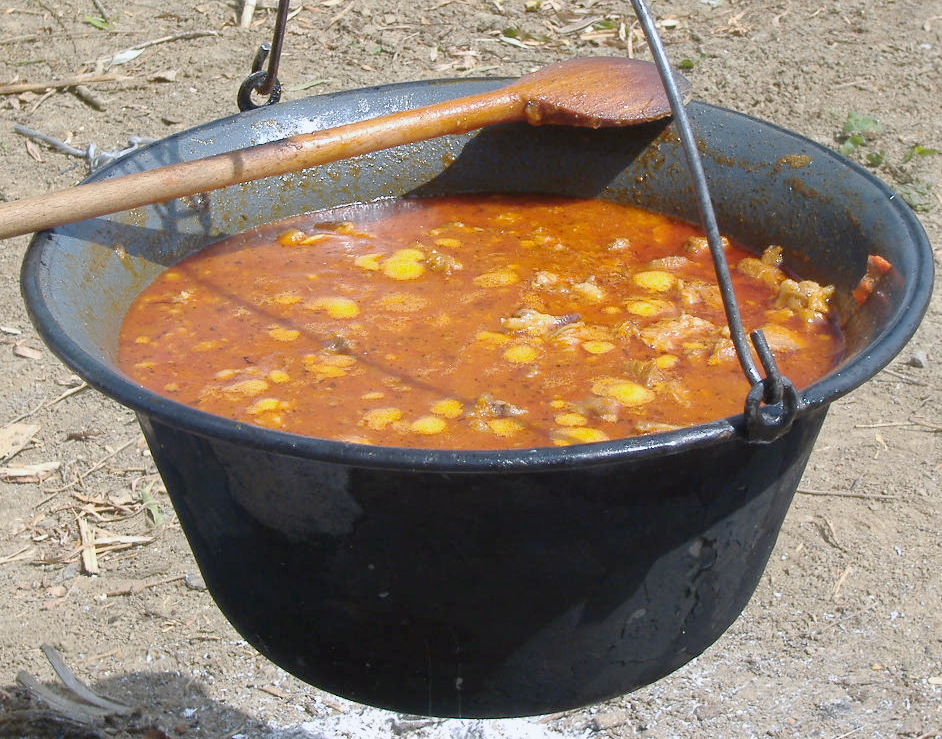 Classic goulash cooking outdoors in a traditional bogrács.
Welcome to FabulousFusionFood's Stew Recipes Page — Stews represent a combination of solid food ingredients that have been cooked in liquid and served in the resultant gravy. Ingredients can include any combination of vegetables and may include meat, especially tougher meats suitable for slow-cooking, such as beef, pork, venison, rabbit, lamb, poultry, sausages, and seafood. While water can be used as the stew-cooking liquid, stock is also common. A small amount of red wine or other alcohol is sometimes added for flavour. Seasonings and flavourings may also be added. Stews are typically cooked at a relatively low temperature (simmered, not boiled), allowing flavours to mingle.
Stews have been around almost nearly as long as humans have been cooking. All you need is a vessel to hold your ingredients and water and a means of heating that vessel. It can be as simple as a leather bag with stones heated in a fire dropped into it. So stews were almost certainly prepared during the Paleolithic and Neolithic periods, if not earlier. Once you have clay or metal pots you can prepare stews next to or set directly over a fire. Stews are low-maintenance cookery, generally not requiring that the cooking pot be observed continuously. The slow cooking is also ideal for tenderizing tougher cuts of meat (neck, shin, tail etc). As these also tend to be the most flavoursome parts of animals, this also means that stews can be extremely flavourful. Stews also pair well with the local staple: potatoes, rice, bread, yams, cassava etc.
Even in hunter-gatherer societies stews are useful in that the slow cooking can make the most of tough meat and it can be combined with foraged grains, leafy greens, nuts and starchy tubers to yield a flavourful, low maintenance and nutritious meal. With the advent of agriculture almost all grains are amenable to stewing and combining grains and legumes in a stew provides a ready way to gain all the essential amino acids that humans (particularly children) require.
The boiling process of making stews also helps sterilize the ingredients, killing harmful bacteria and viruses. It can also help neutralize harmful chemicals, such as the cyanogenic compounds in bitter cassava and helps reduce bitterness in leafy greens, making the food both safer to eat and more palatable. The addition of flavouring ingredients (fruit, spices, herbs) during the cooking process can also alter the flavours of stews, making them more palatable and more appealing. This is particularly the case when adding components with high umami content (certain fish, seaweed, cruciferous vegetables, beans, soy sauce, mushrooms etc).
It is little wonder that, taken globally, the list of stews presented on this site is a long one.
Some stews border on soups and the definition of whether a dish is a soup or a stew. A good example of this is Welsh cawl which can be served with more liquid as a soup or can be thickened as a stew and served with bread and/or potatoes. Most curries, due to their long, slow cooking and blend of ingredients can also be considered a subtype of stew.
Pretty much every culture on earth has a classic stew that's a major part of its cultural culinary repertoire. I have viewed and collected recipes for many of these on my travels. These and other classic stews from around the world are collected and presented here.
The alphabetical list of all the stew recipes on this site follows, (limited to 100 recipes per page). There are 2743 recipes in total:
Page 16 of 28
| Mackerel Run Down Origin: Jamaica | Malvas (Mallow Leaves) Origin: Roman | Mawmene (Chicken in White Wine with Dates and Pine Nuts) Origin: England |
| Mada (Green Banana Dumplings) Origin: Norfolk Island | Mămăligă (Mamaliga) Origin: Moldova | Mawmenee Origin: England |
| Madaba (Cassava Leaf and Coconut Stew) Origin: Britain | Mancarra with Citi (Chicken with Peanuts and Palm Oil) Origin: Guinea-Bissau | Mayotte Pilaou Origin: Mayotte |
| Madeiran Carne Vinha d'Alhos (Pork Marinated in Garlic and Wine) Origin: Portugal | Mangai Palakottai Kuzhambu (Raw Mango Jackfruit Seed Curry) Origin: India | Mbakhal Origin: Senegal |
| Mafé Origin: Senegal | Mangalorean Spinach and Black Eyed Beans Curry Origin: India | MBakhal aux Arachides (MBakhal with Peanuts) Origin: Senegal |
| Mafé Malienne (Malian Mafé) Origin: Mali | Mango Sauce Origin: Nigeria | Mbanga Soup (Palm Nut Soup) Origin: Cameroon |
| Mafé Poulet (Chicken Mafé) Origin: Senegal | Mangoé Rafalari (Spicy Mango Stew) Origin: Guinea | Mbaqanga (Bean and Goat Meat Stew) Origin: South Africa |
| mafè tatou nènn (Naked Peanut Stew) Origin: Mali | Manhattan Seafood Stew Origin: American | Mbawa ya Tomati (Chicken wings with Tomatoes) Origin: Mayotte |
| Maffé de Tabaski (Maffé for Tabaski) Origin: Cote dIvoire | Mani (Rice Sweet Dish) Origin: India | Mbaxal Dieune Origin: Senegal |
| Maffé Mauritanienne (Aubergines and Pumpkin) Origin: Mauritania | Manos de Cerdo a la Peruana (Peruvian-style Pig's Trotters) Origin: Peru | Mboro Mboro (Sweet Potato Leaf and Palm Oil Stew) Origin: Senegal |
| Maffe aux Legumes Arachide (Beef or Lamb in Peanut Butter) Origin: Senegal | Manx Broth for a Wedding Origin: Manx | Mboto à l'oseille (Fish with Sorrel) Origin: Congo |
| Maffi Gumbo (Okra Sauce) Origin: Guinea | Marake Kaloune (Fish in Sauce) Origin: Djibouti | Mboto à la Feuilles de Manioc (Fish with Cassava Leaves) Origin: Gabon |
| Maffi Hakko Bangtura (Sweet Potato Leaf Sauce) Origin: Guinea | Maraq Bilaash (Cherry Tomato Sauce) Origin: Somalia | Mboto aux Champignons (Fish with Mushrooms) Origin: Congo |
| Magatla (Oxtail Casserole) Origin: Botswana | Maraq Fahfah (Somali Soup) Origin: Somalia | MBoume au Néverdaye (Senegalese Fish, Peanut and Cassava Stew with Millet Couscous) Origin: Senegal |
| Magimbi ya nadzi (Taro in Coconut Milk) Origin: Mayotte | Maraq Fahfah (Somali Soup) Origin: Somaliland | Mbuzi ya masala (Goat Meat Dry Fry) Origin: Mayotte |
| Maharagwe (Spiced Red Beans in Coconut Milk) Origin: Kenya | Maraq Hilib Ari (Goat Meat Stew) Origin: Somalia | Mchicha (Spinach, Coconut and Peanuts) Origin: Tanzania |
| Maharggwe (Vegetables and Beans) Origin: Burundi | Marolaym Origin: Mauritania | Mchuzi wa Biringani (Garden Egg Curry) Origin: Tanzania |
| Majadito (Bolivian Rice and Beef) Origin: Bolivia | Maroumbo ya Nadzi (Tripe with Bananas) Origin: Mayotte | Mchuzi wa Biringani (Aubergine Curry) Origin: Tanzania |
| Majboos al Laham (Lamb with Rice) Origin: Kuwait | Maru we-llham (Meat and Rice with Vegetables) Origin: Mauritania | Mchuzi wa Kamba (Zanzibar Prawn Curry) Origin: Tanzania |
| Majoranas Tokany (Beef with Marjoram) Origin: Hungary | Masaaledaar Pudine wal Quimah (Minced Lamb with Mint and Spices) Origin: India | Mchuzi wa Samaki (Fish Curry) Origin: Tanzania |
| Makher Taukari (Fish Curry) Origin: Bangladesh | Masale Baath (Maharashtrian Spicy Vegetable Rice) Origin: India | Meadow Waxcap Curry with Rice Origin: Britain |
| Makher Taukari II (Fish Curry II) Origin: Bangladesh | Masaledaar Bakre ki Kaleji Gurda Phepsa (Lamb Offal Curry) Origin: India | Meatballs in Garlic Broth Origin: Algeria |
| Makke Origin: England | Massaman Mutton Curry Origin: Thailand | Meen Moilee (Keralan Fish Curry) Origin: India |
| Makluba (Upside Down Dish) Origin: Palestine | Massaman Nuea (Beef Masaman Curry) Origin: Thailand | Meshoui (Moroccan Lamb) Origin: Morocco |
| Makubi Origin: Tanzania | Massaman Nuea (Beef Massaman Curry) Origin: Thailand | Mesir Wat (Lentil Bowl) Origin: Ethiopia |
| Malay Chicken Kurma Origin: Malaysia | Mataba au Poisson (Mataba with Fish) Origin: Comoros | Mexican Crockpot Chili Origin: American |
| Malaysian Beriani Origin: Malaysia | Matapa Origin: Mozambique | Mexican Pork'n'Beans Origin: American |
| Malaysian Goat Rendang Origin: Malaysia | Matapa de Abóbora (Pumpkin Matapa) Origin: Mozambique | Meygoo Dopiyazeh (Persian Prawn, Pepper and Onion Curry) Origin: Iran |
| Malaysian Lamb Rendang Origin: Malaysia | Matata (Clam and Peanut Stew) Origin: Mozambique | Mfumbwa (Gnetum and Fish Stew) Origin: Mali |
| Malewa (Bamboo and Peanut Soup) Origin: Uganda | Matata (Clam, Pumpkin and Peanut Stew) Origin: Sao Tome | Micronesian Coconut Chicken Curry Origin: Federated States Micronesia |
| Mallow Stew Origin: Britain | Matata (Clams Cooked in Port Wine) Origin: Sao Tome | Micronesian Fish with Coconut Milk and Lime Origin: Federated States Micronesia |
| Mallow-leaf Stew Origin: African Fusion | Matsavo (Pumpkin Leaf and Peanut Flour Stew) Origin: Mozambique | Microwave Beef Spice Hotpot Origin: Britain |
| Malu Abulthiyal (Fish Curry with Fragrant Masala) Origin: Sri Lanka | Mauritanian Thieboudienne Origin: Mauritius | |
| Malvani Fish Curry Origin: India | Mauritian Prawn Curry Origin: Mauritius |
Page 16 of 28