FabulousFusionFood's Stew Recipes 12th Page
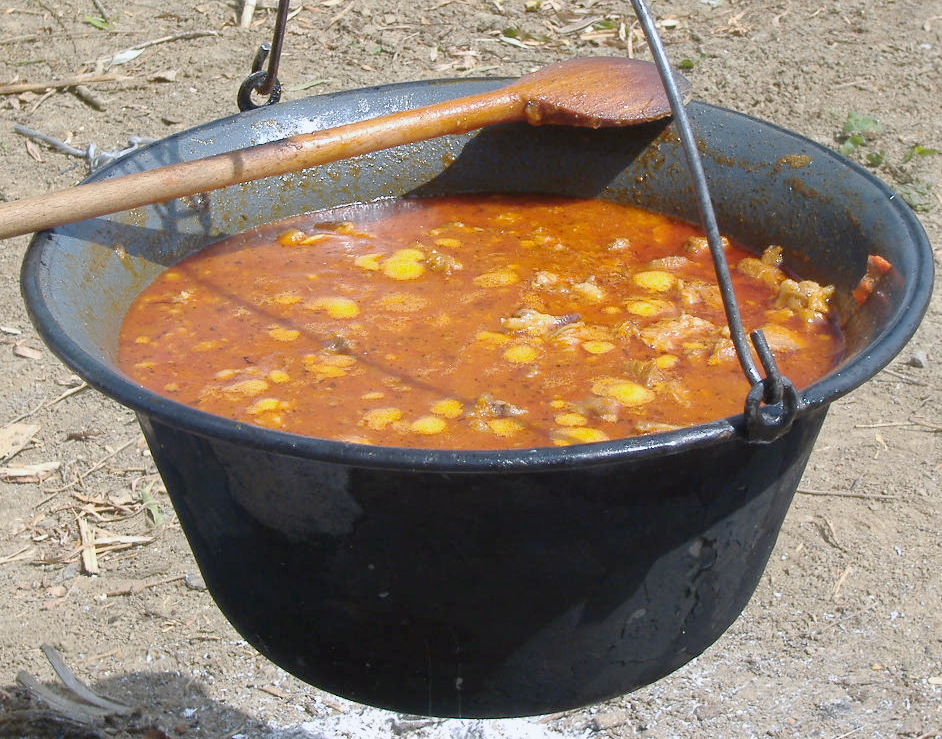 Classic goulash cooking outdoors in a traditional bogrács.
Welcome to FabulousFusionFood's Stew Recipes Page — Stews represent a combination of solid food ingredients that have been cooked in liquid and served in the resultant gravy. Ingredients can include any combination of vegetables and may include meat, especially tougher meats suitable for slow-cooking, such as beef, pork, venison, rabbit, lamb, poultry, sausages, and seafood. While water can be used as the stew-cooking liquid, stock is also common. A small amount of red wine or other alcohol is sometimes added for flavour. Seasonings and flavourings may also be added. Stews are typically cooked at a relatively low temperature (simmered, not boiled), allowing flavours to mingle.
Stews have been around almost nearly as long as humans have been cooking. All you need is a vessel to hold your ingredients and water and a means of heating that vessel. It can be as simple as a leather bag with stones heated in a fire dropped into it. So stews were almost certainly prepared during the Paleolithic and Neolithic periods, if not earlier. Once you have clay or metal pots you can prepare stews next to or set directly over a fire. Stews are low-maintenance cookery, generally not requiring that the cooking pot be observed continuously. The slow cooking is also ideal for tenderizing tougher cuts of meat (neck, shin, tail etc). As these also tend to be the most flavoursome parts of animals, this also means that stews can be extremely flavourful. Stews also pair well with the local staple: potatoes, rice, bread, yams, cassava etc.
Even in hunter-gatherer societies stews are useful in that the slow cooking can make the most of tough meat and it can be combined with foraged grains, leafy greens, nuts and starchy tubers to yield a flavourful, low maintenance and nutritious meal. With the advent of agriculture almost all grains are amenable to stewing and combining grains and legumes in a stew provides a ready way to gain all the essential amino acids that humans (particularly children) require.
The boiling process of making stews also helps sterilize the ingredients, killing harmful bacteria and viruses. It can also help neutralize harmful chemicals, such as the cyanogenic compounds in bitter cassava and helps reduce bitterness in leafy greens, making the food both safer to eat and more palatable. The addition of flavouring ingredients (fruit, spices, herbs) during the cooking process can also alter the flavours of stews, making them more palatable and more appealing. This is particularly the case when adding components with high umami content (certain fish, seaweed, cruciferous vegetables, beans, soy sauce, mushrooms etc).
It is little wonder that, taken globally, the list of stews presented on this site is a long one.
Some stews border on soups and the definition of whether a dish is a soup or a stew. A good example of this is Welsh cawl which can be served with more liquid as a soup or can be thickened as a stew and served with bread and/or potatoes. Most curries, due to their long, slow cooking and blend of ingredients can also be considered a subtype of stew.
Pretty much every culture on earth has a classic stew that's a major part of its cultural culinary repertoire. I have viewed and collected recipes for many of these on my travels. These and other classic stews from around the world are collected and presented here.
The alphabetical list of all the stew recipes on this site follows, (limited to 100 recipes per page). There are 2743 recipes in total:
Page 12 of 28
| Guisado Perviuano de la Calabaza (Peruvian Pumpkin Stew) Origin: Peru | Heat Wave Chili Origin: American | Igra Stobá (Liver Stew) Origin: Bonaire |
| Guiso de Conejoa (Rabbit Stew) Origin: Peru | Hebolace Origin: England | Igra Stobá (Liver Stew) Origin: Curacao |
| Gulai Kambing (Sumatran Goat Curry) Origin: Martinique | Hena-Kisoa sy voanjobory (Pork with Bambara Groundnuts) Origin: Madagascar | Ijogó (Cabbage and Smoked Fish Stew) Origin: Sao Tome |
| Gungo Rice and Peas Origin: Jamaica | Henne in Bokenade (Hen in Sauce) Origin: England | Ila (Okra) Origin: Nigeria |
| Guriltai Shul (Stewed Vegetables, Meat and Noodles) Origin: Mongolia | Herbed Dumplings Origin: Britain | Ila Alasepo (Okra and Spinach Soup) Origin: Nigeria |
| Gustum de Cucurbitis (Gourd Antipasto) Origin: Roman | Herby Suet Dumplings Origin: England | Imam Bayildi (Baked Aubergine Casserole) Origin: Armenia |
| Gustum de Holeribus (Vegetable Relish) Origin: Roman | Herring Rougail (Le Rougail Z'hareng) Origin: Reunion | Imoyo Eba Origin: Nigeria |
| Gustum de praecoquiis (Starter with Apricots) Origin: Roman | Hervido de pescado (Boiled Fish with Vegetables) Origin: Costa Rica | In Echino (Of Sea Urchins) Origin: Roman |
| Gustum Versatile (Turnover Antipasto) Origin: Roman | Highland Venison Casserole with Chestnuts Origin: Scotland | In mitulis (Mussels) Origin: Roman |
| Guy Fawkes Gunpowder Casserole Origin: Britain | Himalayan Balsam Seed Curry Origin: Fusion | In perdice (Boiled Partridge) Origin: Roman |
| Guyanese Chicken Curry Origin: Guyana | Hlalem (Pasta with Beans) Origin: Tunisia | In Vitulinam Elixam (Boiled Veal) Origin: Roman |
| Guyanese Cook-up Rice and Peas Origin: Guyana | Holdermus (Elderberry Mush) Origin: Germany | In Vulva [et] Sterili ([Sauce] for Sterile Sow's Womb) Origin: Roman |
| Guyanese Crab Callaloo Origin: Guyana | Home-made Anchovy Essence Origin: Britain | Indonesian Peanut Sauce Origin: Indonesia |
| Guyanese Pepper Pot Origin: Guyana | Home-made Maggot Stew Origin: American | Inyama Yenkukhu (South African Chicken Casserole) Origin: South Africa |
| Gwledd y Cybydd (The Miser's Feast) Origin: Welsh | Hong am Rèisleck (Chicken Cooked in Wine) Origin: Luxembourg | Irio Origin: Kenya |
| Gynggaudy Origin: England | Hong Shao Rou (Red-cooked Pork Belly) Origin: China | Irish Beef In Guinness Origin: Ireland |
| Habichuelas Guisadas (Dominican Bean Stew) Origin: Dominican Republic | Hoppin' John Origin: America | Irish Beef Stew Origin: Ireland |
| Habichuelas Negras (Puerto Rican Stewed Black Beans) Origin: Puerto Rico | Hor'i (Stewed Beef Shank) Origin: Yemen | Irish Cabbage Parcels Origin: Ireland |
| Haddock Supper Origin: Ireland | Hot and Sour Venison Soup with Honey Fungus Origin: Britain | Irish Carbonnade Origin: Ireland |
| Haenau Cig Oen gyda Pannas a Chennin (Slices of Lamb with Parsnips and Leeks) Origin: Welsh | Hot Chili Beans Origin: American | Irish Coddled Pork with Cider Origin: Ireland |
| Hake and Chorizo Stew Origin: Britain | Hot Green Tamarind Chicken Origin: Indonesia | Irish Farm Broth Origin: Ireland |
| Halibut and Tomato Curry Origin: Britain | Hot Pinto Bean Chili Origin: American | Irish Fisherman's Stew Origin: Ireland |
| Halloween Swamp Dip Origin: American | Hot Turkey and Black Bean Chili Origin: American | Irish Hot Pot Origin: Ireland |
| Halupki (Stuffed Cabbage Rolls) Origin: Slovakia | Hotpot Porc Cymreig, Chorizo a Ffa Gwynion (Welsh Pork, Chorizo and White Bean Hotpot) Origin: Welsh | Irish Lamb and Potato Curry Origin: Ireland |
| Halupki Stuffed with Buckwheat Groats Origin: Slovakia | Hotpot Porc y Gaeaf (Wintery Pork Hotpot) Origin: Welsh | Irish Lamb Stew Origin: Ireland |
| Haluwa (Carrot Sweetmeat) Origin: Tanzania | Huachingngo Yucateco (Red Snapper, Yucatan Style) Origin: Mexico | Irish Lamb Stew Origin: Ireland |
| Hare à la Minute Origin: British | Hyderabad Mutton Dopyaza Origin: India | Irish Stew Origin: Ireland |
| Hares in Papdele (Hare Stew on a Bread Base) Origin: England | Iakwe Stew (Marshallese Chicken Stew) Origin: Marshall Islands | Iron Age Pork and Beans Origin: Ancient |
| Hares in Talbotes (Hares in Hare-blood Sauce) Origin: England | Ibihaza (Beans with Pumpkin) Origin: Rwanda | Isi Ewu (Spiced Goat Head) Origin: Nigeria |
| Haricots Blancs à la Bretonne (Breton-style White Beans) Origin: France | Ifisashi (Bean Leaves with Peanuts) Origin: Zambia | Isidudu Origin: Zimbabwe |
| Harira Origin: Djibouti | Igisafuliya (Chicken Plantain and Vegetable Stew) Origin: Rwanda | Isombe Origin: Rwanda |
| Harisa (Chicken and Wheat Porridge) Origin: Armenia | Igitoke Origin: Rwanda | Isophu Origin: Southern Africa |
| Havgitov Kufta (Bulgur Wheat with Eggs and Tomatoes) Origin: Armenia | Ignames à la sauce tomate (Yams with Tomato Sauce) Origin: Burkina Faso | |
| Hawthorn Berry Sauce Origin: Britain | Ignames à la Tomate (Yams with Tomatoes) Origin: Burkina Faso |
Page 12 of 28