FabulousFusionFood's Stew Recipes 8th Page
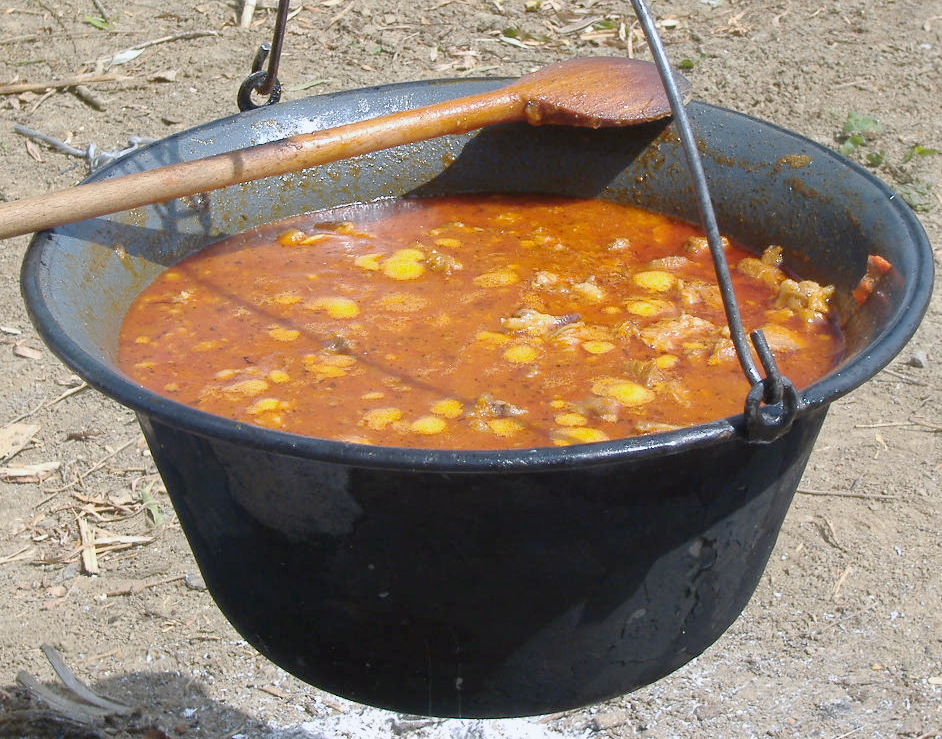 Classic goulash cooking outdoors in a traditional bogrács.
Welcome to FabulousFusionFood's Stew Recipes Page — Stews represent a combination of solid food ingredients that have been cooked in liquid and served in the resultant gravy. Ingredients can include any combination of vegetables and may include meat, especially tougher meats suitable for slow-cooking, such as beef, pork, venison, rabbit, lamb, poultry, sausages, and seafood. While water can be used as the stew-cooking liquid, stock is also common. A small amount of red wine or other alcohol is sometimes added for flavour. Seasonings and flavourings may also be added. Stews are typically cooked at a relatively low temperature (simmered, not boiled), allowing flavours to mingle.
Stews have been around almost nearly as long as humans have been cooking. All you need is a vessel to hold your ingredients and water and a means of heating that vessel. It can be as simple as a leather bag with stones heated in a fire dropped into it. So stews were almost certainly prepared during the Paleolithic and Neolithic periods, if not earlier. Once you have clay or metal pots you can prepare stews next to or set directly over a fire. Stews are low-maintenance cookery, generally not requiring that the cooking pot be observed continuously. The slow cooking is also ideal for tenderizing tougher cuts of meat (neck, shin, tail etc). As these also tend to be the most flavoursome parts of animals, this also means that stews can be extremely flavourful. Stews also pair well with the local staple: potatoes, rice, bread, yams, cassava etc.
Even in hunter-gatherer societies stews are useful in that the slow cooking can make the most of tough meat and it can be combined with foraged grains, leafy greens, nuts and starchy tubers to yield a flavourful, low maintenance and nutritious meal. With the advent of agriculture almost all grains are amenable to stewing and combining grains and legumes in a stew provides a ready way to gain all the essential amino acids that humans (particularly children) require.
The boiling process of making stews also helps sterilize the ingredients, killing harmful bacteria and viruses. It can also help neutralize harmful chemicals, such as the cyanogenic compounds in bitter cassava and helps reduce bitterness in leafy greens, making the food both safer to eat and more palatable. The addition of flavouring ingredients (fruit, spices, herbs) during the cooking process can also alter the flavours of stews, making them more palatable and more appealing. This is particularly the case when adding components with high umami content (certain fish, seaweed, cruciferous vegetables, beans, soy sauce, mushrooms etc).
It is little wonder that, taken globally, the list of stews presented on this site is a long one.
Some stews border on soups and the definition of whether a dish is a soup or a stew. A good example of this is Welsh cawl which can be served with more liquid as a soup or can be thickened as a stew and served with bread and/or potatoes. Most curries, due to their long, slow cooking and blend of ingredients can also be considered a subtype of stew.
Pretty much every culture on earth has a classic stew that's a major part of its cultural culinary repertoire. I have viewed and collected recipes for many of these on my travels. These and other classic stews from around the world are collected and presented here.
The alphabetical list of all the stew recipes on this site follows, (limited to 100 recipes per page). There are 2743 recipes in total:
Page 8 of 28
| Crockpot Chili Con Carne Origin: American | Curried Wild Mustard Greens with Beans Origin: Fusion | Date Sauce Origin: Niger |
| Crockpot Chili with Four Kinds of Beans Origin: American | Curry comorien (Comoros Curry) Origin: Comoros | Daube de Banane Plantains (Daube de Banane) Origin: Seychelles |
| Crockpot Corned Beef and Cabbage Origin: Ireland | Curry de Boeuf (Beef Curry) Origin: Mauritius | Daube de chevreuil (Venison Daube) Origin: France |
| Crockpot Curry Hotpot Origin: Fusion | Curry de Boeuf au Yaourt (Beef Curry with Yoghurt) Origin: Mauritius | Daube de Provençale (Provençal Daube) Origin: France |
| Cucumer Pob (Baked Cucumber) Origin: Welsh | Curry de Lotte au Citron Vert (Monkfish Curry with Lime) Origin: Senegal | Daube de Thon (Tuna Daube) Origin: Mauritius |
| Cucurbitas cum Gallina (Gourds with Chicken) Origin: Roman | Curry de Pintade à la Noix de Coco (Guinea Fowl and Coconut Curry) Origin: Madagascar | Dawadawa Jollof Rice with Guinea Fowl Origin: Ghana |
| Cucurbitas Elixatas (Stewed Gourds) Origin: Roman | Curry de porc au taro tahitien (Tahitian Pork Curry with Taro) Origin: Tahiti | Deccan Chicken Curry Origin: Sri Lanka |
| Cucurbitas Frictas (Fried Gourds) Origin: Roman | Curry de Poulet aux Bananes Plantain (Chicken and Plantain Curry) Origin: Cote dIvoire | Demok (Taro Leaves in Coconut Milk) Origin: Palau |
| Cucurbitas iure Colocasorium (Gourds Cooked as Broad Beans) Origin: Roman | Curry Trey Ruah (Curried Snapper) Origin: Cambodia | Dengu (Green Lentil Stew) Origin: Kenya |
| Cucurbitas mode Alexandrino (Alexandrine Melon) Origin: Roman | Cwnhingen â Chorbys (Rabbit with Lentils) Origin: Welsh | Desayuno Charquicán (Charquicán Breakfast) Origin: Chile |
| Cunillo (Rabbit in Tomato Sauce) Origin: Andorra | Cypriot Imam Baylidi Origin: Cyprus | Dessi Lamoumou (Fresh Fish Sauce) Origin: Togo |
| Curried Beef Origin: Britain | Cyri Cig Oen a Chennin (Welsh Lamb and Leek curry) Origin: Welsh | Dhal Origin: India |
| Curried Beef and Squash Origin: Tanzania | Cyw Iâr Bricyll (Welsh Apricot Chicken) Origin: Welsh (Patagonia) | Dhan Saag Dhal Origin: India |
| Curried Beef Gratin Origin: African Fusion | Cyw Iâr Buarth (Farmyard Chicken) Origin: Welsh | Dhiafora Parayiemista (Mixed Stuffed Vegetables) Origin: Cyprus |
| Curried Beef in Red Wine Origin: Britain | Cyw Iâr Glan Teifi (Teifiside Chicken) Origin: Welsh | Diced Beef Chili Con Carne Origin: American |
| Curried Beef Stew Origin: South Africa | Cyw Iâr Mewn Dull Cymreig (Welsh-style Chicken) Origin: Welsh | Dikgobe (Mixed Beans Porridge) Origin: Botswana |
| Curried Cabbage Origin: West Africa | Dékoudéssi aux Boeuf (Palm Nut Soup with Beef) Origin: Togo | Dippy Origin: England |
| Curried Chestnut Soup Origin: Britain | Dékoudéssi aux Poisson Fumé (Palm Soup with Smoked Fish) Origin: Togo | Diri Ak Pwa (Haitian Rice and Beans) Origin: Haiti |
| Curried Chicken Origin: Saint Kitts | Dékoudéssi aux Poulet (Palm Soup with Chicken) Origin: Togo | Djibouti Lentils Origin: Djibouti |
| Curried Cod Origin: Britain | Dagaa (Dried Fish with Tomatoes) Origin: Tanzania | Djim'bre Origin: Cote dIvoire |
| Curried Corn Origin: Somalia | Daging Bumbu Bali Origin: Indonesia | Djouka de Fonio (Fonio Couscous with Vegetables) Origin: Mali |
| Curried Fruit Bake Origin: American | Dahinou Saloum Origin: Senegal | Djouka Fonio Origin: Mali |
| Curried Gazelle Origin: Zambia | Dahomey Fish Stew Origin: Benin | Dobrada Origin: Portugal |
| Curried Goat Origin: Jamaica | Dajaj bil Hamod (Lemon Chicken) Origin: Saudi Arabia | Dograma (Meat and Pasta Dish) Origin: Turkmenistan |
| Curried Mushrooms and Rice Origin: Fusion | Dakhine Origin: Senegal | Dograma II Origin: Turkmenistan |
| Curried Mutton Origin: Britain | Dakhine Pouhpage (Stewed Chicken and Rice) Origin: Gambia | Domatesli Pilav (Pilaf with Tomato) Origin: Turkey |
| Curried Mutton Stew Origin: South Africa | Dal Makani (Black Dal Curry) Origin: India | Dombrés de Morue Salé (Salt Cod Dombres) Origin: Martinique |
| Curried Neck of Mutton Potjie Origin: Namibia | Dal Makhani Origin: Pakistan | Dombrés haricots rouges (Red Bean Dombrés) Origin: Guadeloupe |
| Curried Rice with Beef Origin: Ghana | Dama be Potaatas (Beef and Potato Stew) Origin: Sudan | Dominica Calypso Chicken Origin: Dominica |
| Curried Salmon Origin: Britain | Damaa Origin: Sudan | Dominica Crab Callaloo Origin: Dominica |
| Curried Scallops in Coconut Milk with Stevia Origin: American | Dambou (Rice Couscous with Moringa) Origin: Niger | Dominica Curried Goat Origin: Dominica |
| Curried Sosaties Origin: South Africa | Dandelion and Orange Curry Origin: Britain | Dominica Curry Prawns Origin: Dominica |
| Curried Spinach with peanut butter Origin: Burundi | Daqoos (Tomato, garlic and coriander sauce) Origin: UAE | |
| Curried Vegetables Origin: East Africa | Daraba Origin: Chad |
Page 8 of 28