FabulousFusionFood's Fish, Crustacean, Cephalopod and Shellfish based Recipes 14th Page
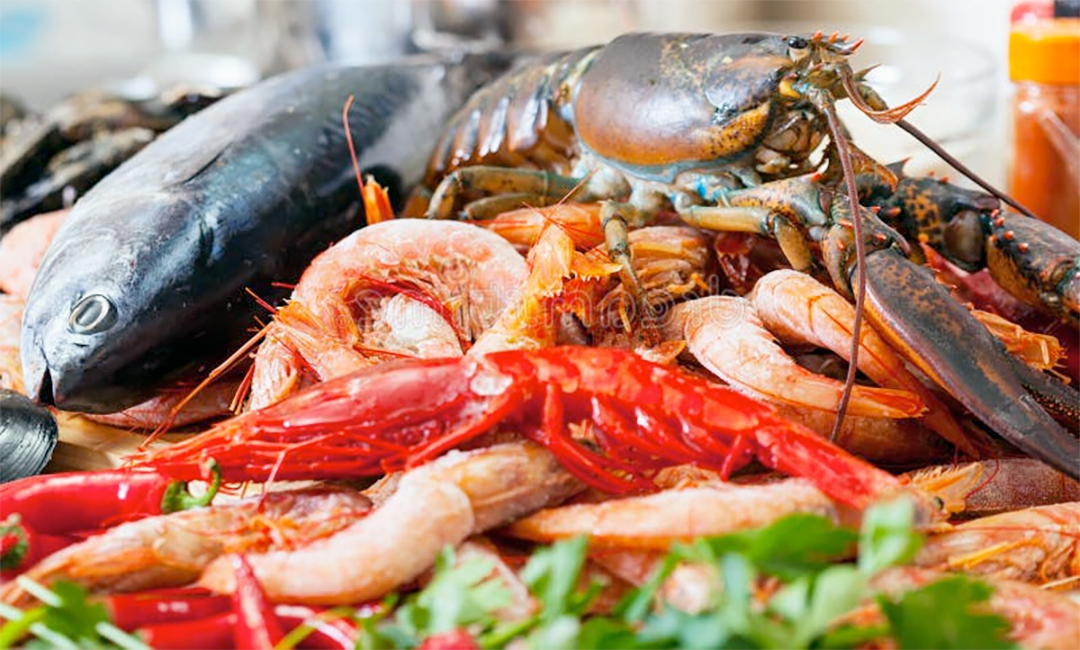 Still Life Photograph of mixed Fish and Seafood.
Welcome to FabulousFusionFood's Fish, Crustacean and Shellfish based Recipes Page — The recipes presented here are all based on aquatic animals: Fish (both sea-water and freshwater), crustaceans (crabs, lobsters, langoustine, crayfish and prawns) and shellfish of all kinds. These are still animals, and their flesh counts as 'meat', though I have removed these animals from the main Meat Recipes page.
Typically, a fish is defined as an aquatic, anamniotic, gill-bearing vertebrate animal with swimming fins and a hard skull, but lacking limbs with digits. Fish can be grouped into the more basal jawless fish and the more common jawed fish, the latter including all living cartilaginous and bony fish, as well as the extinct placoderms and acanthodians. In a break to the long tradition of grouping all fish into a single class (Pisces), modern phylogenetics views fish as a paraphyletic group. Here you will find historic recipes for jawless fishes as well as recipes for cartilaginous and bony jawed fish. For the separate list of fish-based recipes see the fish-based recipes page
For my definition of shellfish I'm including molluscs (ie shelled marine animals) as well as sea snails (that are actually gastropods) but I'm excluding crustaceans (eg prawns, lobsters, crayfish, crabs and barnacles) and cephalopod molluscs (squids, octopodes, cuttlefish) which have their own sections and are described below. Mollusca is a phylum of protostomic invertebrate animals, whose members are known as molluscs or mollusks. Molluscs are the largest marine phylum, comprising about 23% of all the named marine organisms. They are highly diverse, not just in size and anatomical structure, but also in behaviour and habitat, as numerous groups are freshwater and even terrestrial species. For the separate list of shellfish-based recipes see the shellfish-based recipes page.
Crustaceans (from Latin meaning: "those with shells" or "crusted ones") are invertebrate animals that constitute one group of arthropods that are traditionally a part of the subphylum Crustacea (/krəˈsteɪʃə/), a large, diverse group of mainly aquatic arthropods including decapods (shrimps, prawns, crabs, lobsters and crayfish), seed shrimp, branchiopods, fish lice, krill, remipedes, isopods, barnacles, copepods, opossum shrimps, amphipods and mantis shrimp. The vast majority of crustaceans consumed by humans are decapod crustaceans: crabs, lobsters, shrimp, crayfish, langoustine and prawns. Krill and barnacles are the only non-decapod crustaceans eaten regularly. For the separate list of crustacean-based recipes see the crustacean-based recipes page.
Cephalopods are members of the molluscan class Cephalopoda /sɛfəˈlɒpədə/ (Greek plural κεφαλόποδες, kephalópodes; "head-feet") such as a squid, octopus, cuttlefish, or nautilus. These exclusively marine animals are characterized by bilateral body symmetry, a prominent head, and a set of arms or tentacles (muscular hydrostats) modified from the primitive molluscan foot. Fishers sometimes call cephalopods "inkfish", referring to their common ability to squirt ink. They are all regularly consumed by humans, particularly squid and octopodes. For the separate list of caphalopod-based recipes see the cephalopod-based recipes page.
Here I'm using a broader definition of seafood to also include items such as sea anemones (that the Romans ate) as well as sea cucumbers (a common ingredient in sushi) and sea urchins (consumed by ancient Romans and Japanese). Essentially covering the range of aquatic animals consumed by humans.
As this site also includes historic recipes, there will be some unusual fish and shellfish in the lists (like weaver fish from ancient Roman cookery) as well as forms of cookery (like clay baking) that are not so commonly used any more. You will see many Ancient Roman recipes in the list, this is due to the Romans' extensive use of liquamen/garum (fish sauce) in their recipes which was typically fermented from marine fish. There are also many Mediaeval recipes presented, coming from when the Catholic church proscribed the eating of meat and there were more 'fish days' in the yearly calendar than there were days where meat could be eaten. This also explains the separation of aquatic animals from terrestrial animals, the former being classed as 'fish' and the latter as 'meat'.
The alphabetical list of all the fish-, crustacean- and shellfish-based recipes on this site follows, (limited to 100 recipes per page). There are 2561 recipes in total:
Page 14 of 26
| Koro Owu Soup (Cotton Seed Soup) Origin: Nigeria | Langouste à la Vanille (Lobsters with Vanilla Sauce) Origin: Comoros | Liberian Split Peas Origin: Liberia |
| Korokke (Tuna and Water Spinach Fritters) Origin: Palau | Langoustes grillées au beurre vanillé (Grilled Lobsters with Vanilla Butter) Origin: New Caledonia | Liberian-style Fried Cabbage Origin: Liberia |
| Kosrae Soup (Tuna, Banana and Coconut Milk Soup) Origin: Federated States Micronesia | Langoustes grillées sauce antillaise (Grilled Spiny Lobster with Antillean Sauce) Origin: Sint Maarten | Liboké de Poisson (Fish in Banana Leaf) Origin: Central Africa |
| Kotor Bay Stewed Fish Origin: Montenegro | Langoustes grillées sauce antillaise (Grilled Spiny Lobster with Antillean Sauce) Origin: Saint Barthelemy | Ligge Estren Porth Navas (Port Navas Oyster Soup) Origin: England |
| Koumrangan Origin: Chad | Langoustes grillées sauce antillaise (Grilled Spiny Lobster with Antillean Sauce) Origin: Saint-Martin | Lightly-spiced Fish Fajitas Origin: Britain |
| Koumrangan avec Patte d'Arachide (Koumrangan with Peanut Paste) Origin: Chad | Langoustines au Breton Kari (Langoustines with Breton Kari Spices) Origin: France | Lime-cured New Caledonian Blue Prawn Salad Origin: New Caledonia |
| Kouti (Cassava Croquettes) Origin: Guinea | Lao Tam Som (Lao Green Papaya Salad) Origin: Laos | Limelax (Lime Salmon) Origin: Sweden |
| Kpala (Jute Leaf Sauce) Origin: Cote dIvoire | Lapas (Griddled Limpets) Origin: Portugal | Ling Fillets with Parsley and Tomato Pesto Origin: Britain |
| Kräftskiva (Swedish Crayfish Boil) Origin: Sweden | Lapin au Cidre (Rabbit in Cider) Origin: France | Llymrïaid (Sand Eels) Origin: Welsh |
| Krain Krain (Jute Leaf Stew) Origin: Sierra Leone | Large Fungal Caps a Cotoletta Origin: Britain | Loaded Fish Burritos Origin: Britain |
| Kreooli krabi-kotletid (Dominican Creole Crab Cakes) Origin: Dominica | Laska Origin: Malaysia | Lobster and Clotted Cream Tart Origin: Britain |
| Kriibsen (Crayfish, Luxembourg Style) Origin: Luxembourg | Laumproys in Galyntyne (Lampreys in Galingale Sauce) Origin: England | Lobster Croquets Origin: Britain |
| Krill Sweet Potato Cakes Origin: Fusion | Le cassoulet de la mer à la bretonne (Breton seaside cassoulet) Origin: France | Lobster Curry Origin: Britain |
| Krokèchi (Prawn Croquettes) Origin: Aruba | Le Chao Men (New Caledonian Chaw Mein) Origin: New Caledonia | Lobster Sauce Origin: Britain |
| Kuah Kuning (Yellow Gravy Soup) Origin: Papua | Le Goundja (Fish with Aubergines and Cassava Leaves) Origin: Central African Republic | Lobster Sauce for Fish Origin: Britain |
| Kuka Soup Origin: Nigeria | Le Kissar Origin: Chad | Lobster Soup Origin: British |
| Kuljon (Oysters Fried in Egg Batter) Origin: Korea | Le Me Tsolola Origin: Comoros | Lobster with Lemon Origin: Senegal |
| Kwacoco with Banga Soup Origin: Cameroon | Le Ndolé Camerounais (Cameroonian Ndolé) Origin: Cameroon | Locusta Elixa cum Cuminato (Boiled Lobster with Cumin Sauce) Origin: Roman |
| Kwahu Nsusua Abomu (Turkey Berry and Fish Stew) Origin: Ghana | Leftover Mash and Tinned Fish Fishcakes Origin: Britain | Locustam et Scillas (Lobsters and Prawns) Origin: Roman |
| Kyet tha Kar la Thar Hin (Chicken and Squash Curry) Origin: Myanmar | Leftover Rice Muffins Origin: Britain | Locustas Assas sic Facies (Roast Lobster is Made Thus) Origin: Roman |
| Kyinkaafa (Rice with Tomato and Dried Fish) Origin: Ghana | Leftovers Stir-fry with Green Papaya Origin: American | Logosta Assada (Roasted Lobster) Origin: Guinea-Bissau |
| La Capitaine Sangha (Nile Perch with Red Sauce) Origin: Mali | Lemon Chilli Chicken Origin: Cocos Islands | Lohikeitto (Finnish Salmon Soup) Origin: Finland |
| La Salsa de Cacahuete (Peanut Sauce) Origin: Equatorial Guinea | Lemon Pepper Sea Bass Origin: Fusion | London-style Stewed Eels Origin: England |
| Laal Maas (Spicy Red Lamb Shank Curry) Origin: India | Lemongrass Curry Origin: Cambodia | Louisiana Cajun Pizza Origin: American |
| Laap (Beef Salad) Origin: Laos | Lemongrass Pork with Rice Noodles Origin: Australia | Lourenço Marques Prawns Origin: South Africa |
| Labadja Origin: Mali | Lenticula ex sphondylis (Mussels with Lentils) Origin: Roman | Lowumbo (Ugandan Steamed Fish) Origin: Uganda |
| Lactucas (Lettuce) Origin: Roman | Leporem Farsum (Stuffed Hare) Origin: Roman | Lucky Prawns and Lotus Seeds Origin: China |
| Laj Ntses (Fish Larb) Origin: Laos | Les Sardines Farcies aux Blettes et aux Moules (Sardines Stuffed with Chard and Mussels) Origin: Monaco | Luwombo () Origin: Uganda |
| Lakhou bissap Origin: Senegal | Liberian Aubergine Stew Origin: Liberia | M'Boa com Xima (Pumpkin Leaves in Peanut Sauce with Prawns) Origin: Mozambique |
| Laksa Origin: Malaysia | Liberian Dry Rice Origin: Liberia | Môr-leisiad wedi Potsio gyda Nionyn, Cennin a Ffenigl (Poached Pollack with Onion, Leek and Fennel) Origin: Welsh |
| Laksa Paste Origin: Singapore | Liberian Eggplant Stew Origin: Liberia | M'tsolola (Fish and Plantain stew in Coconut Milk) Origin: Comoros |
| Laksa Paste Origin: Malaysia | Liberian Prawn Bisque Origin: Liberia | Maacher Chop (Indian Fish Croquettes) Origin: India |
| Laksa Paste II Origin: Malaysia | Liberian Red Oil Okra Soup Origin: Liberia | |
| Langouste à la Vanille (Lobster with Vanilla Sauce) Origin: Comoros | Liberian Spaghetti Origin: Liberia |
Page 14 of 26