FabulousFusionFood's Fish, Crustacean, Cephalopod and Shellfish based Recipes 18th Page
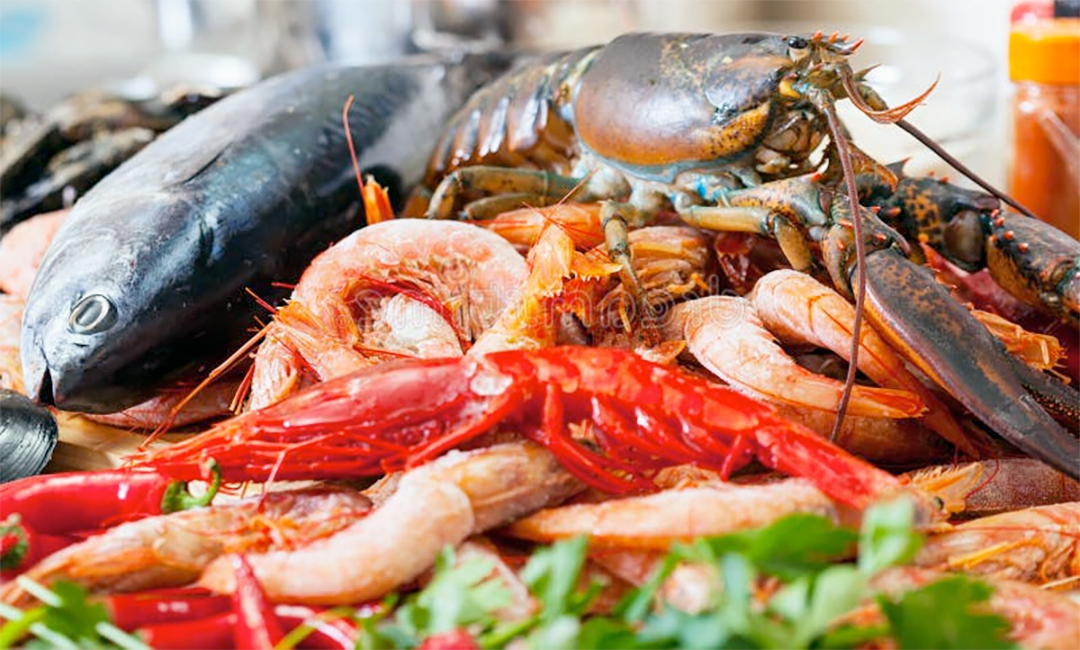 Still Life Photograph of mixed Fish and Seafood.
Welcome to FabulousFusionFood's Fish, Crustacean and Shellfish based Recipes Page — The recipes presented here are all based on aquatic animals: Fish (both sea-water and freshwater), crustaceans (crabs, lobsters, langoustine, crayfish and prawns) and shellfish of all kinds. These are still animals, and their flesh counts as 'meat', though I have removed these animals from the main Meat Recipes page.
Typically, a fish is defined as an aquatic, anamniotic, gill-bearing vertebrate animal with swimming fins and a hard skull, but lacking limbs with digits. Fish can be grouped into the more basal jawless fish and the more common jawed fish, the latter including all living cartilaginous and bony fish, as well as the extinct placoderms and acanthodians. In a break to the long tradition of grouping all fish into a single class (Pisces), modern phylogenetics views fish as a paraphyletic group. Here you will find historic recipes for jawless fishes as well as recipes for cartilaginous and bony jawed fish. For the separate list of fish-based recipes see the fish-based recipes page
For my definition of shellfish I'm including molluscs (ie shelled marine animals) as well as sea snails (that are actually gastropods) but I'm excluding crustaceans (eg prawns, lobsters, crayfish, crabs and barnacles) and cephalopod molluscs (squids, octopodes, cuttlefish) which have their own sections and are described below. Mollusca is a phylum of protostomic invertebrate animals, whose members are known as molluscs or mollusks. Molluscs are the largest marine phylum, comprising about 23% of all the named marine organisms. They are highly diverse, not just in size and anatomical structure, but also in behaviour and habitat, as numerous groups are freshwater and even terrestrial species. For the separate list of shellfish-based recipes see the shellfish-based recipes page.
Crustaceans (from Latin meaning: "those with shells" or "crusted ones") are invertebrate animals that constitute one group of arthropods that are traditionally a part of the subphylum Crustacea (/krəˈsteɪʃə/), a large, diverse group of mainly aquatic arthropods including decapods (shrimps, prawns, crabs, lobsters and crayfish), seed shrimp, branchiopods, fish lice, krill, remipedes, isopods, barnacles, copepods, opossum shrimps, amphipods and mantis shrimp. The vast majority of crustaceans consumed by humans are decapod crustaceans: crabs, lobsters, shrimp, crayfish, langoustine and prawns. Krill and barnacles are the only non-decapod crustaceans eaten regularly. For the separate list of crustacean-based recipes see the crustacean-based recipes page.
Cephalopods are members of the molluscan class Cephalopoda /sɛfəˈlɒpədə/ (Greek plural κεφαλόποδες, kephalópodes; "head-feet") such as a squid, octopus, cuttlefish, or nautilus. These exclusively marine animals are characterized by bilateral body symmetry, a prominent head, and a set of arms or tentacles (muscular hydrostats) modified from the primitive molluscan foot. Fishers sometimes call cephalopods "inkfish", referring to their common ability to squirt ink. They are all regularly consumed by humans, particularly squid and octopodes. For the separate list of caphalopod-based recipes see the cephalopod-based recipes page.
Here I'm using a broader definition of seafood to also include items such as sea anemones (that the Romans ate) as well as sea cucumbers (a common ingredient in sushi) and sea urchins (consumed by ancient Romans and Japanese). Essentially covering the range of aquatic animals consumed by humans.
As this site also includes historic recipes, there will be some unusual fish and shellfish in the lists (like weaver fish from ancient Roman cookery) as well as forms of cookery (like clay baking) that are not so commonly used any more. You will see many Ancient Roman recipes in the list, this is due to the Romans' extensive use of liquamen/garum (fish sauce) in their recipes which was typically fermented from marine fish. There are also many Mediaeval recipes presented, coming from when the Catholic church proscribed the eating of meat and there were more 'fish days' in the yearly calendar than there were days where meat could be eaten. This also explains the separation of aquatic animals from terrestrial animals, the former being classed as 'fish' and the latter as 'meat'.
The alphabetical list of all the fish-, crustacean- and shellfish-based recipes on this site follows, (limited to 100 recipes per page). There are 2561 recipes in total:
Page 18 of 26
| Oven-roasted Grey Snapper with Caribbean Sauce Origin: Turks Caicos | Pan-fried Mackerel with Porridge Oats Origin: Britain | Patina Cotidiana II (Everyday Casserole II) Origin: Roman |
| Oven-smoked Fish Origin: Gambia | Pan-fried Megrim Sole with Creamed Spinach Origin: Britain | Patina de Apua (A Dish of Anchovies) Origin: Roman |
| Oyster Croquets Origin: Britain | Pan-fried Megrim with Tarragon Origin: England | Patina de Apua Fricta (A Dish of Fried Anchovies) Origin: Roman |
| Oyster Soup I Origin: British | Pan-fried Sea Bass with Citrus-dressed Broccoli Origin: Fusion | Patina de apua sive apua (Steamed Custard of Small Fish) Origin: Roman |
| Oyster Soup II Origin: British | Pan-fried Sea Bass with Lemon Mash Origin: Britain | Patina de Cydoneis (A Dish of Quinces) Origin: Roman |
| Oyster Stew Origin: Britain | Pan-fried Squat Lobsters Origin: England | Patina de Pisce Lupo (A Dish of Service-berries) Origin: Roman |
| Oyster Stuffing for Turkey Origin: Britain | Pan-fried Tandoori Fish Steaks Origin: Fusion | Patina de Pisce Lupo (A Dish of Wolf-fish) Origin: Roman |
| Oysters in Cynee (Oysters in Spiced Bread Sauce) Origin: England | Pan-fried Turbot with Summer Truffle Sauce Origin: Britain | Patina de Piscibus, Dentice, Aurata et Mugile (A Dish of Fish Made with Dentex, Gilt-head Bream, or Grey Mullet) Origin: Roman |
| Oysters in Stout Batter with Carrageen Origin: Ireland | Panang Curry Paste Origin: Thailand | Patina de pisciculis (Dish of Small Fish) Origin: Roman |
| Oysters Mombassa Origin: Kenya | Panko Fried Oysters Origin: American | Patina ex Lagitis et Cerebellis (A Dish of Salt Lizard-fish and Brains) Origin: Roman |
| Oysters on the Half Shell with Mignonette Sauce Origin: France | Papas de Mandioca (Cassava Porridge) Origin: Mozambique | Patina Mullorum Loco Salsi (A Dish of Red Mullet in Place of Saltfish) Origin: Roman |
| Oysters Rockerfeller Origin: American | Papeda Kuah Kuning (Papuan Sago with Turmeric Fish Soup) Origin: Papua | Patina Piscium (A Dish of Fish) Origin: Roman |
| Oysters with Bloody Mary Sauce Origin: American | Pargo con Tomate (Snapper with Tomato) Origin: Colombia | Patina Piscium Loco Salsi (A Dish of Fish in Place of Saltfish) Origin: Roman |
| Pâté Cregyn Gleision y Fenai (Menai Straits Mussel Pâté) Origin: Welsh | Pargo rojo frito (Fried Red Snapper) Origin: Dominican Republic | Patina solearum (Patina of Sole in a Herb Sauce) Origin: Roman |
| Pâtes au Thon (Tuna and Macaroni) Origin: Algeria | Parilla de Pescado (Barbecued Fish) Origin: Equatorial Guinea | Patina Solearum ex Ovis (A Dish of Soles with Eggs) Origin: Roman |
| Pâtissons Farcis (Stuffed Squash) Origin: Mauritius | Parseli Brithyll a Thatws Cynnar (Trout and New Potato Parcels) Origin: Welsh | Patina Urticarum (A Dish of Stinging Nettles) Origin: Roman |
| Pè Thee Thoke (String Bean Salad) Origin: Myanmar | Parseli daenog y môr gyda pesto (Sea Bass Parcels with Pesto) Origin: Welsh | Patina Versatilis (Upside-down Dish) Origin: Roman |
| Pèpè Soup du Cameroun (Cameroonian Pepper Soup) Origin: Cameroon | Pasta with Mixed Wild Mushroom Sauce Origin: Britain | Patina Versatilis Vice Dulci (Nut Custard Turnover) Origin: Roman |
| Pad Kee Mao Origin: Thailand | Pastai Cocos, Tatws a Chennin (Cockle, Potato and Leek Pie) Origin: Welsh | Patina zomoteganon (Fish Fillets with Leek and Coriander) Origin: Roman |
| Pad Kra Pao (Thai Holy Basil Stir Fry with Beef) Origin: Thailand | Pastai Cymreig Cocos a Chennin (Welsh Cockle and Leek Pie) Origin: Welsh | Patinam Apicianam (Apician Casserole) Origin: Roman |
| Pad Thai Origin: Thailand | Pastai Gocos (Cockle Pie) Origin: Welsh | Patinam de Piscibus (A Dish of Fish II) Origin: Roman |
| Paella de Carne de Caza (Bushmeat Paella) Origin: Equatorial Guinea | Pastai Llygaid y Graig, Bacwn a Chenin (Limpet, Bacon and Leek Pie) Origin: Welsh | Patinam ex Lacte (Milk Casserole) Origin: Roman |
| Paella Valencia Origin: Spain | Pastai Pysgotwr (Fisherman's Pie) Origin: Welsh | Pawpaw Stew Origin: Ghana |
| Pahua au curry (Curried Pahua) Origin: Tahiti | Pastai Ystumllwynarth (Oystermouth Pie) Origin: Welsh | Pazun Hin (Prawn Curry) Origin: Myanmar |
| Pahua Taioro Origin: Tahiti | Pastechi di Tonijn (Tuna Pastechi) Origin: Aruba | Pe Kyar Zan Thoke (Glass Noodle Salad) Origin: Myanmar |
| Pain de thon aux algues (Tuna and Seaweed Loaf) Origin: France | Pastechi di Tonijn (Tuna Pastechi) Origin: Curacao | Pe ni lay hin cho (Lentil Soup) Origin: Myanmar |
| Pain du merlu á la laitue de mer (Hake and Sea Lettuce Loaf) Origin: France | Pastel de Jamón (Ham Cakes) Origin: Peru | Peanut and Greens Soup Origin: African Fusion |
| Palauan Fish Soup Origin: Palau | Pastelitos de yuca con atún (Cassava and Tuna Pies) Origin: Colombia | Peanut Soup Origin: West Africa |
| Palauan Tinola Origin: Palau | Pastes hern lagesek (Stargazy Pie) Origin: England | Peanut-crusted basa fillets Origin: Britain |
| Palaver 'Sauce' Origin: West Africa | Pastes hern lagesek (Stargazy Pie) Origin: England | Peixe Frito com Mandioca (Fried Fish with Cassava) Origin: Mozambique |
| Palermo Pizza Sauce Origin: Italy | Pastizzi ta' l-Incov (Anchovy Pastizzi) Origin: Malta | Peixe Grelhado (Grilled Fish) Origin: Guinea-Bissau |
| Palm Butter Soup Origin: Liberia | Patellam Lucretianam (A Dish of Lizard-fish) Origin: Roman | Peixe Grelhado com Piri-Piri (Grilled Fish with Piri-Piri) Origin: Mozambique |
| Pan Bagnat (Monaco-style Sandwiches) Origin: Monaco | Patellam Lucretianam (A Dish à la Lucretius) Origin: Roman | |
| Pan-fried Carp Origin: Montenegro | Patellam tyrotaricham ex quocumque salso volueris (A Dish of Cheese and Whichever Salt Fish you Wish) Origin: Roman |
Page 18 of 26