FabulousFusionFood's Fish, Crustacean, Cephalopod and Shellfish based Recipes 16th Page
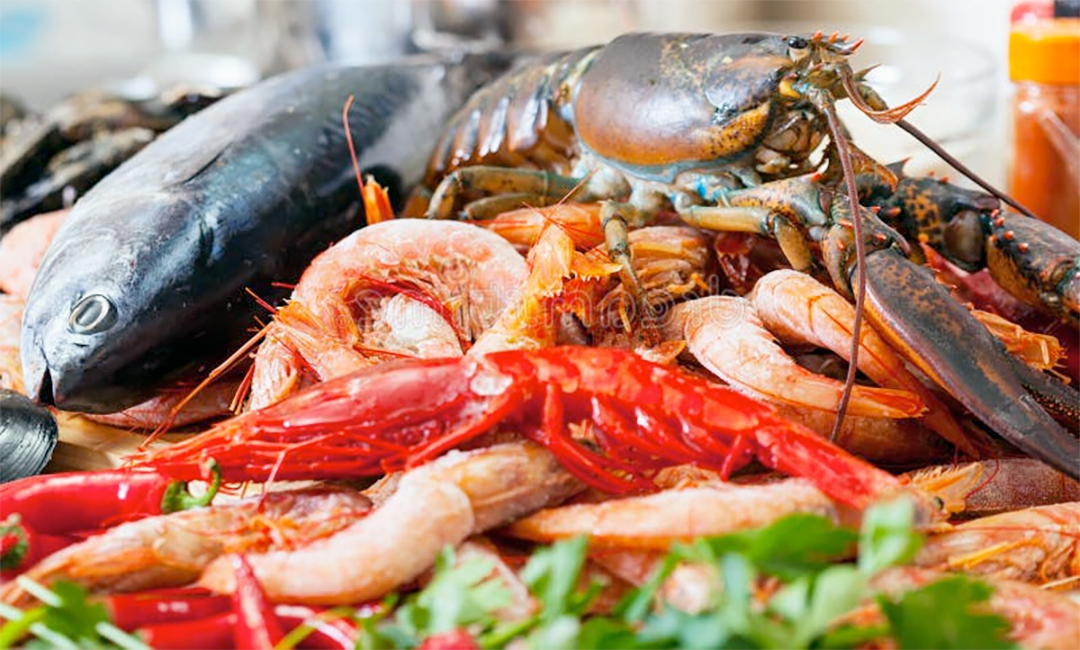 Still Life Photograph of mixed Fish and Seafood.
Welcome to FabulousFusionFood's Fish, Crustacean and Shellfish based Recipes Page — The recipes presented here are all based on aquatic animals: Fish (both sea-water and freshwater), crustaceans (crabs, lobsters, langoustine, crayfish and prawns) and shellfish of all kinds. These are still animals, and their flesh counts as 'meat', though I have removed these animals from the main Meat Recipes page.
Typically, a fish is defined as an aquatic, anamniotic, gill-bearing vertebrate animal with swimming fins and a hard skull, but lacking limbs with digits. Fish can be grouped into the more basal jawless fish and the more common jawed fish, the latter including all living cartilaginous and bony fish, as well as the extinct placoderms and acanthodians. In a break to the long tradition of grouping all fish into a single class (Pisces), modern phylogenetics views fish as a paraphyletic group. Here you will find historic recipes for jawless fishes as well as recipes for cartilaginous and bony jawed fish. For the separate list of fish-based recipes see the fish-based recipes page
For my definition of shellfish I'm including molluscs (ie shelled marine animals) as well as sea snails (that are actually gastropods) but I'm excluding crustaceans (eg prawns, lobsters, crayfish, crabs and barnacles) and cephalopod molluscs (squids, octopodes, cuttlefish) which have their own sections and are described below. Mollusca is a phylum of protostomic invertebrate animals, whose members are known as molluscs or mollusks. Molluscs are the largest marine phylum, comprising about 23% of all the named marine organisms. They are highly diverse, not just in size and anatomical structure, but also in behaviour and habitat, as numerous groups are freshwater and even terrestrial species. For the separate list of shellfish-based recipes see the shellfish-based recipes page.
Crustaceans (from Latin meaning: "those with shells" or "crusted ones") are invertebrate animals that constitute one group of arthropods that are traditionally a part of the subphylum Crustacea (/krəˈsteɪʃə/), a large, diverse group of mainly aquatic arthropods including decapods (shrimps, prawns, crabs, lobsters and crayfish), seed shrimp, branchiopods, fish lice, krill, remipedes, isopods, barnacles, copepods, opossum shrimps, amphipods and mantis shrimp. The vast majority of crustaceans consumed by humans are decapod crustaceans: crabs, lobsters, shrimp, crayfish, langoustine and prawns. Krill and barnacles are the only non-decapod crustaceans eaten regularly. For the separate list of crustacean-based recipes see the crustacean-based recipes page.
Cephalopods are members of the molluscan class Cephalopoda /sɛfəˈlɒpədə/ (Greek plural κεφαλόποδες, kephalópodes; "head-feet") such as a squid, octopus, cuttlefish, or nautilus. These exclusively marine animals are characterized by bilateral body symmetry, a prominent head, and a set of arms or tentacles (muscular hydrostats) modified from the primitive molluscan foot. Fishers sometimes call cephalopods "inkfish", referring to their common ability to squirt ink. They are all regularly consumed by humans, particularly squid and octopodes. For the separate list of caphalopod-based recipes see the cephalopod-based recipes page.
Here I'm using a broader definition of seafood to also include items such as sea anemones (that the Romans ate) as well as sea cucumbers (a common ingredient in sushi) and sea urchins (consumed by ancient Romans and Japanese). Essentially covering the range of aquatic animals consumed by humans.
As this site also includes historic recipes, there will be some unusual fish and shellfish in the lists (like weaver fish from ancient Roman cookery) as well as forms of cookery (like clay baking) that are not so commonly used any more. You will see many Ancient Roman recipes in the list, this is due to the Romans' extensive use of liquamen/garum (fish sauce) in their recipes which was typically fermented from marine fish. There are also many Mediaeval recipes presented, coming from when the Catholic church proscribed the eating of meat and there were more 'fish days' in the yearly calendar than there were days where meat could be eaten. This also explains the separation of aquatic animals from terrestrial animals, the former being classed as 'fish' and the latter as 'meat'.
The alphabetical list of all the fish-, crustacean- and shellfish-based recipes on this site follows, (limited to 100 recipes per page). There are 2561 recipes in total:
Page 16 of 26
| Mediterranean-style Sardines Origin: Britain | Miti Hue (Fermented Coconut Sauce) Origin: Tahiti | Mpotompoto (Ghanaian Yam Porridge) Origin: Ghana |
| Meen Moilee (Keralan Fish Curry) Origin: India | Miyan Kuka (Baobab Leaf Soup) Origin: Nigeria | Mrs Beeton Anchovy Toast Origin: Britain |
| Meen Mulakittathu (Kerala Red Fish Curry) Origin: India | Miyan Kuuka Soup (Fish and Baobab Leaf Powder Soup) Origin: Ghana | Mrs Beeton Baked Haddock Origin: British |
| Meen Peera (Fish with Grated Coconut) Origin: India | Miyan Wake (Beans soup) Origin: Nigeria | Mrs Beeton's Anchovy Sauce Origin: Britain |
| Meen Pollichathu (Fish Cooked in Banana Leaf) Origin: India | Moana-Roa Mahimahi Origin: Cook Islands | Mrs Beeton's Fish Forcemeat Origin: British |
| Megrim Sole Olives with Squat Lobster Stuffing Origin: Britain | Mohinga Origin: Myanmar | Mrs Beeton's Recipe for Brill Origin: Britain |
| Mejillones con Salsa Picante (Mussels with Spicy Sauce) Origin: Spain | Monkfish Choo Chee Curry Origin: Britain | Mrs Beeton's Shrimp Sauce Origin: British |
| Melcas (Cheese Sweetened with Honey) Origin: Roman | Monkfish Pasanda Origin: Britain | Mtuza wa Samaki (Baked Curried Fish) Origin: Kenya |
| Mendip Wallfish Origin: England | Monkfish Skewers with Coconut and Coriander Origin: Britain | Mufete de Causo (Grilled Tilapia with Onion and Chilli Sauce) Origin: Angola |
| Mentsuyu Sauce Origin: Japan | Monkfish Wellington Origin: Britain | Mufete de Sardinha (Grilled Sardines with Onion and Chilli Sauce) Origin: Angola |
| Merluza à la Gallega (Galician-style Hake) Origin: Spain | Monkfish with Potatoes, Artichokes and Prosciutto Origin: Britain | Mukbasa (Yemeni-style Roast Fish) Origin: Djibouti |
| Mexican-style Mackerel and Rice Origin: Fusion | Monkfish, Bacon, Bell Pepper and Mushroom Kebabs Origin: Fusion | Mulet Farci à la Saint-Louisienne (Stuffed Mullet in the style of Saint-Louis) Origin: Senegal |
| Meygoo Dopiyazeh (Persian Prawn, Pepper and Onion Curry) Origin: Iran | Monlar Oo Chin Ye Hin (Myanmar Tangy Soup) Origin: Myanmar | Mullet Soup Origin: Cornwall |
| Mfumbwa (Gnetum and Fish Stew) Origin: Mali | Monterey Jack Cheese, Olive and Prawn Dip Origin: American | Mullos Anethatos sic Facie (Red Mullets with Aniseed is Made Thus) Origin: Roman |
| Micronesian Fish with Coconut Milk and Lime Origin: Federated States Micronesia | Montpelier Butter Origin: France | Murenam aut Anguillas vel Mulos (Moray Eels and Eels or Mullets) Origin: Roman |
| Microwave Bacon Dip Origin: Britain | Montserrat Jerk Prawns Origin: Montserrat | Muscle Sauce (Mussel Sauce) Origin: Britain |
| Microwave Chicken Thai Green Curry Origin: Britain | Montserratian Fisherman's Stew Origin: Montserrat | Mushroom Bhaji Origin: Britain |
| Microwave Jambalaya Origin: Britain | Moqueca de Camarão (Prawn Stew) Origin: Angola | Muskels in Bruet (Mussels in Bruet) Origin: England |
| Microwave Prawn Gumbo Origin: Britain | Moqueca de Peixe (Braised Whole Fish) Origin: Guinea-Bissau | Mussel Brose Origin: Scotland |
| Microwave Red Wine Scallops Origin: Britain | Moqueca de Pixe à Baiana (Grilled Fish, Baian Style) Origin: Brazil | Mussel Pie Origin: Bermuda |
| Microwave Smoked Haddock Chowder Origin: Britain | Moretariaum (Country Sauce) Origin: Roman | Mussel Soup Origin: Scotland |
| Microwave Spaghetti with Bacon and Pesto Sauce Origin: Britain | Moroccan-style Fish and Couscous Parcels Origin: Fusion | Mussels in Cream Sauce Origin: Britain |
| Microwave Spaghetti with Garlic Sausage Origin: Britain | Moroccan-style Lamb Kebabs Origin: Fusion | Mussels in Creamy Horseradish Sauce Origin: Ancient |
| Microwave Superfood Scrambled Eggs Origin: Britain | Mortrews of Fysche (Mortar-paste of Fish) Origin: England | Mustard and Honey Drummers Origin: Britain |
| Microwave Three Fish Soup Origin: Britain | Morue à la portugaise (Cod with Tomato Sauce) Origin: France | Mustard Sauce Origin: Britain |
| Midia Atmou me Aspro Krasi (Mussels Steamed in White Wine) Origin: Greece | Morue aux cranberries (Cod with Cranberry Sauce) Origin: Saint Pierre | Mustard-crusted Herring Origin: Britain |
| Midia Pilaf (Mussels Pilaf) Origin: Armenia | Morue Rôtie à la Sauce Tomate (Roast Salt Cod with Tomato Sauce) Origin: Monaco | Mustard-glazed Flatfish Origin: Britain |
| Miesmuscheln mit Curry (Mussels with Curry Sauce) Origin: Namibia | Moules à la Luxembourgeoise (Mussels, Luxembourg Style) Origin: Luxembourg | Mutabbaq Samak (Fried Pomfret with Rice) Origin: Kuwait |
| Mimini (Grouper and Cassava Stew) Origin: Mozambique | Moules a la Bretonne (Brittany-style Mussels) Origin: France | Myma (Baked Plaice) Origin: Roman |
| Mines Frites Origin: Mauritius | Moules Bretonnes a la Marinière (Breton Mussels Mariner-style) Origin: France | N'dolé (Bitterleaf Stew) Origin: Cameroon |
| Minutal Apicianum (Ragout à la Apicius) Origin: Roman | Moules-frites (Mussels and Chips) Origin: France | N'dolé avec Poisson (Fish and Bitterleaf Stew) Origin: Gabon |
| Minutal marinum (Seafood Fricassee) Origin: Roman | Mouton à l'Arachide (Lamb with Peanuts) Origin: Benin | N'dolé avec Poulet (Chicken N'Dolé) Origin: Cameroon |
| Minutal Matianum (Pork with Apples) Origin: Roman | Moyin-Moyin Origin: Nigeria | |
| Miso Soup with Tade Origin: Japan | Mozambique Prawns Origin: Mozambique |
Page 16 of 26