FabulousFusionFood's Fish, Crustacean, Cephalopod and Shellfish based Recipes 17th Page
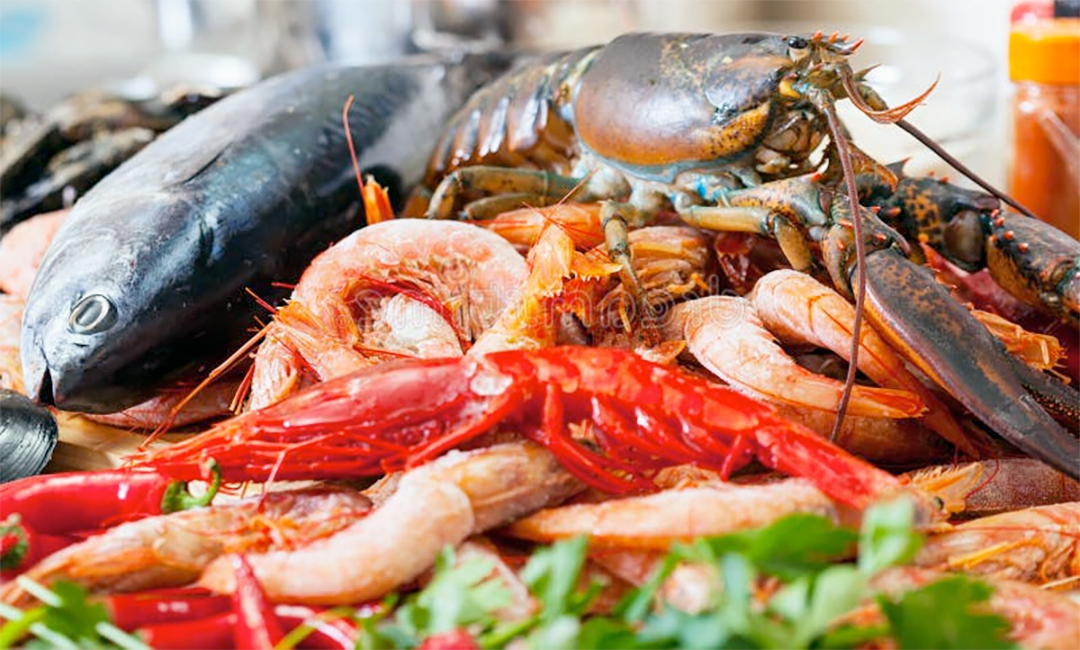 Still Life Photograph of mixed Fish and Seafood.
Welcome to FabulousFusionFood's Fish, Crustacean and Shellfish based Recipes Page — The recipes presented here are all based on aquatic animals: Fish (both sea-water and freshwater), crustaceans (crabs, lobsters, langoustine, crayfish and prawns) and shellfish of all kinds. These are still animals, and their flesh counts as 'meat', though I have removed these animals from the main Meat Recipes page.
Typically, a fish is defined as an aquatic, anamniotic, gill-bearing vertebrate animal with swimming fins and a hard skull, but lacking limbs with digits. Fish can be grouped into the more basal jawless fish and the more common jawed fish, the latter including all living cartilaginous and bony fish, as well as the extinct placoderms and acanthodians. In a break to the long tradition of grouping all fish into a single class (Pisces), modern phylogenetics views fish as a paraphyletic group. Here you will find historic recipes for jawless fishes as well as recipes for cartilaginous and bony jawed fish. For the separate list of fish-based recipes see the fish-based recipes page
For my definition of shellfish I'm including molluscs (ie shelled marine animals) as well as sea snails (that are actually gastropods) but I'm excluding crustaceans (eg prawns, lobsters, crayfish, crabs and barnacles) and cephalopod molluscs (squids, octopodes, cuttlefish) which have their own sections and are described below. Mollusca is a phylum of protostomic invertebrate animals, whose members are known as molluscs or mollusks. Molluscs are the largest marine phylum, comprising about 23% of all the named marine organisms. They are highly diverse, not just in size and anatomical structure, but also in behaviour and habitat, as numerous groups are freshwater and even terrestrial species. For the separate list of shellfish-based recipes see the shellfish-based recipes page.
Crustaceans (from Latin meaning: "those with shells" or "crusted ones") are invertebrate animals that constitute one group of arthropods that are traditionally a part of the subphylum Crustacea (/krəˈsteɪʃə/), a large, diverse group of mainly aquatic arthropods including decapods (shrimps, prawns, crabs, lobsters and crayfish), seed shrimp, branchiopods, fish lice, krill, remipedes, isopods, barnacles, copepods, opossum shrimps, amphipods and mantis shrimp. The vast majority of crustaceans consumed by humans are decapod crustaceans: crabs, lobsters, shrimp, crayfish, langoustine and prawns. Krill and barnacles are the only non-decapod crustaceans eaten regularly. For the separate list of crustacean-based recipes see the crustacean-based recipes page.
Cephalopods are members of the molluscan class Cephalopoda /sɛfəˈlɒpədə/ (Greek plural κεφαλόποδες, kephalópodes; "head-feet") such as a squid, octopus, cuttlefish, or nautilus. These exclusively marine animals are characterized by bilateral body symmetry, a prominent head, and a set of arms or tentacles (muscular hydrostats) modified from the primitive molluscan foot. Fishers sometimes call cephalopods "inkfish", referring to their common ability to squirt ink. They are all regularly consumed by humans, particularly squid and octopodes. For the separate list of caphalopod-based recipes see the cephalopod-based recipes page.
Here I'm using a broader definition of seafood to also include items such as sea anemones (that the Romans ate) as well as sea cucumbers (a common ingredient in sushi) and sea urchins (consumed by ancient Romans and Japanese). Essentially covering the range of aquatic animals consumed by humans.
As this site also includes historic recipes, there will be some unusual fish and shellfish in the lists (like weaver fish from ancient Roman cookery) as well as forms of cookery (like clay baking) that are not so commonly used any more. You will see many Ancient Roman recipes in the list, this is due to the Romans' extensive use of liquamen/garum (fish sauce) in their recipes which was typically fermented from marine fish. There are also many Mediaeval recipes presented, coming from when the Catholic church proscribed the eating of meat and there were more 'fish days' in the yearly calendar than there were days where meat could be eaten. This also explains the separation of aquatic animals from terrestrial animals, the former being classed as 'fish' and the latter as 'meat'.
The alphabetical list of all the fish-, crustacean- and shellfish-based recipes on this site follows, (limited to 100 recipes per page). There are 2561 recipes in total:
Page 17 of 26
| Nachinyonaya Forel (Stuffed Trout) Origin: Georgia | Nigerian Spiced Chicken Pepper Soup Origin: Nigeria | Octapodhi Ksydhato (Pickled Octopus) Origin: Cyprus |
| Naengi-guk (Shepherd's Purse Soup) Origin: Korea | Nigerian Spiced Goat Meat Pepper Soup Origin: Nigeria | Oenogarum (Wine Sauce) Origin: Roman |
| Nam Pla Prik (Chillies in Fish Sauce) Origin: Thailand | Nigerian Spiced Grasscutter Pepper Soup Origin: Nigeria | Oenogarum cum Thymum et Satureiam in Tubera (Truffles in Savory-thyme Wine Sauce) Origin: Roman |
| Nam Prig Pow (Roasted Chilli Paste) Origin: Thailand | Nila Bumbu Acar (Sour Spicy Carp) Origin: Indonesia | Oenogarum et Coriandrum in Tubera (Truffles in Coriander Wine Sauce) Origin: Roman |
| Nam Prig Pud (Fried Chill Paste) Origin: Thailand | Nimino de Peixe (Nimino of Fish) Origin: Mozambique | Ofada-Ugba Jollof (Fermented Jollof Rice) Origin: Nigeria |
| Nam Prik Pao (Thai Chilli Paste) Origin: Thailand | Njandu Curry (Kerala Crab Curry) Origin: India | Ofe Achara (Elephant Grass Stew) Origin: Nigeria |
| Namasu (Daikon and Carrot in Vinegar Dressing) Origin: Japan | Njanga Rice Origin: Cameroon | Ofe Ugba (Ugba Soup) Origin: Nigeria |
| Naruto (Japanese Fish Cakes) Origin: Japan | NjaNjaMoto (Smelt in Njangsa Sauce) Origin: Cameroon | Ofe-Owerri Soup Origin: Nigeria |
| Nasi Goreng Istimewa (Fried Rice Breakfast) Origin: Indonesia | Nkatenkwan (Ghanaian Peanut Soup) Origin: Ghana | Ofellas Assas (Roast Morsels) Origin: Roman |
| Nasi Lemak Origin: Malaysia | Nkrakrakwam (Ghanaian Light Soup) Origin: Ghana | Ofellas Garatas (Braised Morsels) Origin: Roman |
| Nasi Lemak Origin: Cocos Islands | Nnam Owondo Origin: Cameroon | Ofellas Garaton (Morsels with Fish-sauce) Origin: Roman |
| Nasi Lemak Origin: Singapore | Noix de St-Jacques à la crème d'oignons de Roscoff (Scallops with Roscoff Onion Cream) Origin: France | Ogbono Soup Origin: Nigeria |
| Nasi Lemak Origin: Christmas Island | Nom Banh Chok Origin: Cambodia | Ogbono Soup with Ugwu Origin: Nigeria |
| Ndolé à la Viande (Bitterleaf with Meat) Origin: Cameroon | Noodle Curry Paste Origin: Laos | Ogbono Soup with Waterleaf Origin: Nigeria |
| Ndomba de Poisson (Fish Cooked in Banana Leaves) Origin: Cameroon | Nowmbyls of Muskyls (Mussels in Almond Milk Sauce) Origin: England | Ohn-No Khaukswe (Coconut Noodles) Origin: Myanmar |
| Ndomba de Porc (Pork Cooked in Banana Leaves) Origin: Cameroon | Num Banh Choc (Rice Noodle Fish Soup) Origin: Cambodia | Ojinguh Jut (Korean Pickled Squid) Origin: Korea |
| Ndrovi ya Nazi (Banana with Coconut Milk) Origin: Comoros | Num Pa-chok Tirk Ka-chuii (Khmer Noodle Soup with Fingerroot) Origin: Cambodia | Ojojo Origin: Nigeria |
| Neckham's Green Sauce Origin: England | Numb-fish (Electric Ray) Origin: Roman | Ojojo II Origin: Nigeria |
| Nems au poulet (Chicken Spring Rolls) Origin: Tahiti | Nuoc Mam Cham (Fish Dipping Sauce) Origin: Vietnam | Oka Popo (Samoan Raw Fish) Origin: Samoa |
| Nettle Greens and Peanut Stew Origin: African Fusion | Nwa Mee Hinga (Oxtail and Watercress) Origin: Myanmar | Oka Popo (Samoan Raw Fish) Origin: American Samoa |
| New Caledonian Raw Fish Salad Origin: New Caledonia | Nyeleng (Beef and Peanut Gumbo) Origin: Senegal | Okro Soup Origin: Nigeria |
| New Zealand Fish Pie Origin: New Zealand | Nyona Penang Assam Laska Origin: Malaysia | Oktapodhi Krasato (Octopus in Wine) Origin: Cyprus |
| Nga Atoiba Thongba (Manipuri Broken Fish Curry) Origin: India | Nyonya Curry Paste Origin: Singapore | Oleleh (Gambian Moi Moi) Origin: Gambia |
| Nga Myin Hin (Butter Fish Curry) Origin: Myanmar | Oa Pnikta (Eggs Poached with Oil, Wine and Garum) Origin: Roman | Oluwombo Origin: Uganda |
| Nga Tha Lout Paung (Sour Fish Curry) Origin: Myanmar | Oarweed-cured Tuna Origin: Ireland | Open Smoked Haddock and Leek Omelette Origin: British |
| Ngege with Peanut Sauce (Tilapia with Peanut Sauce) Origin: East Africa | Oat-crusted Fish Pie Origin: Scotland | Or Lam Origin: Laos |
| Niban Dashi (Stock For Vegetables and Dipping Sauces) Origin: Japan | Obe Ata (Nigerian Pepper Soup) Origin: Nigeria | Orange and Lemon Peppered Monkfish Origin: Britain |
| Nigerian Beans Porridge Origin: Nigeria | Obe Ata Dindin (Nigerian Red Sauce) Origin: Nigeria | Otak-otak (Spicy Grilled Nyonya Fish Cakes) Origin: Malaysia |
| Nigerian Catfish Stew Origin: Nigeria | Obe Efo Elegusi (Egusi Soup) Origin: Nigeria | Otong Soup Origin: Nigeria |
| Nigerian Fresh Fish Pepper Soup Origin: Nigeria | Obe Eja Dindin (Fried Fish Stew) Origin: Nigeria | Ouassous dans la nage (Ouassous in the swim) Origin: Guadeloupe |
| Nigerian Goat Meat Pie Origin: Nigeria | Obe Eja Tutu (Fresh Fish Stew) Origin: Nigeria | Oude Sauce Origin: Britain |
| Nigerian Groundnut Soup Origin: Nigeria | Ochazuke (Japanese Green Tea Rice) Origin: Japan | Oven-dried Fish Origin: Nigeria |
| Nigerian Guineafowl Pepper Soup Origin: Nigeria | Ock-lam (Barbecued Pork with Mushrooms and Beans) Origin: Laos | |
| Nigerian Pancakes with Prawns Origin: Nigeria | Ocopa de Camarones (Prawn Ocopa) Origin: Peru |
Page 17 of 26