FabulousFusionFood's Fish, Crustacean, Cephalopod and Shellfish based Recipes 12th Page
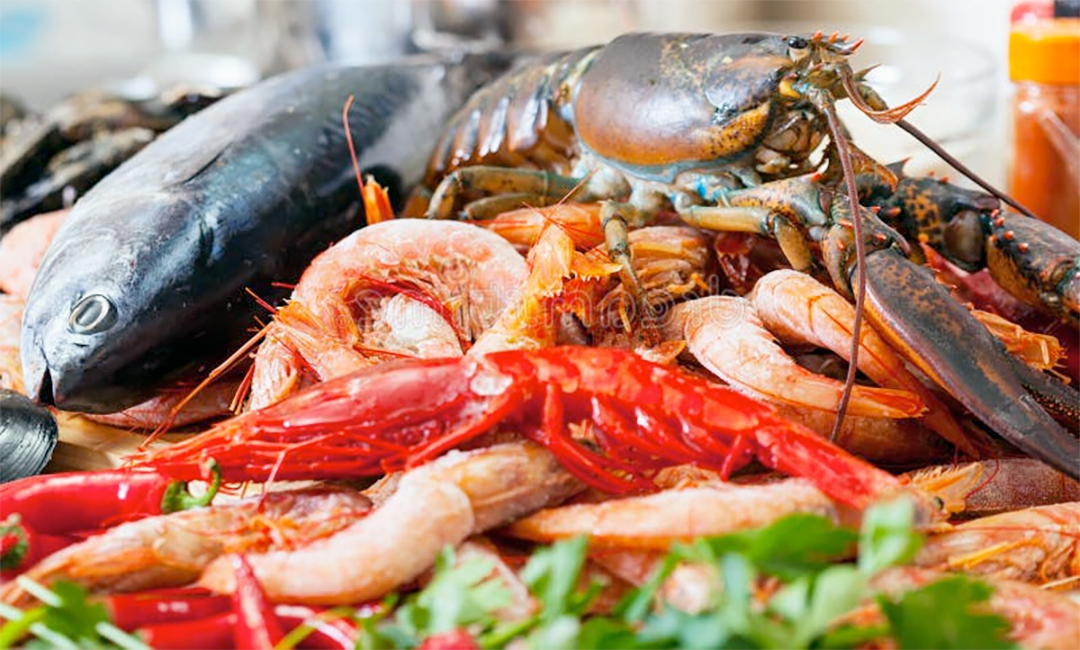 Still Life Photograph of mixed Fish and Seafood.
Welcome to FabulousFusionFood's Fish, Crustacean and Shellfish based Recipes Page — The recipes presented here are all based on aquatic animals: Fish (both sea-water and freshwater), crustaceans (crabs, lobsters, langoustine, crayfish and prawns) and shellfish of all kinds. These are still animals, and their flesh counts as 'meat', though I have removed these animals from the main Meat Recipes page.
Typically, a fish is defined as an aquatic, anamniotic, gill-bearing vertebrate animal with swimming fins and a hard skull, but lacking limbs with digits. Fish can be grouped into the more basal jawless fish and the more common jawed fish, the latter including all living cartilaginous and bony fish, as well as the extinct placoderms and acanthodians. In a break to the long tradition of grouping all fish into a single class (Pisces), modern phylogenetics views fish as a paraphyletic group. Here you will find historic recipes for jawless fishes as well as recipes for cartilaginous and bony jawed fish. For the separate list of fish-based recipes see the fish-based recipes page
For my definition of shellfish I'm including molluscs (ie shelled marine animals) as well as sea snails (that are actually gastropods) but I'm excluding crustaceans (eg prawns, lobsters, crayfish, crabs and barnacles) and cephalopod molluscs (squids, octopodes, cuttlefish) which have their own sections and are described below. Mollusca is a phylum of protostomic invertebrate animals, whose members are known as molluscs or mollusks. Molluscs are the largest marine phylum, comprising about 23% of all the named marine organisms. They are highly diverse, not just in size and anatomical structure, but also in behaviour and habitat, as numerous groups are freshwater and even terrestrial species. For the separate list of shellfish-based recipes see the shellfish-based recipes page.
Crustaceans (from Latin meaning: "those with shells" or "crusted ones") are invertebrate animals that constitute one group of arthropods that are traditionally a part of the subphylum Crustacea (/krəˈsteɪʃə/), a large, diverse group of mainly aquatic arthropods including decapods (shrimps, prawns, crabs, lobsters and crayfish), seed shrimp, branchiopods, fish lice, krill, remipedes, isopods, barnacles, copepods, opossum shrimps, amphipods and mantis shrimp. The vast majority of crustaceans consumed by humans are decapod crustaceans: crabs, lobsters, shrimp, crayfish, langoustine and prawns. Krill and barnacles are the only non-decapod crustaceans eaten regularly. For the separate list of crustacean-based recipes see the crustacean-based recipes page.
Cephalopods are members of the molluscan class Cephalopoda /sɛfəˈlɒpədə/ (Greek plural κεφαλόποδες, kephalópodes; "head-feet") such as a squid, octopus, cuttlefish, or nautilus. These exclusively marine animals are characterized by bilateral body symmetry, a prominent head, and a set of arms or tentacles (muscular hydrostats) modified from the primitive molluscan foot. Fishers sometimes call cephalopods "inkfish", referring to their common ability to squirt ink. They are all regularly consumed by humans, particularly squid and octopodes. For the separate list of caphalopod-based recipes see the cephalopod-based recipes page.
Here I'm using a broader definition of seafood to also include items such as sea anemones (that the Romans ate) as well as sea cucumbers (a common ingredient in sushi) and sea urchins (consumed by ancient Romans and Japanese). Essentially covering the range of aquatic animals consumed by humans.
As this site also includes historic recipes, there will be some unusual fish and shellfish in the lists (like weaver fish from ancient Roman cookery) as well as forms of cookery (like clay baking) that are not so commonly used any more. You will see many Ancient Roman recipes in the list, this is due to the Romans' extensive use of liquamen/garum (fish sauce) in their recipes which was typically fermented from marine fish. There are also many Mediaeval recipes presented, coming from when the Catholic church proscribed the eating of meat and there were more 'fish days' in the yearly calendar than there were days where meat could be eaten. This also explains the separation of aquatic animals from terrestrial animals, the former being classed as 'fish' and the latter as 'meat'.
The alphabetical list of all the fish-, crustacean- and shellfish-based recipes on this site follows, (limited to 100 recipes per page). There are 2561 recipes in total:
Page 12 of 26
| In Colocasio (For Taro) Origin: Roman | Inglad Sill (Swedish Pickled Herring) Origin: Sweden | Ius in Cervum, Aliter (Sauce for Venison, Another Way) Origin: Roman |
| In Dentice Elixo (Sauce for Poached Bream) Origin: Roman | Insal Nga Lapu Lapu (Grilled Grouper with Aubergine-prune Compote) Origin: Philippines | Ius in Cornutam (Sauce for Horned Fish) Origin: Roman |
| In Echino (Of Sea Urchins) Origin: Roman | Involtini Aka di Salvia (Sage and Anchovy Fritters) Origin: Italy | Ius in Dentice Asso (Sauce for Baked Bream) Origin: Roman |
| In Echino Salso (Salted Sea Urchins) Origin: Roman | Irish Cod Cobbler Origin: Ireland | Ius in elixam allecatum (Fish-pickle Sauce for Boiled Meat) Origin: Roman |
| In ficato oenogarum (Livers of Animals Fattened on Figs, Another Way) Origin: Roman | Irish Fish Cakes Origin: Ireland | Ius in Gongro Asso (Sauce for Baked Conger Eel) Origin: Roman |
| In Isiciato Pullo (For Chicken Forcemeats) Origin: Roman | Irish Fisherman's Stew Origin: Ireland | Ius in lacertos elixos (Boiled Mackerel with Sauce) Origin: Roman |
| In Locusta Elixa (Sauce for Boiled Lobster) Origin: Roman | Isicia Amulata a Balineo sic Facies (Meatballs with Starch Cooked in a Pan) Origin: Roman | Ius in Lacertos Elixos (Sauce for Poached Lizard Fish) Origin: Roman |
| In Lolligine Farsili (Stuffed Squid) Origin: Roman | Isicia de Cauda Eius sic Facies (Make Lobster Tail Forcemeat Balls Thus) Origin: Roman | Ius in Locusta et Cammari (Sauce for Lobster and Crayfish) Origin: Roman |
| In Lolligine in Patina (A Dish of Squid) Origin: Roman | Isicia de Cerebellis (Brain Dumplings) Origin: Roman | Ius in Mugile Salso (Sauce for Salted Grey Mullet) Origin: Roman |
| In mitulis (Mussels) Origin: Roman | Isicia de lolligine (Squid Rissoles) Origin: Roman | Ius in Mullos Assos (Sauce for Baked Red Mullet) Origin: Roman |
| In Mitulis (Of Mussels) Origin: Roman | Isicia de Pavo (Peacock Forcemeats) Origin: Roman | Ius in Murena Assa (Sauce for Grilled Moray Eel) Origin: Roman |
| In Omne Genus Conchyliorum (For All Kinds of Shellfish) Origin: Roman | Isicia de scillis (Prawn Rissole) Origin: Roman | Ius in Murena Elixa (Sauce for Poached Moray Eel) Origin: Roman |
| In ostreis (Oysters) Origin: Roman | Isicia de Thursione (A Dry Dish Made with Porpoise Forcemeat) Origin: Roman | Ius in pelamyde assa (Sauce for Grilled Young Tuna) Origin: Roman |
| In Ostreis (Of Oysters) Origin: Roman | Isicia ex Sphondylis (Mussel Forcemeat) Origin: Roman | Ius in Pelamyde Assa (Sauce for Baked Young Tuna) Origin: Roman |
| In Ovis Hapalis (Of Soft-boiled Eggs) Origin: Roman | Isicia Marina (Seafood Patties) Origin: Roman | Ius in Percam (Sauce for Perch) Origin: Roman |
| In Pisce Oenogarum (Wine Sauce for Fish) Origin: Roman | Isicia Plena (Pheasant Forcemeat) Origin: Roman | Ius in Perdices (Sauce for Partridges) Origin: Roman |
| In Pisce Oenogarum II (Wine Sauce for Fish II) Origin: Roman | Isicium Simplex (Plain Forcemeats) Origin: Roman | Ius in Pisce Asso (Sauce for Baked Fish) Origin: Roman |
| In Piscibum Elixis (Of Poached Fish) Origin: Roman | Island Fish Tea Origin: Bahamas | Ius in Pisce Aurata (Sauce for Gilthead) Origin: Roman |
| In Polypo (Of Octopus) Origin: Roman | Isso Vade Origin: Sri Lanka | Ius in Pisce Aurata (Sauce for Gilthead Bream) Origin: Roman |
| In Sardis (Sauce for Bonito) Origin: Roman | Italian Sauce Origin: Britain | Ius in Pisce Aurata Assa (Sauce for Baked Gilthead Bream) Origin: Roman |
| In Sepia Farsili (Sauce for Stuffed Cuttlefish) Origin: Roman | Italianate Warm Dandelion Salad Origin: British | Ius in Pisce Elixo (Sauce for Poached Fish) Origin: Roman |
| In Struthione Elixo (Of Boiled Ostrich) Origin: Roman | Item Pisces Frixos (Fried Fish, In the Same Manner) Origin: Roman | Ius in Pisce Elixo II (Sauce for Poached Fish II) Origin: Roman |
| In Torpedine (Of Ray) Origin: Roman | Iura Ferventia in Cervo (Hot Sauce for Venison) Origin: Roman | Ius in Pisce Elixo III (Sauce for Poached Fish III) Origin: Roman |
| In Torpedine Elixa (Sauce for Boiled Ray) Origin: Roman | Ius Album in Assum Leporem (Hare's Blood, Liver and Lung Ragout) Origin: Roman | Ius in pisce rubellione (Sauce for Red Snapper) Origin: Roman |
| Inarizushi (Inari Sushi) Origin: Japan | Ius Alexandrinum in Pisce Asso (Alexandrine Sauce for Baked Fish) Origin: Roman | Ius in Pisce Rubellione (Sauce for Redfish) Origin: Roman |
| Indian Dumpode Goose Origin: Anglo-Indian | Ius diabotanon in pisce frixo (Fish in Herb Sauce) Origin: Roman | Ius in Scorpione Elixo (Sauce for Poached Scorpion Fish) Origin: Roman |
| Indian Sauce Origin: Britain | Ius Diabotanon in Pisce Frixo (A Herb Sauce for Fried Fish) Origin: Roman | Ius in Thynno (Sauce for Tuna) Origin: Roman |
| Indonesian Black Squid Curry Origin: Indonesia | Ius Frigidum in Aprum Elixum (Cold Sauce for Boiled Wild Boar) Origin: Roman | Ius in thynno elixo (Salt Tuna with Sauce) Origin: Roman |
| Indonesian Curry Spice Paste Origin: Indonesia | Ius Frigidum in Porcellum Elixum (Cold Sauce for Boiled Suckling Pig) Origin: Roman | Ius in Thynno Elixo (Sauce for Poached Tuna) Origin: Roman |
| Indonesian Peanut Sauce Origin: Indonesia | Ius in Anguilla (Sauce for Eels) Origin: Roman | Iwuk Efere Origin: Nigeria |
| Indonesian-style Spicy Cod Origin: Fusion | Ius in Anguillam (Sauce for Eels II) Origin: Roman | Jacket Potato with Salmon in Creamy Dill Sauce Origin: Ireland |
| Ingelegde Vis (Pickled Fish) Origin: South Africa | Ius in Aprum Elixum (Sauce for Boiled Wild Boar) Origin: Roman | Jacket Potato with Smoked Cod and Broccoli Filling Origin: Ireland |
| Ingelegde Vis II (Pickled Fish) Origin: South Africa | Ius in Cervo (Sauce for Venison) Origin: Roman | |
| Inglad Sill (Pickled Salt Herring) Origin: Sweden | Ius in Cervum (Sauce for Venison) Origin: Roman |
Page 12 of 26