FabulousFusionFood's Fish, Crustacean, Cephalopod and Shellfish based Recipes 11th Page
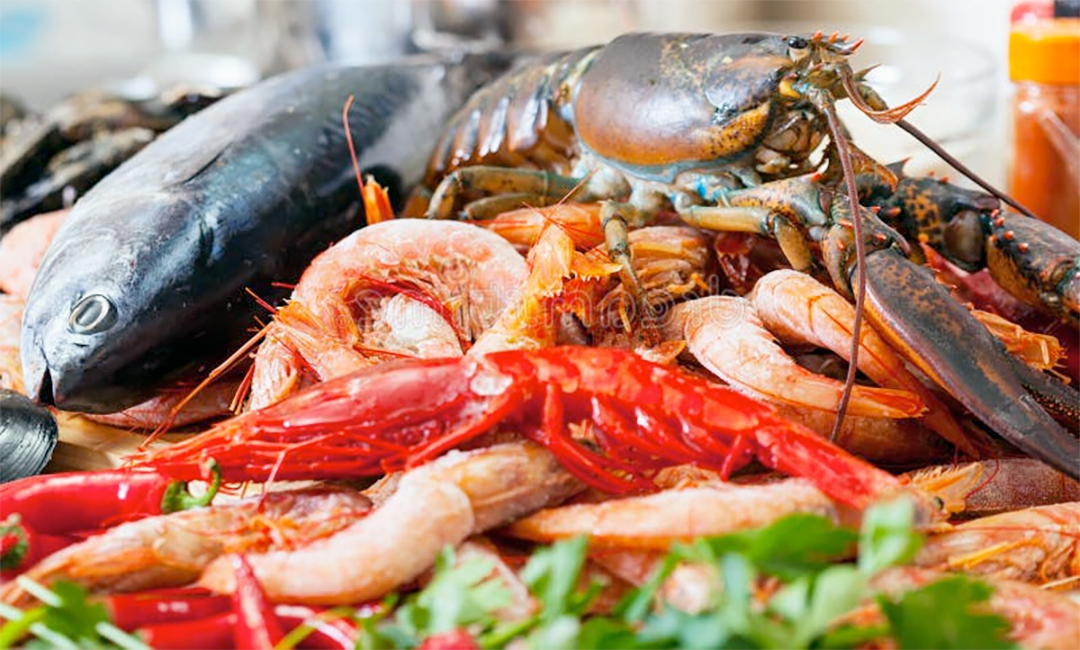 Still Life Photograph of mixed Fish and Seafood.
Welcome to FabulousFusionFood's Fish, Crustacean and Shellfish based Recipes Page — The recipes presented here are all based on aquatic animals: Fish (both sea-water and freshwater), crustaceans (crabs, lobsters, langoustine, crayfish and prawns) and shellfish of all kinds. These are still animals, and their flesh counts as 'meat', though I have removed these animals from the main Meat Recipes page.
Typically, a fish is defined as an aquatic, anamniotic, gill-bearing vertebrate animal with swimming fins and a hard skull, but lacking limbs with digits. Fish can be grouped into the more basal jawless fish and the more common jawed fish, the latter including all living cartilaginous and bony fish, as well as the extinct placoderms and acanthodians. In a break to the long tradition of grouping all fish into a single class (Pisces), modern phylogenetics views fish as a paraphyletic group. Here you will find historic recipes for jawless fishes as well as recipes for cartilaginous and bony jawed fish. For the separate list of fish-based recipes see the fish-based recipes page
For my definition of shellfish I'm including molluscs (ie shelled marine animals) as well as sea snails (that are actually gastropods) but I'm excluding crustaceans (eg prawns, lobsters, crayfish, crabs and barnacles) and cephalopod molluscs (squids, octopodes, cuttlefish) which have their own sections and are described below. Mollusca is a phylum of protostomic invertebrate animals, whose members are known as molluscs or mollusks. Molluscs are the largest marine phylum, comprising about 23% of all the named marine organisms. They are highly diverse, not just in size and anatomical structure, but also in behaviour and habitat, as numerous groups are freshwater and even terrestrial species. For the separate list of shellfish-based recipes see the shellfish-based recipes page.
Crustaceans (from Latin meaning: "those with shells" or "crusted ones") are invertebrate animals that constitute one group of arthropods that are traditionally a part of the subphylum Crustacea (/krəˈsteɪʃə/), a large, diverse group of mainly aquatic arthropods including decapods (shrimps, prawns, crabs, lobsters and crayfish), seed shrimp, branchiopods, fish lice, krill, remipedes, isopods, barnacles, copepods, opossum shrimps, amphipods and mantis shrimp. The vast majority of crustaceans consumed by humans are decapod crustaceans: crabs, lobsters, shrimp, crayfish, langoustine and prawns. Krill and barnacles are the only non-decapod crustaceans eaten regularly. For the separate list of crustacean-based recipes see the crustacean-based recipes page.
Cephalopods are members of the molluscan class Cephalopoda /sɛfəˈlɒpədə/ (Greek plural κεφαλόποδες, kephalópodes; "head-feet") such as a squid, octopus, cuttlefish, or nautilus. These exclusively marine animals are characterized by bilateral body symmetry, a prominent head, and a set of arms or tentacles (muscular hydrostats) modified from the primitive molluscan foot. Fishers sometimes call cephalopods "inkfish", referring to their common ability to squirt ink. They are all regularly consumed by humans, particularly squid and octopodes. For the separate list of caphalopod-based recipes see the cephalopod-based recipes page.
Here I'm using a broader definition of seafood to also include items such as sea anemones (that the Romans ate) as well as sea cucumbers (a common ingredient in sushi) and sea urchins (consumed by ancient Romans and Japanese). Essentially covering the range of aquatic animals consumed by humans.
As this site also includes historic recipes, there will be some unusual fish and shellfish in the lists (like weaver fish from ancient Roman cookery) as well as forms of cookery (like clay baking) that are not so commonly used any more. You will see many Ancient Roman recipes in the list, this is due to the Romans' extensive use of liquamen/garum (fish sauce) in their recipes which was typically fermented from marine fish. There are also many Mediaeval recipes presented, coming from when the Catholic church proscribed the eating of meat and there were more 'fish days' in the yearly calendar than there were days where meat could be eaten. This also explains the separation of aquatic animals from terrestrial animals, the former being classed as 'fish' and the latter as 'meat'.
The alphabetical list of all the fish-, crustacean- and shellfish-based recipes on this site follows, (limited to 100 recipes per page). There are 2561 recipes in total:
Page 11 of 26
| Green Fig and Saltfish Origin: Saint Lucia | Gurnard with Porthilly Sauce Origin: British | Hilsa Fish Fried in Curry Condiments Origin: Anglo-Indian |
| Green Fish Curry Origin: Fusion | Gurnard with Tomato and Mint Sauce Origin: British | Hilsa Fish Gravy Curry Origin: Anglo-Indian |
| Green Mix with Indian Ocean Seafood Origin: Tanzania | Gutweed Salad with Fennel and Orange Origin: Britain | Hoender Pasteie (Boer Chicken Pie) Origin: South Africa |
| Green Ravigotte Sauce Origin: Britain | Guyanese Crab Callaloo Origin: Guyana | Holisera in Fasciculum (Horse Parsley) Origin: Roman |
| Grillades de Thon Mariné (Grilled Marinated Tuna) Origin: Togo | Gwichiaid (Periwinkles) Origin: Welsh | Home Cured Herring Origin: Britain |
| Grilled Coconut Crab Origin: Federated States Micronesia | Gwrachen Fraith gyda Menyn a Ffenigl (Ballan Wrasse with Butter and Fennel) Origin: Welsh | Home-made Anchovy Essence Origin: Britain |
| Grilled Coconut Crab Origin: Tuvalu | Gynggaudy Origin: England | Home-made Ikura (Marinated Salmon Roe) Origin: Japan |
| Grilled Mackerel Two Ways Origin: Fusion | Haailey dy Brick Spottagh (Pickled Mackerel) Origin: Manx | Home-made Oyster Sauce Origin: China |
| Grilled Mackerel with Spicy Dahl Origin: South Africa | Haddock Supper Origin: Ireland | Honey-glazed Prawns Origin: Roman |
| Grilled Orange Roughy Origin: New Zealand | Haedum Laseratum (Kid Goat Seasoned with Laser) Origin: Roman | Hong Kong Curry Fish Balls Origin: Hong Kong |
| Grilled Oysters with Fennel Crumbs Origin: South Africa | Haiken (Chicken and Prawn Egg Rolls) Origin: Mauritius | Hong Kong Snake Soup Origin: Hong Kong |
| Grilled Red Snapper Origin: Sint Eustatius | Hákarl (Fermented Shark) Origin: Iceland | Hor Mok Pla Chawnn Bai-Yaw (Steamed Serpent Head Fish Curry with Indian Mulberry Leaf) Origin: Thailand |
| Grilled Salmon Balmoral Origin: Scotland | Hake and Chorizo Stew Origin: Britain | Hor Mok Pla Chawnn Bai-Yaw (Steamed Serpent Head Fish Curry with Indian Mulberry Leaf) Origin: Thailand |
| Grilled Salmon in Red Wine and Wild Mushroom Sauce Origin: Britain | Hake in Chermoula Marinade Origin: Morocco | Hot Crab Origin: British |
| Grilled Sea Bass and Marsh Samphire Origin: Britain | Halászlé (Fisherman's Soup) Origin: Hungary | Hot-smoked Sea Trout Origin: Britain |
| Grilled Spiny Lobster with Mango Salsa Origin: Turks Caicos | Halibut and Tomato Curry Origin: Britain | How to Prepare Saltfish/Stockfish Origin: Britain |
| Grilled, Gingered, Swordfish Origin: American | Halibut with Pine Nut and Parmesan Crust Origin: Britain | Huîtres à la laitue de mer (Oysters with Sea Lettuce) Origin: France |
| Grima Fish Curry Origin: Kenya | Halltu Penwaig (Salting Herring) Origin: Welsh | Huachingngo Yucateco (Red Snapper, Yucatan Style) Origin: Mexico |
| Gruzinchiki (Siberian Fish Rolls) Origin: Siberia | Ham and Haddie Pie Origin: Scotland | Humarsúpa (Creamy Icelandic Langoustine Soup) Origin: Iceland |
| Guadeloupe Cod Accras (Cod Fritters) Origin: Guadeloupe | Hami (Fermented Coconut Sauce) Origin: Tonga | Hydrogarata Isicia sic Facies (Boiled Forcemeat with Fish-sauce) Origin: Roman |
| Guai Daun Singlong Tumbuk (Grilled Fish with Greens) Origin: Sumatra | Harvey's Sauce Origin: Britain | Iced Cucumber, Prawn and Yoghurt Soup Origin: Britain |
| Gudgeons Origin: British | Hedgehog Fungus and Filo Parcels Origin: Britain | Ichiban Dashi (Basic Japanese Soup Stock) Origin: Japan |
| Guernsey Conger Soup Origin: Guernsey | Heicht mat Kraïderzooss (Pike in Green Sauce) Origin: Luxembourg | Igbo MoinMoin Origin: Nigeria |
| Guinean Fish Grill with Three Sauces Origin: Equatorial Guinea | Hekele (Herring Starter) Origin: Poland | Ijogó (Cabbage and Smoked Fish Stew) Origin: Sao Tome |
| Guinean Spinach Sauce Origin: Equatorial Guinea | Herb and Garlic Prawns Origin: Britain | Ika Lolo (Fish in Taro Leaves) Origin: Tonga |
| Guisado de Caranguejo (Crab Stew) Origin: Mozambique | Herb Crusted Cod Origin: Britain | Ikan Assam Pedas (Hot-and-sour Fish Stew) Origin: Malaysia |
| Guisado de carne de porco com Amêijoas (Pork Stew with Cockles) Origin: Angola | Herbae Rusticae (Country Herbs) Origin: Roman | Ikan Bungkus Papua (Papuan Fish Wrap) Origin: Papua |
| Gujarati-style Monkfish Curry Origin: Fusion | Herby Fish Burgers Origin: Britain | Ikan Sabuko (Grilled Tamarind Fish) Origin: East Timor |
| Gulai Ikan Karibia (Caribbean Fish Stew) Origin: Turks Caicos | Herring in Oatmeal Origin: Scotland | Ikokore Origin: Nigeria |
| Gulha (Fried Fish Balls) Origin: Maldives | Herring Pasty Origin: England | Ila Alasepo (Okra and Spinach Soup) Origin: Nigeria |
| Gulha Riha (Maldives Fish Ball Curry) Origin: Maldives | Herring Pie Origin: Britain | Impala Origin: eSwatini |
| Gurnard Curry Origin: Britain | Herring Rougail (Le Rougail Z'hareng) Origin: Reunion | In Aprum Assum Iura Ferventia Facies Sic (Hot Sauce for Roast Wild Boar is Made Thus) Origin: Roman |
| Gurnard Fillets Steamed on a Bed of Wrack Origin: England | Hers ys aysel (Marinated Pilchards) Origin: England | |
| Gurnard in Tamarind Sauce Origin: Fusion | Hervido de pescado (Boiled Fish with Vegetables) Origin: Costa Rica |
Page 11 of 26