FabulousFusionFood's Tokelauan Recipes Home Page
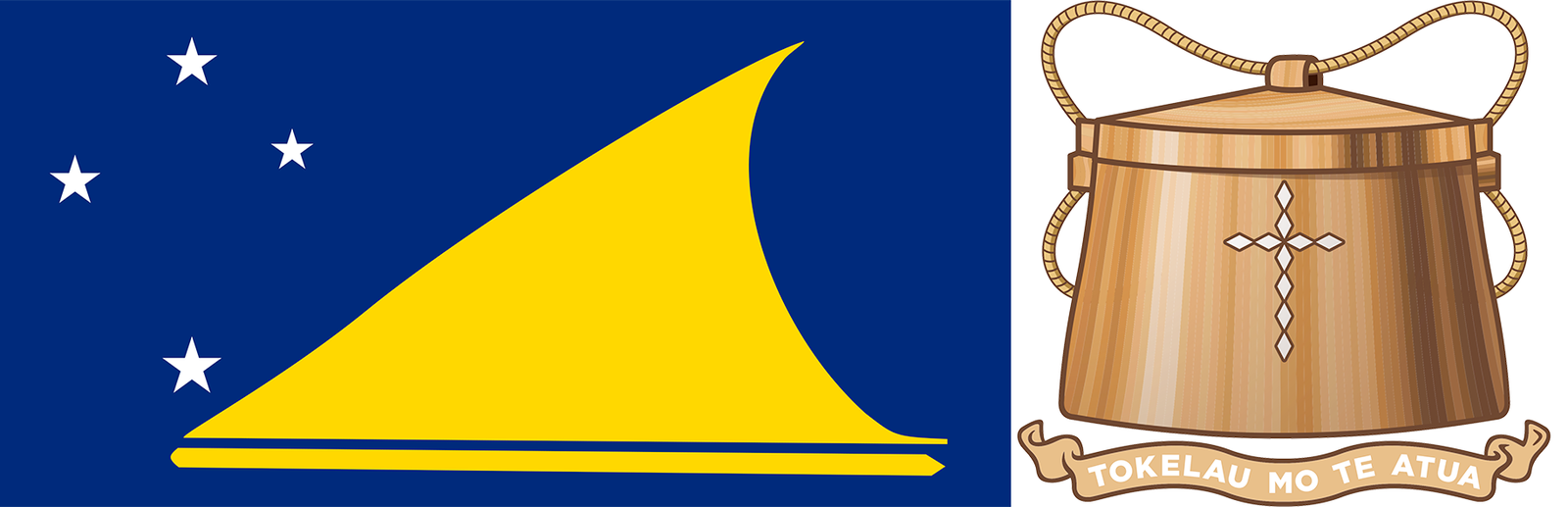 The flag of Tokelau (left) and the badge of Tokelau (right).
Welcome to the summary page for FabulousFusionFood's Tokelauan recipes, part of Oceania. This page provides links to all the Tuvaluan recipes presented on this site, with 9 recipes in total.
This is a continuation of an entire series of pages that will, I hope, allow my visitors to better navigate this site. As well as displaying recipes by name, country and region of origin I am now planning a whole series of pages where recipes can be located by meal type and main ingredient. This page gives a listing of all the Tokelauan recipes added to this site.
Tokelauan cuisine (Meakai tokelau) is the culinary traditions and practices of the island nation of Tokelau. The original food crops of the Tokelauans were coconut (niu), pandanus (fala), noni (nonu), dyer's fig (mati) and arrowroot (māhoā) Of these, coconut and pandanus fruit were considered the major food crops while noni, dyer's fig and arrowroot were considered famine food, eaten only during times of scarcity. Coconut in particular was a very important component of the diet, making up the majority of the Tokelauans' energy intake. The coconut drupe was prepared and consumed in various forms; the meat, milk and oil are all used extensively in many meal preparations. Sap from the cut flower spathe was also collected and is consumed as a beverage or boiled down into a red syrup (kaleve kukula) that was used as a sweetener for various dishes.
These recipes, for the major part, originate in Tokelau. Otherwise they are fusion recipes with major Tokelauan influences.
Tokelau lit. 'north-northeast' or 'north wind'; known previously as the Union Islands, and, until 1976, known officially as the Tokelau Islands) is a dependent territory of New Zealand in the southern Pacific Ocean. It consists of three tropical coral atolls: Atafu, Nukunonu, and Fakaofo. They have a combined land area of 10 km2 (4 sq mi). In addition to these three, Swains Island (Olohega), which forms part of the same archipelago, is the subject of an ongoing territorial dispute, while being currently administered by the United States as part of American Samoa. Tokelau lies north of the Samoan Islands, east of Tuvalu, south of the Phoenix Islands, southwest of the more distant Line Islands, and northwest of the Cook Islands.
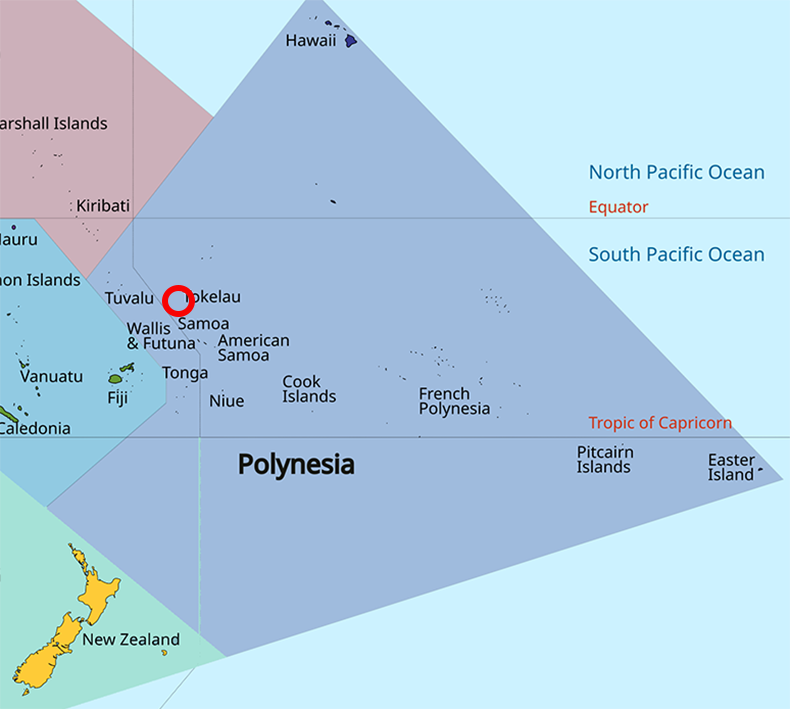 The image above shows Tokelau in relation to Polynesia, with the location of Tokelau circled in red.Tokelau has a population of approximately 1,500 people; it has the fourth-smallest population of any sovereign state or dependency in the world. As of the 2016 census, around 45% of its residents had been born overseas, mostly in Samoa or New Zealand. The populace has a life expectancy of 69, which is comparable to that of other Oceanian island nations. Approximately 94% of the population speak Tokelauan as their first language. Tokelau has the smallest economy of any nation. It is a leader in renewable energy, being the first 100% solar-powered nation in the world.
Tokelau is officially referred to as a nation by both the New Zealand government and the Tokelauan government. It is free and democratic, with elections every three years. However, in 2007, the United Nations General Assembly included Tokelau on its list of non-self-governing territories. Its inclusion on this list is controversial, as Tokelauans have twice narrowly failed to reach a two-thirds majority for further self-determination in referendums, and the islands' small population makes the viability of self-government challenging. The basis of Tokelau's legislative, administrative and judicial systems is the Tokelau Islands Act 1948, which has been amended several times. Since 1993, the territory has annually elected its own head of government, the Ulu-o-Tokelau. Before 1993, the administrator of Tokelau was the highest official in the government and the territory was directly administered by a New Zealand government department.
Etymology: Tokelau is a word meaning 'north wind' in the native Tokelau language. The Tokelau islands were named the Union Islands and Union Group by European explorers at an earlier time. Tokelau Islands was adopted as the islands’ official name in 1946. The name was officially shortened to Tokelau on 9 December 1976.
Lolo fala; a pudding made from pandanus fruit pulp and coconut cream, sometimes thickened with starch.
Ota; a raw fish dish.
'otai; a drink made from grated coconut meat, milk and water mixed together.
Puleleti; a confection made from desiccated coconut and coconut syrup rolled into balls.
Puta; a round doughnut.
Tatuna; coconut cream residue separated during the process of making coconut oil, usually formed into balls and eaten with pandanus fruit.
Tupelepele; a gelatinous food made from grated coconut meat and coconut water, thickened with starch.
Vaihalo; a porridge made from coconut.
This is a continuation of an entire series of pages that will, I hope, allow my visitors to better navigate this site. As well as displaying recipes by name, country and region of origin I am now planning a whole series of pages where recipes can be located by meal type and main ingredient. This page gives a listing of all the Tokelauan recipes added to this site.
Tokelauan cuisine (Meakai tokelau) is the culinary traditions and practices of the island nation of Tokelau. The original food crops of the Tokelauans were coconut (niu), pandanus (fala), noni (nonu), dyer's fig (mati) and arrowroot (māhoā) Of these, coconut and pandanus fruit were considered the major food crops while noni, dyer's fig and arrowroot were considered famine food, eaten only during times of scarcity. Coconut in particular was a very important component of the diet, making up the majority of the Tokelauans' energy intake. The coconut drupe was prepared and consumed in various forms; the meat, milk and oil are all used extensively in many meal preparations. Sap from the cut flower spathe was also collected and is consumed as a beverage or boiled down into a red syrup (kaleve kukula) that was used as a sweetener for various dishes.
These recipes, for the major part, originate in Tokelau. Otherwise they are fusion recipes with major Tokelauan influences.
Tokelau lit. 'north-northeast' or 'north wind'; known previously as the Union Islands, and, until 1976, known officially as the Tokelau Islands) is a dependent territory of New Zealand in the southern Pacific Ocean. It consists of three tropical coral atolls: Atafu, Nukunonu, and Fakaofo. They have a combined land area of 10 km2 (4 sq mi). In addition to these three, Swains Island (Olohega), which forms part of the same archipelago, is the subject of an ongoing territorial dispute, while being currently administered by the United States as part of American Samoa. Tokelau lies north of the Samoan Islands, east of Tuvalu, south of the Phoenix Islands, southwest of the more distant Line Islands, and northwest of the Cook Islands.
The image above shows Tokelau in relation to Polynesia, with the location of Tokelau circled in red.Tokelau is officially referred to as a nation by both the New Zealand government and the Tokelauan government. It is free and democratic, with elections every three years. However, in 2007, the United Nations General Assembly included Tokelau on its list of non-self-governing territories. Its inclusion on this list is controversial, as Tokelauans have twice narrowly failed to reach a two-thirds majority for further self-determination in referendums, and the islands' small population makes the viability of self-government challenging. The basis of Tokelau's legislative, administrative and judicial systems is the Tokelau Islands Act 1948, which has been amended several times. Since 1993, the territory has annually elected its own head of government, the Ulu-o-Tokelau. Before 1993, the administrator of Tokelau was the highest official in the government and the territory was directly administered by a New Zealand government department.
Etymology: Tokelau is a word meaning 'north wind' in the native Tokelau language. The Tokelau islands were named the Union Islands and Union Group by European explorers at an earlier time. Tokelau Islands was adopted as the islands’ official name in 1946. The name was officially shortened to Tokelau on 9 December 1976.
Tokelauan Cuisine:
Foods and dishes:Lolo fala; a pudding made from pandanus fruit pulp and coconut cream, sometimes thickened with starch.
Ota; a raw fish dish.
'otai; a drink made from grated coconut meat, milk and water mixed together.
Puleleti; a confection made from desiccated coconut and coconut syrup rolled into balls.
Puta; a round doughnut.
Tatuna; coconut cream residue separated during the process of making coconut oil, usually formed into balls and eaten with pandanus fruit.
Tupelepele; a gelatinous food made from grated coconut meat and coconut water, thickened with starch.
Vaihalo; a porridge made from coconut.
Tokelau's National Dishes:
Below are listed the dishes considered to be Tokelau's national foods along with links to the recipes for those dishes:| 'Ika Mata (Tokelauan Style Raw Fish) Origin: Tokelau |
The alphabetical list of all the Tokelauan recipes on this site follows, (limited to 100 recipes per page). There are 9 recipes in total:
Page 1 of 1
| 'Ika Mata (Tokelauan Style Raw Fish) Origin: Tokelau | Fakatokelau Origin: Tokelau | Puta (Tokelauan Doughnuts) Origin: Tokelau |
| 'Ika Mata (Tokelauan Style Raw Fish) Origin: Tokelau | Kilo'a Origin: Tokelau | Rukau Origin: Tokelau |
| 'Ota (Raw Fish) Origin: Tokelau | Poke Origin: Tokelau | Sapasui Pisupo (Corned Beef Chop Suey) Origin: Tokelau |
Page 1 of 1