FabulousFusionFood's I-Kiribati Recipes Home Page
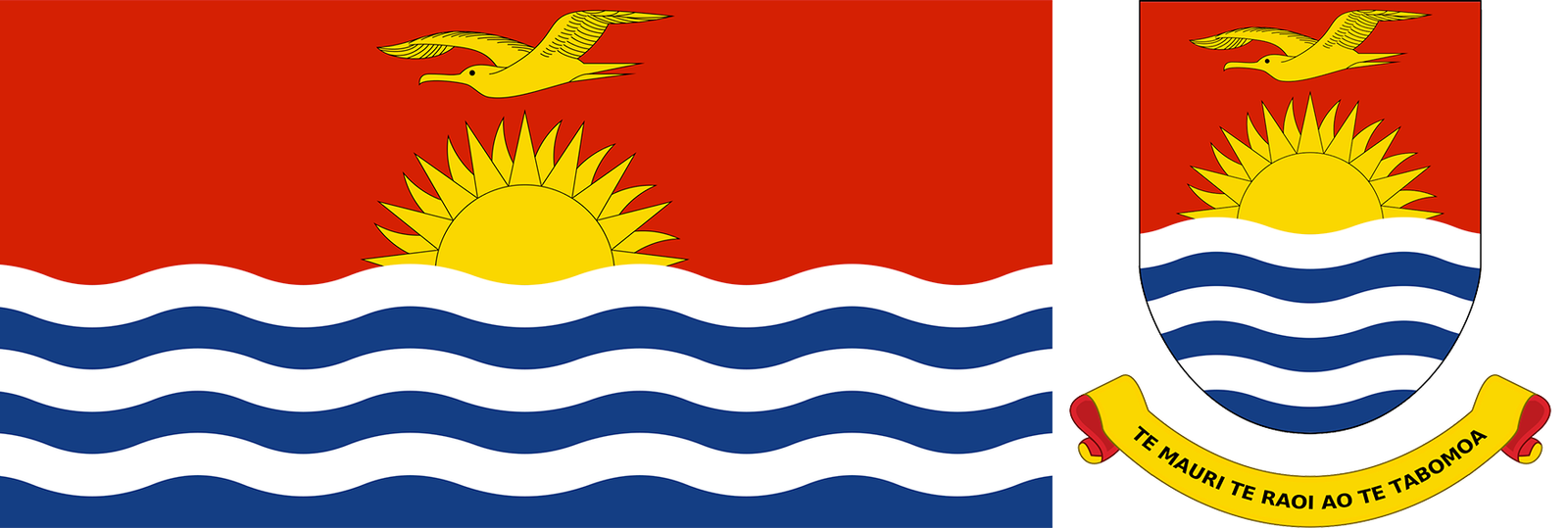 The flag of Kiribati (left) and the coat of arms of Kiribati (right).
Welcome to the summary page for FabulousFusionFood's I-Kiribati recipes, part of Oceania. This page provides links to all the I-Kiribati recipes presented on this site, with 15 recipes in total.
This is a continuation of an entire series of pages that will, I hope, allow my visitors to better navigate this site. As well as displaying recipes by name, country and region of origin I am now planning a whole series of pages where recipes can be located by meal type and main ingredient. This page gives a listing of all the I-Kiribati recipes added to this site.
Traditionally, the staple diet of the I-Kiribati was the abundance of seafood and coconuts. Starch-based carbohydrate sources were not plentiful due to the hostile climate of the atolls with only the northernmost atolls being viable for constant agriculture. The national crop bwabwai was only eaten during special celebrations along with pork. To complement the rather low consumption of carbohydrates in their diets, the I-Kiribati processed the sap and fruit of the abundant pandanus and coconut trees into different beverages and foods such as te karewe (fresh daily sap of the coconut tree) or te tuae (dried pandanus cake) and te kabubu (dried pandanus flour) from pandanus fruit pulp and te kamaimai (coconut sap syrup) from coconut sap.
These recipes, for the major part, originate in Kiribati. Otherwise they are fusion recipes with major I-Kiribati influences.
Kiribati, officially the Republic of Kiribati (Ribaberiki Kiribati in Gilbertese) is an island country in the Micronesia subregion of Oceania in the central Pacific Ocean. Its permanent population is over 119,000 as of the 2020 census and more than half live on Tarawa. The state comprises 32 atolls and one remote raised coral island, Banaba. Its total land area is 811 km2 dispersed over 3,441,810 km2 of ocean.
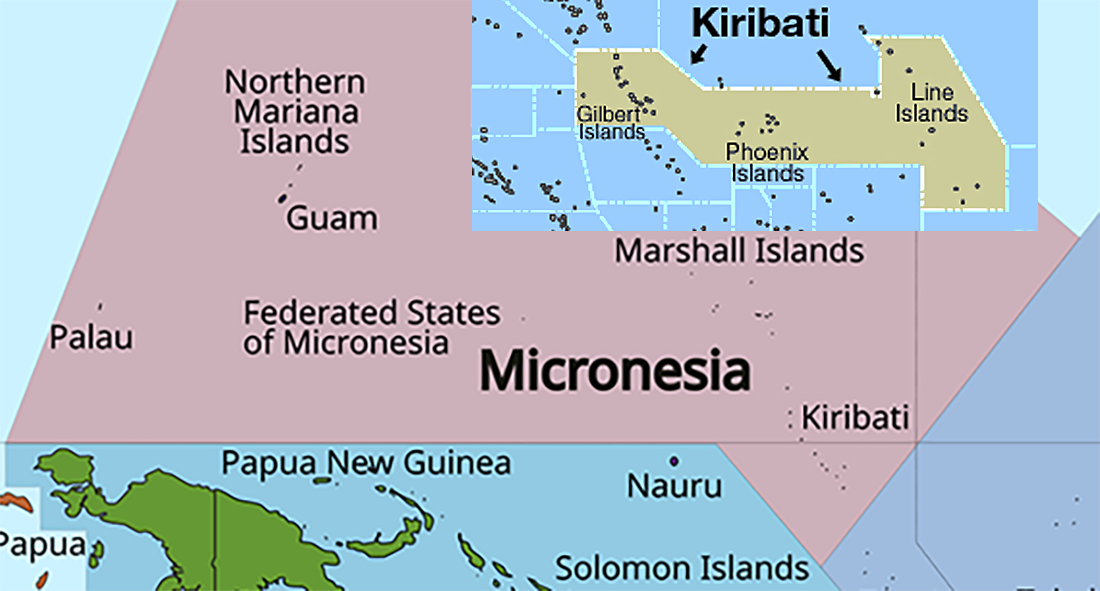 The image above shows Kiribati in relation to Micronesia in Oceania. The ocean area of
Kiribati is shown, insetThe islands' spread straddles the equator and the 180th meridian. The International Date Line goes around Kiribati and swings far to the east, almost reaching 150°W. This brings Kiribati's easternmost islands, the southern Line Islands south of Hawaii, into the same day as the Gilbert Islands and places them in the most advanced time zone on Earth: UTC+14.
Kiribati gained its independence from the United Kingdom, becoming a sovereign state in 1979. The capital, South Tarawa, now the most populated area, consists of a number of islets, connected by a series of causeways. These comprise about half the area of Tarawa Atoll. Prior to its independence the country exported phosphate, but those mines are no longer viable. Fisheries and the export of copra drive much of the economy. Kiribati is one of the least developed countries in the world and is highly dependent on international aid for its economy.
Kiribati is a member of the Pacific Community, Commonwealth of Nations, the International Monetary Fund, the World Bank, and the Organisation of African, Caribbean and Pacific States, and became a full member of the United Nations in 1999. As an island nation, Kiribati is vulnerable to climate change and tsunamis. Addressing climate change has been a central part of its international policy, as a member of the Alliance of Small Island States.
Etymology: The name is pronounced /ˈkɪrɪbæs/ KIRR-i-bass, as -ti in the Gilbertese language represents an [s] sound. Similarly, the name of its people, the I-Kiribati, is pronounced /iːˈkɪrɪbæs/ ee-KIRR-i-bass.
The name Kiribati was adopted upon the country's independence in 1979. It is the Gilbertese rendition of Gilberts, the plural of the English name of the nation's main archipelago, the Gilbert Islands. It was named îles Gilbert (French for 'Gilbert Islands') in about 1820 by Russian admiral Adam von Krusenstern and French captain Louis Duperrey, after the British captain Thomas Gilbert. Gilbert and captain John Marshall sighted some of the islands in 1788, while crossing the 'outer passage' route from Port Jackson to Canton. Both von Krusenstern's and Duperrey's maps, published in 1824, were written in French.
In French, the Northern Islands were until then called îles Mulgrave and Byron Island was not part of them. In English, the archipelago, particularly the southern part, was often referred to as the Kingsmills in the 19th century, although the name Gilbert Islands was used increasingly, including in the Western Pacific Order in Council of 1877 and in the Pacific Order of 1893.
The name Gilbert, already in the name of the British protectorate since 1892, was incorporated into the name of the entire Gilbert and Ellice Islands Colony (GEIC) from 1916 and was retained after the Ellice Islands became the separate country of Tuvalu in 1976. The spelling of Gilberts in the Gilbertese language as Kiribati may be found in books in Gilbertese prepared by missionaries, but with the meaning of Gilbertese (demonym and language) (see e.g., Hawaiian Board of Missionaries, 1895). The first mention as a dictionary entry of the word Kiribati as the native name of the country was written down in 1952 by Ernest Sabatier in his comprehensive Dictionnaire gilbertin–français.
The indigenous name often suggested for the Gilbert Islands proper is Tungaru (see e.g., Ernest Sabatier, 1952–1953, or Arthur Grimble, 1989). The rendition Kiribati for Gilberts was chosen as the official name of the new independent state by the chief minister, Sir Ieremia Tabai and his cabinet, on such grounds that it was modern, and to indicate the inclusion of islands (e.g., the Phoenix and Line Islands), beyond the Tungaru (i.e., Gilbert) chain.
Nauruan cuisine is greatly influenced by Chinese cuisine. The Chinese are the major foreign community of the country, and there are a number of Chinese restaurants on the island, most notably in Yaren. Nauruan cuisine also commonly shows strong Western influence, especially from Australia.
To complement the rather low consumption of carbohydrates in their diets, the I-Kiribati processed the sap and fruit of the abundant pandanus and coconut trees into different beverages and foods such as te karewe (fresh daily sap of the coconut tree) or te tuae (dried pandanus cake) and te kabubu (dried pandanus flour) from pandanus fruit pulp and te kamaimai (coconut sap syrup) from coconut sap.
After World War II, rice became a daily staple in most households; this is still the case today. The majority of seafood—in particular, fish—is eaten sashimi-style with either coconut sap, soy sauce or vinegar-based dressings, often combined with chillies and onions.
Coconut crabs and mud crabs are traditionally given to breastfeeding mothers, with the belief that the meat stimulates the production of high-quality breast milk.
This is a continuation of an entire series of pages that will, I hope, allow my visitors to better navigate this site. As well as displaying recipes by name, country and region of origin I am now planning a whole series of pages where recipes can be located by meal type and main ingredient. This page gives a listing of all the I-Kiribati recipes added to this site.
Traditionally, the staple diet of the I-Kiribati was the abundance of seafood and coconuts. Starch-based carbohydrate sources were not plentiful due to the hostile climate of the atolls with only the northernmost atolls being viable for constant agriculture. The national crop bwabwai was only eaten during special celebrations along with pork. To complement the rather low consumption of carbohydrates in their diets, the I-Kiribati processed the sap and fruit of the abundant pandanus and coconut trees into different beverages and foods such as te karewe (fresh daily sap of the coconut tree) or te tuae (dried pandanus cake) and te kabubu (dried pandanus flour) from pandanus fruit pulp and te kamaimai (coconut sap syrup) from coconut sap.
These recipes, for the major part, originate in Kiribati. Otherwise they are fusion recipes with major I-Kiribati influences.
Kiribati, officially the Republic of Kiribati (Ribaberiki Kiribati in Gilbertese) is an island country in the Micronesia subregion of Oceania in the central Pacific Ocean. Its permanent population is over 119,000 as of the 2020 census and more than half live on Tarawa. The state comprises 32 atolls and one remote raised coral island, Banaba. Its total land area is 811 km2 dispersed over 3,441,810 km2 of ocean.
The image above shows Kiribati in relation to Micronesia in Oceania. The ocean area ofKiribati is shown, inset
Kiribati gained its independence from the United Kingdom, becoming a sovereign state in 1979. The capital, South Tarawa, now the most populated area, consists of a number of islets, connected by a series of causeways. These comprise about half the area of Tarawa Atoll. Prior to its independence the country exported phosphate, but those mines are no longer viable. Fisheries and the export of copra drive much of the economy. Kiribati is one of the least developed countries in the world and is highly dependent on international aid for its economy.
Kiribati is a member of the Pacific Community, Commonwealth of Nations, the International Monetary Fund, the World Bank, and the Organisation of African, Caribbean and Pacific States, and became a full member of the United Nations in 1999. As an island nation, Kiribati is vulnerable to climate change and tsunamis. Addressing climate change has been a central part of its international policy, as a member of the Alliance of Small Island States.
Etymology: The name is pronounced /ˈkɪrɪbæs/ KIRR-i-bass, as -ti in the Gilbertese language represents an [s] sound. Similarly, the name of its people, the I-Kiribati, is pronounced /iːˈkɪrɪbæs/ ee-KIRR-i-bass.
The name Kiribati was adopted upon the country's independence in 1979. It is the Gilbertese rendition of Gilberts, the plural of the English name of the nation's main archipelago, the Gilbert Islands. It was named îles Gilbert (French for 'Gilbert Islands') in about 1820 by Russian admiral Adam von Krusenstern and French captain Louis Duperrey, after the British captain Thomas Gilbert. Gilbert and captain John Marshall sighted some of the islands in 1788, while crossing the 'outer passage' route from Port Jackson to Canton. Both von Krusenstern's and Duperrey's maps, published in 1824, were written in French.
In French, the Northern Islands were until then called îles Mulgrave and Byron Island was not part of them. In English, the archipelago, particularly the southern part, was often referred to as the Kingsmills in the 19th century, although the name Gilbert Islands was used increasingly, including in the Western Pacific Order in Council of 1877 and in the Pacific Order of 1893.
The name Gilbert, already in the name of the British protectorate since 1892, was incorporated into the name of the entire Gilbert and Ellice Islands Colony (GEIC) from 1916 and was retained after the Ellice Islands became the separate country of Tuvalu in 1976. The spelling of Gilberts in the Gilbertese language as Kiribati may be found in books in Gilbertese prepared by missionaries, but with the meaning of Gilbertese (demonym and language) (see e.g., Hawaiian Board of Missionaries, 1895). The first mention as a dictionary entry of the word Kiribati as the native name of the country was written down in 1952 by Ernest Sabatier in his comprehensive Dictionnaire gilbertin–français.
The indigenous name often suggested for the Gilbert Islands proper is Tungaru (see e.g., Ernest Sabatier, 1952–1953, or Arthur Grimble, 1989). The rendition Kiribati for Gilberts was chosen as the official name of the new independent state by the chief minister, Sir Ieremia Tabai and his cabinet, on such grounds that it was modern, and to indicate the inclusion of islands (e.g., the Phoenix and Line Islands), beyond the Tungaru (i.e., Gilbert) chain.
I-Kiribati Cuisine:
Traditionally, the staple diet of the I-Kiribati was the abundance of seafood and coconuts. Starch-based carbohydrate sources were not plentiful due to the hostile climate of the atolls with only the northernmost atolls being viable for constant agriculture. The national crop bwabwai was only eaten during special celebrations along with pork.Nauruan cuisine is greatly influenced by Chinese cuisine. The Chinese are the major foreign community of the country, and there are a number of Chinese restaurants on the island, most notably in Yaren. Nauruan cuisine also commonly shows strong Western influence, especially from Australia.
To complement the rather low consumption of carbohydrates in their diets, the I-Kiribati processed the sap and fruit of the abundant pandanus and coconut trees into different beverages and foods such as te karewe (fresh daily sap of the coconut tree) or te tuae (dried pandanus cake) and te kabubu (dried pandanus flour) from pandanus fruit pulp and te kamaimai (coconut sap syrup) from coconut sap.
After World War II, rice became a daily staple in most households; this is still the case today. The majority of seafood—in particular, fish—is eaten sashimi-style with either coconut sap, soy sauce or vinegar-based dressings, often combined with chillies and onions.
Coconut crabs and mud crabs are traditionally given to breastfeeding mothers, with the belief that the meat stimulates the production of high-quality breast milk.
I-Kiribati's National Dishes:
Below are listed the dishes considered to be I-Kiribati's national foods along with links to the recipes for those dishes:| 'Ika Mata (Kiribati Style Raw Fish) Origin: Kiribati | Palusami (Corned Beef, Taro Greens and Coconut Milk) Origin: Kiribati |
The alphabetical list of all the I-Kiribati recipes on this site follows, (limited to 100 recipes per page). There are 15 recipes in total:
Page 1 of 1
| 'Ika Mata (Kiribati Style Raw Fish) Origin: Kiribati | Buatoro 1 Origin: Kiribati | Palusami (Corned Beef, Taro Greens and Coconut Milk) Origin: Kiribati |
| Palusami (Corned Beef, Taro Greens and Coconut Milk) Origin: Kiribati | Fried Breadfruit Origin: Kiribati | Palusami II Origin: Kiribati |
| 'Ika Mata (Kiribati Style Raw Fish) Origin: Kiribati | Kiribati Coconut Crab Curry Origin: Kiribati | Pia Sua (Coconut Pudding) Origin: Kiribati |
| Ahi Poke Bowl Origin: Kiribati | Kiribati Poi Origin: Kiribati | Pit Pit in Coconut Cream Origin: Kiribati |
| Buatoro (Baked Taro Cake) Origin: Kiribati | Pacific-style Coconut Rice Origin: Kiribati | Red snapper with Coconut Curry Sauce Origin: Kiribati |
Page 1 of 1