FabulousFusionFood's Christmas Islander Recipes Home Page
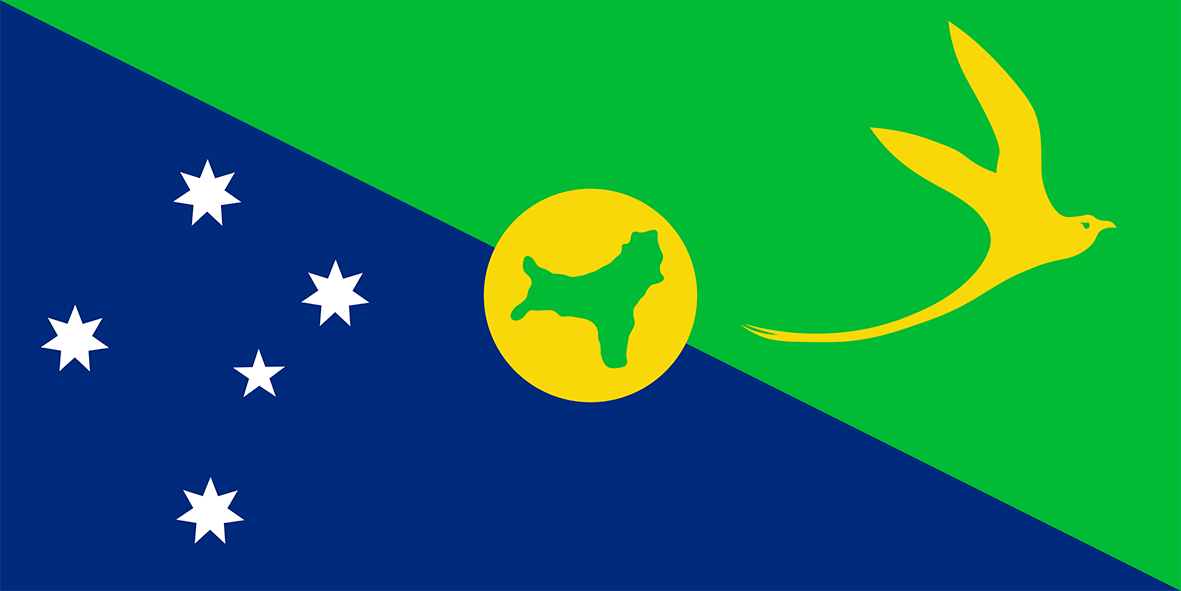 The flag of Christmas Island.
Welcome to the summary page for FabulousFusionFood's Christmas Islander recipes, part of Oceania. This page provides links to all the Christmas Islander recipes presented on this site, with 14 recipes in total.
This is a continuation of an entire series of pages that will, I hope, allow my visitors to better navigate this site. As well as displaying recipes by name, country and region of origin I am now planning a whole series of pages where recipes can be located by meal type and main ingredient. This page gives a listing of all the Christmas Islander recipes added to this site.
The cuisine of Christmas Island can best be described as an eclectic combination of traditional Australian cuisine and Asian cuisine, particularly meals from Malaysia and Indonesia. Almost no fresh food is grown on the island due to nematodes in the soil. However, there are three local gardens on the island that cultivate small amounts of Asian greens. Locals rely on government-contracted deliveries of fresh food from mainland Australia. As of November 2013, an additional air-freight of vegetables arrives from Malaysia via Indonesia every Friday night for purchase on Saturday morning. This air-freight mainly caters to the tastes of the local community, offering fresh noodles, Asian greens, fish, pork belly, bones and fillets, as well as other packaged foods like fish balls and tofu.
These recipes, for the major part, originate in Christmas Island. Otherwise they are fusion recipes with major Christmas Islander influences.
Christmas Island, officially the Territory of Christmas Island (聖誕島領地 in Chinese and Wilayah Pulau Krismas in Malay) s an Australian external territory in the Indian Ocean comprising the island of the same name. It is about 350 kilometres (190 nautical miles) south of Java and Sumatra and about 1,550 km (840 nmi) north-west of the closest point on the Australian mainland. It has an area of 135 square kilometres (52 sq mi). Christmas Island's geographic isolation and history of minimal human disturbance has led to a high level of endemism among its flora and fauna, which is of interest to scientists and naturalists. The territory derives its name from its discovery on Christmas Day 1643 by Captain William Mynors. Although not strictly in Oceania, Christmas Island is typically included in the list of Oceanian islands by virtue of being an Australian territory.
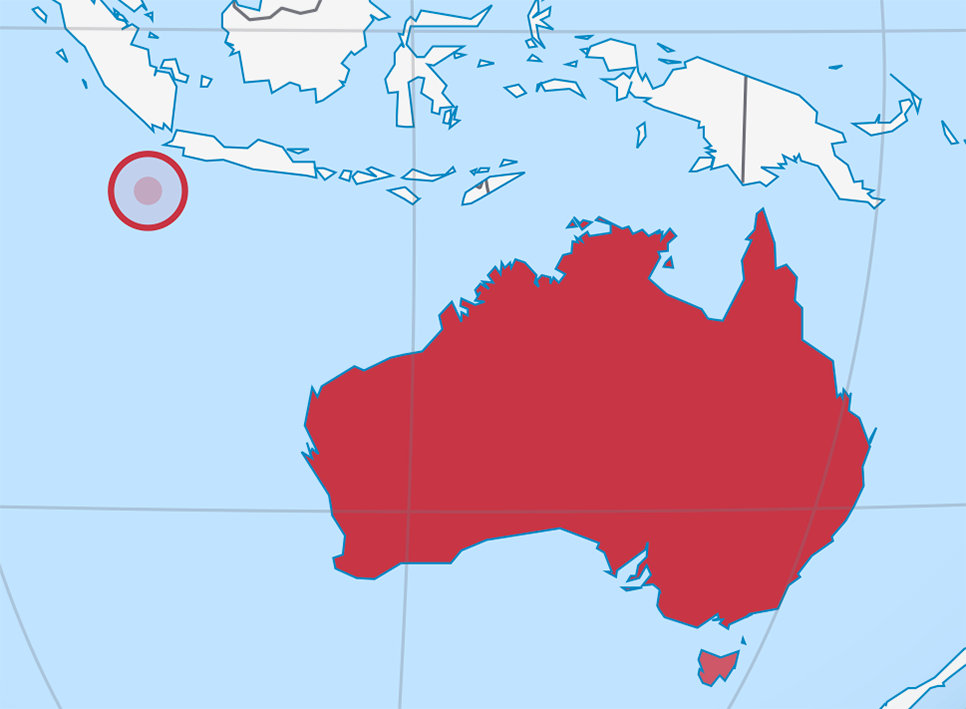 The image above shows Christmas Island (circled in red) in the Indian Ocean in relation to Australia.The first European to sight Christmas Island was Richard Rowe of the Thomas in 1615. Mynors gave it its name. It was first settled in the late 19th century, after abundant phosphate deposits were found (originally deposited as guano) which led Britain to annex the island in 1888 and begin commercial mining in 1899. The Japanese invaded the island in 1942 to secure its phosphate deposits. After the end of Japanese occupation, the island's administration was restored to Singapore, but it was transferred to Australia in 1958, where it has remained since.
Christmas Island had a population of 1,692 as of 2021, with most living in settlements on its northern edge. The main settlement is Flying Fish Cove, known simply as The Settlement. Other settlements include Poon Saan, Drumsite, and Silver City. Historically, Asian Australians of Chinese, Malay, and Indian descent were the majority of the population. Today, around two-thirds of the island's population is estimated to have Straits Chinese origin (though just 22.2% of the population declared Chinese ancestry in 2021), with significant numbers of Malays and European Australians and smaller numbers of Straits Indians and Eurasians. Several languages are in use, including English, Malay, and various Chinese dialects.
Religious beliefs vary geographically. The Anglo-Celtic influence in the capital is closely tied to Catholicism, whereas Buddhism is common in Poon Saan, and Sunni Islam is generally observed in the shoreline water village where the Malays live. The majority (63%) of the island is made up of Christmas Island National Park, which features several areas of primary monsoonal forest.
Etymology: The first European to sight the island was Richard Rowe of the Thomas in 1615. Captain William Mynors of the East India Company vessel Royal Mary named the island when he sailed past it on Christmas Day in 1643 and named it for that day.
Almost no fresh food is grown on the island due to nematodes in the soil. However, there are three local gardens on the island that cultivate small amounts of Asian greens. Locals rely on government-contracted deliveries of fresh food from mainland Australia. As of November 2013, an additional air-freight of vegetables arrives from Malaysia via Indonesia every Friday night for purchase on Saturday morning. This air-freight mainly caters to the tastes of the local community, offering fresh noodles, Asian greens, fish, pork belly, bones and fillets, as well as other packaged foods like fish balls and tofu.
As a result of supply issues, whole fresh produce can be difficult to acquire and so meals that make use of processed foods and canned foods are popular. Traditionally, chickens were kept on the island and locals produced their own pickled eggs and Chinese century eggs. Dishes that made use of the chickens themselves were popular along with dishes that included local coconut crabs. However, coconut crabs are now a protected species. The island has a number of noodle bars offering Chinese and Malaysian dishes in accordance with the traditional cuisines of the island's residents.
This is a continuation of an entire series of pages that will, I hope, allow my visitors to better navigate this site. As well as displaying recipes by name, country and region of origin I am now planning a whole series of pages where recipes can be located by meal type and main ingredient. This page gives a listing of all the Christmas Islander recipes added to this site.
The cuisine of Christmas Island can best be described as an eclectic combination of traditional Australian cuisine and Asian cuisine, particularly meals from Malaysia and Indonesia. Almost no fresh food is grown on the island due to nematodes in the soil. However, there are three local gardens on the island that cultivate small amounts of Asian greens. Locals rely on government-contracted deliveries of fresh food from mainland Australia. As of November 2013, an additional air-freight of vegetables arrives from Malaysia via Indonesia every Friday night for purchase on Saturday morning. This air-freight mainly caters to the tastes of the local community, offering fresh noodles, Asian greens, fish, pork belly, bones and fillets, as well as other packaged foods like fish balls and tofu.
These recipes, for the major part, originate in Christmas Island. Otherwise they are fusion recipes with major Christmas Islander influences.
Christmas Island, officially the Territory of Christmas Island (聖誕島領地 in Chinese and Wilayah Pulau Krismas in Malay) s an Australian external territory in the Indian Ocean comprising the island of the same name. It is about 350 kilometres (190 nautical miles) south of Java and Sumatra and about 1,550 km (840 nmi) north-west of the closest point on the Australian mainland. It has an area of 135 square kilometres (52 sq mi). Christmas Island's geographic isolation and history of minimal human disturbance has led to a high level of endemism among its flora and fauna, which is of interest to scientists and naturalists. The territory derives its name from its discovery on Christmas Day 1643 by Captain William Mynors. Although not strictly in Oceania, Christmas Island is typically included in the list of Oceanian islands by virtue of being an Australian territory.
The image above shows Christmas Island (circled in red) in the Indian Ocean in relation to Australia.Christmas Island had a population of 1,692 as of 2021, with most living in settlements on its northern edge. The main settlement is Flying Fish Cove, known simply as The Settlement. Other settlements include Poon Saan, Drumsite, and Silver City. Historically, Asian Australians of Chinese, Malay, and Indian descent were the majority of the population. Today, around two-thirds of the island's population is estimated to have Straits Chinese origin (though just 22.2% of the population declared Chinese ancestry in 2021), with significant numbers of Malays and European Australians and smaller numbers of Straits Indians and Eurasians. Several languages are in use, including English, Malay, and various Chinese dialects.
Religious beliefs vary geographically. The Anglo-Celtic influence in the capital is closely tied to Catholicism, whereas Buddhism is common in Poon Saan, and Sunni Islam is generally observed in the shoreline water village where the Malays live. The majority (63%) of the island is made up of Christmas Island National Park, which features several areas of primary monsoonal forest.
Etymology: The first European to sight the island was Richard Rowe of the Thomas in 1615. Captain William Mynors of the East India Company vessel Royal Mary named the island when he sailed past it on Christmas Day in 1643 and named it for that day.
Christmas Islander Cuisine:
The cuisine of Christmas Island can best be described as an eclectic combination of traditional Australian cuisine and Asian cuisine, particularly meals from Malaysia and Indonesia. As of 2009, the island had just 1,200 residents: 65% Chinese Malaysians, 20% Malaysian Malays, and 15% of European descent. There are also small Malaysian Indian and Eurasian communities on the island.Almost no fresh food is grown on the island due to nematodes in the soil. However, there are three local gardens on the island that cultivate small amounts of Asian greens. Locals rely on government-contracted deliveries of fresh food from mainland Australia. As of November 2013, an additional air-freight of vegetables arrives from Malaysia via Indonesia every Friday night for purchase on Saturday morning. This air-freight mainly caters to the tastes of the local community, offering fresh noodles, Asian greens, fish, pork belly, bones and fillets, as well as other packaged foods like fish balls and tofu.
As a result of supply issues, whole fresh produce can be difficult to acquire and so meals that make use of processed foods and canned foods are popular. Traditionally, chickens were kept on the island and locals produced their own pickled eggs and Chinese century eggs. Dishes that made use of the chickens themselves were popular along with dishes that included local coconut crabs. However, coconut crabs are now a protected species. The island has a number of noodle bars offering Chinese and Malaysian dishes in accordance with the traditional cuisines of the island's residents.
Christmas Island's National Dishes:
Note that Christmas Island has no official national dish, however, a range of dishes prepared on the island are listed below:The alphabetical list of all the Christmas Islander recipes on this site follows, (limited to 100 recipes per page). There are 14 recipes in total:
Page 1 of 1
| Ayam Panggang Origin: Christmas Island | Christmas Island Crab Rendang Origin: Christmas Island | Iced Milo Origin: Christmas Island |
| Century Eggs Origin: Christmas Island | Christmas Island Pickled Eggs Origin: Christmas Island | Malaysian Chicken Curry Origin: Christmas Island |
| Chicken Curry with Potatoes Origin: Christmas Island | Coconut Crab Curry Origin: Christmas Island | Nasi Lemak Origin: Christmas Island |
| Chicken Rice Origin: Christmas Island | Coconut Rice Origin: Christmas Island | Roti Canai Origin: Christmas Island |
| Christmas Island Beriani Origin: Christmas Island | Fried Kway Teow Origin: Christmas Island |
Page 1 of 1