FabulousFusionFood's Guamian Recipes Home Page
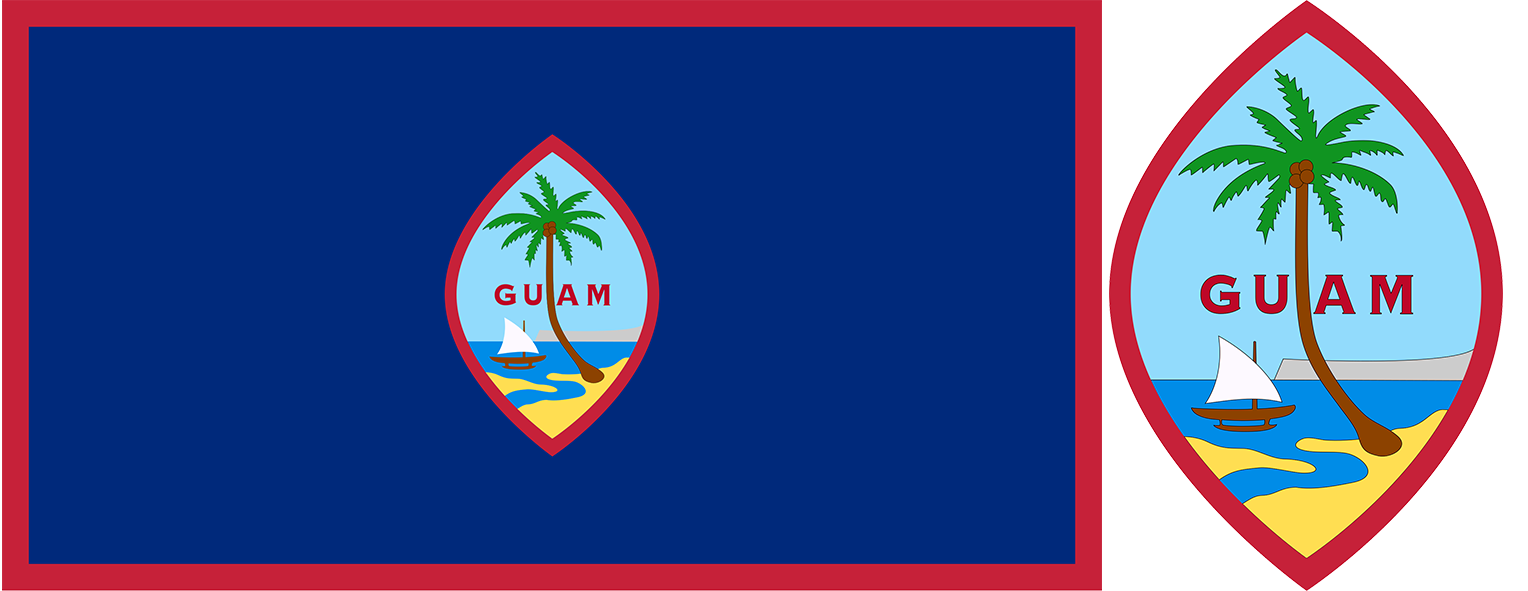 The flag of Guam (left) and the coat of arms of Guam (right).
Welcome to the summary page for FabulousFusionFood's Guamian recipes, part of Oceania. This page provides links to all the Guamian recipes presented on this site, with 17 recipes in total.
This is a continuation of an entire series of pages that will, I hope, allow my visitors to better navigate this site. As well as displaying recipes by name, country and region of origin I am now planning a whole series of pages where recipes can be located by meal type and main ingredient. This page gives a listing of all the Guamian recipes added to this site.
Historically, the diet of the native inhabitants of Guam consisted of fish, fowl, rice, breadfruit, taro, yams, bananas, and coconuts used in a variety of dishes. They traditionally cooked by means of heated stones buried in a pit, much like the method used by many present day Polynesian cultures. The principal crops introduced by European missionaries were maize, tobacco, oranges, lemons, limes, pineapples, cashews, peanuts, eggplant, tomatoes, and several species of Annona, besides a number of leguminous vegetables and garden herbs. Coffee and cacao were introduced later. Post-contact Chamoru cuisine is largely based on corn, and includes tortillas, tamales, atole, and chilaquiles, which are a clear influence from Mesoamerica, principally Mexico, from Spanish trade with Asia.
These recipes, for the major part, originate in Guam. Otherwise they are fusion recipes with major Guamian influences.
Guam, Chamorro: Guåhan [ˈɡʷɑhɑn]) is an island that is an organized, unincorporated territory of the United States in the Micronesia subregion of the western Pacific Ocean. Guam's capital is Hagåtña, and the most populous village is Dededo. It is the westernmost point and territory of the United States, as measured from the geographic center of the U.S. In Oceania, Guam is the largest and southernmost of the Mariana Islands and the largest island in Micronesia. In 2022, its population was 168,801. Chamorros are its largest ethnic group, but a minority on the multiethnic island. The territory spans 210 square miles (540 km2; 130,000 acres) and has a population density of 775 per square mile (299/km2).
 The image above shows Guam (circled in red) in relation to Micronesia in Oceania.Indigenous Guamanians are the Chamorro, who are related to the Austronesian peoples of the Malay Archipelago, the Philippines, Taiwan, and Polynesia. Unlike most of its neighbors, the Chamorro language is not classified as a Micronesian or Polynesian language. Like Palauan, it possibly constitutes an independent branch of the Malayo-Polynesian language family. The Chamorro people settled Guam and the Mariana islands approximately 3,500 years ago. Portuguese explorer Ferdinand Magellan, while in the service of Spain, was the first European to visit and claim the island in March 1521. Guam was fully colonized by Spain in 1668. Between the 17th and 19th centuries, Guam was an important stopover for Spanish Manila galleons. During the Spanish–American War, the United States captured Guam in June 1898. Under the 1898 Treaty of Paris, Spain ceded Guam to the U.S. effective April 11, 1899.
Before World War II, Guam was one of five American jurisdictions in the Pacific Ocean, along with Wake Island in Micronesia, American Samoa and Hawaii in Polynesia, and the Philippines. On December 8, 1941, hours after the attack on Pearl Harbor, Guam was captured by the Japanese, who occupied the island for two and a half years before American forces recaptured it on July 21, 1944, which is commemorated there as Liberation Day. Since the 1960s, Guam's economy has been supported primarily by tourism and the U.S. military, for which Guam is a major strategic asset. Its future political status has been a matter of significant discussion, with public opinion polls indicating a strong preference for American statehood.
Guam's de facto motto is 'Where America's Day Begins', which refers to the island's proximity to the International Date Line. Guam is among the 17 non-self-governing territories listed by the United Nations, and has been a member of the Pacific Community since 1983.
Etymology: Guam is called Guåhan by Chamorro speakers, from the word guaha, meaning 'to have'. Its English gloss 'we have' references the island's providing everything needed to live.
The modern-day cuisine of Guam is a fusion of that of the indigenous tribes of Chamorro with other Pacific Islanders, Asians and Europeans. Spanish colonialism, which came to the Marianas via Mexico and lasted 200+ years, has had an especially strong influence on the cuisine blended with the present American influence. Some popular dishes include the chorizo breakfast bowl, the Jamaican Grill, red rice as a side dish cooked with the red seeds of the achiote tree, escovitch chicharrón, guyuria, roskette, kalamai, and a Filipino-inspired dessert called the banana lumpia (also known as turon in the Philippines). P. mariannus mariannus (Mariana Fruit Bat) meat is a distinctive feature of traditional Chamorro cuisine. Other notable local ingredients in Guam's cuisine include fresh fish, such as tuna, as well as breadfruit, coconut, papaya, taro, and yams.
This is a continuation of an entire series of pages that will, I hope, allow my visitors to better navigate this site. As well as displaying recipes by name, country and region of origin I am now planning a whole series of pages where recipes can be located by meal type and main ingredient. This page gives a listing of all the Guamian recipes added to this site.
Historically, the diet of the native inhabitants of Guam consisted of fish, fowl, rice, breadfruit, taro, yams, bananas, and coconuts used in a variety of dishes. They traditionally cooked by means of heated stones buried in a pit, much like the method used by many present day Polynesian cultures. The principal crops introduced by European missionaries were maize, tobacco, oranges, lemons, limes, pineapples, cashews, peanuts, eggplant, tomatoes, and several species of Annona, besides a number of leguminous vegetables and garden herbs. Coffee and cacao were introduced later. Post-contact Chamoru cuisine is largely based on corn, and includes tortillas, tamales, atole, and chilaquiles, which are a clear influence from Mesoamerica, principally Mexico, from Spanish trade with Asia.
These recipes, for the major part, originate in Guam. Otherwise they are fusion recipes with major Guamian influences.
Guam, Chamorro: Guåhan [ˈɡʷɑhɑn]) is an island that is an organized, unincorporated territory of the United States in the Micronesia subregion of the western Pacific Ocean. Guam's capital is Hagåtña, and the most populous village is Dededo. It is the westernmost point and territory of the United States, as measured from the geographic center of the U.S. In Oceania, Guam is the largest and southernmost of the Mariana Islands and the largest island in Micronesia. In 2022, its population was 168,801. Chamorros are its largest ethnic group, but a minority on the multiethnic island. The territory spans 210 square miles (540 km2; 130,000 acres) and has a population density of 775 per square mile (299/km2).
The image above shows Guam (circled in red) in relation to Micronesia in Oceania.Before World War II, Guam was one of five American jurisdictions in the Pacific Ocean, along with Wake Island in Micronesia, American Samoa and Hawaii in Polynesia, and the Philippines. On December 8, 1941, hours after the attack on Pearl Harbor, Guam was captured by the Japanese, who occupied the island for two and a half years before American forces recaptured it on July 21, 1944, which is commemorated there as Liberation Day. Since the 1960s, Guam's economy has been supported primarily by tourism and the U.S. military, for which Guam is a major strategic asset. Its future political status has been a matter of significant discussion, with public opinion polls indicating a strong preference for American statehood.
Guam's de facto motto is 'Where America's Day Begins', which refers to the island's proximity to the International Date Line. Guam is among the 17 non-self-governing territories listed by the United Nations, and has been a member of the Pacific Community since 1983.
Etymology: Guam is called Guåhan by Chamorro speakers, from the word guaha, meaning 'to have'. Its English gloss 'we have' references the island's providing everything needed to live.
Guamian Cuisine:
Historically, the diet of the native inhabitants of Guam consisted of fish, fowl, rice, breadfruit, taro, yams, bananas, and coconuts used in a variety of dishes. They traditionally cooked by means of heated stones buried in a pit, much like the method used by many present day Polynesian cultures. The principal crops introduced by European missionaries were maize, tobacco, oranges, lemons, limes, pineapples, cashews, peanuts, eggplant, tomatoes, and several species of Annona, besides a number of leguminous vegetables and garden herbs. Coffee and cacao were introduced later. Post-contact Chamoru cuisine is largely based on corn, and includes tortillas, tamales, atole, and chilaquiles, which are a clear influence from Mesoamerica, principally Mexico, from Spanish trade with Asia.The modern-day cuisine of Guam is a fusion of that of the indigenous tribes of Chamorro with other Pacific Islanders, Asians and Europeans. Spanish colonialism, which came to the Marianas via Mexico and lasted 200+ years, has had an especially strong influence on the cuisine blended with the present American influence. Some popular dishes include the chorizo breakfast bowl, the Jamaican Grill, red rice as a side dish cooked with the red seeds of the achiote tree, escovitch chicharrón, guyuria, roskette, kalamai, and a Filipino-inspired dessert called the banana lumpia (also known as turon in the Philippines). P. mariannus mariannus (Mariana Fruit Bat) meat is a distinctive feature of traditional Chamorro cuisine. Other notable local ingredients in Guam's cuisine include fresh fish, such as tuna, as well as breadfruit, coconut, papaya, taro, and yams.
Guam's National Dishes:
Below are listed the dishes considered to be Guam's national foods along with links to the recipes for those dishes:| Kelaguen Mannok (Chamorro-style Chicken Salad) Origin: Guam |
The alphabetical list of all the Guamian recipes on this site follows, (limited to 100 recipes per page). There are 17 recipes in total:
Page 1 of 1
| Kelaguen Mannok (Chamorro-style Chicken Salad) Origin: Guam | Guam Chicken Curry Origin: Guam | Månha Titiyas (Coconut Crêpe) Origin: Guam |
| Chamorro Flour Titiyas Origin: Guam | Guam Cucumber Salad Origin: Guam | Pado'lalo' (Spicy coconut Aubergine) Origin: Guam |
| Chamorro Shrimp Patties Origin: Guam | Guam Red Rice Origin: Guam | Riyenu (Chamorro Stuffing) Origin: Guam |
| Chicken Kelaugen Origin: Guam | Kådun Pika (Spicy Chicken) Origin: Guam | Sardine Kelaguen Origin: Guam |
| Coconut Latiya Origin: Guam | Ke'lagu'en Uhang (Prawns and Peppers) Origin: Guam | Spam Kelaguen Origin: Guam |
| Finadene Origin: Guam | Kelaguen Mannok (Chamorro-style Chicken Salad) Origin: Guam |
Page 1 of 1