FabulousFusionFood's Spice Guide for Sweet Almond Home Page
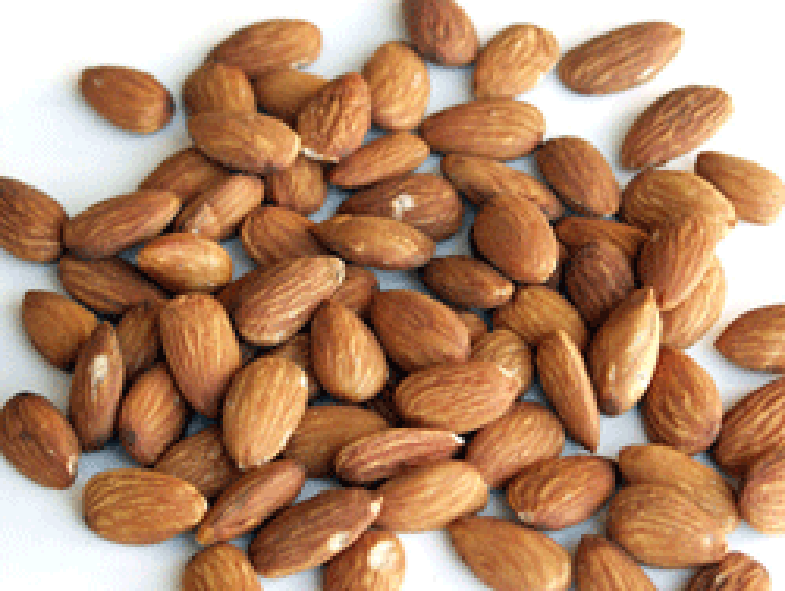 Almond kernel (nut)
from Prunus
dulcis var.
dulcis and
the
almonds
Almond kernel (nut)
from Prunus
dulcis var.
dulcis and
the
almondsseeds from inside extracted
Welcome to the summary page for FabulousFusionFood's Spice guide to Sweet Almond along with all the Sweet Almond containing recipes presented on this site, with 750 recipes in total.
This is a continuation of an entire series of pages that will, I hope, allow my visitors to better navigate this site. As well as displaying recipes by name, country and region of origin I am now planning a whole series of pages where recipes can be located by meal type and main ingredient. This page gives a listing of all the spice-based recipes added to this site.
These recipes, all contain Sweet Almond as a major flavouring.
Sweet almonds are the seed kernels of the fruit of Prunus dulcis var. dulcis
The almond (Prunus amygdalus, syn. Prunus dulcis) is a species of small tree from the genus Prunus, cultivated worldwide for its seed, a culinary nut. Along with the peach, it is classified in the subgenus Amygdalus, distinguished from the other subgenera by corrugations on the shell (endocarp) surrounding the seed.
The fruit of the almond is a drupe, consisting of an outer hull and a hard shell with the seed, which is not a true nut. Shelling almonds refers to removing the shell to reveal the seed. Almonds are sold shelled or unshelled. Blanched almonds are shelled almonds that have been treated with hot water to soften the seedcoat, which is then removed to reveal the white embryo. Once almonds are cleaned and processed, they can be stored over time. Almonds are used in many cuisines, often featuring prominently in desserts, such as marzipan.
The almond tree prospers in a moderate Mediterranean climate with cool winter weather. Native to Iran and surrounding countries including the Levant, today it is rarely found wild in its original setting.[6] Almonds were one of the earliest domesticated fruit trees, due to the ability to produce quality offspring entirely from seed, without using suckers and cuttings. Evidence of domesticated almonds in the Early Bronze Age has been found in the archeological sites of the Middle East, and subsequently across the Mediterranean region and similar arid climates with cool winters. The place of origin of almonds is variously given as West or Central Asia; yet due to many millennia of cultivation, their original distribution cannot be reconstructed. In temperate Europe, almond trees do not thrive, although their cultivation has been tried in the Middle Ages due to the Capitulare de villis, a text composed sometime in the late 8th or early 9th century that guided the governance of the royal estates during the later years of the reign of Charlemagne (c. 768–814). It lists, in no particular order, a series of rules and regulations on how to manage the lands, animals, justice, and overall administration of the king's property and assets.
The almond is a deciduous tree growing to 4–12.2 metres in height, with a trunk of up to 30 centimetres in diameter. The young twigs are green at first, becoming purplish where exposed to sunlight, then grey in their second year. The leaves are 8–13cm long, with a serrated margin and a 2.5cm petiole.
The flowers are white to pale pink, 3–5cm diameter with five petals, produced singly or in pairs and appearing before the leaves in early spring. Almond grows best in Mediterranean climates with warm, dry summers and mild, wet winters. The optimal temperature for their growth is between 15 and 30°C and the tree buds have a chilling requirement of 200 to 700 hours below 7.2°C to break dormancy.
Almonds begin bearing an economic crop in the third year after planting. Trees reach full bearing five to six years after planting. The fruit matures in the autumn, 7–8 months after flowering.
The almond fruit is 3.5–6cm long. It is not a nut but a drupe. The outer covering, consisting of an outer exocarp, or skin, and mesocarp, or flesh, fleshy in other members of Prunus such as the plum and cherry, is instead a thick, leathery, grey-green coat (with a downy exterior), called the hull. Inside the hull is a woody endocarp which forms a reticulated, hard shell (like the outside of a peach pit) called the pyrena. Inside the shell is the edible seed, commonly called a nut. Generally, one seed is present, but occasionally two occur. After the fruit matures, the hull splits and separates from the shell, and an abscission layer forms between the stem and the fruit so that the fruit can fall from the tree.
The word almond comes from Old French almande or alemande, Late Latin amandula, amindula, derived from amygdala from the Ancient Greek amygdálē (ἀμυγδάλη) (cf. amygdala, the almond-shaped portion of the brain). Late Old English had amygdales, 'almonds'.
Almonds are 4% water, 22% carbohydrates, 21% protein, and 50% fat (table). In a 100-gram (3+1⁄2-ounce) reference amount, almonds supply 2,420 kilojoules (579 kilocalories) of food energy. The almond is a nutritionally dense food (table), providing a rich source (20% or more of the Daily Value, DV) of the B vitamins riboflavin and niacin, vitamin E, and the essential minerals calcium, copper, iron, magnesium, manganese, phosphorus, and zinc. Almonds are a moderate source (10–19% DV) of the B vitamins thiamine, vitamin B6, and folate, choline, and the essential mineral potassium. They also contain substantial dietary fibre, the monounsaturated fat, oleic acid, and the polyunsaturated fat, linoleic acid. Typical of nuts and seeds, almonds are a source of phytosterols such as beta-sitosterol, stigmasterol, campesterol, sitostanol, and campestanol.
While the almond is often eaten on its own as a nut, either raw or toasted, and has a faint, nutty fragrance and taste it is also a component of various dishes. Almonds are available in many forms, such as whole, slivered, and ground into flour. Almond pieces around 2–3 millimetres in size, called "nibs", are used for special purposes such as decoration.
The development of almond-based dishes traces back to the middle ages, particular in wealthier estates. Almonds were valued as a thickener, as an addition to flour and, particularly, in making almond milk (very important when cow's milk could not be reliably stored).
Almonds contain about 50% of a fixed oil. This, typically is too expensive to be used for cooking, though it is available for sale and is sometimes used in cakes. It is made up of glycerides (80% oleic acid, 15% linoleic acid, 5% palmitic acid).
This is a continuation of an entire series of pages that will, I hope, allow my visitors to better navigate this site. As well as displaying recipes by name, country and region of origin I am now planning a whole series of pages where recipes can be located by meal type and main ingredient. This page gives a listing of all the spice-based recipes added to this site.
These recipes, all contain Sweet Almond as a major flavouring.
Sweet almonds are the seed kernels of the fruit of Prunus dulcis var. dulcis
The almond (Prunus amygdalus, syn. Prunus dulcis) is a species of small tree from the genus Prunus, cultivated worldwide for its seed, a culinary nut. Along with the peach, it is classified in the subgenus Amygdalus, distinguished from the other subgenera by corrugations on the shell (endocarp) surrounding the seed.
The fruit of the almond is a drupe, consisting of an outer hull and a hard shell with the seed, which is not a true nut. Shelling almonds refers to removing the shell to reveal the seed. Almonds are sold shelled or unshelled. Blanched almonds are shelled almonds that have been treated with hot water to soften the seedcoat, which is then removed to reveal the white embryo. Once almonds are cleaned and processed, they can be stored over time. Almonds are used in many cuisines, often featuring prominently in desserts, such as marzipan.
The almond tree prospers in a moderate Mediterranean climate with cool winter weather. Native to Iran and surrounding countries including the Levant, today it is rarely found wild in its original setting.[6] Almonds were one of the earliest domesticated fruit trees, due to the ability to produce quality offspring entirely from seed, without using suckers and cuttings. Evidence of domesticated almonds in the Early Bronze Age has been found in the archeological sites of the Middle East, and subsequently across the Mediterranean region and similar arid climates with cool winters. The place of origin of almonds is variously given as West or Central Asia; yet due to many millennia of cultivation, their original distribution cannot be reconstructed. In temperate Europe, almond trees do not thrive, although their cultivation has been tried in the Middle Ages due to the Capitulare de villis, a text composed sometime in the late 8th or early 9th century that guided the governance of the royal estates during the later years of the reign of Charlemagne (c. 768–814). It lists, in no particular order, a series of rules and regulations on how to manage the lands, animals, justice, and overall administration of the king's property and assets.
The almond is a deciduous tree growing to 4–12.2 metres in height, with a trunk of up to 30 centimetres in diameter. The young twigs are green at first, becoming purplish where exposed to sunlight, then grey in their second year. The leaves are 8–13cm long, with a serrated margin and a 2.5cm petiole.
The flowers are white to pale pink, 3–5cm diameter with five petals, produced singly or in pairs and appearing before the leaves in early spring. Almond grows best in Mediterranean climates with warm, dry summers and mild, wet winters. The optimal temperature for their growth is between 15 and 30°C and the tree buds have a chilling requirement of 200 to 700 hours below 7.2°C to break dormancy.
Almonds begin bearing an economic crop in the third year after planting. Trees reach full bearing five to six years after planting. The fruit matures in the autumn, 7–8 months after flowering.
The almond fruit is 3.5–6cm long. It is not a nut but a drupe. The outer covering, consisting of an outer exocarp, or skin, and mesocarp, or flesh, fleshy in other members of Prunus such as the plum and cherry, is instead a thick, leathery, grey-green coat (with a downy exterior), called the hull. Inside the hull is a woody endocarp which forms a reticulated, hard shell (like the outside of a peach pit) called the pyrena. Inside the shell is the edible seed, commonly called a nut. Generally, one seed is present, but occasionally two occur. After the fruit matures, the hull splits and separates from the shell, and an abscission layer forms between the stem and the fruit so that the fruit can fall from the tree.
The word almond comes from Old French almande or alemande, Late Latin amandula, amindula, derived from amygdala from the Ancient Greek amygdálē (ἀμυγδάλη) (cf. amygdala, the almond-shaped portion of the brain). Late Old English had amygdales, 'almonds'.
Almonds are 4% water, 22% carbohydrates, 21% protein, and 50% fat (table). In a 100-gram (3+1⁄2-ounce) reference amount, almonds supply 2,420 kilojoules (579 kilocalories) of food energy. The almond is a nutritionally dense food (table), providing a rich source (20% or more of the Daily Value, DV) of the B vitamins riboflavin and niacin, vitamin E, and the essential minerals calcium, copper, iron, magnesium, manganese, phosphorus, and zinc. Almonds are a moderate source (10–19% DV) of the B vitamins thiamine, vitamin B6, and folate, choline, and the essential mineral potassium. They also contain substantial dietary fibre, the monounsaturated fat, oleic acid, and the polyunsaturated fat, linoleic acid. Typical of nuts and seeds, almonds are a source of phytosterols such as beta-sitosterol, stigmasterol, campesterol, sitostanol, and campestanol.
While the almond is often eaten on its own as a nut, either raw or toasted, and has a faint, nutty fragrance and taste it is also a component of various dishes. Almonds are available in many forms, such as whole, slivered, and ground into flour. Almond pieces around 2–3 millimetres in size, called "nibs", are used for special purposes such as decoration.
The development of almond-based dishes traces back to the middle ages, particular in wealthier estates. Almonds were valued as a thickener, as an addition to flour and, particularly, in making almond milk (very important when cow's milk could not be reliably stored).
Almonds contain about 50% of a fixed oil. This, typically is too expensive to be used for cooking, though it is available for sale and is sometimes used in cakes. It is made up of glycerides (80% oleic acid, 15% linoleic acid, 5% palmitic acid).
The alphabetical list of all Sweet Almond recipes on this site follows, (limited to 100 recipes per page). There are 750 recipes in total:
Page 1 of 8
| Étendre chocolat et noisettes (Chocolate and Hazelnut Spread) Origin: France | Almond Pancakes Origin: Britain | Bakewell Tart Origin: Britain |
| A Potage of Roysons (A Pudding of Raisins) Origin: England | Almond Praline Origin: British | Bakewell Tart II Origin: Britain |
| AC Brownies Origin: American | Almond Shortbread Origin: Ireland | Ballymaloe Fruit Tarts Origin: Ireland |
| Air Fryer Blackberry-topped Almond Sponge with Blackberry Compote Origin: Britain | Almond Shortbread II Origin: Scotland | Balti Chicken Pasanda Origin: Britain |
| Air Fryer Carrot, Almond and Pine Nut Cake Origin: Britain | Almond Soup Origin: British | Banana and Chestnut Crumble Origin: Britain |
| Air Fryer Quick Christmas Cake Origin: Britain | Altdeutsche Brotchen (Old-German Muffins) Origin: Germany | Banana Coconut Muffins (Banana Coconut Muffins) Origin: American |
| Ajo Blanco (White Garlic Sauce) Origin: Spain | Amaretti Orestano Origin: Italy | Banana Lassi Origin: India |
| Al Machboos (Emirati Spiced Rice With Chicken) Origin: UAE | Amaretto Cheesecake II Origin: American | Banoffee Pie Origin: Britain |
| Aliter Dulcia III (Another Sweet III) Origin: Roman | Amaretto Cheesecake with Apricot Glaze Origin: Britain | Bara Carwe Ynys Môn (Anglesea Caraway Bread) Origin: Welsh |
| Aliter in Locusta (Another Sauce for Lobster) Origin: Roman | Amaretto Cheesecake with Raspberry Sauce Origin: Britain | Barbadian Plain Cake Origin: Barbados |
| Aliter in Vitulina Elixa (Sauce for Boiled Veal, Another Way) Origin: Roman | Amerikaner Biscuits Origin: American | Barbecued Baked Apples Origin: Britain |
| Aliter Isicia (Another Sausage) Origin: Roman | Angelica Seed Pound Cake Origin: Britain | Barfi badam (Almond Cream Sweetmeats) Origin: India |
| Aliter Isicia II (Another Sausage II) Origin: Roman | Apothermum (Sweet Wine and Raisin Sauce) Origin: Roman | Barley Gruel Origin: England |
| Aliter Ius in Avibus (Sauce for Birds, Another Way) Origin: Roman | Apple Cheesecakes Origin: Ireland | Basbousa Origin: India |
| Almendrados (Granadan Almond Biscuits) Origin: Spain | Apple Kesari with Nutmeg Origin: India | Basler Leckerli (Basel Biscuits) Origin: Switzerland |
| Almond Amaretto Cheesecake Origin: American | Apple Muse Origin: England | Basundi (Thickened Milk Dessert) Origin: India |
| Almond and Lavender Biscuits Origin: Britain | Appulmoy (Apple Stew) Origin: England | Battenberg Origin: Britain |
| Almond and Orange Cake Origin: Scotland | Apricot Compote Origin: Britain | Bean and Almond Salad Origin: South Africa |
| Almond Biscotti Origin: Italy | Apricot Pinwheels Origin: Britain | Bedam ki Burfi (Almond Toffee) Origin: India |
| Almond Cake Origin: Ireland | Asabia el Aroos (Brides' Fingers) Origin: Afghanistan | Berenjena con Queso al Horno (Aubergine with Almonds and Cheese) Origin: Spain |
| Almond Cheesecakes Origin: Ireland | Assegas n Tajin s Ifrawen (Camel tagine with dried apricots) Origin: Western Sahara | Bergamot, Basil and Almond Pesto Origin: Fusion |
| Almond Christmas Biscuits Origin: Britain | Aşure (Noah's Pudding) Origin: Northern Cyprus | Beriani Origin: Brunei |
| Almond Comfits Origin: Britain | Authentic Mole Poblano Origin: Mexico | Bermuda Rockfish with Bananas and Rum Sauce Origin: Bermuda |
| Almond Cream Origin: Britain | Azerbaijani Plav (Azerbaijani Pilaf) Origin: Azerbaijan | Besan Ladoo Origin: India |
| Almond Cream Sauce Origin: Britain | Azevias de Batata Doce (Sweet Potato Pockets) Origin: Portugal | Betas et Polypodiae (Beetroot and Polypody Root) Origin: Roman |
| Almond Cupcakes with Candied Borage Flowers Origin: Britain | Azevias de Feijão (Sweet White Bean Pockets) Origin: Portugal | Bethmaennchen (German Marzipan Christmas Biscuits) Origin: Germany |
| Almond Curd Origin: Britain | Azevias de Grão (Sweet Chickpea Pockets) Origin: Portugal | Bienenstich (Bee Sting) Origin: Germany |
| Almond Ice Cream Origin: Britain | Bûche de Noël (Yule Log) Origin: France | Bilberry and Cowberry Pie Origin: British |
| Almond Jelly in Ginger Sauce Origin: China | Bacalao Encebollado con Almendras al Estilo Canario (Cod with Onions and Almonds, Canary Style) Origin: Spain | BIR Kashmiri Curry Origin: Britain |
| Almond Katli with Pistachios Origin: India | Badam Puri Origin: India | Biscotti Mandorle e Pistacchio (Pistachio and Almond Biscuits) Origin: Italy |
| Almond Madeleines Origin: France | Bahama Mama Smoothie Origin: American | Bisgedi Nadolig (Christmas Biscuits) Origin: Welsh |
| Almond Mousse Cheesecake Origin: American | Bajan Sweet Bread Origin: Barbados | Bizcocho de almendras (Almond Cake) Origin: Spain |
| Almond Mylk (Almond Milk) Origin: England | Baked Date Oatmeal Origin: Fusion | |
| Almond Nougat Origin: Britain | Bakewell Mince Pies Origin: Britain |
Page 1 of 8