FabulousFusionFood's Nut-based Recipes 18th Page
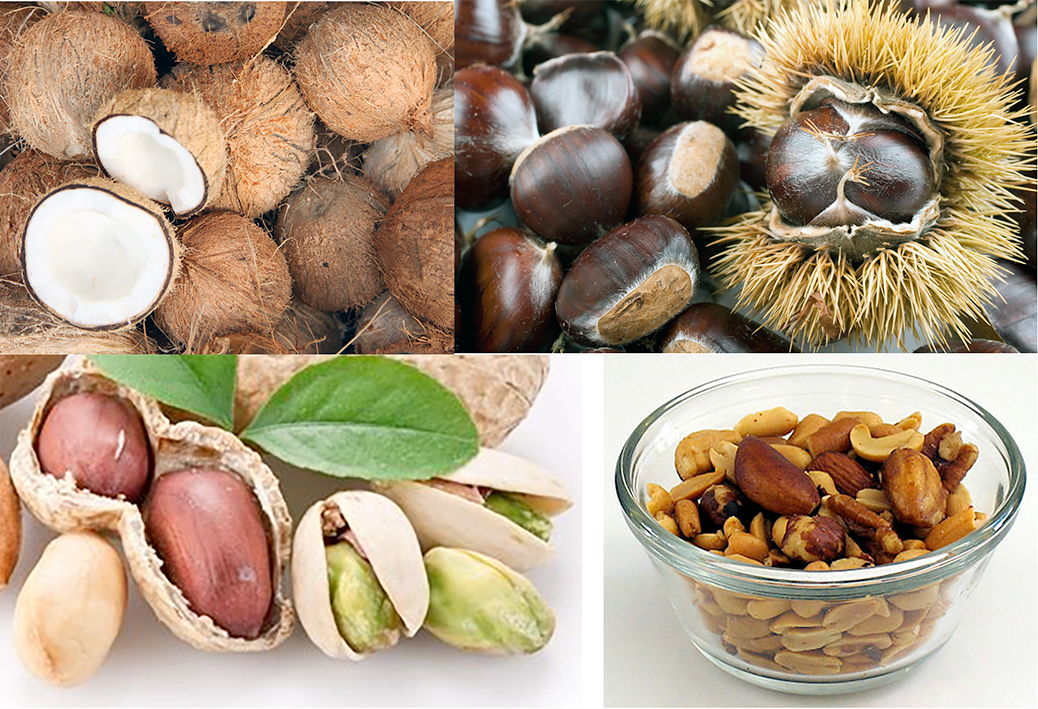 Different nuts. Clockwise: coconuts, sweet chestnuts, bowl of mixed nuts,
peanuts and pistachios.
Welcome to FabulousFusionFood's Nut-based Recipes Page —A nut is a fruit consisting of a hard or tough nutshell protecting a kernel which is usually edible. In general usage and in a culinary sense, many dry seeds are called nuts. In a botanical context, "nut" implies that the shell does not open to release the seed (indehiscent).
Most seeds come from fruit that naturally free themselves from the shell, but this is not the case in nuts such as hazelnuts, chestnuts, and acorns, which have hard shell walls and originate from a compound ovary. The general and original usage of the term is less restrictive, and many nuts (in the culinary sense), such as almonds, pistachios, and Brazil nuts, are not nuts in a botanical sense. Common usage of the term often refers to any hard-walled, edible kernel as a nut. Nuts are an energy-dense and nutrient-rich food source.
Botanically, a nut is a fruit with a woody pericarp developing from a syncarpous gynoecium. True nuts include, for example, chestnut, hazelnut and filbert. Culinarily, the term 'nut' is used much more widely, and includes examples of drupes (such as pecans and almonds) or seeds (such as pine nuts and peanuts).
Also widely known as nuts are dry drupes, which include pecans, almonds, macadamia (Macadamia integrifolia), candlenut (Aleurites moluccanus) and the water caltrop (Trapa bicornis). A drupe is an indehiscent fruit that has an outer fleshy part consisting of the exocarp, or skin, and mesocarp, or flesh, which surround a single pit or stone, the endocarp with a seed (kernel) inside. In a dry drupe, the outer parts dry up and the remaining husk is part of the ovary wall or pericarp, and the hard inner wall surrounding the seed represents the inner part of the pericarp.
Walnuts and hickories (Juglandaceae) have fruit that are difficult to classify. They are considered to be nuts under some definitions but are also referred to as drupaceous nuts.
In common use, a "tree nut" is, as the name implies, any nut coming from a tree. This most often comes up regarding food allergies; a person may be allergic specifically to peanuts (which are not tree nuts but legumes), whereas others may be allergic to the wider range of nuts that grow on trees.
The sweet potato arrived in Europe with the Columbian exchange. It is recorded, for example, in Elinor Fettiplace's Receipt Book, compiled in England in 1604.
Nuts are eaten by humans and wildlife. Because nuts generally have a high oil content, they are a significant energy source. Many seeds are edible by humans and used in cooking, eaten raw, sprouted, or roasted as a snack food, ground to make nut butters, or pressed for oil that is used in cooking and cosmetics.
Nuts used for food are a common source of food allergens. Reactions can range from mild symptoms to severe ones, a condition known as anaphylaxis, which can be life-threatening. The reaction is due to the release of histamine by the body in response to an allergen in the nuts, causing skin and other possible reactions. Many experts suggest that a person with an allergy to peanuts should avoid eating tree nuts, and vice versa.
The nuts linked to from this page are: acorn; almond; beech nuts; betel nut; brazil nut; bush mango; filbert; ginkgo nut; kola nut; candlenut; cashew; chestnut; coconut; hazelnut; macadamia; ogbono; palm nut; peanut; pecan; pine nut; pistachio; walnut.
The alphabetical list of all the nut-based recipes on this site follows, (limited to 100 recipes per page). There are 4197 recipes in total:
Page 18 of 42
| Haselnußtorte (Hazelnut Torte) Origin: Germany | Hidden Heart Valentine's Cake Origin: Britain | Hot Caramel Apple Drink Origin: American |
| Haselnuss Halbmonde (Hazelnut Crescent Biscuits) Origin: Germany | High Dumpsy Dearie Jam Origin: England | Hot Chocolate Fondants Origin: Britain |
| Hashwe Stuffing Origin: Arabia | Highland Toffee Origin: Scotland | Hot Crab Origin: British |
| Hastletes of Fruyt (Roast Fruit) Origin: England | Highland Venison Casserole with Chestnuts Origin: Scotland | Hot Cross Buns With Cream Cheese Frosting Origin: Britain |
| Haupia (Hawaiian Coconut Pudding) Origin: Hawaii | Himalayan Balsam Seed Curry Origin: Fusion | Hot Wings in Haw Sauce Origin: Britain |
| Havuçlu Toplar (Turkish Carrot Balls) Origin: Turkey | Hindle Wakes Origin: England | Houska (Bohemian Sweet Bread) Origin: Czech |
| Hawayij (Yemeni Spice Mix) Origin: Yemen | Hoenderpastei (South African Chicken Pie) Origin: South Africa | Houska (Bohemian Easter and Christmas Cake) Origin: Czech |
| Hawthorn and Nut Autumn Biscuits Origin: Britain | Hogmanay Whisky Cake Origin: Scotland | Howtowdie Origin: Scotland |
| Hazelnut and Cowberry Cake Origin: Canada | Hoisin chicken with Noodles Origin: Fusion | Howtowdie Stuffing Origin: Scotland |
| Hazelnut and Garlic Mustard Pesto Origin: Britain | Hoisin Pork with Garlic Noodles Origin: China | Hummingbird Cake Origin: American |
| Hazelnut and Wild Greens Pesto Origin: Britain | Hoisin Sauce Origin: China | Huni Roshi (Coconut Flatbread) Origin: Maldives |
| Hazelnut Brittle Origin: Britain | Holiday Eggnog Cheesecake Origin: American | Hypocras Origin: France |
| Hazelnut Clusters Origin: Britain | Home-made Instant Pistachio Pudding Mix Origin: American | Hypotrimma (Condiment Sauce) Origin: Roman |
| Hazelnut crêpes with caramelised bananas Origin: Britain | Home-made Instant Pistachio Pudding Mix Origin: American | Iakwe Stew (Marshallese Chicken Stew) Origin: Marshall Islands |
| Hazelnut Crescents Origin: Turkmenistan | Home-made Sichuan Garlic Chilli Oil Origin: China | Iced Coconut Soup Origin: Cayman Islands |
| Hazelnut Cupcakes Origin: Britain | Home-made Vegan Butter Origin: Britain | Iced Curry Soup Origin: Britain |
| Hazelnut Halva Origin: Fusion | Honduran Yucca Cake with Sweet Milk Sauce Origin: Honduras | Idichakka Thoran (Raw Jackfruit Curry) Origin: India |
| Hazelnut Meringue Origin: British | Honey Almond Brittle Origin: Britain | Ifisashi (Bean Leaves with Peanuts) Origin: Zambia |
| Hazelnut Milk Origin: Britain | Honey and Catkin Grain Biscuits Origin: Britain | Iflaghun Origin: Syria |
| Hazelnut Nougat Origin: Britain | Honey and Spice Buns Origin: Britain | Igbekere (Plantain Chips) Origin: Nigeria |
| Hazelnut Pancakes Origin: Britain | Honey Fungus Tart Origin: Britain | Igbo MoinMoin Origin: Nigeria |
| Hearty Hogmanay Tart Origin: Scotland | Honey Orange Koskosi Origin: Egypt | Ignames à la Tomate (Yams with Tomatoes) Origin: Burkina Faso |
| Heather Biscotti Origin: Scotland | Honey Pecan Cupcakes Origin: Canada | Igra Stobá (Liver Stew) Origin: Bonaire |
| Hebridean Carrageen Pudding with Rose Water and Cardamom Origin: Scotland | Honey Wafers Origin: American | Igra Stobá (Liver Stew) Origin: Curacao |
| Hedgehog Fungus Risotto Origin: Britain | Honey-roasted Sea Lettuce Origin: Britain | Ika Lolo (Fish in Taro Leaves) Origin: Tonga |
| Hedgerow Jam Origin: British | Hong am Rèisleck (Chicken Cooked in Wine) Origin: Luxembourg | In Aprum Assum Iura Ferventia Facies Sic (Hot Sauce for Roast Wild Boar is Made Thus) Origin: Roman |
| Hedgerow Salad Origin: Ancient | Hong Shao Rou (Red-braised pork belly) Origin: Britain | In Lolligine Farsili (Stuffed Squid) Origin: Roman |
| Helado de Boletus Edulis con Crema de Clitocybe Odora (Penny Bun Ice Cream with Aniseed Toadstool Cream) Origin: Spain | Hor Mok Pla Chawnn Bai-Yaw (Steamed Serpent Head Fish Curry with Indian Mulberry Leaf) Origin: Thailand | In ovis hapalis (Boiled Eggs and Pine-nuts) Origin: Roman |
| Hena-Kisoa sy voanjobory (Pork with Bambara Groundnuts) Origin: Madagascar | Hor Mok Pla Chawnn Bai-Yaw (Steamed Serpent Head Fish Curry with Indian Mulberry Leaf) Origin: Thailand | In Ovis Hapalis (Of Soft-boiled Eggs) Origin: Roman |
| Henan Hu La Tang (Hot Pepper Soup) Origin: China | Horchata (Chilled Almond Drink) Origin: Spain | In Piscibum Elixis (Of Poached Fish) Origin: Roman |
| Herb Flower Pesto Origin: Britain | Horchata Origin: Mexico | In Sardis (Sauce for Bonito) Origin: Roman |
| Herbae Rusticae (Country Herbs) Origin: Roman | Horchata de Chufas (Tiger Nut Milk) Origin: Spain | Inafliton Lemai (Fried Breadfruit Slices) Origin: Comoros |
| Herodotus' Pudding Origin: Britain | Hot and Sour Soup Origin: China | |
| Hertzoggies Origin: South Africa | Hot Buttered Rum Origin: Britain |
Page 18 of 42