FabulousFusionFood's Nut-based Recipes 23rd Page
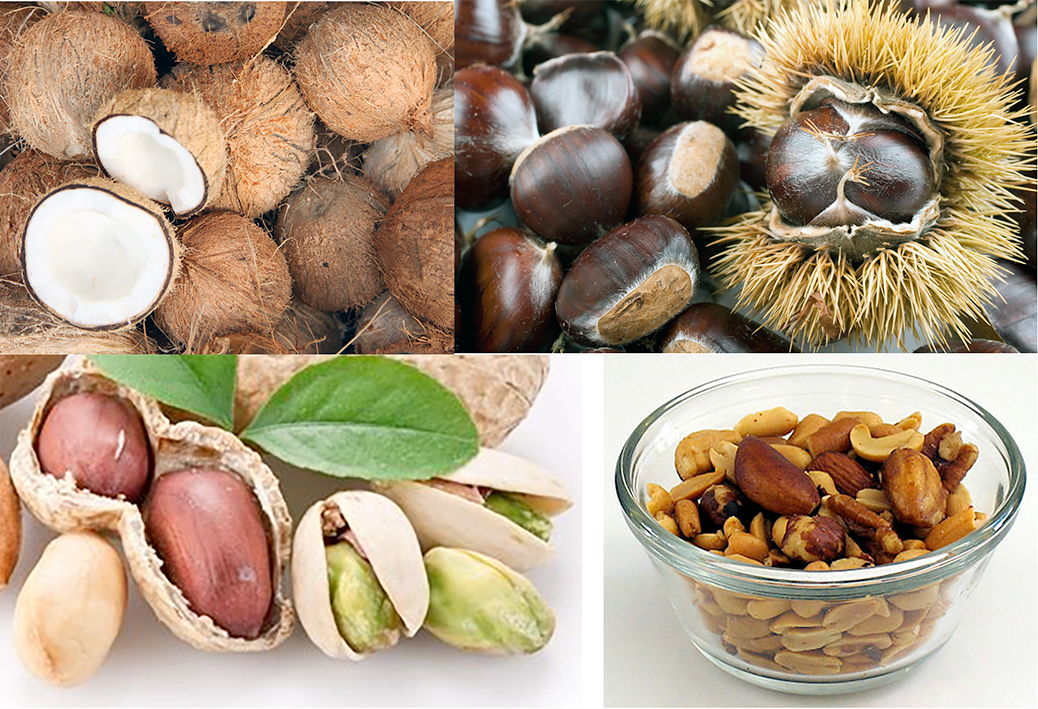 Different nuts. Clockwise: coconuts, sweet chestnuts, bowl of mixed nuts,
peanuts and pistachios.
Welcome to FabulousFusionFood's Nut-based Recipes Page —A nut is a fruit consisting of a hard or tough nutshell protecting a kernel which is usually edible. In general usage and in a culinary sense, many dry seeds are called nuts. In a botanical context, "nut" implies that the shell does not open to release the seed (indehiscent).
Most seeds come from fruit that naturally free themselves from the shell, but this is not the case in nuts such as hazelnuts, chestnuts, and acorns, which have hard shell walls and originate from a compound ovary. The general and original usage of the term is less restrictive, and many nuts (in the culinary sense), such as almonds, pistachios, and Brazil nuts, are not nuts in a botanical sense. Common usage of the term often refers to any hard-walled, edible kernel as a nut. Nuts are an energy-dense and nutrient-rich food source.
Botanically, a nut is a fruit with a woody pericarp developing from a syncarpous gynoecium. True nuts include, for example, chestnut, hazelnut and filbert. Culinarily, the term 'nut' is used much more widely, and includes examples of drupes (such as pecans and almonds) or seeds (such as pine nuts and peanuts).
Also widely known as nuts are dry drupes, which include pecans, almonds, macadamia (Macadamia integrifolia), candlenut (Aleurites moluccanus) and the water caltrop (Trapa bicornis). A drupe is an indehiscent fruit that has an outer fleshy part consisting of the exocarp, or skin, and mesocarp, or flesh, which surround a single pit or stone, the endocarp with a seed (kernel) inside. In a dry drupe, the outer parts dry up and the remaining husk is part of the ovary wall or pericarp, and the hard inner wall surrounding the seed represents the inner part of the pericarp.
Walnuts and hickories (Juglandaceae) have fruit that are difficult to classify. They are considered to be nuts under some definitions but are also referred to as drupaceous nuts.
In common use, a "tree nut" is, as the name implies, any nut coming from a tree. This most often comes up regarding food allergies; a person may be allergic specifically to peanuts (which are not tree nuts but legumes), whereas others may be allergic to the wider range of nuts that grow on trees.
The sweet potato arrived in Europe with the Columbian exchange. It is recorded, for example, in Elinor Fettiplace's Receipt Book, compiled in England in 1604.
Nuts are eaten by humans and wildlife. Because nuts generally have a high oil content, they are a significant energy source. Many seeds are edible by humans and used in cooking, eaten raw, sprouted, or roasted as a snack food, ground to make nut butters, or pressed for oil that is used in cooking and cosmetics.
Nuts used for food are a common source of food allergens. Reactions can range from mild symptoms to severe ones, a condition known as anaphylaxis, which can be life-threatening. The reaction is due to the release of histamine by the body in response to an allergen in the nuts, causing skin and other possible reactions. Many experts suggest that a person with an allergy to peanuts should avoid eating tree nuts, and vice versa.
The nuts linked to from this page are: acorn; almond; beech nuts; betel nut; brazil nut; bush mango; filbert; ginkgo nut; kola nut; candlenut; cashew; chestnut; coconut; hazelnut; macadamia; ogbono; palm nut; peanut; pecan; pine nut; pistachio; walnut.
The alphabetical list of all the nut-based recipes on this site follows, (limited to 100 recipes per page). There are 4197 recipes in total:
Page 23 of 42
| Lorne Sausage Origin: Scotland | Mackerel Run Down Origin: Jamaica | Malabi Milk Pudding with Rose Water Origin: Israel |
| Loseyns in Fysch Day (Lozenge Cakes for Fish Day) Origin: England | Mackerel with currant sauce and radicchio Origin: Britain | Malagasy Coconut and Vanilla Rice Origin: Madagascar |
| Loubia bil Luz (Green Beans with Almonds) Origin: Algeria | Mada (Green Banana Dumplings) Origin: Norfolk Island | Malagasy Vanilla Chicken Curry Origin: Madagascar |
| Lū (Baked Taro Leaf Parcels) Origin: Tonga | Madaba (Cassava Leaf and Coconut Stew) Origin: Britain | Malai Curry Sauce Origin: India |
| Lū (Baked Taro Leaf Parcels) Origin: Wallis Futuna | Madeira Loaf Cake Origin: Britain | Malai Kofta with Spicy Gravy Origin: India |
| Lu Pulu (Corned Beef and Onion in Taro Leaves) Origin: Tonga | Madungo Bakes Origin: Saint Vincent | Malay Chicken Curry with White Pumpkin Origin: Anglo-Indian |
| Lucaniae (Lucanian Sausages) Origin: Roman | Mafé Origin: Senegal | Malay Chicken Kurma Origin: Malaysia |
| Lumbuli assi ita fiunt (Stuffed Kidneys or Testicles) Origin: Roman | Mafé Malienne (Malian Mafé) Origin: Mali | Malaysian Beriani Origin: Malaysia |
| Lupis (Sticky Rice Rolls with Palm Sugar Syrup) Origin: Indonesia | Mafé Poulet (Chicken Mafé) Origin: Senegal | Malaysian Chicken Curry Origin: Malaysia |
| Lupulu (Coconut Cream and Onion in Taro Leaves) Origin: Tonga | Mafa (Breadfruit Pudding) Origin: Marshall Islands | Malaysian Chicken Curry Origin: Malaysia |
| Luwombo () Origin: Uganda | mafè tatou nènn (Naked Peanut Stew) Origin: Mali | Malaysian Chicken Curry Origin: Cocos Islands |
| Lychee Spice Smoothie Origin: American | Maffé de Tabaski (Maffé for Tabaski) Origin: Cote dIvoire | Malaysian Chicken Curry Origin: Christmas Island |
| M'Baazi Origin: Kenya | Maffé Mauritanienne (Aubergines and Pumpkin) Origin: Mauritania | Malaysian Chicken Satay Origin: Malaysia |
| M'Boa com Xima (Pumpkin Leaves in Peanut Sauce with Prawns) Origin: Mozambique | Maffe aux Legumes Arachide (Beef or Lamb in Peanut Butter) Origin: Senegal | Malaysian Goat Rendang Origin: Malaysia |
| M'chicha (Spinach with Peanuts) Origin: Tanzania | Magaj Origin: India | Malaysian Kapitan Chicken Origin: Malaysia |
| M'Chuzi wa Nyama (Zanzibar-style Beef Curry) Origin: Britain | Magimbi ya nadzi (Taro in Coconut Milk) Origin: Mayotte | Malaysian Kurma Powder Origin: Malaysia |
| M'rouzia (Lamb Tagine with Sultanas, Almonds and Honey) Origin: Morocco | Maharagwe (Spiced Red Beans in Coconut Milk) Origin: Kenya | Malaysian Laksa Origin: Malaysia |
| Môr-leisiad wedi Potsio gyda Nionyn, Cennin a Ffenigl (Poached Pollack with Onion, Leek and Fennel) Origin: Welsh | Maharashtrian Masala Bhat (Spicy Maharashtrian Rice) Origin: India | Malaysian Lamb Rendang Origin: Malaysia |
| M'borokhé (Peanut Sauce with Spinach) Origin: Mali | Mahi Shekam Por (Persian Stuffed Fish) Origin: Iran | Malaysian Meat Curry Powder Origin: Malaysia |
| M'tsolola (Fish and Plantain stew in Coconut Milk) Origin: Comoros | Maidd ac Ŵy (Egg Whey) Origin: Welsh | Malaysian Peanut Sauce Origin: Malaysia |
| Ma'amool B'jowz (Easter Walnut Biscuits) Origin: Lebanon | Maidd ac Ŵy Hwyaden (Duck Egg Whey) Origin: Welsh | Malewa (Bamboo and Peanut Soup) Origin: Uganda |
| Maafé Origin: Mali | Maids of Honour Origin: England | Mallorcan-style Easter Lamb Origin: Britain |
| Maafe (Meat Peanut Stew) Origin: Mali | Maids of Honour Tarts Origin: Britain | Mallow Leaf Peanut Sauce Origin: Fusion |
| Maandazi (Swahili Doughnuts) Origin: Tanzania | Maidstone Biscuits Origin: England | Mallow Leaf Stew II Origin: African Fusion |
| Macadamia Nut and Toffee Tart Origin: Australia | Majarete (Dominican Corn Pudding) Origin: Dominican Republic | Mallow-leaf Stew Origin: African Fusion |
| Macadamia Nut Cheesecake Origin: American | Makarara (Orange and Vanilla Comorian Sweet Cake) Origin: Comoros | Malpua with Rabri (Indian Pancakes with Saffron and Rosewater Cream) Origin: India |
| Macadamia Nut Pie Origin: Marshall Islands | Makaronia tou Fournou (Oven-baked Macaroni with Layers of Minced Meat) Origin: Cyprus | Malvani Fish Curry Origin: India |
| Macadamia Tart Origin: Australia | Make-ahead Mulled Wine Cake Origin: Britain | Malvani Masala Origin: India |
| Macanese Choy Sum Origin: Macau | Makhan Murgh Wala (Butter Chicken) Origin: India | Mambá (Spicy Peanut Butter) Origin: Dominican Republic |
| Macanese-style Portuguese Curry Chicken Origin: Macau | Makhni Curry Sauce Origin: India | Mambazha Pulissery Origin: India |
| Macaroon-topped Mince Pies Origin: Britain | Makubi Origin: Tanzania | Mamoul Origin: North Africa |
| Macaroons Origin: Britain | Mal Pua (Coconut Pancakes) Origin: India | Mancarra with Citi (Chicken with Peanuts and Palm Oil) Origin: Guinea-Bissau |
| Macau-style Portuguese Curry Chickeno (Macau-style Portuguese Curry Chicken) Origin: Portugal | Malabar Chicken Biryani Origin: India | |
| Machali aur Daal (Fish and Lentil Curry) Origin: India | Malabar Peralan (Malabar Fish Roast) Origin: India |
Page 23 of 42