FabulousFusionFood's Vegetarian Recipes 21st Page
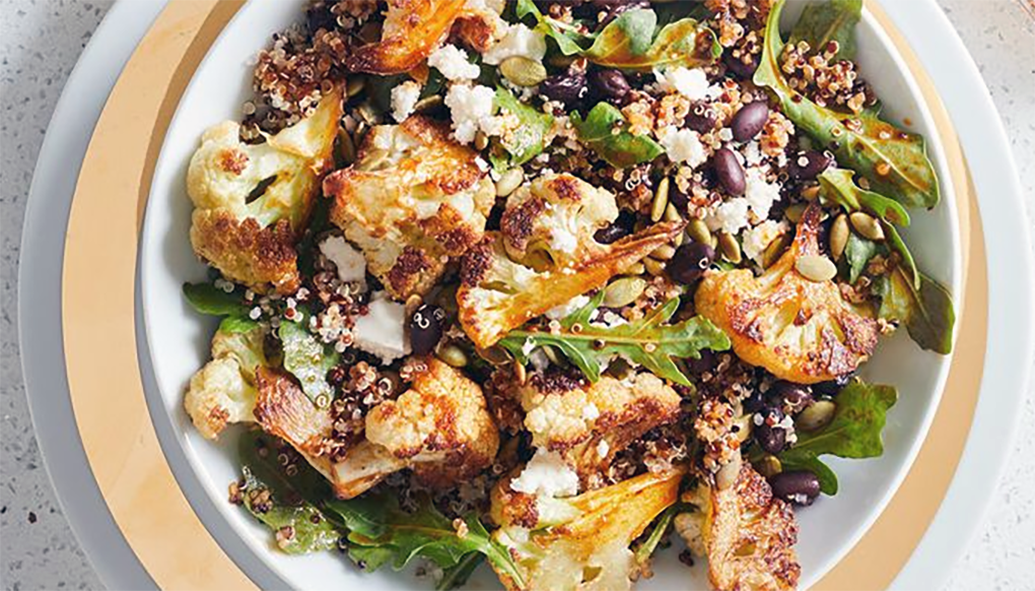 Image of a vegetarian dish based on cauliflower.
Welcome to FabulousFusionFood's Vegetarian Recipes Page — A vegetarian dish is one that eschews the addition of meat or meat products. As a practice, vegetarianism is the practice of abstaining from the consumption of meat (red meat, poultry, seafood, insects, and the flesh of any other animal). It may also include abstaining from eating all by-products of animal slaughter. A person who practices vegetarianism is known as a vegetarian
There are many variations of the vegetarian diet: an ovo-vegetarian diet includes eggs and a lacto-vegetarian diet includes dairy products, while a lacto-ovo vegetarian diet includes both. As the strictest of vegetarian diets, a vegan diet excludes all animal products, and can be accompanied by abstention from the use of animal-derived products, such as leather shoes.
The earliest record of vegetarianism comes from the 9th century BCE, inculcating tolerance towards all living beings. Parshwanatha and Mahavira, the 23rd and 24th tirthankaras in Jainism, respectively, revived and advocated ahimsa and Jain vegetarianism between the 8th and 6th centuries BCE; the most comprehensive and strictest form of vegetarianism. In Indian culture, vegetarianism has been closely connected with the attitude of nonviolence towards animals (called ahimsa in India) for millennia and was promoted by religious groups and philosophers. The Ācārāṅga Sūtra from 5th century BCE advocates Jain-vegetarianism; and forbids the monks from walking on grass in order to avoid inflicting pain on them and prevent small insects dwelling inside from getting killed. The ancient Indian work of the Tirukkuṟaḷ, dated before the 5th century CE, explicitly and unambiguously emphasizes shunning meat and non-killing as a common man's virtues.
Among the Hellenes, Egyptians, and others, vegetarianism had medical or ritual purification purposes. Vegetarianism was also practiced in ancient Greece and the earliest reliable evidence for vegetarian theory and practice in Greece dates from the 6th century BCE. The Orphics, a religious movement spreading in Greece at that time, also practiced and promoted vegetarianism. Greek teacher Pythagoras, who promoted the altruistic doctrine of metempsychosis, may have practiced vegetarianism, but is also recorded as eating meat. A fictionalized portrayal of Pythagoras appears in Ovid's Metamorphoses, in which he advocates a form of strict vegetarianism. It was through this portrayal that Pythagoras was best known to English-speakers throughout the early modern period and, prior to the coinage of the word "vegetarianism", vegetarians were referred to in English as "Pythagoreans".
The first written use of the term "vegetarian" originated in the early 19th century, when authors referred to a vegetable regimen diet. Historically, 'vegetable' could be used to refer to any type of edible vegetation. Modern dictionaries explain its origin as a compound of vegetable (adjective) and the suffix -arian (in the sense of agrarian). The term was popularized with the foundation of the Vegetarian Society in Manchester in 1847, although it may have appeared in print before 1847. The earliest occurrences of the term seem to be related to Alcott House—a school on the north side of Ham Common, London—which was opened in July 1838 by James Pierrepont Greaves.
Western vegetarian diets are typically high in carotenoids, but relatively low in omega-3 fatty acids and vitamin B12. Vegans can have particularly low intake of vitamin B and calcium if they do not eat enough items such as collard greens, leafy greens, tempeh and tofu (soy). In contrast, high levels of dietary fibre, folic acid, vitamins C and E, and magnesium, and low consumption of saturated fat are all considered to be beneficial aspects of a vegetarian diet.
The alphabetical list of all the vegetarian recipes on this site follows, (limited to 100 recipes per page). There are 4093 recipes in total:
Page 21 of 41
| Lacto-fermented Sea Sandwort Origin: Britain | Laza Hot Sauce Origin: Kyrgyzstan | Lemon Yoghurt Cupcakes Origin: British |
| Ladob Banan (Bananas in Coconut Milk) Origin: Seychelles | Laza Hot Sauce Origin: China | Lemonadha Siropi (Lemon Squash) Origin: Cyprus |
| Laganophake (Lentil Stew) Origin: Roman | Laza Hot Sauce Origin: Uzbekistan | Lemongrass Curry Origin: Cambodia |
| Lagman Spice Blend Origin: Kyrgyzstan | Laza Hot Sauce Origin: Kazakhstan | Lenticula ex Sphondylis (Lentils and Parsnips) Origin: Roman |
| Lagman Spice Blend Origin: Tajikistan | Laza Hot Sauce Origin: Russia | Lentil and Hazelnut Burgers Origin: Britain |
| Lagman Spice Blend Origin: Uzbekistan | Laza Hot Sauce Origin: Turkey | Lentil and Nettle Curry Origin: Britain |
| Lagman Spice Blend Origin: Afghanistan | Lazeez Lauki (Tasty Stuffed Bottle Gourd) Origin: India | Lentil Curry with Japanese Knotweed and Sweet Potatoes Origin: Fusion |
| Lagman Spice Blend Origin: Turkmenistan | Le gâteau nantais (Nantes cake) Origin: France | Lentil Curry with Rhubarb and Sweet Potatoes Origin: Fusion |
| Lahooh Origin: Somalia | Le Goundja (Fish with Aubergines and Cassava Leaves) Origin: Central African Republic | Lentil, Pasta and Vegetable Soup Origin: Britain |
| Lahooh Origin: Yemen | Le Kissar Origin: Chad | Lepinja (Triple-raised Soft Flatbread) Origin: Bosnia |
| Lahpet Thoke (Burmese Tea Leaf Salad) Origin: Myanmar | Le Koki (Bean Cake) Origin: Chad | Lepinje (Serbian Flatbread) Origin: Serbia |
| Lait Caillé (Curdled Milk) Origin: Guinea | Le Koki de Cameroun (Cameroonian Bean Cake) Origin: Cameroon | Leqebekoane (Lesothan Steamed Bread) Origin: Lesotho |
| Lait de Corossol (Soursop Milk) Origin: Senegal | Le michon breton (Breton michon) Origin: France | Les beignets de Tréguier (Tréguier Apple Fritters) Origin: France |
| Lakh Origin: Senegal | Le Ouaddaï (Fried Millet Fingers) Origin: Chad | Les Cakes (Chadian Biscuits) Origin: Chad |
| Lakh (Sweet Millet Porridge) Origin: Senegal | Le Salade Côte Cap Vert (Cape Vert Coast Salad) Origin: Senegal | Les Galettes de Farine de Riz (Yeasted Rice Flour Cakes) Origin: Mali |
| Lakh Mauritanienne Origin: Mauritania | Le Tô Sauce Gombos (Tô with Okra Sauce) Origin: Burkina Faso | Les haricots de Paimpol (Pampiol Beans) Origin: France |
| Lakka Keitto (Cloudberry Soup) Origin: Finland | Leamington Sauce Origin: British | Les Lentilles (Reunion Lentils) Origin: Reunion |
| Lam Veritab (Fried Breadfruit) Origin: Haiti | Lebanese Hummus Origin: Lebanon | Les Palmiers du Jour de Valentine (Palmiers for Valentine's Day) Origin: France |
| Lamprais Rice Origin: Sri Lanka | Lebanese Pizza Sauce Origin: Lebanon | Lesothan Chakalaka Origin: Lesotho |
| Langues de Chat (Cat's Tongue Biscuits) Origin: France | Lebanese-style Braaied Fruit Salad Origin: South Africa | Lete Lorye (Milk, Lorraine Style) Origin: England |
| Lantern Soup Origin: British | Leftover Porridge Muffins Origin: Scotland | Liberian Aubergine Fritters Origin: Liberia |
| Lao Tam Som (Lao Green Papaya Salad) Origin: Laos | Leftover Vegetable Curry with Tofu Origin: Britain | Liberian Cornbread Origin: Liberia |
| Lasagne with Mushrooms and Cheeses Origin: Britain | Lemóni pshtó patátes (Greek Lemony Roasted Potatoes) Origin: Greece | Liberian Pawpaw Pie Origin: Liberia |
| Lasary Citron (Lemon Condiment) Origin: Reunion | Lemon and Condensed Milk Biscuits Origin: Botswana | Liberian Pepper Kala Origin: Liberia |
| Lashun ka Achar (Indian Garlic Pickle) Origin: India | Lemon and Elderflower Sorbet with Prosecco Origin: Britain | Liberian Shortbread Origin: Liberia |
| Last-minute Mincemeat Christmas Cake Origin: Britain | Lemon and Lime Meringue Tart Origin: Britain | Liberian Twisted Doughnuts Origin: Liberia |
| Latchiri Kössan (Maize Couscous with Curdled Milk) Origin: Guinea | Lemon and Poppy Seed Muffins Origin: Britain | Libum (Diced Cheese Bread) Origin: Roman |
| Lauki Kofta Curry (Bottle Gourd Kofta Curry) Origin: India | Lemon Balm Vinaigrette Origin: Britain | Licky Pasty Origin: England |
| Launceston Cake Origin: Britain | Lemon Curd Origin: Britain | Lilac Honey Cake Origin: Britain |
| Lavash Flatbread Origin: Turkey | Lemon Drizzle Cake Origin: Britain | Lilac Honey Posset Origin: Britain |
| Laxoox Origin: Djibouti | Lemon Meringue Tart Origin: Britain | Lilac Rice Pudding Origin: Britain |
| Laxoox Origin: Somaliland | Lemon Myrtle Coconut Rice Origin: Fusion | Lime Curd Origin: Britain |
| Laxoox/Canjeero (Sorghum Bread) Origin: Somalia | Lemon Pistachio Snacking Cake Origin: Britain | |
| Layer Cake Origin: Britain | Lemon Surprise Pudding Origin: Britain |
Page 21 of 41