FabulousFusionFood's Vegetarian Recipes 23rd Page
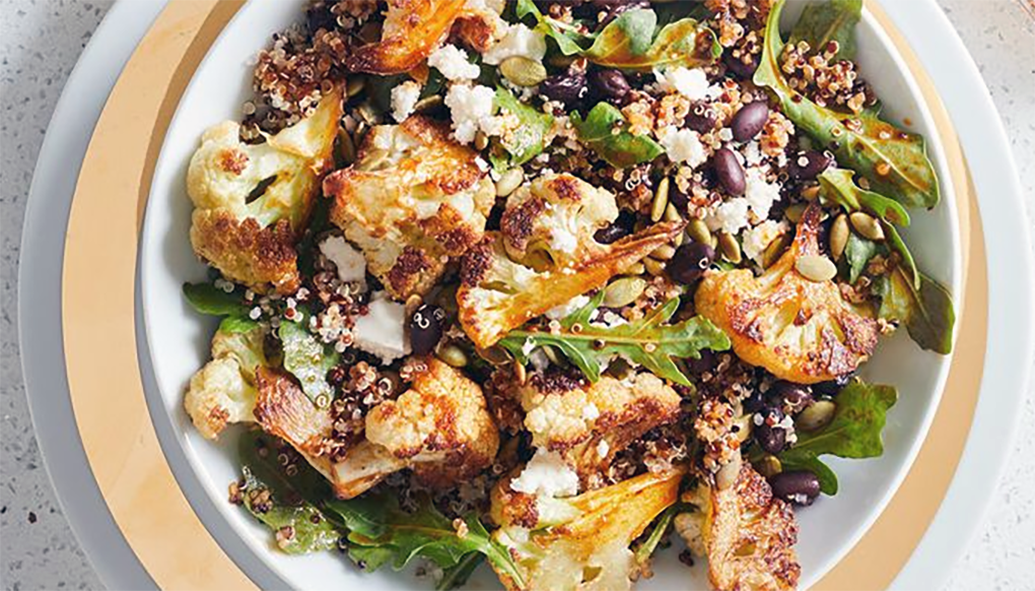 Image of a vegetarian dish based on cauliflower.
Welcome to FabulousFusionFood's Vegetarian Recipes Page — A vegetarian dish is one that eschews the addition of meat or meat products. As a practice, vegetarianism is the practice of abstaining from the consumption of meat (red meat, poultry, seafood, insects, and the flesh of any other animal). It may also include abstaining from eating all by-products of animal slaughter. A person who practices vegetarianism is known as a vegetarian
There are many variations of the vegetarian diet: an ovo-vegetarian diet includes eggs and a lacto-vegetarian diet includes dairy products, while a lacto-ovo vegetarian diet includes both. As the strictest of vegetarian diets, a vegan diet excludes all animal products, and can be accompanied by abstention from the use of animal-derived products, such as leather shoes.
The earliest record of vegetarianism comes from the 9th century BCE, inculcating tolerance towards all living beings. Parshwanatha and Mahavira, the 23rd and 24th tirthankaras in Jainism, respectively, revived and advocated ahimsa and Jain vegetarianism between the 8th and 6th centuries BCE; the most comprehensive and strictest form of vegetarianism. In Indian culture, vegetarianism has been closely connected with the attitude of nonviolence towards animals (called ahimsa in India) for millennia and was promoted by religious groups and philosophers. The Ācārāṅga Sūtra from 5th century BCE advocates Jain-vegetarianism; and forbids the monks from walking on grass in order to avoid inflicting pain on them and prevent small insects dwelling inside from getting killed. The ancient Indian work of the Tirukkuṟaḷ, dated before the 5th century CE, explicitly and unambiguously emphasizes shunning meat and non-killing as a common man's virtues.
Among the Hellenes, Egyptians, and others, vegetarianism had medical or ritual purification purposes. Vegetarianism was also practiced in ancient Greece and the earliest reliable evidence for vegetarian theory and practice in Greece dates from the 6th century BCE. The Orphics, a religious movement spreading in Greece at that time, also practiced and promoted vegetarianism. Greek teacher Pythagoras, who promoted the altruistic doctrine of metempsychosis, may have practiced vegetarianism, but is also recorded as eating meat. A fictionalized portrayal of Pythagoras appears in Ovid's Metamorphoses, in which he advocates a form of strict vegetarianism. It was through this portrayal that Pythagoras was best known to English-speakers throughout the early modern period and, prior to the coinage of the word "vegetarianism", vegetarians were referred to in English as "Pythagoreans".
The first written use of the term "vegetarian" originated in the early 19th century, when authors referred to a vegetable regimen diet. Historically, 'vegetable' could be used to refer to any type of edible vegetation. Modern dictionaries explain its origin as a compound of vegetable (adjective) and the suffix -arian (in the sense of agrarian). The term was popularized with the foundation of the Vegetarian Society in Manchester in 1847, although it may have appeared in print before 1847. The earliest occurrences of the term seem to be related to Alcott House—a school on the north side of Ham Common, London—which was opened in July 1838 by James Pierrepont Greaves.
Western vegetarian diets are typically high in carotenoids, but relatively low in omega-3 fatty acids and vitamin B12. Vegans can have particularly low intake of vitamin B and calcium if they do not eat enough items such as collard greens, leafy greens, tempeh and tofu (soy). In contrast, high levels of dietary fibre, folic acid, vitamins C and E, and magnesium, and low consumption of saturated fat are all considered to be beneficial aspects of a vegetarian diet.
The alphabetical list of all the vegetarian recipes on this site follows, (limited to 100 recipes per page). There are 4093 recipes in total:
Page 23 of 41
| Mangú Origin: Dominican Republic | Mashed Neeps Origin: Scotland | Medvjeđe Šape (Bear Paws) Origin: Croatia |
| Mani (Rice Sweet Dish) Origin: India | Masoor Daal (Red Lentils) Origin: Bangladesh | Melachino (Greek Wedding Cake) Origin: Greece |
| Manitaria Krasata (Mushrooms in Wine) Origin: Cyprus | Masoor Dal Chur Churi Origin: Anglo-Indian | Melitzanaki Toursi (Pickled Baby Aubergines) Origin: Greece |
| Mankaron (Antillean Macaron) Origin: Aruba | Massa (Mini Millet Pancakes) Origin: Burkina Faso | Melitzanes Me Lathi (Aubergines with Olive Oil) Origin: Greece |
| Mankaron (Antillean Macaron) Origin: Bonaire | Matbucha (Spicy Cooked Tomato and Pepper Salad) Origin: Israel | Melktert (Milk Tart) Origin: South Africa |
| Mankaron (Antillean Macaron) Origin: Curacao | Matchstick Potatoes Origin: Britain | Melokhia Origin: Egypt |
| Mankoushe (Lebanese Pizza Dough) Origin: Lebanon | Matki Chi Rassa Bhaji (Maharashtrian Style Moth Beans) Origin: India | Melomakrona (Honey Semolina Biscuits) Origin: Greece |
| Manx Gooseberry Crumble Origin: Manx | Matlebekwane (Dumplings) Origin: Botswana | Melted Butter Origin: Britain |
| Maple and Orange Chantenay Carrots Origin: Britain | Matlebekwane dumplings Origin: Botswana | Meringue Rice Pudding Origin: Britain |
| Maple Pecan Cupcakes Origin: American | Mattar Paneer (Green Peas and Curd Cheese Curry) Origin: Britain | Meringue-topped Mince Pies Origin: Britain |
| Maraq Bilaash (Cherry Tomato Sauce) Origin: Somalia | Mattar Paneer Curry Origin: India | Mesir Wat (Lentil Bowl) Origin: Ethiopia |
| Marble Cupcakes Origin: Britain | Mattar Panir Origin: Britain | Mesru (Date and Pistachio Pastries) Origin: Mesopotamia |
| Marble Loaf Cake Origin: Britain | Matzo Balls Origin: Jewish | Messe of African Greens Origin: African Fusion |
| Marigold Jelly Origin: Britain | Matzo Crackers Origin: Jewish | Methi Mushroom Masala Origin: India |
| Marigold Tart Origin: Britain | Mauritian Curry Masala Origin: Mauritius | Methi Paneer Origin: India |
| Marinated Chile Güerito Peppers Origin: Mexico | Mavi Origin: Puerto Rico | Mexican Caramels Origin: Mexico |
| Marinated Tofu Skewers Origin: Britain | Mawa Gujiya Origin: India | Mexican Fiesta Dip Origin: America |
| Marjoram Jelly Origin: Britain | Mawa Peda Origin: India | Mexican Red Sauce Origin: American |
| Markit Ommalah (Chickpea and Lentil Stew) Origin: Tunisia | Mayotte Mataba Origin: Mayotte | Mexican Rice Origin: America |
| Marmalade and Ginger Slice Origin: Scotland | Mazavaroo Origin: Mauritius | Mho Kazun Ywet Kyaw (Stir-fried Water Spinach with Straw Mushrooms) Origin: Myanmar |
| Marmalade of Quinces of Damsons Origin: Britain | Mazze de Tamburo (Fried Shaggy Parasols) Origin: Italy | Mhogo na tzouzi (Cassava in Coconut Sauce) Origin: Mayotte |
| Marmalade Ring Cake Origin: Scotland | Mboh (Peanut Paste) Origin: Cameroon | Michael Kelly's Sauce Origin: Ireland |
| Marmalêd Eirin Gwyrdd (Greengage Marmalade) Origin: Welsh | Mchuzi wa Biringani (Garden Egg Curry) Origin: Tanzania | Micronesia Taro and Coconut Bread Origin: Federated States Micronesia |
| Marrakech Vegetable Curry Origin: Morocco | Mchuzi wa Biringani (Aubergine Curry) Origin: Tanzania | Microwave Banana and Walnut Loaf Origin: Britain |
| Marraquetas (Chilean French Bread Rolls) Origin: Chile | Meadow Waxcap Curry with Rice Origin: Britain | Microwave Bramble Crumble Origin: Britain |
| Marrow and Orange Cake with Cashew Butter Origin: Britain | Meadow Waxcap Frittata Origin: Britain | Microwave Chocolate Sponge Pudding Origin: Britain |
| Masak Lemak (Cabbage in Coconut Milk Gravy) Origin: Malaysia | Meadowsweet Cream Origin: Britain | Microwave Crème Caramel Origin: Britain |
| Masala French Fries Origin: India | Meadowsweet Lemon Curd Origin: Britain | Microwave Crème Caramel Origin: Britain |
| Masala Meusi Origin: East Africa | Meatless White Sauce Origin: British | Microwave Fruity Christmas Pudding Origin: Britain |
| Masale Baath (Maharashtrian Spicy Vegetable Rice) Origin: India | Mediterranean Mint Salad Origin: Mediterranean | Microwave Fudge Sauce Origin: Britain |
| Masaledaar Bakre ki Kaleji Gurda Phepsa (Lamb Offal Curry) Origin: India | Medlar and Pear Mincemeat Origin: Britain | Microwave Garam Masala Vegetable Curry Origin: Britain |
| Mascarpone Cupcakes with Strawberry Glaze Origin: American | Medlar Cream Cake Origin: America | Microwave Honey Christmas Cake Ring Origin: British |
| Masfouf bin Narine (Couscous and Nut Dessert) Origin: Tunisia | Medlar Muffins with Medlar Cream Cheese Icing Origin: Britain | |
| Mashed Creeping Bellflower Root Origin: Britain | Medlar Sticky Toffee Pudding Origin: Britain |
Page 23 of 41