FabulousFusionFood's Vegetarian Recipes 28th Page
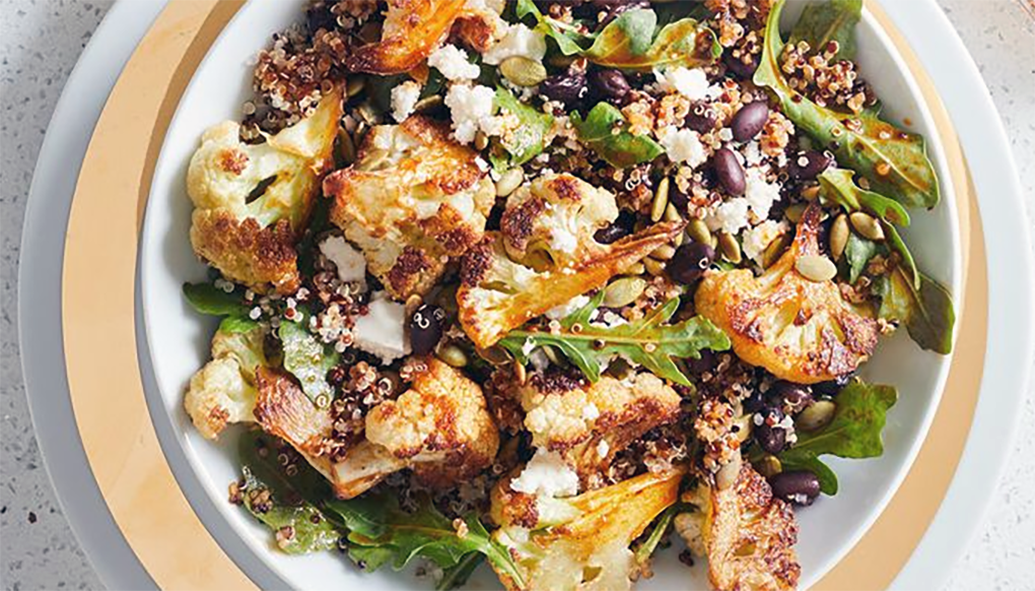 Image of a vegetarian dish based on cauliflower.
Welcome to FabulousFusionFood's Vegetarian Recipes Page — A vegetarian dish is one that eschews the addition of meat or meat products. As a practice, vegetarianism is the practice of abstaining from the consumption of meat (red meat, poultry, seafood, insects, and the flesh of any other animal). It may also include abstaining from eating all by-products of animal slaughter. A person who practices vegetarianism is known as a vegetarian
There are many variations of the vegetarian diet: an ovo-vegetarian diet includes eggs and a lacto-vegetarian diet includes dairy products, while a lacto-ovo vegetarian diet includes both. As the strictest of vegetarian diets, a vegan diet excludes all animal products, and can be accompanied by abstention from the use of animal-derived products, such as leather shoes.
The earliest record of vegetarianism comes from the 9th century BCE, inculcating tolerance towards all living beings. Parshwanatha and Mahavira, the 23rd and 24th tirthankaras in Jainism, respectively, revived and advocated ahimsa and Jain vegetarianism between the 8th and 6th centuries BCE; the most comprehensive and strictest form of vegetarianism. In Indian culture, vegetarianism has been closely connected with the attitude of nonviolence towards animals (called ahimsa in India) for millennia and was promoted by religious groups and philosophers. The Ācārāṅga Sūtra from 5th century BCE advocates Jain-vegetarianism; and forbids the monks from walking on grass in order to avoid inflicting pain on them and prevent small insects dwelling inside from getting killed. The ancient Indian work of the Tirukkuṟaḷ, dated before the 5th century CE, explicitly and unambiguously emphasizes shunning meat and non-killing as a common man's virtues.
Among the Hellenes, Egyptians, and others, vegetarianism had medical or ritual purification purposes. Vegetarianism was also practiced in ancient Greece and the earliest reliable evidence for vegetarian theory and practice in Greece dates from the 6th century BCE. The Orphics, a religious movement spreading in Greece at that time, also practiced and promoted vegetarianism. Greek teacher Pythagoras, who promoted the altruistic doctrine of metempsychosis, may have practiced vegetarianism, but is also recorded as eating meat. A fictionalized portrayal of Pythagoras appears in Ovid's Metamorphoses, in which he advocates a form of strict vegetarianism. It was through this portrayal that Pythagoras was best known to English-speakers throughout the early modern period and, prior to the coinage of the word "vegetarianism", vegetarians were referred to in English as "Pythagoreans".
The first written use of the term "vegetarian" originated in the early 19th century, when authors referred to a vegetable regimen diet. Historically, 'vegetable' could be used to refer to any type of edible vegetation. Modern dictionaries explain its origin as a compound of vegetable (adjective) and the suffix -arian (in the sense of agrarian). The term was popularized with the foundation of the Vegetarian Society in Manchester in 1847, although it may have appeared in print before 1847. The earliest occurrences of the term seem to be related to Alcott House—a school on the north side of Ham Common, London—which was opened in July 1838 by James Pierrepont Greaves.
Western vegetarian diets are typically high in carotenoids, but relatively low in omega-3 fatty acids and vitamin B12. Vegans can have particularly low intake of vitamin B and calcium if they do not eat enough items such as collard greens, leafy greens, tempeh and tofu (soy). In contrast, high levels of dietary fibre, folic acid, vitamins C and E, and magnesium, and low consumption of saturated fat are all considered to be beneficial aspects of a vegetarian diet.
The alphabetical list of all the vegetarian recipes on this site follows, (limited to 100 recipes per page). There are 4093 recipes in total:
Page 28 of 41
| Parisienne Potatoes Origin: France | Pastel De Choclo (Corn Pudding) Origin: Argentina | Peli bara lawr, perlysiau a lemwn gyda saws iogwrt (Laverbread, Herb and Lemon Balls with Yoghurt Sauce) Origin: Welsh |
| Parmentier Potatoes Origin: France | Pastel de Papas con Tres Quesos (Potato Cake with Three Cheeses) Origin: Peru | Penne with Edible Flowers Origin: Britain |
| Parmesan Oatmeal Muffins Origin: British | Pastiera di Grano (Neapolitan Grain Pie) Origin: Italy | Penne with Fresh Pumpkin Sauce Origin: American |
| Parmesan Orzo Origin: Italy | Pastiera Napoletana (Naples Easter Cakes) Origin: Italy | Peperonata Origin: Italy |
| Parotta Origin: India | Pat Anggeum (Sweet Red Bean Paste) Origin: Korea | Pepper Pasta Pie Origin: South Africa |
| Parseli Cennin (Leek Parcels) Origin: Welsh | Patacones (Fried Green Plantains) Origin: Colombia | Peppermint Creams Origin: Scotland |
| Parsley and Fennel Soup Origin: Britain | Patates Antinaktes (Tossed New Potatoes) Origin: Cyprus | Peppermint Patties Origin: American |
| Parsnip and Apples Origin: Ireland | Patbingsu (Korean Shaved Ice with Red Bean Paste) Origin: Korea | Pera piña (Dominican Rice and Pineapple Drink) Origin: Dominican Republic |
| Parsnip Cakes Origin: Ireland | Pâte Sablée Selon (pate-sablee-selon) Origin: France | Perfect Mashed Potatoes Origin: Britain |
| Parthade Origin: India | Patellam ex holisatro (Artichokes Cooked in Herbs) Origin: Roman | Perfect Steamed Rice Origin: Asia |
| Parthade Curry Origin: India | Patina de Cucurbitis (A Dish of Melon) Origin: Roman | Persian Jewelled Rice Origin: Iran |
| Party Cupcakes Origin: Britain | Patina de Cydoneis (A Dish of Quinces) Origin: Roman | Persian Lentils with Orange Juice and Angelica Origin: Iran |
| Pasanda Sauce Origin: Britain | Patina Fusilis (A Fluid Dish) Origin: Roman | Pesto Bara Lawr a Garlleg Gwyllt (Laverbread and Wild Garlic Pesto) Origin: Welsh |
| Pască (Sweet Easter Bread Pie) Origin: Romania | Patina Fusilis (A Dish of Wild Herbs) Origin: Roman | Pesto Gwymon (Seaweed Pesto) Origin: Welsh |
| Paskha (Russian Easter Cheesecake) Origin: Russia | Patina Fusilis (A Dish of Cold Asparagus) Origin: Roman | Pesto Pastry Stars Origin: Britain |
| Pašrūtum (Unwinding Mesopotamian Vegetable Stew) Origin: Mesopotamia | Patina Urticarum (A Dish of Stinging Nettles) Origin: Roman | Petalonia Croquettes Origin: Britain |
| Passion Cake Origin: Britain | Patna or Bombay Pickled Onions Origin: Anglo-Indian | Peynirli Künefe (Turkish Cheesecake) Origin: Turkey |
| Passion Fruit and Orange Butterfly Cakes Origin: Britain | Pau-Pau Chatni (Papaya Chutney) Origin: Seychelles | Phali (Young Beet Greens in Walnut Sauce) Origin: Georgia |
| Passion Fruit Pie Origin: Norfolk Island | Pav Bhaji (Spicy Vegetables with Bread) Origin: India | Phool gobhi Achari Origin: India |
| Passion Fruit Soufflé Origin: Britain | Pav Bhaji Masala Origin: India | Phulka (Puffed Flatbread) Origin: India |
| Pasta al Limone (Creamy Lemon Pasta with Parmesan) Origin: Italy | Payn Ragonn Origin: England | Piña Colada Cupcakes Origin: Britain |
| Pasta al Sugo e Berbere (Pasta with Eritrean Tomato Sauce) Origin: Eritrea | Pchali (Herb Fritters) Origin: Georgia | Piahia (Coconut Milk Sauce) Origin: Federated States Micronesia |
| Pasta con Cece (Pasta Soup with Chickpeas) Origin: San Marino | Pe Htamin (Lentil Rice) Origin: Myanmar | Pickled Alexanders Buds Origin: Britain |
| Pasta Con Sugo ai Funghi (Pasta with mixed mushroom sauce) Origin: Italy | Pe Nyat (Beans Curry) Origin: Myanmar | Pickled Angelica Origin: Britain |
| Pasta Crisps Origin: Britain | Peaches with Creamy Mascarpone Filling Origin: Britain | Pickled Bladderwrack Origin: Britain |
| Pasta Frolla Origin: Italy | Peanut Rougail Origin: Mauritius | Pickled Bramble Tips Origin: Britain |
| Pasta Piri-piri (Piri-piri Chilli Paste) Origin: Portugal | Peapod Soup Origin: Scotland | Pickled Daylily Buds Origin: America |
| Pasta Primavera with Dryad's Saddle and Chicken of the Woods Origin: Britain | Pear and Apple Ginger Galette Origin: America | Pickled Dulse Origin: Britain |
| Pasta with Creamy Parasol Mushrooms Origin: British | Pear and Blackberry Cobbler Origin: Britain | Pickled Kelp Origin: Britain |
| Pasta with Daylily Flower Buds and Mushrooms Origin: American | Pears in Honey Syrup Origin: China | Pickled Kombu Origin: Japan |
| Pasta with Mixed Wild Mushroom Sauce Origin: Britain | Pecan Brie Tarts Origin: Britain | Pickled Magnolia Flowers Origin: Britain |
| Pasta with Olives and Caperberries Origin: Britain | Pecan Coffee Fudge Origin: Britain | Pickled Red Cabbage Origin: Britain |
| Pasta with Wild Greens Origin: Britain | Peixinhos da Horta (Deep Fried Battered Beans) Origin: Portugal | |
| Pastai Briwgig Eidion a Nionod (Leek and Caerphilly Cheese Crumble Tart) Origin: Welsh | Peking-style Vegetable Dumplings Origin: China |
Page 28 of 41