FabulousFusionFood's Vegetarian Recipes 27th Page
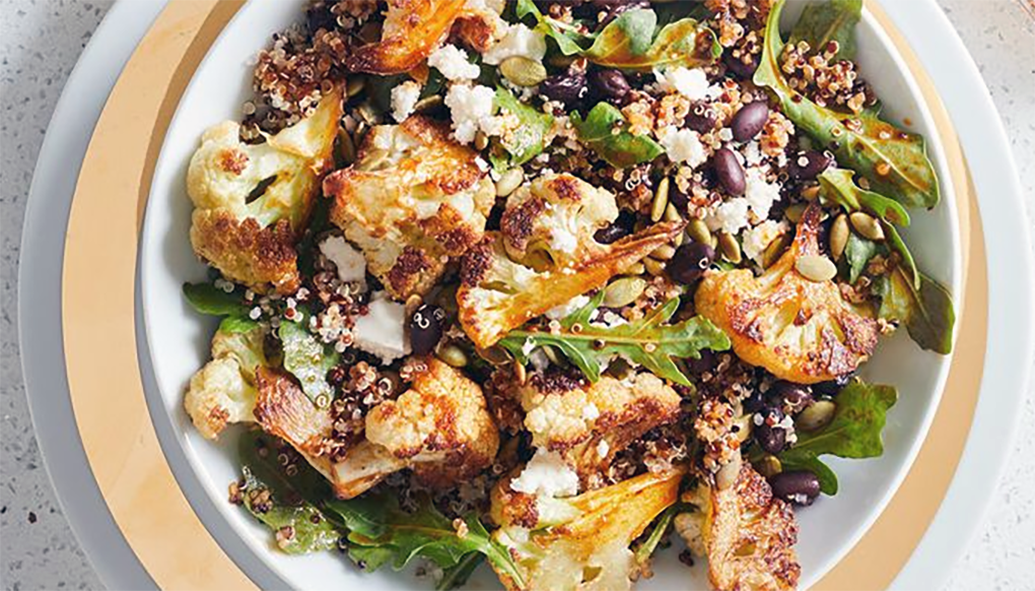 Image of a vegetarian dish based on cauliflower.
Welcome to FabulousFusionFood's Vegetarian Recipes Page — A vegetarian dish is one that eschews the addition of meat or meat products. As a practice, vegetarianism is the practice of abstaining from the consumption of meat (red meat, poultry, seafood, insects, and the flesh of any other animal). It may also include abstaining from eating all by-products of animal slaughter. A person who practices vegetarianism is known as a vegetarian
There are many variations of the vegetarian diet: an ovo-vegetarian diet includes eggs and a lacto-vegetarian diet includes dairy products, while a lacto-ovo vegetarian diet includes both. As the strictest of vegetarian diets, a vegan diet excludes all animal products, and can be accompanied by abstention from the use of animal-derived products, such as leather shoes.
The earliest record of vegetarianism comes from the 9th century BCE, inculcating tolerance towards all living beings. Parshwanatha and Mahavira, the 23rd and 24th tirthankaras in Jainism, respectively, revived and advocated ahimsa and Jain vegetarianism between the 8th and 6th centuries BCE; the most comprehensive and strictest form of vegetarianism. In Indian culture, vegetarianism has been closely connected with the attitude of nonviolence towards animals (called ahimsa in India) for millennia and was promoted by religious groups and philosophers. The Ācārāṅga Sūtra from 5th century BCE advocates Jain-vegetarianism; and forbids the monks from walking on grass in order to avoid inflicting pain on them and prevent small insects dwelling inside from getting killed. The ancient Indian work of the Tirukkuṟaḷ, dated before the 5th century CE, explicitly and unambiguously emphasizes shunning meat and non-killing as a common man's virtues.
Among the Hellenes, Egyptians, and others, vegetarianism had medical or ritual purification purposes. Vegetarianism was also practiced in ancient Greece and the earliest reliable evidence for vegetarian theory and practice in Greece dates from the 6th century BCE. The Orphics, a religious movement spreading in Greece at that time, also practiced and promoted vegetarianism. Greek teacher Pythagoras, who promoted the altruistic doctrine of metempsychosis, may have practiced vegetarianism, but is also recorded as eating meat. A fictionalized portrayal of Pythagoras appears in Ovid's Metamorphoses, in which he advocates a form of strict vegetarianism. It was through this portrayal that Pythagoras was best known to English-speakers throughout the early modern period and, prior to the coinage of the word "vegetarianism", vegetarians were referred to in English as "Pythagoreans".
The first written use of the term "vegetarian" originated in the early 19th century, when authors referred to a vegetable regimen diet. Historically, 'vegetable' could be used to refer to any type of edible vegetation. Modern dictionaries explain its origin as a compound of vegetable (adjective) and the suffix -arian (in the sense of agrarian). The term was popularized with the foundation of the Vegetarian Society in Manchester in 1847, although it may have appeared in print before 1847. The earliest occurrences of the term seem to be related to Alcott House—a school on the north side of Ham Common, London—which was opened in July 1838 by James Pierrepont Greaves.
Western vegetarian diets are typically high in carotenoids, but relatively low in omega-3 fatty acids and vitamin B12. Vegans can have particularly low intake of vitamin B and calcium if they do not eat enough items such as collard greens, leafy greens, tempeh and tofu (soy). In contrast, high levels of dietary fibre, folic acid, vitamins C and E, and magnesium, and low consumption of saturated fat are all considered to be beneficial aspects of a vegetarian diet.
The alphabetical list of all the vegetarian recipes on this site follows, (limited to 100 recipes per page). There are 4093 recipes in total:
Page 27 of 41
| Orange Olive Oil Cake Origin: Fusion | Pain de Gruau (Fine Wheaten Bread) Origin: Monaco | Paneer Manchurian Origin: Britain |
| Orange or Lemon Marmalade Origin: Britain | Pakora Thongba (Spicy Pakora Curry) Origin: India | Paneer Maza (Chilli Paneer) Origin: India |
| Orange polenta cake Origin: Britain | Palačinke (Croatian Pancakes) Origin: Croatia | Paneer Paratha Origin: India |
| Orange Salad Origin: Scotland | Palak Dal (Spinach with Moong Dal) Origin: India | Paneer Pasanda Origin: India |
| Oranges Douces de Congo (Sweet Congolese Oranges) Origin: Congo | Palak Moru Curry (Spinach-yoghurt Curry) Origin: India | Paneer Pasanda Origin: India |
| Oranges in Syrup Origin: Britain | Palak Paneer (Creamed Spinach with Fresh Curd Cheese) Origin: India | Paneer Roll Origin: India |
| Orecchiette with Mushroom Sauce Origin: Italy | Palak Paneer (Paneer with Spinach) Origin: India | Paneer Shabnam Origin: India |
| Oregon Grape Juice Origin: America | Palak Paneer IV (Paneer in a Mildly Spiced Spinach Sauce) Origin: India | Paneer Tikka Origin: India |
| Oregon Grape Sherbet Origin: America | Palakottai Curry (Jackfruit Seed Curry) Origin: India | Paneer Tikka Masala Origin: India |
| Orkney Clapshot Origin: Scotland | Palatschinken (Austrian Pancakes) Origin: Austria | Panettone with Mascarpone and Strawberries Origin: Britain |
| Oshifima II (Namibian Stiff Porridge) Origin: Namibia | Palestinian Hummus Origin: Palestine | Pangiallo romano (Roman Christmas Cake) Origin: Italy |
| Oshigali (Namibian Fermented Millet Porridge) Origin: Namibia | Palets Breton (Breton Pucks) Origin: France | Pangiallo romano (Roman Christmas Cake) Origin: Vatican City |
| Ostfriesisch (East Frisian New Year Cones) Origin: Germany | Palets bretons au caramel salé (Breton Pucks with Salted Caramel) Origin: France | Pangratto Origin: Italy |
| Ouaddaï (Fried Millet Dough) Origin: Chad | Pamplona de Puerco (Barbecued Stuffed, Rolled Pork) Origin: Uruguay | Panis Quadratus (Four-cut Loaf) Origin: Roman |
| Ovas Moles de Papaia (Papaya and Egg Yolk Pudding) Origin: Mozambique | Pampoenkokies (Christmas Fruit Fritters) Origin: South Africa | Panjiri Origin: India |
| Oven Roasted Dandelion Root Slivers Origin: Britain | Pan Bagnat (Monaco-style Sandwiches) Origin: Monaco | Pansotti di Rapallo (Pansotti with Walnut Sauce) Origin: Italy |
| Oven Scones Origin: Scotland | Pan de Yuca (Colombian Yuca Bread) Origin: Colombia | Pap II Origin: South Africa |
| Oven-baked Jollof Rice Origin: Nigeria | Pan Haggerty Origin: England | Papadzules Origin: Mexico |
| Oven-baked Taco Shells Origin: Mexico | Pan Loaf Bread Origin: Scotland | Papaya Fairy Cakes with Tangy Lemon Glaze Origin: African Fusion |
| Overnight Oats Origin: Britain | Pane all'olio d'oliva (Olive Oil Bread) Origin: Italy | Papeeta Kari (Green Papaya Curry) Origin: India |
| Oxford Marmalade Origin: Britain | Pane di Casa Origin: Italy | Papelón con Limón (Piloncillo and Lime Drink) Origin: Venezuela |
| Pâtes 'Teuf-Teuf' (Pasta 'Teuf-Teuf') Origin: Mali | Pane di Vaticano Origin: Vatican City | Papo Secos (Crusty Portuguese Rolls) Origin: Portugal |
| Pão de Aveia (Oat Bread) Origin: Brazil | Paneer 65 Origin: Britain | Papo Secos (Crusty Portuguese Rolls) Origin: Angola |
| Pão de Ervas (Herbed Sourdough Bread) Origin: Brazil | Paneer Bhurji Origin: India | Papo Secos (Crusty Portuguese Rolls) Origin: Mozambique |
| Pacific-style Coconut Rice Origin: Kiribati | Paneer Butter Masala Origin: India | Papo Secos (East Timor Portuguese Rolls) Origin: East Timor |
| Pacific-style Coconut Rice Origin: Hawaii | Paneer Capsicum Curry Origin: India | Pappardelle con Ragù di Funghi Misti (Pappardelle with Mixed Mushroom Ragù) Origin: Italy |
| Paczki (Polish Shrove Doughnuts) Origin: Poland | Paneer Cheese Origin: India | Paprika Potatoes Origin: Israel |
| Pad Kee Mao Origin: Thailand | Paneer Jalfrezi Origin: Britain | Papuan Sago Pancake Origin: Papua New Guinea |
| Padavalanga Parippu Curry (Snake Gourd Curry) Origin: India | Paneer Kofta Origin: India | Paradise Slice Origin: Scotland |
| Padipe Saasmi (Utupi-style Red Amaranth Leaf Curry) Origin: India | Paneer Korma Origin: Britain | Parasol Fritters Origin: Britain |
| Pado'lalo' (Spicy coconut Aubergine) Origin: Guam | Paneer Lababdar Origin: India | Paratoi Bara Lafwr (Preparing Laverbread) Origin: Welsh |
| Pado'lalo' (Spicy coconut Aubergine) Origin: Northern Mariana Islands | Paneer Lababdar Origin: India | Parched Peas Origin: England |
| Paifala (Pineapple and Coconut Pasties) Origin: American Samoa | Paneer Makhani Origin: India | |
| Pain chapeau breton (Breton hat bread) Origin: France | Paneer Makhanwala Origin: India |
Page 27 of 41