FabulousFusionFood's Baking Recipes 29th Page
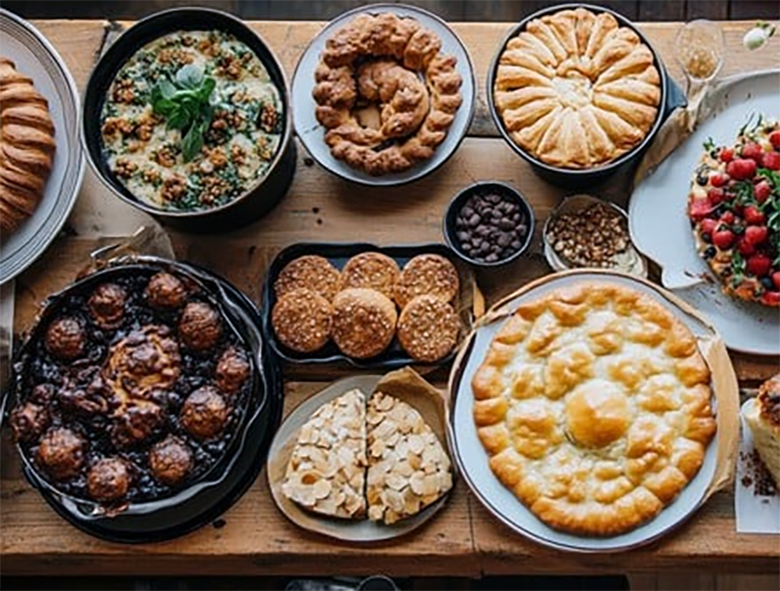 A range of baked goods.
Welcome to FabulousFusionFood's Baking Recipes Page — This is a continuation of an entire series of pages that will, I hope, allow my visitors to better navigate this site. As well as displaying recipes by name, country and region of origin I am now planning a whole series of pages where recipes can be located by meal type and main ingredient. This page gives a listing of all the baking recipes added to this site. Baking is defined as a technique for the prolonged cooking of food using dry heat by the action of conduction. Baking is normally done in an oven, but goods may also be baked in hot ashes or on hot stones. Baking differs from Roasting Recipes in that a lower temperature is typically used and the items are cooked for a longer period of time. Baking is a much older process than most people think and foods were probably originally baked in embers or with hot stones (which is how bread may have started). Only later did specialist ovens develop. Though most baked goods tend to be bread or cake-based some other dishes such as pasta dishes and vegetable dishes may also be baked. Stews are often also technically baked in an oven, but are not classed as 'baked goods' in that they are more liquid than solid at the end of the cooking process.
Baking is a method of preparing food that uses dry heat, typically in an oven, but can also be done in hot ashes, or on hot stones. The most common baked item is bread, but many other types of foods can be baked. Heat is gradually transferred "from the surface of cakes, biscuits and cookies, and pieces of bread to their centre, typically conducted at elevated temperatures surpassing 150°C. Dry heat cooking imparts a distinctive richness to foods through the processes of caramelization and surface browning. As heat travels through, it transforms batters and doughs into baked goods and more with a firm dry crust and a softer centre. Baking can be combined with grilling to produce a hybrid barbecue variant by using both methods simultaneously, or one after the other. Baking is related to barbecuing because the concept of the masonry oven is similar to that of a smoke pit.
In addition to bread, baking is used to prepare cakes, pastries, pies, tarts, quiches, biscuits and cookies, scones, crackers, pretzels, and more. These popular items are known collectively as 'baked goods', and are often sold at a bakery, which is a store that carries only baked goods, or at markets, grocery stores, farmers markets or through other venues.
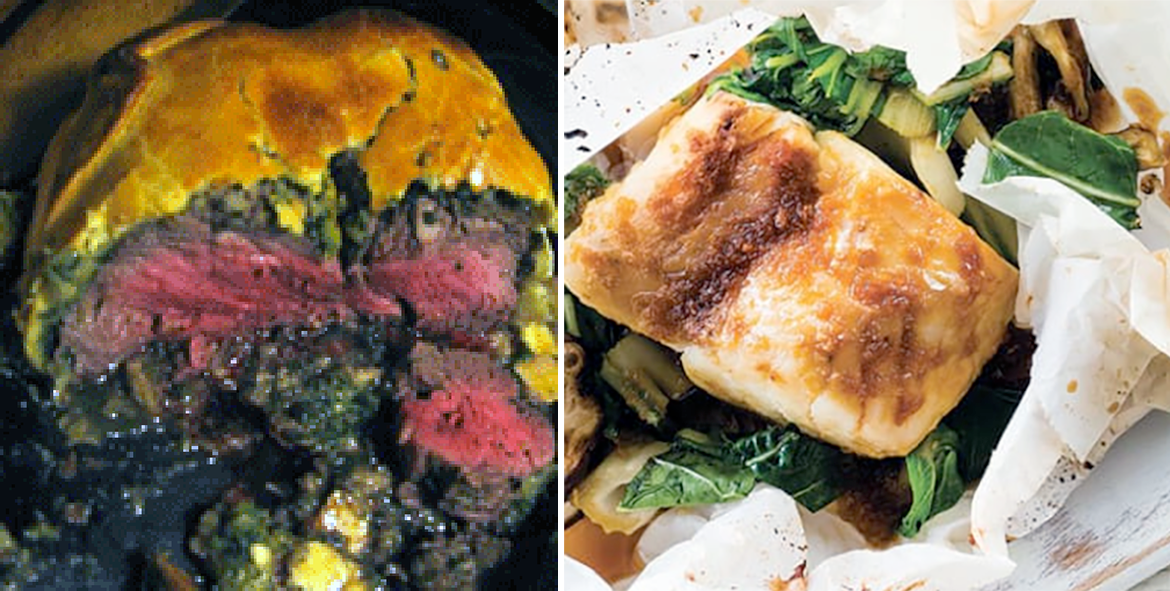 Beef en croûte (left) and fish en papillote (right).
The alphabetical list of all the baking recipes on this site follows, (limited to 100 recipes per page). There are 3406 recipes in total:
Page 29 of 35
| Semita de Piña (Salvadoran Pineapple Preserves Yeasted Pastry Pie) Origin: El Salvador | Siberian Bird Cherry Cake Origin: Russia | Sonso de Yuca Origin: Bolivia |
| Serbian Burek Origin: Serbia | Sicilian Lemon Polenta Cake Origin: Italy | Sopa Paraaguaya (Paraguayan Cornbread) Origin: Paraguay |
| Serim (Baked Dough with Yoghurt) Origin: Armenia | Sienimunaskas-kääryle (Wild Mushroom Omelette Roll) Origin: Finland | Sopa Paraguayana (Paraguayan soup) Origin: Paraguay |
| Sernik Krakowski (Polish Lattice Cheesecake) Origin: Poland | Sierra Leonean Ginger Cake Origin: Sierra Leone | Sopapilla Cheesecake Origin: American |
| Serviceberry Muffins Origin: Canada | Sierra Leonean Rice Bread Origin: Sierra Leone | Sorrel Meringue Pie Origin: Britain |
| Setas al Horno (Baked Oyster Mushrooms) Origin: Spain | Sierra Leonian Rice Bread Origin: Sierra Leone | Sorrel Tartlets Origin: Britain |
| Sevillum (Sweetened Cheese Dough) Origin: Roman | Simit (Turkish sesame bread rings) Origin: Turkey | Sou-Boerag (Cheese-filled Flaky Pastry) Origin: Armenia |
| Sewin Gyda Saws Perlysiau (Sea Trout with Herb Sauce) Origin: Welsh | Simnel Cake Origin: England | Soufflé Flan of St George's Mushrooms Origin: France |
| Sex Muffins (Sex Muffins) Origin: Australia | Simnel Cake 2 Origin: Britain | Soufflé Potatoes with Carrot and Asparagus Origin: Ireland |
| Sfincione Palermitano (Palermo Pizza) Origin: Italy | Simnel Cupcakes Origin: Britain | Soul Cakes Origin: Britain |
| Sgoniau Bricyll a Chnau Ffrengig (Apricot and Walnut Scones) Origin: Welsh | Single-layer Calabrian Pizza Origin: Italy | Sour Milk Ginger Cake Origin: England |
| Sgoniau Caerffili (Caerphilly Scones) Origin: Welsh | Siphnopitta (Honey and Cheese Cake) Origin: Greece | Sour Sauce Pasty Origin: England |
| Sgoniau Ceirios (Cherry Scones) Origin: Welsh | Sirnica (Dalmatian Easter bread) Origin: Croatia | Sourdough Grandmother Bread Origin: American |
| Sgoniau Mam (Mum's Batch Scone) Origin: Welsh | Siwin (Sewin) Origin: Welsh | Sourdough Pizza Crust Origin: Italy |
| Sgoniau Melys (Sweet Scones) Origin: Welsh | Six-week Refrigerator Bran Muffins Origin: American | Sourdough Starter Origin: Britain |
| Sgoniau Sawrus (Savoury Scones) Origin: Welsh | Skilpadjie (Afrikaans Faggots) Origin: South Africa | Soused Cornish Sardines Origin: England |
| Sgoniau Triog (Treacle Scones) Origin: Welsh | Sklandrausis (Vegetable Tarts) Origin: Latvia | Soused Herrings Origin: Scotland |
| Shaker Ghurek Origin: Azerbaijan | Sloppy Joe Pizza Origin: American | South African Ginger Biscuits Origin: South Africa |
| Shami Kebab Origin: India | Small Raised Mutton Pies Origin: Scotland | South African Lamb Curry Origin: South Africa |
| Shamrock Sugar Biscuits Origin: Ireland | Smetanniki (Belarusian Sour Cream Buns) Origin: Belarus | Southern Biscuit Muffins Origin: American |
| Shellbread Origin: Britain | Smoked Chicken, Leek and Mushroom Pie Origin: Australia | Southern Cornbread Origin: American |
| Shellfish and Leek Roly-poly Origin: Britain | Smoked Fish Fisherman's Pie Origin: England | Spanagh-Banir Boerag (Cheese and Spinach Filo Bake) Origin: Armenia |
| Shepherd's Pie Origin: Britain | Smoked Salmon and Haddock Pots Origin: Scotland | Spanakopita (Spinach Pie) Origin: Greece |
| Sheqerpare (Biscuits in Syrup) Origin: Albania | Smoked Salmon Tartlets Origin: British | Spanokopita (Cheese and Spinach Pie) Origin: Greece |
| Shetland Shortbread Origin: Scotland | Snow-capped Deep-filled Mince Pies Origin: Britain | Special Bunloaf Origin: Manx |
| Shiamali (Semolina Cakes) Origin: Cyprus | Snowball Cakes Origin: Britain | Speckzelten (Bacon Tents) Origin: Germany |
| Shida Kartli (Beef-wrapped Eggs in Tomato Sauce) Origin: South Ossetia | Snowflake Cake Origin: America | Speculaas Origin: Netherlands |
| Ship's Biscuit Origin: Britain | Sočni Kolač (Rich Cake) Origin: Bosnia | Spekulatius (Spiced Almond Biscuits) Origin: Germany |
| Short Cakes Origin: Britain | Soda Bread Origin: Ireland | Spice Bread Origin: Ireland |
| Shortbread Oatmeal Biscuits Origin: Scotland | Soda Bread Origin: Britain | Spice Cake Origin: Britain |
| Shortcrust Pastry Dough Origin: British | Soda Bread Biscuits Origin: Ireland | Spiced Apricot Oat Muffins Origin: British |
| Shrewsbury Biscuits Origin: England | Soda Bread Pizza Origin: Ireland | Spiced Biscuits Origin: Britain |
| Shropshire Cakes Origin: England | Soft-centred Chocolate Pudding Origin: Australia | |
| Shuku-shuku (Coconut Biscuits) Origin: Nigeria | Sole Fillets Stuffed with Mixed Wild Mushrooms and Ricotta Cheese Origin: Britain |
Page 29 of 35