FabulousFusionFood's Baking Recipes 33rd Page
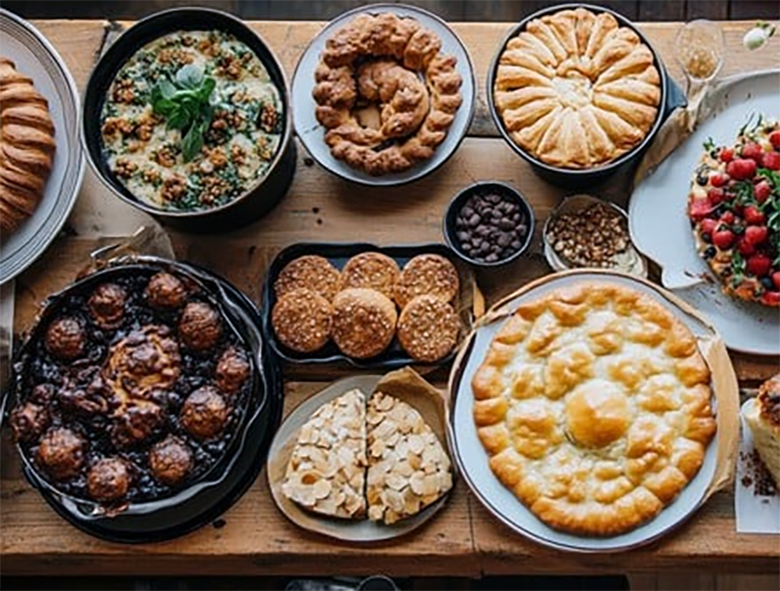 A range of baked goods.
Welcome to FabulousFusionFood's Baking Recipes Page — This is a continuation of an entire series of pages that will, I hope, allow my visitors to better navigate this site. As well as displaying recipes by name, country and region of origin I am now planning a whole series of pages where recipes can be located by meal type and main ingredient. This page gives a listing of all the baking recipes added to this site. Baking is defined as a technique for the prolonged cooking of food using dry heat by the action of conduction. Baking is normally done in an oven, but goods may also be baked in hot ashes or on hot stones. Baking differs from Roasting Recipes in that a lower temperature is typically used and the items are cooked for a longer period of time. Baking is a much older process than most people think and foods were probably originally baked in embers or with hot stones (which is how bread may have started). Only later did specialist ovens develop. Though most baked goods tend to be bread or cake-based some other dishes such as pasta dishes and vegetable dishes may also be baked. Stews are often also technically baked in an oven, but are not classed as 'baked goods' in that they are more liquid than solid at the end of the cooking process.
Baking is a method of preparing food that uses dry heat, typically in an oven, but can also be done in hot ashes, or on hot stones. The most common baked item is bread, but many other types of foods can be baked. Heat is gradually transferred "from the surface of cakes, biscuits and cookies, and pieces of bread to their centre, typically conducted at elevated temperatures surpassing 150°C. Dry heat cooking imparts a distinctive richness to foods through the processes of caramelization and surface browning. As heat travels through, it transforms batters and doughs into baked goods and more with a firm dry crust and a softer centre. Baking can be combined with grilling to produce a hybrid barbecue variant by using both methods simultaneously, or one after the other. Baking is related to barbecuing because the concept of the masonry oven is similar to that of a smoke pit.
In addition to bread, baking is used to prepare cakes, pastries, pies, tarts, quiches, biscuits and cookies, scones, crackers, pretzels, and more. These popular items are known collectively as 'baked goods', and are often sold at a bakery, which is a store that carries only baked goods, or at markets, grocery stores, farmers markets or through other venues.
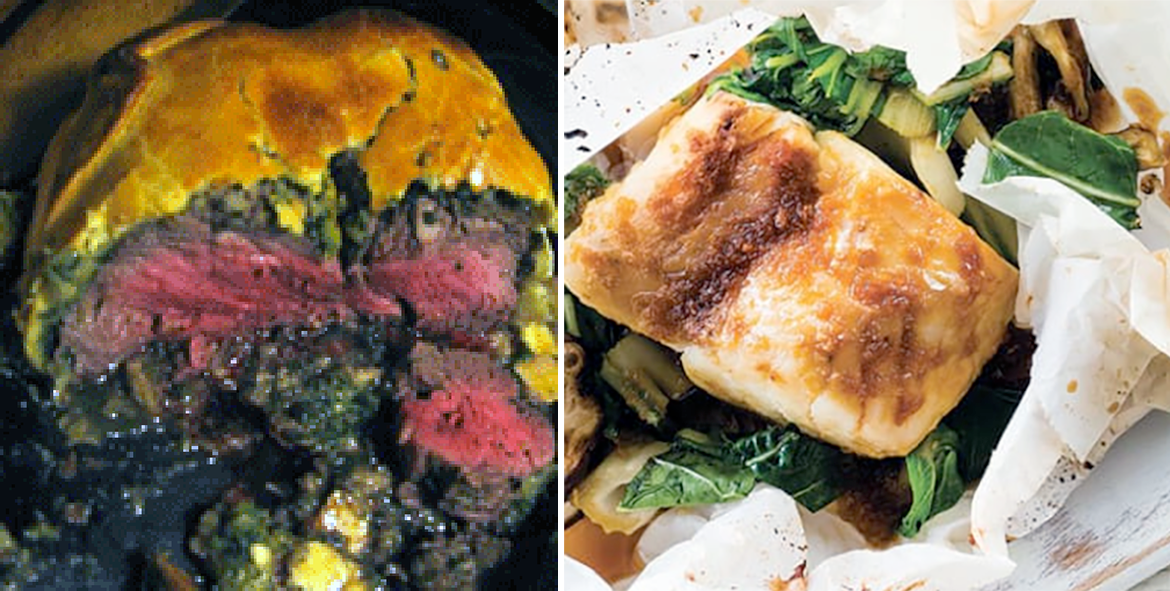 Beef en croûte (left) and fish en papillote (right).
The alphabetical list of all the baking recipes on this site follows, (limited to 100 recipes per page). There are 3406 recipes in total:
Page 33 of 35
| Torta Pasqua con la Pasta Frolla (Easter Tart with Pasta Frolla) Origin: Italy | Traditional Mince Pies Origin: Britain | Turnip Pasty Origin: England |
| Torta Plava zaguna (Blue Lagoon Cake) Origin: Slovenia | Traditional Pork Pie Origin: Britain | Turnip Puff Origin: American |
| Torta Rogel (Rogel Cake) Origin: Argentina | Traditional Pumpkin Pie Origin: Britain | Tuscan Ricotta Cheesecake Origin: American |
| Torta Rustica di Mele (Italian Rustic Apple Cake) Origin: Italy | Traditional Sachertorte Origin: Austria | Tutumov Boerag (Courgette Cake) Origin: Armenia |
| Tortas de Aceite (Sesame Seed and Aniseed Biscuits) Origin: Spain | Traditional Scottish Gingerbread Origin: Scotland | Tuvaluan Coconut Bread Origin: Tuvalu |
| Torten Oen a Thatws (Welsh Lamb and Potato Torte) Origin: Welsh | Traditional Sugar Cookies Origin: American | Tvarahovy Kolác Treny (Czech Cheesecake) Origin: Czech |
| Torth Amser Te (Tea Time Bread) Origin: Welsh | Traditional Vegetable Bake Origin: Ireland | Twelfth-night Cake Origin: Britain |
| Torth Cennin a Saets (Leek and Sage Bread) Origin: Welsh | Traou Mad (Breton Macaroons) Origin: France | Twenty-five Centimetre Pumpkin Pie Origin: American |
| Torth Fraith (Mottled Bread) Origin: Welsh | Träubleskuchen (Meringue-topped Redcurrant Cake) Origin: Germany | Two-crust Apple Pie Origin: American |
| Torth Frith Llandudno (Llandudno Fruit Cake) Origin: Welsh | Traybake Chicken Nachos Origin: Britain | Tyropatinam (Baked Custard) Origin: Roman |
| Torth Sinsir Hen Gymreig (Old Welsh Gingerbread) Origin: Welsh | Traybake Keralan Fish Curry Origin: Fusion | Tyttebœr Brød (Lingonberry Bread) Origin: Denmark |
| Tottenham Cake Origin: England | Traybake Sea Bass with Asparagus and New Potatoes Origin: Britain | Ube Cheesecake Origin: Austria |
| Tourment d'Amour (Love's Torment) Origin: Guadeloupe | Treacle Raisin Gingerbread Origin: Britain | Ukaeb (Minced Crab with Coconut Cream) Origin: Palau |
| Tourment d'Amour (Love's Torment) Origin: Saint Barthelemy | Treacle Rooibos Fruit Cake Origin: South Africa | Ukrainian Sour Cream Pastry Origin: Ukraine |
| Tourta de Blea (Chard Pie) Origin: Monaco | Treacle Scones Origin: Britain | Ultimate Box Mix Strawberry Cake Origin: American |
| Tourte bretonne (Breton pie) Origin: France | Treacle Tart Origin: Britain | Ulu (Hawaiian Roasted Breadfruit) Origin: Hawaii |
| Tourteletes in fryture (Honey-basted Fig Pastries) Origin: England | Trencher Origin: England | Um Ali (Puff Pastry Milk Pudding) Origin: Kuwait |
| Tourtes parmeriennes (Parmesan Pies) Origin: France | Tres Leches Cake Origin: Chile | Umm Ali (Puff Pastry Milk Pudding) Origin: Qatar |
| Tourtière Origin: Canada | Tres Leches Cake Origin: Mexico | Upside-down Pear Gingerbread Cake Origin: British |
| Towcester Cheesecakes Origin: England | Trini Coconut Sweet Bread Origin: Trinidad | Uru (Roasted Breadfruit) Origin: Society Islands |
| Towering Praline Carrot Cake Origin: American | Trini Curried Shrimp Patty Origin: Trinidad | Vínarterta (Icelandic Layer Cake) Origin: Iceland |
| Tozzetti della Tuscia (Hazelnut Biscotti) Origin: Italy | Trini Meat Patties Origin: Trinidad | Valentine Cupcakes Origin: Britain |
| Tractae (Pastry Sheets) Origin: Roman | Trini Milk Cake Origin: Trinidad | Valentine Raspberry Scones Origin: Cornwall |
| Traditional Air Fryer Scones Origin: Britain | Trinidad Hops Bread Origin: Trinidad | Valentine's Day Chocolate Cheesecake Origin: American |
| Traditional Black Bun Origin: Scotland | Trinidadian Black Cake Origin: Trinidad | Vanilla and Spice Candied Sweet Potato Galette Origin: America |
| Traditional Bread and Butter Pudding Origin: Britain | Triopita (Greek Cheese Pie) Origin: Greece | Vanilla Apple and Tamarillo Tart Origin: British |
| Traditional Bread Dough Pizza Base Origin: Italy | Tripolita (Greek Feta Pie) Origin: Syria | Vanilla Cake Mix Cake Origin: American |
| Traditional Chocolate Chip Cookies Origin: America | Tropical Chicken Pizza Origin: American | Vanilla Cake Mix Chocolate Cake Origin: American |
| Traditional Cornbread Origin: America | Tsoureki (Greek Easter Bread) Origin: Greece | Vanilla Cake Mix Lemon Cake Origin: American |
| Traditional Cornish Pasty Origin: Cornwall | Tunu Ahi Ika Origin: Easter Island | Vanilla Cake Mix Spice Cake Origin: American |
| Traditional French Baguette Origin: France | Turkey and Cranberry Mini Pies Origin: Britain | Vanilla Cheesecake Origin: American |
| Traditional Fruit Cake Origin: Britain | Turkey Curry Samosas Origin: Britain | Vanilla Chocolate Cake Origin: Britain |
| Traditional Historic Bobotie Origin: South Africa | Turkey Tetrazzini Casserole Origin: American | |
| Traditional Mexican Bolillos Origin: Mexico | Turkish Cypriot Lavaş (Cypriot Pitta Bread) Origin: Northern Cyprus |
Page 33 of 35