FabulousFusionFood's Baking Recipes 28th Page
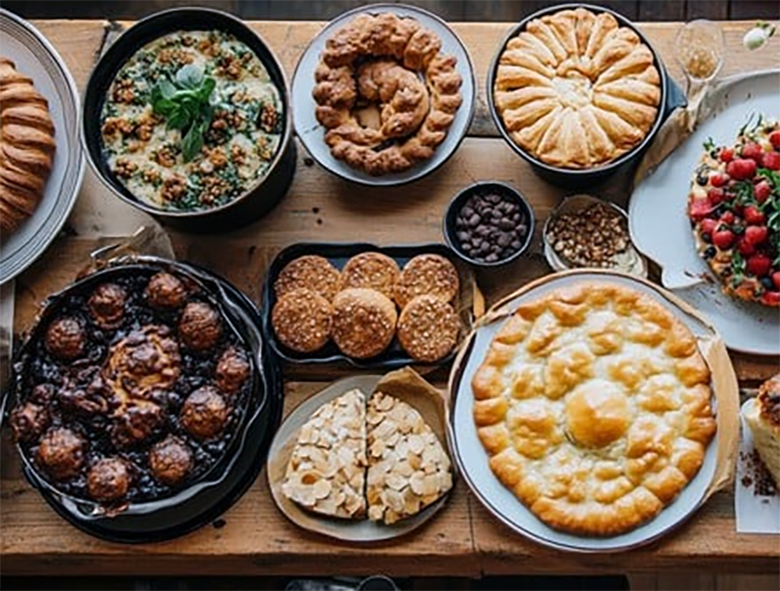 A range of baked goods.
Welcome to FabulousFusionFood's Baking Recipes Page — This is a continuation of an entire series of pages that will, I hope, allow my visitors to better navigate this site. As well as displaying recipes by name, country and region of origin I am now planning a whole series of pages where recipes can be located by meal type and main ingredient. This page gives a listing of all the baking recipes added to this site. Baking is defined as a technique for the prolonged cooking of food using dry heat by the action of conduction. Baking is normally done in an oven, but goods may also be baked in hot ashes or on hot stones. Baking differs from Roasting Recipes in that a lower temperature is typically used and the items are cooked for a longer period of time. Baking is a much older process than most people think and foods were probably originally baked in embers or with hot stones (which is how bread may have started). Only later did specialist ovens develop. Though most baked goods tend to be bread or cake-based some other dishes such as pasta dishes and vegetable dishes may also be baked. Stews are often also technically baked in an oven, but are not classed as 'baked goods' in that they are more liquid than solid at the end of the cooking process.
Baking is a method of preparing food that uses dry heat, typically in an oven, but can also be done in hot ashes, or on hot stones. The most common baked item is bread, but many other types of foods can be baked. Heat is gradually transferred "from the surface of cakes, biscuits and cookies, and pieces of bread to their centre, typically conducted at elevated temperatures surpassing 150°C. Dry heat cooking imparts a distinctive richness to foods through the processes of caramelization and surface browning. As heat travels through, it transforms batters and doughs into baked goods and more with a firm dry crust and a softer centre. Baking can be combined with grilling to produce a hybrid barbecue variant by using both methods simultaneously, or one after the other. Baking is related to barbecuing because the concept of the masonry oven is similar to that of a smoke pit.
In addition to bread, baking is used to prepare cakes, pastries, pies, tarts, quiches, biscuits and cookies, scones, crackers, pretzels, and more. These popular items are known collectively as 'baked goods', and are often sold at a bakery, which is a store that carries only baked goods, or at markets, grocery stores, farmers markets or through other venues.
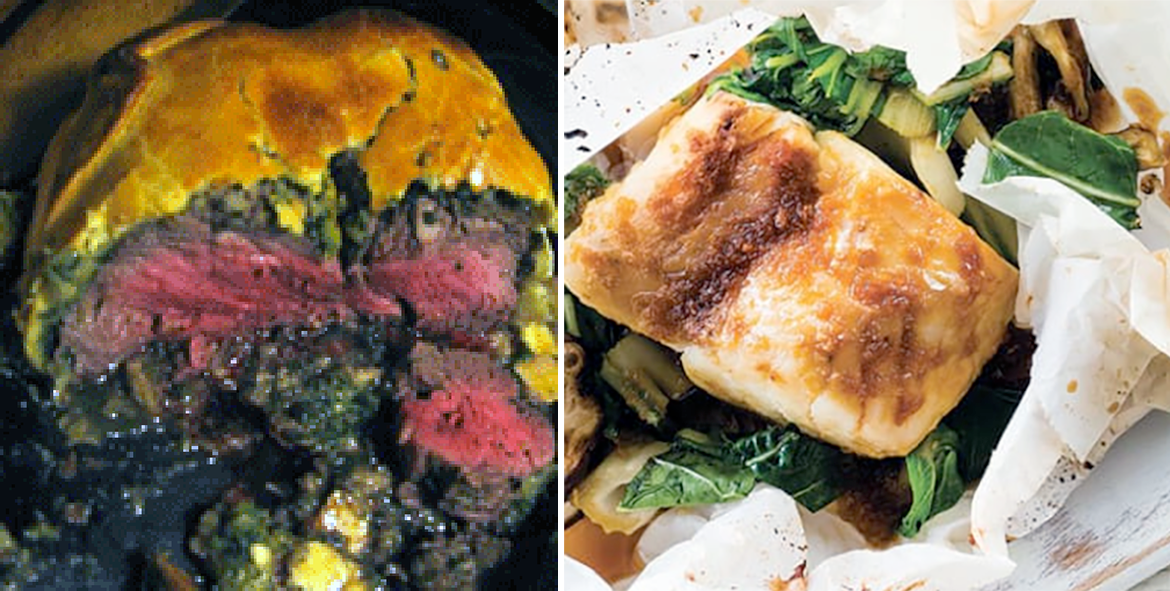 Beef en croûte (left) and fish en papillote (right).
The alphabetical list of all the baking recipes on this site follows, (limited to 100 recipes per page). There are 3406 recipes in total:
Page 28 of 35
| Rugbrød (Danish Rye Bread) Origin: Denmark | Salmon with Hot Beetroot Relish Origin: Britain | Scotch Cake Biscuits Origin: Scotland |
| Rum and Chocolate Cupcakes Origin: Britain | Salsa Chicken Origin: America | Scotch Currant Loaf Origin: Scotland |
| Rum And Coconut Bread Pudding Origin: Cayman Islands | Salted Caramel Cheesecake Origin: Britain | Scotch Pie Origin: Scotland |
| Rum Cake Origin: British Virgin Islands | Salted Pilchard and Leek Pie Origin: Britain | Scotch Pie II Origin: Scotland |
| Rum Cake Origin: US Virgin Islands | Salvadoran Marquesote Origin: El Salvador | Scots Mutton Pies Origin: Scotland |
| Rum Raisin Cheesecake Origin: Britain | Sambocade (Elderflower Cheesecake) Origin: England | Scottish Bacon and Potato Pie Origin: Scotland |
| Rummed Yams Origin: Aruba | Samoon Origin: Iraq | Scottish Baps Origin: Scotland |
| Rupjmaize (Latvian Rye Bread) Origin: Latvia | Šampita (Meringue Cake) Origin: Bosnia | Scottish Christmas Bun Origin: Scotland |
| Rusks with Chickpea Leaven Origin: Cyprus | Sanddorn-Muffin (Sea-buckthorn Muffins) Origin: Germany | Scottish Christmas Cake Origin: Scotland |
| Rwlâd Bara Lawr (Laverbread Roulade) Origin: Welsh | Saniyit Kufta (Baked Beef Patties) Origin: Egypt | Scottish Fruit Tart with Whisky Origin: Scotland |
| Rye Bread with Caraway Seeds Origin: British | Sara Lee Pound Cake Origin: American | Scottish Lace Biscuits Origin: Scotland |
| Rye Sourdough Starter Origin: American | Sargos (Cuttlefish) Origin: Roman | Scottish Marmalade Bread and Butter Pudding Origin: Scotland |
| Súkkulaði-slöngukaka (Chocolate 'Snake Cake') Origin: Iceland | Sarma (Meat-stuffed Cabbage Leaves) Origin: Kosovo | Scottish Oatcakes Origin: Scotland |
| Saba Spice Cake Origin: Saba | Saudi Sago Pudding Origin: Saudi Arabia | Scottish Parkin Origin: Scotland |
| Sabaayad (Somali Flatbread) Origin: Somalia | Sausage and Guinness Toad in the Hole Origin: Ireland | Scottish Parkin Biscuits Origin: Scotland |
| Sabanikhiay (Turnovers with Spinach Filling) Origin: Egypt | Sausage Lattice Origin: Northern Ireland | Scottish Parkin with Lemon Sauce Origin: Scotland |
| Sablés Bretons (Breton Biscuits) Origin: France | Sausage Rolls Origin: Britain | Scottish Parliament Cakes Origin: Scotland |
| Sablés Bretons Maison (Home-made Breton Shortbread) Origin: France | Savillum (Cheese Bread) Origin: Roman | Scottish Pickled Herring Origin: Scotland |
| Saboera Biscuits Origin: South Africa | Savoiardi Biscuits Origin: Italy | Scottish Shortbread Origin: Scotland |
| Sachertorte Origin: Austria | Savoury Corn Muffins Origin: American | Scottish Smokies in Hot Cream Sauce Origin: Scotland |
| Safflower Madeleines Origin: France | Savoury Fish Steaks Origin: New Zealand | Scottish Snow Cake Origin: Scotland |
| Saffron Bread Origin: England | Savoury Honey Fungus Tart Origin: Britain | Scottish Snowballs Origin: Scotland |
| Saffron Milk Cap, Brie and Thyme Tart Origin: Britain | Savoury Potato Roulade Origin: Ireland | Scottish Steak Pie Origin: Scotland |
| Safra (Semolina and Date Cake) Origin: Libya | Sawine (Trini Sweet Baked Noodles) Origin: Trinidad | Scottish Venison Pie Origin: Scotland |
| Sagu Keju (Indonesian Cheese Biscuits) Origin: Indonesia | Sayadieh Samak (Baked Fish with Rice) Origin: Saudi Arabia | Scottish Yule Bannock Origin: Scotland |
| Saint Helena Coconut Rock Cakes Origin: St Helena | Scallop and Mushroom Pie Origin: Ireland | Sea Aster and Cheese Strata Origin: Italy |
| Saint Helena Curry Puffs Origin: St Helena | Scallop Pie Origin: Northern Ireland | Sea-buckthorn Cheesecake Origin: Britain |
| Saint Helena Ginger Beer Origin: St Helena | Scarus (Dentex) Origin: Roman | Seafood-stuffed Morel Mushrooms Origin: America |
| Saint Helena Rock Cakes Origin: St Helena | Schenecken (Crispy Butterhorns) Origin: Germany | Seasoning Pudding Origin: Manx |
| Saint Patrick's Cakes Origin: Ireland | Schokoladenpretzel (Chocolate Pretzels) Origin: Germany | Seaweed Flour Biscuits Origin: Britain |
| Saint Vincent Black Cake Origin: Saint Vincent | Schwaebischer Träubleskuchen (Swabian Redcurrant Cake) Origin: Germany | Seaweed Wolfberry Cupcakes Origin: Britain |
| Salara Origin: Guyana | Scone and Butter Pudding Origin: Scotland | Selkirk Bannock Origin: Scotland |
| Salara Cake Origin: French Guiana | Scone Pizza Base Origin: Italy | |
| Salmon and Couscous en Papillote Origin: Britain | Scones Origin: Scotland |
Page 28 of 35