FabulousFusionFood's Baking Recipes 24th Page
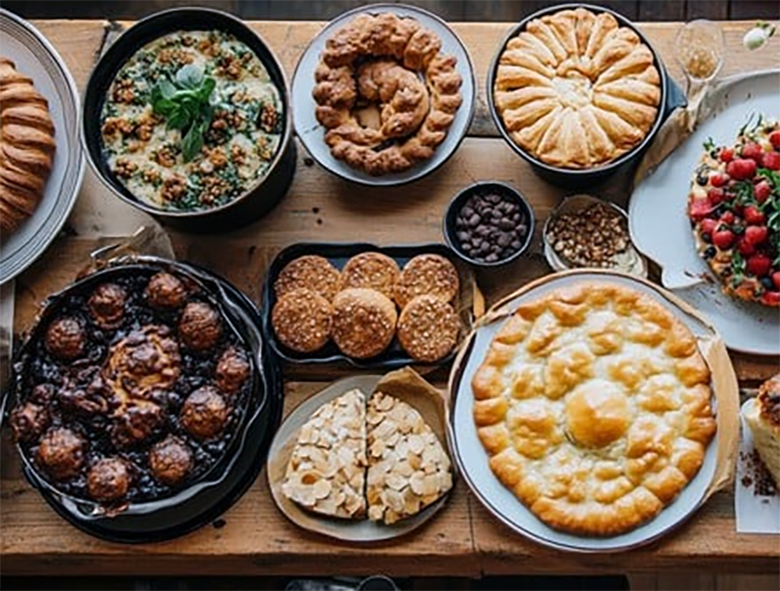 A range of baked goods.
Welcome to FabulousFusionFood's Baking Recipes Page — This is a continuation of an entire series of pages that will, I hope, allow my visitors to better navigate this site. As well as displaying recipes by name, country and region of origin I am now planning a whole series of pages where recipes can be located by meal type and main ingredient. This page gives a listing of all the baking recipes added to this site. Baking is defined as a technique for the prolonged cooking of food using dry heat by the action of conduction. Baking is normally done in an oven, but goods may also be baked in hot ashes or on hot stones. Baking differs from Roasting Recipes in that a lower temperature is typically used and the items are cooked for a longer period of time. Baking is a much older process than most people think and foods were probably originally baked in embers or with hot stones (which is how bread may have started). Only later did specialist ovens develop. Though most baked goods tend to be bread or cake-based some other dishes such as pasta dishes and vegetable dishes may also be baked. Stews are often also technically baked in an oven, but are not classed as 'baked goods' in that they are more liquid than solid at the end of the cooking process.
Baking is a method of preparing food that uses dry heat, typically in an oven, but can also be done in hot ashes, or on hot stones. The most common baked item is bread, but many other types of foods can be baked. Heat is gradually transferred "from the surface of cakes, biscuits and cookies, and pieces of bread to their centre, typically conducted at elevated temperatures surpassing 150°C. Dry heat cooking imparts a distinctive richness to foods through the processes of caramelization and surface browning. As heat travels through, it transforms batters and doughs into baked goods and more with a firm dry crust and a softer centre. Baking can be combined with grilling to produce a hybrid barbecue variant by using both methods simultaneously, or one after the other. Baking is related to barbecuing because the concept of the masonry oven is similar to that of a smoke pit.
In addition to bread, baking is used to prepare cakes, pastries, pies, tarts, quiches, biscuits and cookies, scones, crackers, pretzels, and more. These popular items are known collectively as 'baked goods', and are often sold at a bakery, which is a store that carries only baked goods, or at markets, grocery stores, farmers markets or through other venues.
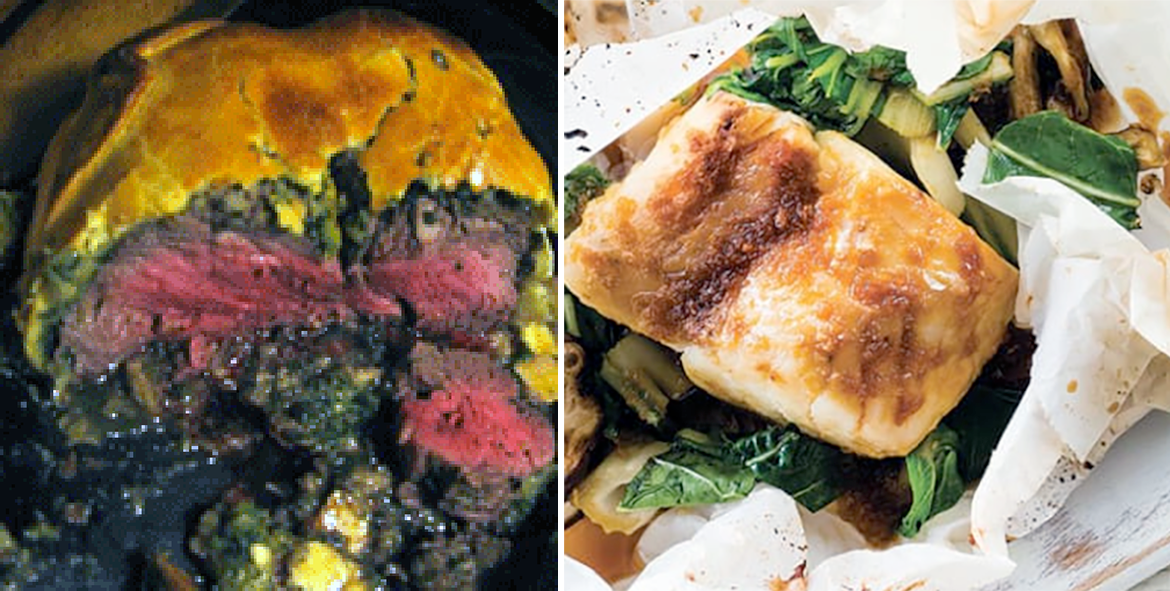 Beef en croûte (left) and fish en papillote (right).
The alphabetical list of all the baking recipes on this site follows, (limited to 100 recipes per page). There are 3406 recipes in total:
Page 24 of 35
| Pastai Ystumllwynarth (Oystermouth Pie) Origin: Welsh | Patina Fusilis (A Dish of Cold Asparagus) Origin: Roman | Piña Colada Cupcakes Origin: Britain |
| Pastai'r Bwthyn (Cottage-style Pie) Origin: Welsh | Patina Urticarum (A Dish of Stinging Nettles) Origin: Roman | Pie Crust Origin: Britain |
| Pastei Aeron Coch gyda Chrwst Ceirch (Red Berry Pie with Oat Crust) Origin: Welsh | Patinam de rosis (A dish of roses) Origin: Roman | Pigeon Pie Origin: Britain |
| Pastei Arennau ac Eidion (Steak and Kidney Pie) Origin: Welsh | Pato-bravo com Sálvia (Pot-baked Duck with Sage) Origin: Mozambique | Pigeons in a Hole Origin: Britain |
| Pastei Bersli (Parsley Pie) Origin: Welsh | Patychyk (Breaded Kebabs) Origin: Ukraine | Pilaf-Stuffed Onions Origin: Middle East |
| Pastei Cannin a Chig Moch (Welsh Leek and Ham Pie) Origin: Welsh | Pavlova Origin: New Zealand | Pine Pollen Bread Origin: France |
| Pastei'r Porthmon (Drover's Pie) Origin: Welsh | Payne Foundow (Medieval Bread Pudding) Origin: England | Pineapple and Carnation Fruit Cake Origin: Britain |
| Pasteis de Belém Origin: Portugal | Pea Flour Bread Origin: Britain | Pineapple and Cassava Tarts Origin: Philippines |
| Pastel de Choclo Origin: Chile | Peanut Butter Cheesecake Origin: Britain | Pineapple Buns Origin: Hong Kong |
| Pastel de Jamón (Ham Cakes) Origin: Peru | Peanut Clusters Origin: Britain | Pineapple Sage Pound Cake Origin: American |
| Pastel de Papas con Tres Quesos (Potato Cake with Three Cheeses) Origin: Peru | Peanut Cookies Origin: Britain | Pineapple Upside-down Pudding Origin: Britain |
| Pastel de Tres Leches Origin: El Salvador | Peanut Macaroons Origin: Sudan-a | Pineappleweed Biscuits Origin: Britain |
| Pastelillos de Guayaba (Guava Pastries) Origin: Puerto Rico | Pear and Apple Ginger Galette Origin: America | Pineappleweed Skolebrød Origin: Scotland |
| Pastelitos de yuca con atún (Cassava and Tuna Pies) Origin: Colombia | Pear and Blackberry Cobbler Origin: Britain | Pinsa Romana Origin: Italy |
| Pastelón (Sweet Plantain Lasagna) Origin: Puerto Rico | Pease Bannocks Origin: Scotland | Pioniono de Arquipe y Coco (Dulce de Leche and Coconut Roll) Origin: Colombia |
| Pastelón de Arroz (Cheesy Beef and Rice Casserole) Origin: Dominican Republic | Pecan Brie Tarts Origin: Britain | Piparkökur (Icelandic Pepper Biscuits) Origin: Iceland |
| Pastelón de Harina de Maíz (Cornmeal and Beef Casserole) Origin: Dominican Republic | Pehtranova Potica (Tarragon Potica) Origin: Slovenia | Piroshki Origin: Russia |
| Pastelón de Papa (Dominican Cottage Pie) Origin: Dominican Republic | Pennywise Fruit Cake Origin: Britain | Pirozhki (Stuffed Yeasted Buns) Origin: Russia |
| Pastes hern lagesek (Stargazy Pie) Origin: England | Penzance Cake Origin: England | Pisam Farsilem (Pressed Peas) Origin: Roman |
| Pastes hern lagesek (Stargazy Pie) Origin: England | Penzance Cake II Origin: England | Pistachio and Yoghurt Cake Origin: Britain |
| Pastiera di Grano (Neapolitan Grain Pie) Origin: Italy | Penzance Cake III Origin: England | Pistachio Pudding Cookies Origin: American |
| Pastiera Napoletana (Naples Easter Cakes) Origin: Italy | Penzance Grey Mullet Origin: Cornwall | Pistolette Roll Origin: American |
| Pastilla (Moroccan Meat Pie) Origin: Morocco | Pepper Pasta Pie Origin: South Africa | Pita Bread Origin: Turkey |
| Pastilla au Poulet (Chicklen Pastilla) Origin: Morocco | Pepperoni Pizza Origin: Italy | Pita Bread Origin: Tajikistan |
| Pastizzi ta' l-Incov (Anchovy Pastizzi) Origin: Malta | Perfect Pumpkin Pie Origin: American | Pita sa Mesom (Meat Filo Pie) Origin: Bosnia |
| Pastizzi tal Pizelli (Pea Pastizzi) Origin: Malta | Pesmol (Mackerel with Bell Pepper in a Coconut and Chilli Sauce) Origin: Indonesia | Pitcairn Roasted Breadfruit Origin: Pitcairn Islands |
| Pastry Cheesecake Crust Origin: Britain | Pesto Pastry Stars Origin: Britain | Pitcaithly Bannocks Origin: Scotland |
| Pâte à Choux (Choux Pastry) Origin: France | Petits Beurres Origin: France | Pitta Bread Origin: Middle East |
| Pâté breton (Breton Pâté) Origin: France | Petits Gâteaux au Sureau (Elderberry Muffins) Origin: Switzerland | Pizza (Made Without Yeast) Origin: Argentina |
| Pâte Feuilletée (Puff Pastry) Origin: France | Peynirli Bisküvi (Cheese Biscuits) Origin: Turkey | Pizza ai Fruiti di Mare (Seafood Pizza) Origin: Italy |
| Patellam tyrotaricham ex quocumque salso volueris (A Dish of Cheese and Whichever Salt Fish you Wish) Origin: Roman | Peynirli Künefe (Turkish Cheesecake) Origin: Turkey | Pizza alla Marinara Origin: Italy |
| Pâtés à la Goyave (Guava Pasties) Origin: Martinique | Phaphata (Fried Muffins) Origin: Botswana | Pizza alla Rustica Origin: Italy |
| Patina de Cucurbitis (A Dish of Melon) Origin: Roman | Philadelphia-style Butter Cake Origin: American | |
| Patina de Pisce Lupo (A Dish of Service-berries) Origin: Roman | Philippines Banana Bread Origin: Philippines |
Page 24 of 35