FabulousFusionFood's Baking Recipes 23rd Page
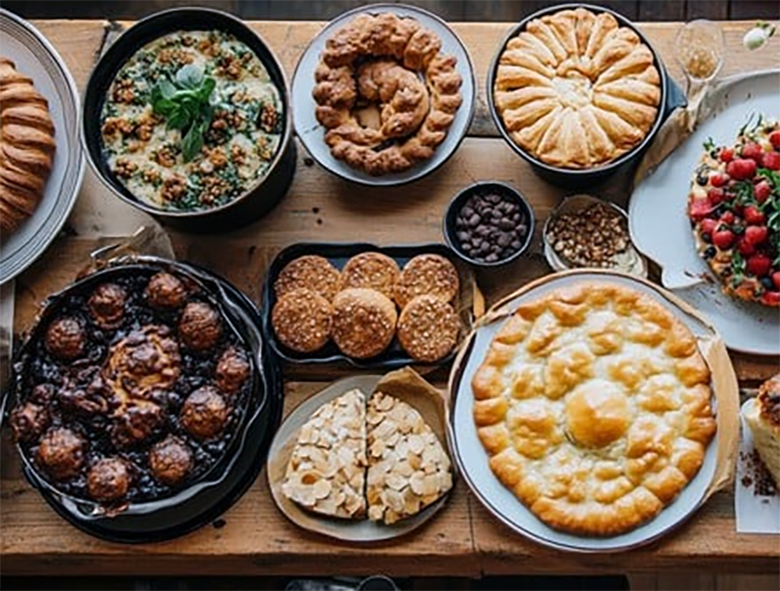 A range of baked goods.
Welcome to FabulousFusionFood's Baking Recipes Page — This is a continuation of an entire series of pages that will, I hope, allow my visitors to better navigate this site. As well as displaying recipes by name, country and region of origin I am now planning a whole series of pages where recipes can be located by meal type and main ingredient. This page gives a listing of all the baking recipes added to this site. Baking is defined as a technique for the prolonged cooking of food using dry heat by the action of conduction. Baking is normally done in an oven, but goods may also be baked in hot ashes or on hot stones. Baking differs from Roasting Recipes in that a lower temperature is typically used and the items are cooked for a longer period of time. Baking is a much older process than most people think and foods were probably originally baked in embers or with hot stones (which is how bread may have started). Only later did specialist ovens develop. Though most baked goods tend to be bread or cake-based some other dishes such as pasta dishes and vegetable dishes may also be baked. Stews are often also technically baked in an oven, but are not classed as 'baked goods' in that they are more liquid than solid at the end of the cooking process.
Baking is a method of preparing food that uses dry heat, typically in an oven, but can also be done in hot ashes, or on hot stones. The most common baked item is bread, but many other types of foods can be baked. Heat is gradually transferred "from the surface of cakes, biscuits and cookies, and pieces of bread to their centre, typically conducted at elevated temperatures surpassing 150°C. Dry heat cooking imparts a distinctive richness to foods through the processes of caramelization and surface browning. As heat travels through, it transforms batters and doughs into baked goods and more with a firm dry crust and a softer centre. Baking can be combined with grilling to produce a hybrid barbecue variant by using both methods simultaneously, or one after the other. Baking is related to barbecuing because the concept of the masonry oven is similar to that of a smoke pit.
In addition to bread, baking is used to prepare cakes, pastries, pies, tarts, quiches, biscuits and cookies, scones, crackers, pretzels, and more. These popular items are known collectively as 'baked goods', and are often sold at a bakery, which is a store that carries only baked goods, or at markets, grocery stores, farmers markets or through other venues.
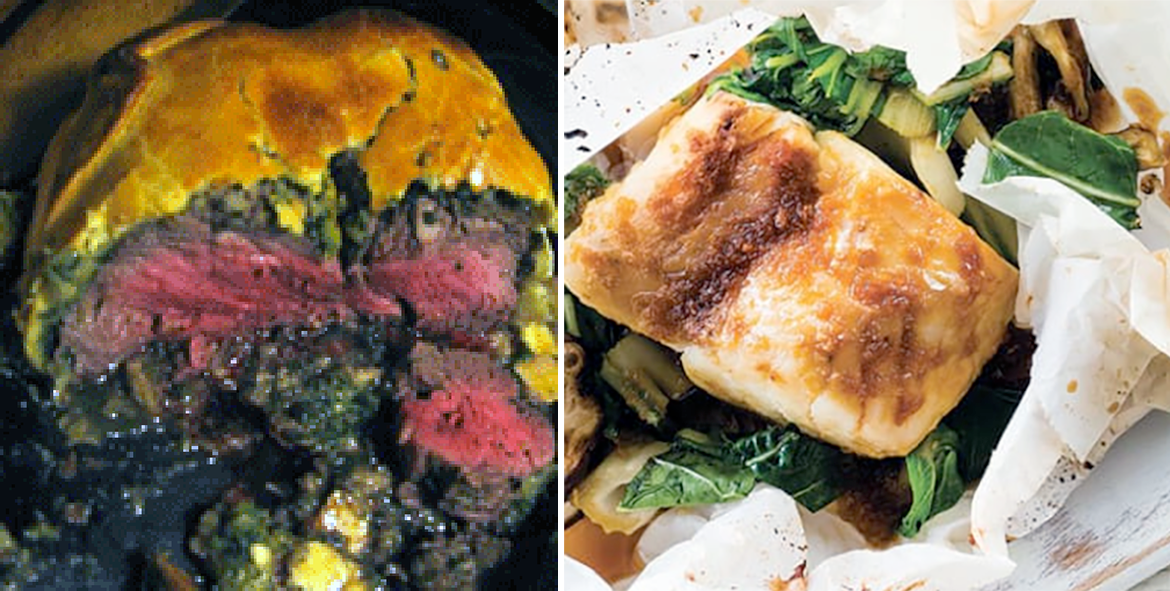 Beef en croûte (left) and fish en papillote (right).
The alphabetical list of all the baking recipes on this site follows, (limited to 100 recipes per page). There are 3406 recipes in total:
Page 23 of 35
| Pain de thon aux algues (Tuna and Seaweed Loaf) Origin: France | Papaya Fairy Cakes with Tangy Lemon Glaze Origin: African Fusion | Passionfruit Crème Patissière Origin: Saint Barthelemy |
| Pain de Viande (Venison Meatloaf) Origin: Canada | Papaya Pudding Origin: Aruba | Passover Banana Sponge Cake Origin: Jewish |
| Pain du merlu á la laitue de mer (Hake and Sea Lettuce Loaf) Origin: France | Papo Secos (Crusty Portuguese Rolls) Origin: Portugal | Passover Matzoh Pudding Origin: Jewish |
| Pains aux Algues (Seaweed Loaf) Origin: France | Papo Secos (Crusty Portuguese Rolls) Origin: Angola | Pastéis de nata (Cream Custards) Origin: Portugal |
| Palets Breton (Breton Pucks) Origin: France | Papo Secos (Crusty Portuguese Rolls) Origin: Mozambique | Pastéis de nata (Cream Custards) Origin: Cape Verde |
| Palets bretons au caramel salé (Breton Pucks with Salted Caramel) Origin: France | Papo Secos (East Timor Portuguese Rolls) Origin: East Timor | Pastéis de nata (Cream Custards) Origin: East Timor |
| Palusami Origin: Fiji | Papuan Banana Cake Origin: Papua New Guinea | Pastéis de nata (Cream Custards) Origin: Mozambique |
| Palusami (Coconut Cream and Tinned Meat in Taro Leaves) Origin: Nauru | Papuan Banana Cake Origin: Papua | Pastéis de nata (Cream Custards) Origin: South Africa |
| Palusami Origin: Samoa | Paradise Cake Origin: Scotland | Pasta Frolla Origin: Italy |
| Palusami (Coconut Cream and Onion in Taro Leaves) Origin: Samoa | Paradise Slice Origin: Scotland | Pastai Briwgig a Llugaeorn (Pork Mince and Cranberry Mini Pies) Origin: Welsh |
| Palusami (Coconut Cream and Onion in Taro Leaves) Origin: Tuvalu | Paratha Origin: India | Pastai Briwgig Eidion a Nionod (Welsh Beef Mince and Onion Pies) Origin: Welsh |
| Palusami Origin: American Samoa | Pargo con Tomate (Snapper with Tomato) Origin: Colombia | Pastai Briwgig Eidion a Nionod (Leek and Caerphilly Cheese Crumble Tart) Origin: Welsh |
| Palusami (Coconut Cream and Onion in Taro Leaves) Origin: Wallis Futuna | Parkin Origin: England | Pastai Cenin, Panas a Chig Moch (Leek, Parsnip and Bacon Pie) Origin: Welsh |
| Palusami II Origin: Kiribati | Parkin Origin: England | Pastai Cennin (Leek Pasty) Origin: Welsh |
| Pan de Yuca (Cassava Bread) Origin: Costa Rica | Parmentier de Canard (Duck Parmentier) Origin: France | Pastai Cig Carw (Venison Pie) Origin: Welsh |
| Pan de Yuca (Colombian Yuca Bread) Origin: Colombia | Parmentier de confit de canard (Confit of Duck Cottage Pie) Origin: France | Pastai Cig Llo (Veal Pie) Origin: Welsh |
| Pan di Spagna Origin: Italy | Parmesan Oatmeal Muffins Origin: British | Pastai Cig oen Cymraeg a Phwmpen (Welsh Lamb and Marrow Pie) Origin: Welsh |
| Pan Loaf Bread Origin: Scotland | Parseli Brithyll a Thatws Cynnar (Trout and New Potato Parcels) Origin: Welsh | Pastai Cocos (Cockle Pie) Origin: Welsh |
| Pane all'olio d'oliva (Olive Oil Bread) Origin: Italy | Parseli Cennin (Leek Parcels) Origin: Welsh | Pastai Cocos, Tatws a Chennin (Cockle, Potato and Leek Pie) Origin: Welsh |
| Pane della colomba di Pasqua (Italian Easter Dove Bread) Origin: Italy | Parseli Ffilo Cennin a Chaws Caerffili (Leek and Caerphilly Cheese Parcels) Origin: Welsh | Pastai Cwnhingen (Rabbit Pie) Origin: Welsh |
| Pane di Casa Origin: Italy | Parsley Pasty Origin: England | Pastai Cymreig Cocos a Chennin (Welsh Cockle and Leek Pie) Origin: Welsh |
| Pane di Vaticano Origin: Vatican City | Party Cupcakes Origin: Britain | Pastai Draig Gymreig Porc, Cennin a Chwmin (Pork, Leek and Cumin Welsh Dragon Pie) Origin: Welsh |
| Panettone Origin: Italy | Pasca de Pasti (Romanian Easter Cheesecake) Origin: Romania | Pastai Gocos (Cockle Pie) Origin: Welsh |
| Panforte Origin: Italy | Paska Babka (Russian Easter Bread) Origin: Russia | Pastai Katt (Katt Pie) Origin: Welsh |
| Panforte II Origin: Italy | Paska Babka (Easter Babka) Origin: Belarus | Pastai Llygaid y Graig, Bacwn a Chenin (Limpet, Bacon and Leek Pie) Origin: Welsh |
| Pangiallo romano (Roman Christmas Cake) Origin: Italy | Paska Babka (Easter Babka) Origin: Russia | Pastai Mam (Mum's White Pastry) Origin: Welsh |
| Pangiallo romano (Roman Christmas Cake) Origin: Vatican City | Paska Babka (Easter Babka) Origin: Ukraine | Pastai Nadolig Eidion a Chlementin (Christmas Beef and Clementine Pie) Origin: Welsh |
| Pani Popo (Bread Rolls Cooked in Coconut Milk) Origin: Samoa | Paska Bobka (Polish Easter Bread) Origin: Poland | Pastai Nos Priodas (Wedding Night Pie) Origin: Welsh |
| Pani Popo (Bread Rolls Cooked in Coconut Milk) Origin: American Samoa | Paska Slovak (Slovakian Easter Bread) Origin: Slovakia | Pastai Oen Cymreig (Welsh Lamb Pie) Origin: Welsh |
| Panis cum Milo Fermento (Bread with Millet Leaven) Origin: Roman | Paskalya Çöreği (Turkish Easter Bread) Origin: Turkey | Pastai Penfro (Pembrokeshire Pies) Origin: Welsh |
| Panis Quadratus (Four-cut Loaf) Origin: Roman | Passion Cake Origin: Britain | Pastai Pysgotwr (Fisherman's Pie) Origin: Welsh |
| Panlevi (Sponge Biscuits) Origin: Aruba | Passion Fruit and Orange Butterfly Cakes Origin: Britain | Pastai Tatws (Potato Pie) Origin: Welsh |
| Pão de Cacau (Chocolate Loaf) Origin: Sao Tome | Passion Fruit Pie Origin: Norfolk Island | |
| Pão Doce Origin: Sao Tome | Passion Fruit Soufflé Origin: Britain |
Page 23 of 35