FabulousFusionFood's Baking Recipes 18th Page
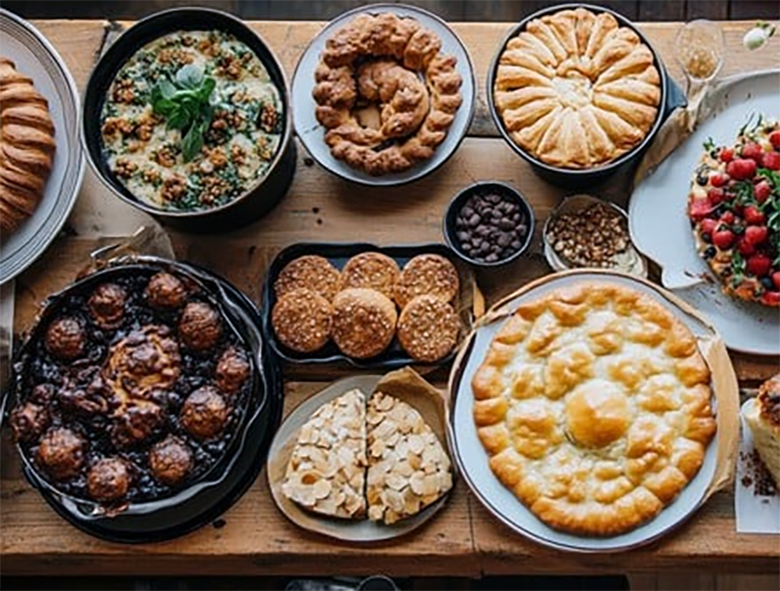 A range of baked goods.
Welcome to FabulousFusionFood's Baking Recipes Page — This is a continuation of an entire series of pages that will, I hope, allow my visitors to better navigate this site. As well as displaying recipes by name, country and region of origin I am now planning a whole series of pages where recipes can be located by meal type and main ingredient. This page gives a listing of all the baking recipes added to this site. Baking is defined as a technique for the prolonged cooking of food using dry heat by the action of conduction. Baking is normally done in an oven, but goods may also be baked in hot ashes or on hot stones. Baking differs from Roasting Recipes in that a lower temperature is typically used and the items are cooked for a longer period of time. Baking is a much older process than most people think and foods were probably originally baked in embers or with hot stones (which is how bread may have started). Only later did specialist ovens develop. Though most baked goods tend to be bread or cake-based some other dishes such as pasta dishes and vegetable dishes may also be baked. Stews are often also technically baked in an oven, but are not classed as 'baked goods' in that they are more liquid than solid at the end of the cooking process.
Baking is a method of preparing food that uses dry heat, typically in an oven, but can also be done in hot ashes, or on hot stones. The most common baked item is bread, but many other types of foods can be baked. Heat is gradually transferred "from the surface of cakes, biscuits and cookies, and pieces of bread to their centre, typically conducted at elevated temperatures surpassing 150°C. Dry heat cooking imparts a distinctive richness to foods through the processes of caramelization and surface browning. As heat travels through, it transforms batters and doughs into baked goods and more with a firm dry crust and a softer centre. Baking can be combined with grilling to produce a hybrid barbecue variant by using both methods simultaneously, or one after the other. Baking is related to barbecuing because the concept of the masonry oven is similar to that of a smoke pit.
In addition to bread, baking is used to prepare cakes, pastries, pies, tarts, quiches, biscuits and cookies, scones, crackers, pretzels, and more. These popular items are known collectively as 'baked goods', and are often sold at a bakery, which is a store that carries only baked goods, or at markets, grocery stores, farmers markets or through other venues.
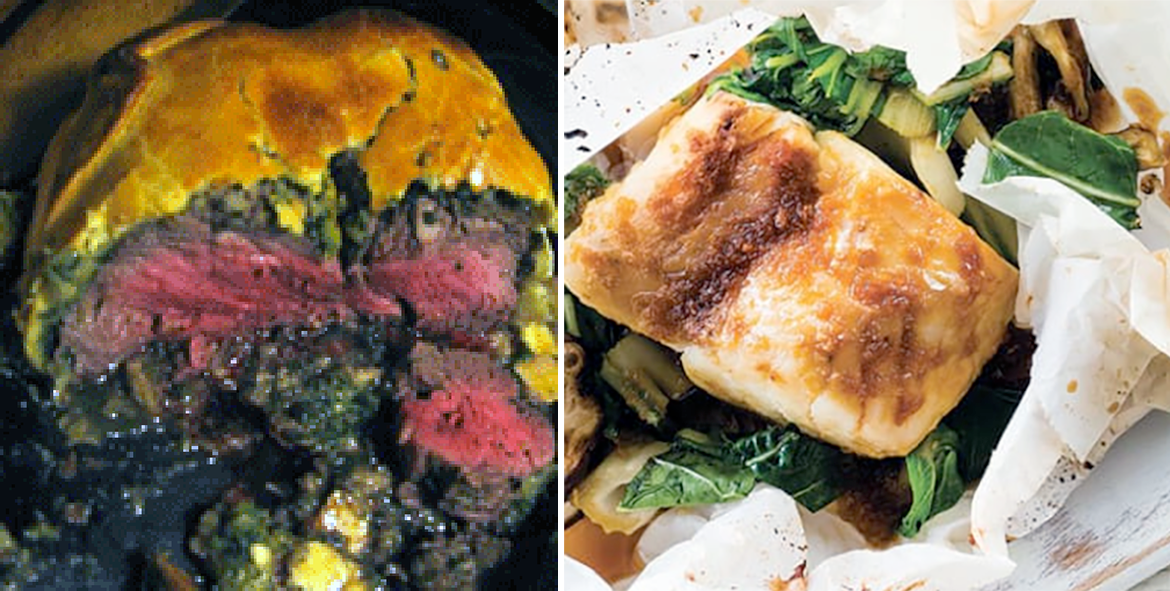 Beef en croûte (left) and fish en papillote (right).
The alphabetical list of all the baking recipes on this site follows, (limited to 100 recipes per page). There are 3406 recipes in total:
Page 18 of 35
| Kolacky Origin: Poland | Lamb Shank and Parsnip Pie Origin: New Zealand | Ledene Kocke (Ice-cube Sponge Cake) Origin: Serbia |
| Kookoo Sabzi (Seasoned Savoury Cakes) Origin: North Africa | Lamb Tagine Pie Origin: Fusion | Leeky Larrup Origin: England |
| Kosovar Flija (Kossovan Flija) Origin: Kosovo | Lambropsomo (Greek Easter Bread) Origin: Greece | Leftover Porridge Muffins Origin: Scotland |
| Kotleta de-voliay (Russian Chicken Kiev) Origin: Russia | Lancashire Meat and Potato Pie Origin: England | Leftover Rice Muffins Origin: Britain |
| Kougin Patatez (Breton Potato Cake) Origin: France | Lancashire Nuts Origin: England | Lemon and Condensed Milk Biscuits Origin: Botswana |
| Kouign Amann (Breton Layered Pastry Cake) Origin: France | Lancashire Pizza Origin: England | Lemon and Lime Meringue Tart Origin: Britain |
| Kouign amann aux pommes (Kouign Amann with Apples) Origin: France | Langues de Chat (Cat's Biscuits) Origin: France | Lemon and Marigold Tart Origin: Britain |
| Koulourakia (Greek Easter Biscuits) Origin: Greece | Langues de Chat (Cat's Tongue Biscuits) Origin: France | Lemon and Poppy Seed Cupcakes Origin: British |
| Kourabiedes (Greek Almond Crescents) Origin: Greece | Laplap Origin: Vanuatu | Lemon and Poppy Seed Muffins Origin: Britain |
| Koy Ekmegi (Turkish Rustic Bread) Origin: Turkey | Lasagne al Forno Origin: Italy | Lemon and Poppyseed Cupcakes Origin: Britain |
| Krampez Yar (Cornish Chicken Pie) Origin: England | Lasagne Verdi Origin: San Marino | Lemon Balm Cheesecake Origin: Britain |
| Kransekage Konfekt (Almond Allsorts) Origin: Denmark | Lasagne with Mushrooms and Cheeses Origin: Britain | Lemon Basil Crème Brûlée Origin: Fusion |
| Kransekage Stænger (Danish Almond Sticks) Origin: Denmark | Last-minute Mincemeat Christmas Cake Origin: Britain | Lemon Cake Mix Cake Origin: American |
| Krautstrudel (Cabbage Strudel) Origin: Liechtenstein | Launceston Cake Origin: Britain | Lemon Cake Mix Chocolate Cake Origin: American |
| Kringle (Estonian Cinnamon Braid Bread) Origin: Estonia | Lavaş Ekmeği (Turkish Lavash Puff Bread) Origin: Turkey | Lemon Cake Mix Spice Cake Origin: American |
| Kulich (Russian Easter Cake) Origin: Russia | Lavash (Armenian Flatbread) Origin: Armenia | Lemon Chiffon Cake Origin: American |
| Kulich (Russian Easter Bread) Origin: Russia | Lavender Chicken Origin: England | Lemon Couscous Cake Origin: African Fusion |
| Kurambiedes (Greek Christmas Biscuits) Origin: Greece | Lavender Chocolate Chip Cookies Origin: Britain | Lemon Cross Buns Origin: Britain |
| Kwarezimal (Maltese Lenten Cake) Origin: Malta | Lavender Crème Brulée Origin: France | Lemon Curd Tassie Origin: American |
| Kwarezimal (Almond Cakes) Origin: Malta | Lavender Focaccia Origin: Britain | Lemon Custard Cups Origin: American |
| Kyboi (Dice Bread) Origin: Roman | Lavender Tea Biscuits Origin: American | Lemon Drizzle Cake Origin: Britain |
| Kydonion syn Meliti (Honeyed Quinces) Origin: Roman | Laxoox/Canjeero (Sorghum Bread) Origin: Somalia | Lemon Glazed Cake Origin: American |
| Kypriaka Lazania (Cypriot Lasagne) Origin: Cyprus | Layer Cake Origin: Britain | Lemon Meringue Pie Origin: Britain |
| La Galette des Rois (Kings Cake) Origin: France | Lazania sto Fourno (Oven-baked Cypriot Lasagne) Origin: Cyprus | Lemon Meringue Tart Origin: Britain |
| La Pagne aux Fruits (Fruited Bread) Origin: Monaco | Le Galapian Origin: Monaco | Lemon Nut Loaf Origin: New Zealand |
| La Pastiera di Grano (Neapolitan Easter Cake) Origin: Italy | Le gâteau nantais (Nantes cake) Origin: France | Lemon Pepper Seasoning Origin: Britain |
| La Torta Tre Monti (Sammarinese Three Mountain Cake) Origin: San Marino | Le michon breton (Breton michon) Origin: France | Lemon Pistachio Snacking Cake Origin: Britain |
| Ladyfingers Origin: Italy | Le molleux au chocolat (Chocolate Fudge Cake) Origin: France | Lemon Poppy Seed Cake Origin: Britain |
| Laffa Bread Origin: Israel | Le Vitréais, le gâteau aux pommes de Vitré (Vitré Apple Cake) Origin: France | Lemon Pudding Cookies Origin: American |
| Laffa Bread Origin: Iraq | Leaven Origin: Ancient | Lemon Ribwort Plantain Seed Pudding Origin: Britain |
| Lahm bi Agine Mankoushe (Lebanese Lamb Pizza) Origin: Lebanon | Leavened Bread Origin: Ancient | Lemon Surprise Pudding Origin: Britain |
| Lahmajoun Origin: Armenia | Leavened Rye Bread Origin: Estonia | Lemon Whiskey Cake Origin: Ireland |
| Lamb Biryani Origin: India | Leche Asada (Baked Milk) Origin: Chile | |
| Lamb Cobbler Origin: England | Leche Frys in Lentoun (Almond Milk Fruit Pie) Origin: England |
Page 18 of 35