FabulousFusionFood's Baking Recipes 12th Page
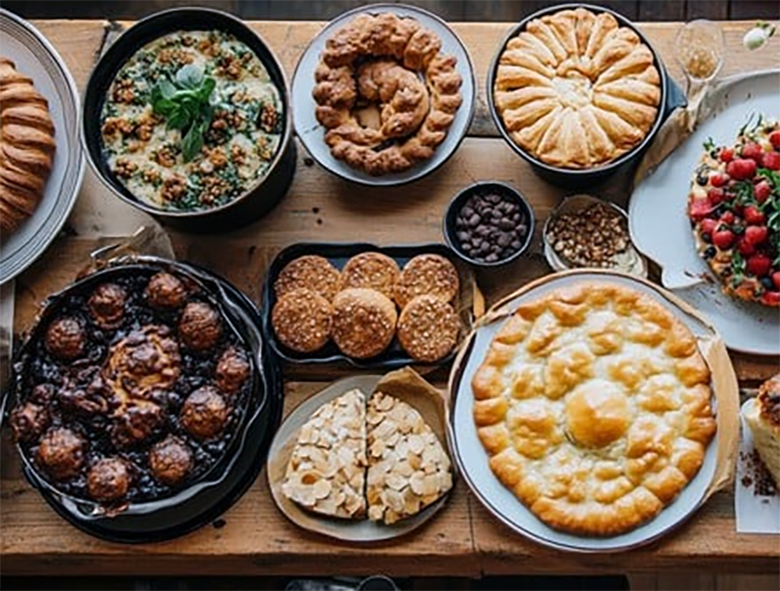 A range of baked goods.
Welcome to FabulousFusionFood's Baking Recipes Page — This is a continuation of an entire series of pages that will, I hope, allow my visitors to better navigate this site. As well as displaying recipes by name, country and region of origin I am now planning a whole series of pages where recipes can be located by meal type and main ingredient. This page gives a listing of all the baking recipes added to this site. Baking is defined as a technique for the prolonged cooking of food using dry heat by the action of conduction. Baking is normally done in an oven, but goods may also be baked in hot ashes or on hot stones. Baking differs from Roasting Recipes in that a lower temperature is typically used and the items are cooked for a longer period of time. Baking is a much older process than most people think and foods were probably originally baked in embers or with hot stones (which is how bread may have started). Only later did specialist ovens develop. Though most baked goods tend to be bread or cake-based some other dishes such as pasta dishes and vegetable dishes may also be baked. Stews are often also technically baked in an oven, but are not classed as 'baked goods' in that they are more liquid than solid at the end of the cooking process.
Baking is a method of preparing food that uses dry heat, typically in an oven, but can also be done in hot ashes, or on hot stones. The most common baked item is bread, but many other types of foods can be baked. Heat is gradually transferred "from the surface of cakes, biscuits and cookies, and pieces of bread to their centre, typically conducted at elevated temperatures surpassing 150°C. Dry heat cooking imparts a distinctive richness to foods through the processes of caramelization and surface browning. As heat travels through, it transforms batters and doughs into baked goods and more with a firm dry crust and a softer centre. Baking can be combined with grilling to produce a hybrid barbecue variant by using both methods simultaneously, or one after the other. Baking is related to barbecuing because the concept of the masonry oven is similar to that of a smoke pit.
In addition to bread, baking is used to prepare cakes, pastries, pies, tarts, quiches, biscuits and cookies, scones, crackers, pretzels, and more. These popular items are known collectively as 'baked goods', and are often sold at a bakery, which is a store that carries only baked goods, or at markets, grocery stores, farmers markets or through other venues.
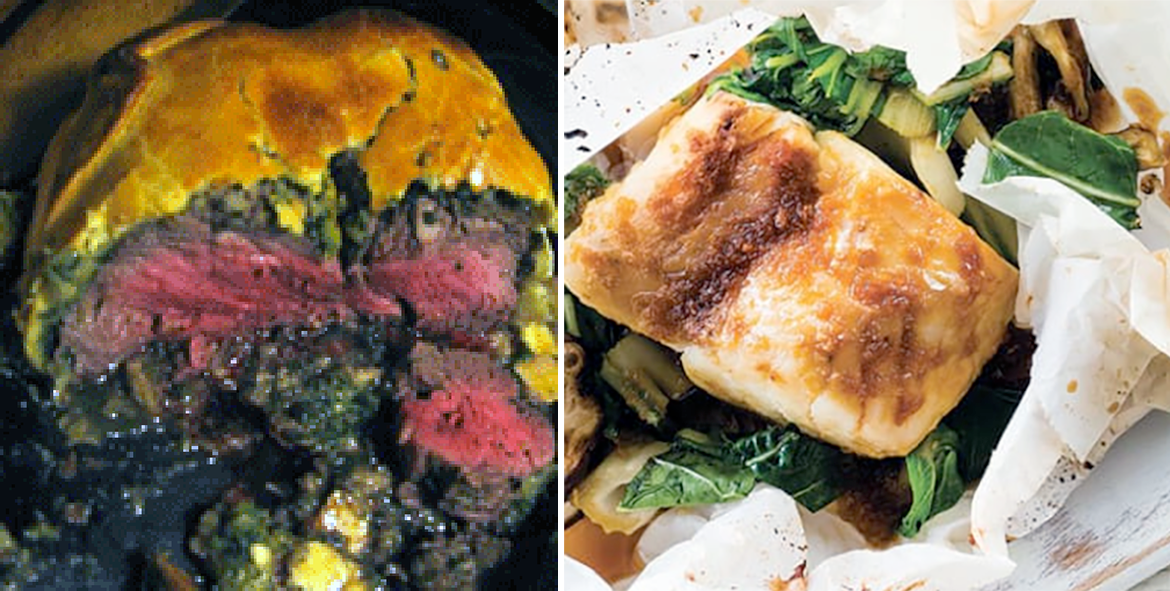 Beef en croûte (left) and fish en papillote (right).
The alphabetical list of all the baking recipes on this site follows, (limited to 100 recipes per page). There are 3406 recipes in total:
Page 12 of 35
| Dulse Quiche Origin: Britain | Easy Butterless Flapjack Origin: Britain | English Cottage Pie Origin: England |
| Dulse Soda Bread Origin: Ireland | Easy Enchiladas Origin: Mexico | English Madeleines Origin: England |
| Dulse Soda Scones Origin: Ireland | Easy Praline Cookies with Tonka Beans Origin: Britain | English Madeleines Origin: Britain |
| Dumpling Mix Origin: Britain | Ecclefechan Butter Tart Origin: Scotland | Enkhytoi (Roman Honey Cakes) Origin: Roman |
| Duncan Hines Deluxe Dark Chocolate Cake Mix Cake Origin: American | Eccles Cakes Origin: England | Eog Cothi Pob (Baked Cothi Salmon) Origin: Welsh |
| Dundee Biscuits Origin: Scotland | Egg Pockets Origin: American | Eog Gyda Saws Corgimychiaid (Salmon with Prawn Sauce) Origin: Welsh |
| Dundee Cake Origin: Scotland | Eggless Mealie Maize Muffins Origin: South Africa | Eog Wedi Crasu Gyda Bara Lawr â Chaws (Baked Salmon with Laver Bread and Cheese) Origin: Welsh |
| Dundee Mince Pie Origin: Scotland | Eggless Quiche Origin: British | Eog wedi ei Bobi gyda Thatws a Teim (Salmon Baked with Potatoes and Thyme) Origin: Welsh |
| Dunesslin Pudding Origin: Scotland | Eggnog Christmas Bread Origin: Britain | Erbolat Origin: England |
| Dunfillan Pudding Origin: Scotland | Egyptian Basboosa (Semolina Cake) Origin: Egypt | Escargot and Mushrooms in Garlic Sauce Origin: American |
| Dziriat (Algerian Almond Tarts) Origin: Algeria | Egyptian Basbousa Origin: Egypt | Escargots à la Bourguignonne Origin: France |
| Easter Biscuits Origin: England | Elcampane Apple Pie Origin: Britain | Ethiopian-spiced Chicken Origin: Ethiopia |
| Easter Biscuits II Origin: Britain | Elcho Scones Origin: Ireland | Eve's Pudding Origin: England |
| Easter Biscuits III Origin: Britain | Elderberry and Chocolate Muffins Origin: Britain | Eve's Pudding II Origin: Britain |
| Easter Brunch Sausage Strata Origin: Britain | Elderflower Cupcakes Origin: Britain | Excellent Small Cakes Origin: Britain |
| Easter Bunny Biscuits Origin: Britain | Elderflower Tart Origin: Britain | Fa'apapa (Samoan Coconut Bread) Origin: Samoa |
| Easter Cake Origin: American | Elizabethan Cheese-curd Tart Origin: England | Fa'apapa (Samoan Coconut Bread) Origin: American Samoa |
| Easter Carrot Cake Origin: Britain | Elus Bakyn in Dyshes (Eels baked in dishes) Origin: England | Fairy Cakes Origin: Britain |
| Easter Carrot Cake Cupcakes Origin: Britain | Ember-baked Focaccia Origin: Montenegro | Fakatokelau Origin: Tokelau |
| Easter Crown Bread Origin: Europe | Emirati Sago Pudding Origin: UAE | Fanouropita (Greek Spiced Sultana Cake) Origin: Greece |
| Easter Cupcakes Origin: American | Empadãi de Queijo (Cheese Pie) Origin: Brazil | Far Breton à la Cerise (Breton Far with Cherries) Origin: France |
| Easter Egg Biscuits Origin: Britain | Empanada Gallega (Spicy Galician Chicken Empanada) Origin: Spain | Far breton aux pruneaux (Breton Far with Prunes) Origin: France |
| Easter Flower Cupcakes Origin: Britain | Empanadas Origin: Chile | Farina Pie Origin: Bermuda |
| Easter Fruit Cake Origin: Britain | Empanadas Origin: Uruguay | Farmhouse Loaf Origin: Ireland |
| Easter Lamb Bobotie Origin: South Africa | Empanadas de Carne (Mexican Beef Empanadas) Origin: Mexico | Fat Hen and Potato Gratin Origin: Britain |
| Easter Lamb Cake Origin: Britain | Empanadas de carne (Argentinan Beef Empanadas) Origin: Argentina | Fat Hen Quiche Origin: Britain |
| Easter Ledge Pudding Origin: Ancient | Empanadas de Carne Molida (Minced Beef Empanadas) Origin: Mexico | Fatayas Sénégalais (Senegalese Fatayas) Origin: Senegal |
| Easter Lemony Chocolate Cake Origin: Britain | Empanadas de carneo (Argentinian Meat Empanadas) Origin: Argentina | Fatir (Tajik Flatbread) Origin: Tajikistan |
| Easter Rice Pudding Origin: American | Empanadas de carneo (Argentinian Meat Empanadas) Origin: Vatican City | Fedt Kager (Melting Moments) Origin: Denmark |
| Easter Rolls Origin: Britain | Empanadas Gallegas (Galician Empanadas) Origin: Spain | Feisty Cock Origin: Scotland |
| Easter Sunday Saffron Cake Origin: Cornwall | Empire Biscuits Origin: Britain | Festive Venison Wellington Origin: South Africa |
| Easter Tansy Origin: Britain | Enchiladas (Stuffed Tortillas with Chilli Sauce) Origin: Spain | Feta Cheese Puffs Origin: Britain |
| Easter Teabread Origin: Britain | Enchiladas de Espinaca (Spinach Enchiladas) Origin: Mexico | |
| Easter White Chocolate and Lime Cheesecake Origin: Britain | Endive and Asparagus Gratin Origin: Belgium |
Page 12 of 35