FabulousFusionFood's Baking Recipes 5th Page
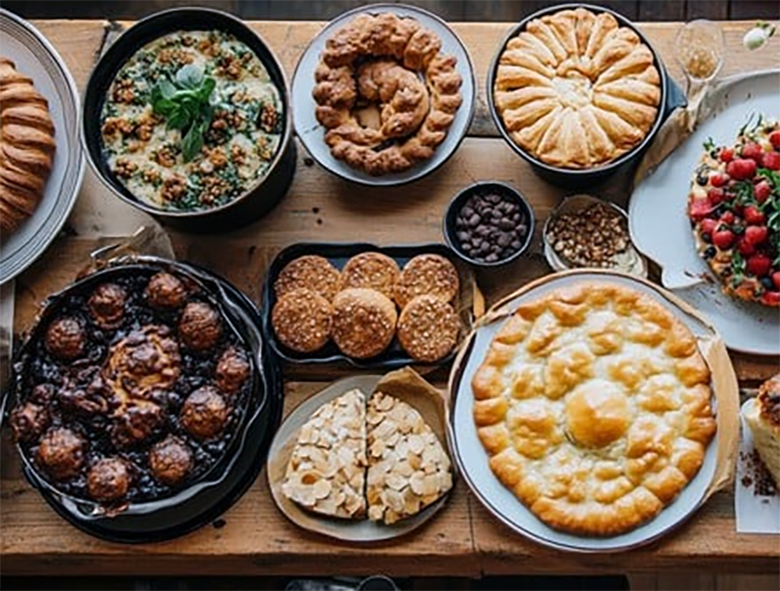 A range of baked goods.
Welcome to FabulousFusionFood's Baking Recipes Page — This is a continuation of an entire series of pages that will, I hope, allow my visitors to better navigate this site. As well as displaying recipes by name, country and region of origin I am now planning a whole series of pages where recipes can be located by meal type and main ingredient. This page gives a listing of all the baking recipes added to this site. Baking is defined as a technique for the prolonged cooking of food using dry heat by the action of conduction. Baking is normally done in an oven, but goods may also be baked in hot ashes or on hot stones. Baking differs from Roasting Recipes in that a lower temperature is typically used and the items are cooked for a longer period of time. Baking is a much older process than most people think and foods were probably originally baked in embers or with hot stones (which is how bread may have started). Only later did specialist ovens develop. Though most baked goods tend to be bread or cake-based some other dishes such as pasta dishes and vegetable dishes may also be baked. Stews are often also technically baked in an oven, but are not classed as 'baked goods' in that they are more liquid than solid at the end of the cooking process.
Baking is a method of preparing food that uses dry heat, typically in an oven, but can also be done in hot ashes, or on hot stones. The most common baked item is bread, but many other types of foods can be baked. Heat is gradually transferred "from the surface of cakes, biscuits and cookies, and pieces of bread to their centre, typically conducted at elevated temperatures surpassing 150°C. Dry heat cooking imparts a distinctive richness to foods through the processes of caramelization and surface browning. As heat travels through, it transforms batters and doughs into baked goods and more with a firm dry crust and a softer centre. Baking can be combined with grilling to produce a hybrid barbecue variant by using both methods simultaneously, or one after the other. Baking is related to barbecuing because the concept of the masonry oven is similar to that of a smoke pit.
In addition to bread, baking is used to prepare cakes, pastries, pies, tarts, quiches, biscuits and cookies, scones, crackers, pretzels, and more. These popular items are known collectively as 'baked goods', and are often sold at a bakery, which is a store that carries only baked goods, or at markets, grocery stores, farmers markets or through other venues.
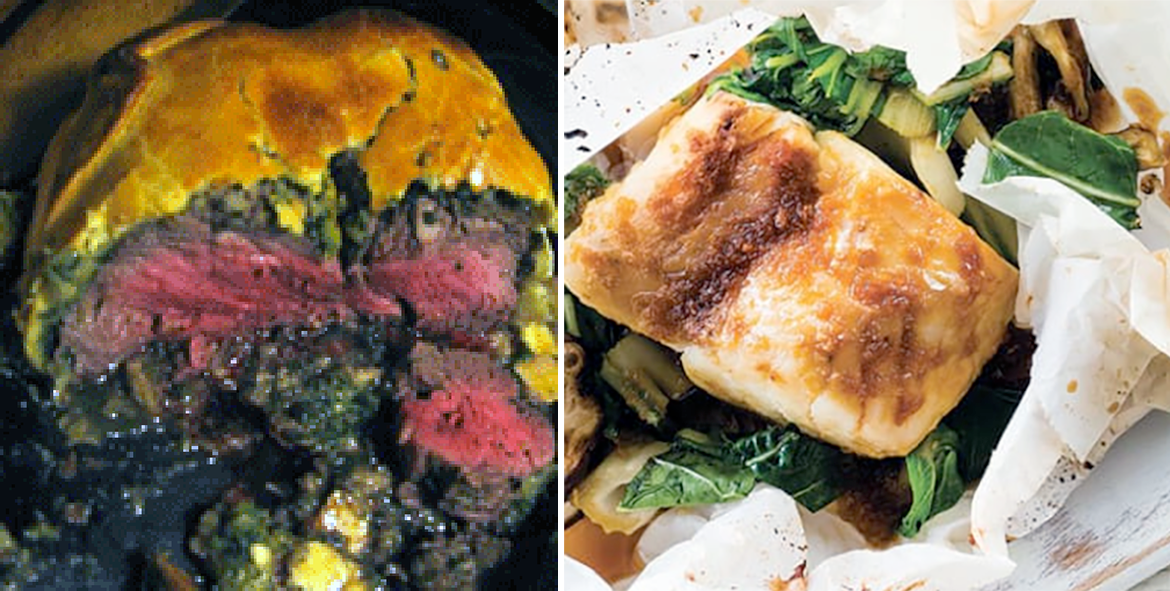 Beef en croûte (left) and fish en papillote (right).
The alphabetical list of all the baking recipes on this site follows, (limited to 100 recipes per page). There are 3406 recipes in total:
Page 5 of 35
| Blackberry and Almond Cake Origin: Britain | Bolo de Laranje e Amêndoa (Orange and Almond Cake) Origin: Mozambique | Brazo Gitano (Puerto Rican Swiss Roll) Origin: Puerto Rico |
| Blackberry and Almond Snacking Cake Origin: Britain | Bolo di Dadel (Date Cake) Origin: Curacao | Bread and Butter Pudding Origin: Britain |
| Blackberry and Meadowsweet Custard Pasty Origin: Britain | Bolo Polana (Cashew Nut Cake) Origin: Aruba | Bread and Butter Pudding II Origin: Britain |
| Blackberry Batter Origin: Britain | Bolo Preto Portuguesa (Portuguese Black Cake) Origin: Portugal | Bread Cups Origin: South Africa |
| Blackberry Bavarois Origin: Britain | Bonfire Brownies Origin: Britain | Breadfruit and Saltfish Bread Origin: Saint Vincent |
| Blackberry Flognarde Origin: France | Bonfire Chicken Casserole Origin: British | Breadfruit Pie Origin: Saint Lucia |
| Blackberry Fool with Hazelnut Biscuits Origin: Britain | Bonfire Ginger and Apple Layer Cake Origin: British | Breakfast Pizza Origin: British |
| Blackberry Leather Origin: Britain | Bonfire Ginger Cake Origin: British | Breakfast Pizza 2 Origin: British |
| Blackberry Muffins Origin: Britain | Bonnach (Bannock) Origin: Scotland | Brenneslekake (Norwgian Nettle and Honey Cake) Origin: Norway |
| Blackberry Shortbread Biscuits Origin: Britain | Bonnach Strùthan Origin: Scotland | Brioche Mousseline (Brioche Loaf) Origin: France |
| Blackberry-glazed Lemon and Blackberry Loaf Cake Origin: Britain | Bonnag Arran Oarn (Barley Meal Bonnag) Origin: Manx | Brioche Raisin Snails Origin: Denmark |
| Blackberry-iced Biscuits Origin: Britain | Boorrma (String Pastry Rolls) Origin: Lebanon | Brithyll a Chig Moch (Baked Trout with Bacon) Origin: Welsh |
| Blackcurrant and Orange Streusel Crisp Origin: Britain | Borders Tart Origin: Scotland | Brithyll mewn Bacwn (Trout Wrapped in Bacon) Origin: Welsh |
| Blackcurrant Cheesecake Origin: Britain | Bori (Bengali Baked Dumplings) Origin: India | British Pumpkin Pie Origin: Britain |
| Blintzes with Cream Cheese and Cinnamon Origin: Jewish | Bosnian Baklava Origin: Bosnia | British Spicy Bread Origin: Britain |
| Blitz Kuchen (Lightning Cake) Origin: Germany | Boston Cream Pie Cheesecake Origin: America | Broas de Mel (Madeira Molasses Biscuits) Origin: Portugal |
| Blitzkuchen mit Obst (Lightning Cake with Fruit) Origin: Germany | Botswanan Chicken Pie Origin: Botswana | Broccoli Pasty Origin: England |
| Blood orange upside-down cake Origin: Britain | Botswanan Lamb Pie Origin: Botswana | Brooke Priory Biscuits Origin: England |
| Blueberry Cheese Tart Origin: Britain | Boudin de Pescado (Fish Pudding) Origin: Spain | Brooklyn Cheesecake Origin: American |
| Blueberry Cupcakes Origin: Britain | Bourbon Pumpkin Cheesecake Origin: America | Brötchen (Crusty Bread Rolls) Origin: Germany |
| Boîte au Chocolat aux Fruit Origin: France | Bourkakia me Kima (Minced Meat Rolls) Origin: Greece | Brown Oatmeal Bread Origin: Britain |
| Boboli Pizza Crust Origin: Italy | Bourkakia me Tiri (Cheese Rolls) Origin: Greece | Brown Sugar Cashew Snacking Cake Origin: Britain |
| Bobotie (Curried Meat Loaf) Origin: South Africa | Bouzgene (Barber Flatbread) Origin: Algeria | Brownie Mix Origin: American |
| Bocaditos de Frambuesa y Queso (Raspberry and Cheese Bites) Origin: Spain | Boxemännercher (Gingerbread Men) Origin: Luxembourg | Brownie Swirl Cheesecake Origin: American |
| Boiled Cake Origin: Ireland | Boxty Bread Origin: Northern Ireland | Brungiel Mimli (Stuffed Aubergine) Origin: Malta |
| Bojo (Suriname Cassava and Coconut Cake) Origin: Suriname | Braided Easter Bread Origin: Europe | Brunsli (Swiss Brownies) Origin: Switzerland |
| Boletinos Artos (Mushroom Bread) Origin: Roman | Bramble Pudding Origin: Scotland | Buatoro (Baked Taro Cake) Origin: Kiribati |
| Bolinhos de Mandioca com Mel (Cassava and Honey Muffins) Origin: Cape Verde | Brambrack Origin: Ireland | Buatoro 1 Origin: Kiribati |
| Bolo à Moda da Guiné Bissau (Cake in the Style of Guinea-Bissau) Origin: Guinea-Bissau | Bran Muffins Origin: New Zealand | Buccellatum (Roman Hardtack) Origin: Roman |
| Bolo de Ananás (Cake with Pineapple Filling) Origin: Mozambique | Brandy Snaps Origin: England | Buchty (Poppy Seed Buns) Origin: Czech |
| Bolo de Ananás (Angolan Pineapple Cake) Origin: Angola | Brandy-snap Baskets with Summer Fruit Origin: British | Buckwheat Bread Origin: Fusion |
| Bolo de Carne (Brazilian Rolled Meatloaf) Origin: Brazil | Braune Kuchen (Brown Biscuits) Origin: Germany | Buffalo Chicken Pizza Origin: American |
| Bolo de Chocolate com Frutas (Chocolate Cake with Fruit) Origin: Brazil | Brazo de Reina (Dulce de Leche Swiss Roll) Origin: Chile | |
| Bolo de Laranja (Orange Cake) Origin: Brazil | Brazo Gitano (Ecuadorian Swiss Roll) Origin: Ecuador |
Page 5 of 35