FabulousFusionFood's Baking Recipes 2nd Page
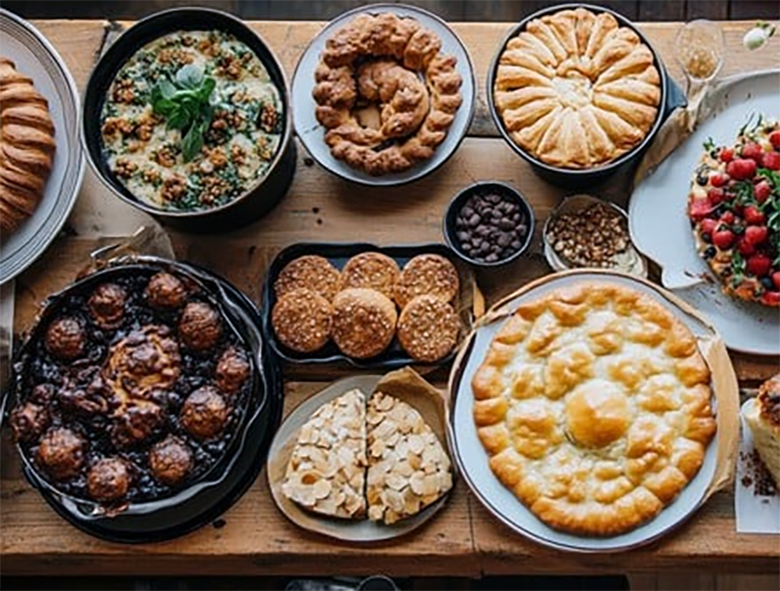 A range of baked goods.
Welcome to FabulousFusionFood's Baking Recipes Page — This is a continuation of an entire series of pages that will, I hope, allow my visitors to better navigate this site. As well as displaying recipes by name, country and region of origin I am now planning a whole series of pages where recipes can be located by meal type and main ingredient. This page gives a listing of all the baking recipes added to this site. Baking is defined as a technique for the prolonged cooking of food using dry heat by the action of conduction. Baking is normally done in an oven, but goods may also be baked in hot ashes or on hot stones. Baking differs from Roasting Recipes in that a lower temperature is typically used and the items are cooked for a longer period of time. Baking is a much older process than most people think and foods were probably originally baked in embers or with hot stones (which is how bread may have started). Only later did specialist ovens develop. Though most baked goods tend to be bread or cake-based some other dishes such as pasta dishes and vegetable dishes may also be baked. Stews are often also technically baked in an oven, but are not classed as 'baked goods' in that they are more liquid than solid at the end of the cooking process.
Baking is a method of preparing food that uses dry heat, typically in an oven, but can also be done in hot ashes, or on hot stones. The most common baked item is bread, but many other types of foods can be baked. Heat is gradually transferred "from the surface of cakes, biscuits and cookies, and pieces of bread to their centre, typically conducted at elevated temperatures surpassing 150°C. Dry heat cooking imparts a distinctive richness to foods through the processes of caramelization and surface browning. As heat travels through, it transforms batters and doughs into baked goods and more with a firm dry crust and a softer centre. Baking can be combined with grilling to produce a hybrid barbecue variant by using both methods simultaneously, or one after the other. Baking is related to barbecuing because the concept of the masonry oven is similar to that of a smoke pit.
In addition to bread, baking is used to prepare cakes, pastries, pies, tarts, quiches, biscuits and cookies, scones, crackers, pretzels, and more. These popular items are known collectively as 'baked goods', and are often sold at a bakery, which is a store that carries only baked goods, or at markets, grocery stores, farmers markets or through other venues.
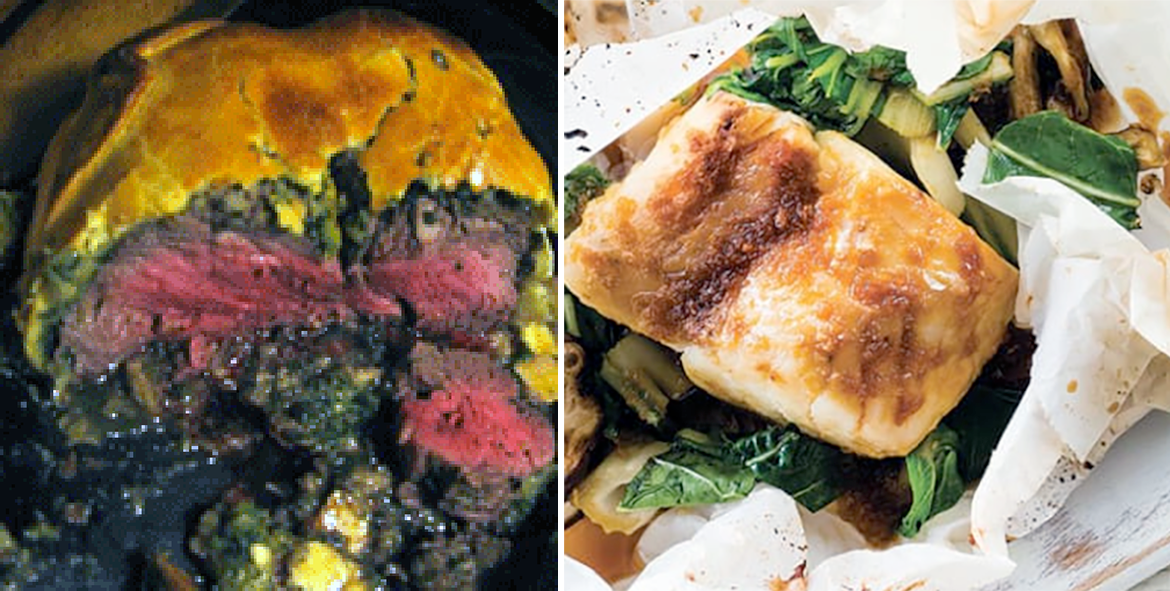 Beef en croûte (left) and fish en papillote (right).
The alphabetical list of all the baking recipes on this site follows, (limited to 100 recipes per page). There are 3406 recipes in total:
Page 2 of 35
| Apache Acorn Cakes Origin: America | Apple Teabread Origin: Ireland | Bacalao a la Viscaina (Salt Cod, Basque Style) Origin: Spain |
| Apelsin och rosmarinlax (Orange and Rosemary Salmon) Origin: Sweden | Apple, Pear and Cinnamon Crumble Origin: Britain | Bacalhau com Batatas (Salt Cod with Potatoes) Origin: Portugal |
| Apple and Blackberry Pasty Origin: England | Apricot Crumble Origin: Britain | Bacon and Egg Pasty Origin: England |
| Apple and Cinnamon Muffins Origin: Britain | Apricot Kolaches Origin: Czech | Bacon and Egg Pie Origin: Scotland |
| Apple and Cottage Cheese Muffins (Äppelmuffins med KESO) Origin: Sweden | Aprikosen-Torte (Apricot Torte) Origin: Germany | Bacon and Onion Muffins Origin: American |
| Apple and Cream Pie Origin: American | Arán Breac (Speckled Bread) Origin: Ireland | Bacon and Potato Pie Origin: England |
| Apple and Honey Sponge Origin: Manx | Arepas (Venezuelan Flatbreads) Origin: Venezuela | Bacon, Brown Butter and Chocolate Chip Cookies Origin: American |
| Apple and Lemon Fruit Leather Origin: Britain | Arepas de Queso (Colombian Cheese Flatbreads) Origin: Colombia | Bagea Sagu (Sago Bagea Biscuits) Origin: Papua |
| Apple and Pear Harvest Pie Origin: South Africa | Arni Psito (Oven-baked Lamb) Origin: Cyprus | Bagels II Origin: Jewish |
| Apple and Pear Tarte Tatin Origin: France | Arroz al Horno con Perdiz (Baked Rice with Garlic) Origin: Spain | Bagt Torsk (Baked Cod, Danish Style) Origin: Denmark |
| Apple and Plum Charlotte Origin: Britain | Aruban Corn Bread Origin: Aruba | Bahamian Baked Macaroni and Cheese Origin: Bahamas |
| Apple and Redcurrant Pie Origin: Britain | Asabia el Aroos (Brides' Fingers) Origin: Afghanistan | Bahamian Bread Pudding Origin: Bahamas |
| Apple and Tamarillo Gingerbread Cobbler Origin: British | Ascot Pie Origin: England | Bahamian Johnny Cake Origin: Bahamas |
| Apple and Tamarillo Muffins Origin: British | Asparagus and Morel Bread Pudding Origin: America | Bajan Macaroni Pie Origin: Barbados |
| Apple and Tamarillo Pie II Origin: British | Asparagus with Lemon Matzo Crumble Origin: Jewish | Bajan Salt Bread Origin: Barbados |
| Apple and Whitebeam Berry Pie Origin: Ireland | Assabeh Tamr (Date Fingers) Origin: Arabic | Bajan Sweet Bread Origin: Barbados |
| Apple and Wild Service Berry Pie Origin: Ireland | Aubergine and Lamb Pizza Origin: Italy | Bake Mete Pye (Pie of Baked Meat) Origin: England |
| Apple Butter Squares Origin: American | Aurangabadi Special Naan Bread Origin: India | Baked Alaska Origin: American |
| Apple Cake Origin: Ireland | Australian Cheese Garlic and Chive Damper Origin: Australia | Baked Apples with Prunes, Cinnamon and Ginger Origin: Britain |
| Apple Cake Cupcakes Origin: British | Australian Damper Origin: Australia | Baked Autumn Suet Pudding Origin: Britain |
| Apple Charlotte Origin: Britain | Australian Meat Pie Origin: Australia | Baked Banana Pudding Origin: Uganda |
| Apple Charlotte Origin: Britain | Autumn Cheesecake Origin: Britain | Baked Beef I Origin: British |
| Apple Cheesecakes Origin: Ireland | Autumn Tart Origin: Britain | Baked Beef II Origin: British |
| Apple Compote Origin: Britain | Ayrshire Shortbread Origin: Scotland | Baked Brown Trout Origin: Scotland |
| Apple Crumble Origin: Britain | Ayrshire Shortbread II Origin: Scotland | Baked Butternut Squash with Cranberries Origin: American |
| Apple Dicky Origin: England | Azevias de Batata Doce (Sweet Potato Pockets) Origin: Portugal | Baked Celeriac with Wild Mushrooms and Cobnut Relish Origin: Britain |
| Apple Gingerbread Cobbler Origin: American | Azevias de Feijão (Sweet White Bean Pockets) Origin: Portugal | Baked Cheesecake Origin: New Zealand |
| Apple Meringue Pie Origin: British | Azevias de Grão (Sweet Chickpea Pockets) Origin: Portugal | Baked Chicken Chimichangas Origin: America |
| Apple Muffins with Ground Ivy Origin: Denmark | Börek Sauvage (Wild Greens Börek) Origin: France | Baked Chips Origin: Ireland |
| Apple Pasty Origin: England | Bûche de Nöel (French Yule Log) Origin: France | Baked Cod and Egg Sauce Origin: Scotland |
| Apple Pie Origin: Britain | Bûche de Noël (Yule Log) Origin: France | Baked Cod with Ginger on Asparagus Origin: Australia |
| Apple Pie Origin: Britain | Babka (Meat and Potato Bake) Origin: Belarus | Baked Date Oatmeal Origin: Fusion |
| Apple Rose Tarts Origin: Britain | Babka Paska (Ukrainian Easter Bread) Origin: Ukraine | |
| Apple Tart Spiced with Herb Bennet Root Origin: Britain | Bacalao à la Naranja (Cod with Orange) Origin: Spain |
Page 2 of 35