FabulousFusionFood's Baking Recipes 35th Page
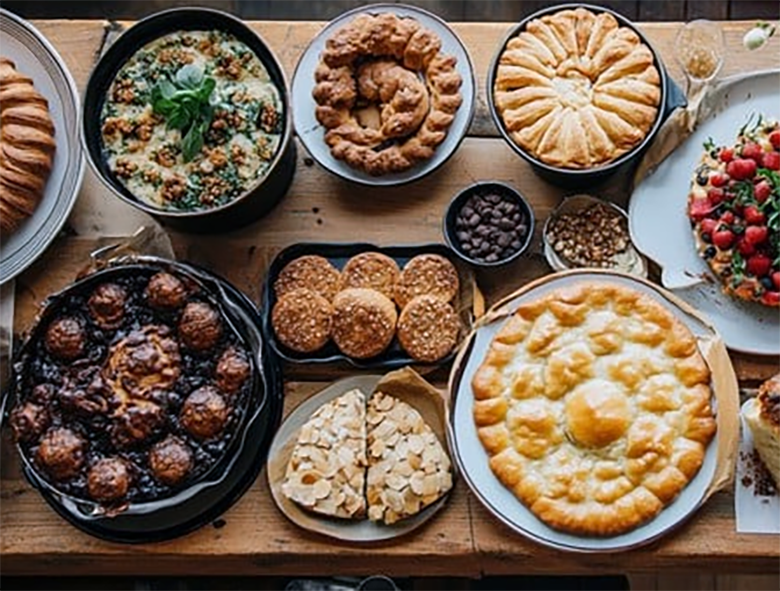 A range of baked goods.
Welcome to FabulousFusionFood's Baking Recipes Page — This is a continuation of an entire series of pages that will, I hope, allow my visitors to better navigate this site. As well as displaying recipes by name, country and region of origin I am now planning a whole series of pages where recipes can be located by meal type and main ingredient. This page gives a listing of all the baking recipes added to this site. Baking is defined as a technique for the prolonged cooking of food using dry heat by the action of conduction. Baking is normally done in an oven, but goods may also be baked in hot ashes or on hot stones. Baking differs from Roasting Recipes in that a lower temperature is typically used and the items are cooked for a longer period of time. Baking is a much older process than most people think and foods were probably originally baked in embers or with hot stones (which is how bread may have started). Only later did specialist ovens develop. Though most baked goods tend to be bread or cake-based some other dishes such as pasta dishes and vegetable dishes may also be baked. Stews are often also technically baked in an oven, but are not classed as 'baked goods' in that they are more liquid than solid at the end of the cooking process.
Baking is a method of preparing food that uses dry heat, typically in an oven, but can also be done in hot ashes, or on hot stones. The most common baked item is bread, but many other types of foods can be baked. Heat is gradually transferred "from the surface of cakes, biscuits and cookies, and pieces of bread to their centre, typically conducted at elevated temperatures surpassing 150°C. Dry heat cooking imparts a distinctive richness to foods through the processes of caramelization and surface browning. As heat travels through, it transforms batters and doughs into baked goods and more with a firm dry crust and a softer centre. Baking can be combined with grilling to produce a hybrid barbecue variant by using both methods simultaneously, or one after the other. Baking is related to barbecuing because the concept of the masonry oven is similar to that of a smoke pit.
In addition to bread, baking is used to prepare cakes, pastries, pies, tarts, quiches, biscuits and cookies, scones, crackers, pretzels, and more. These popular items are known collectively as 'baked goods', and are often sold at a bakery, which is a store that carries only baked goods, or at markets, grocery stores, farmers markets or through other venues.
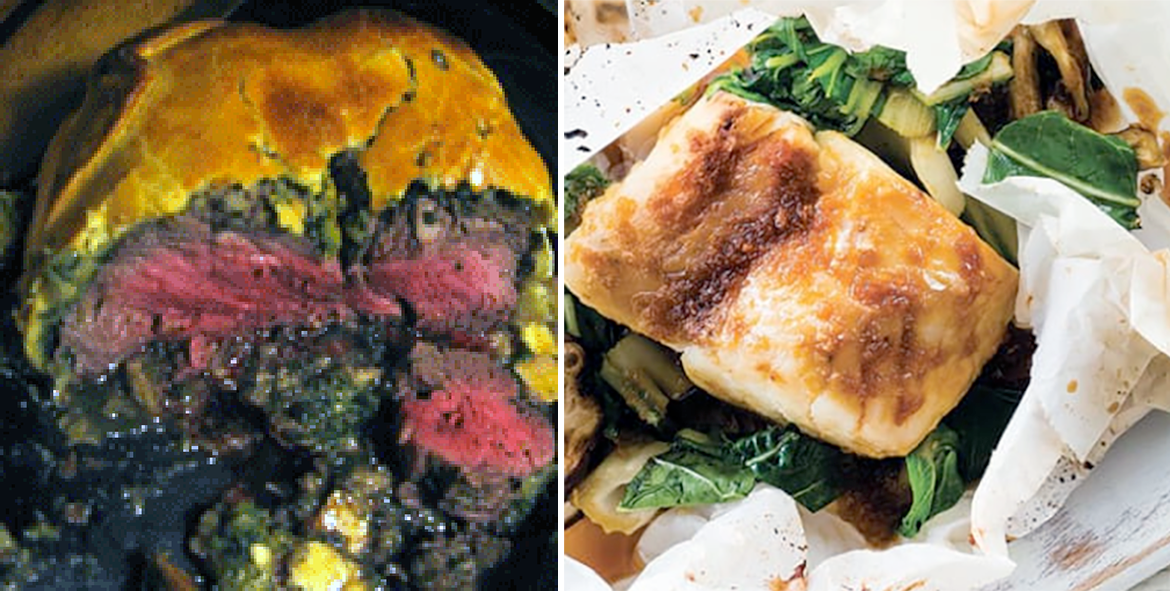 Beef en croûte (left) and fish en papillote (right).
The alphabetical list of all the baking recipes on this site follows, (limited to 100 recipes per page). There are 3781 recipes in total:
Page 35 of 38
| Teisen Fferm (Farmhouse Cake) Origin: Welsh | Terrine Mauritanienne (Mauritanian Terrine) Origin: Mauritania | To Make a Custarde (Custard Tart) Origin: British |
| Teisen Frau Gellyg Ffres a Mascarpone (Fresh Pear and Mascarpone Shortcake) Origin: Welsh | Terrine Verte (Wild Greens Terrine) Origin: Switzerland | To make a florentine of veal Origin: Britain |
| Teisen Frau Noswaith Lawen (Merry Evening Shortbread) Origin: Welsh | Tesen Aval (Cornish Apple Cake) Origin: England | To Make a Marchpane Origin: Britain |
| Teisen Fyrbryd Llus ac Almonau (Bilberry, and Almond Snacking Cake) Origin: Welsh | Teviotdale Pie Origin: Scotland | To make a Pasty of a Breast of Veal Origin: British |
| Teisen Gaws Pice ar y Maen Pob (Baked Welshcake Cheesecake) Origin: Welsh | Thai Hake Bites Origin: South Africa | To Make a Pie of Aloes Origin: British |
| Teisen Geni (Huish Cake) Origin: Welsh | Thai-flavoured Pizza Origin: Fusion | To make a Pie with Parsneps and Oisters very good Origin: British |
| Teisen Griwsion (Cree Cake) Origin: Welsh | The Lady's Tourte Origin: British | To make a Pigeon-Pie Origin: British |
| Teisen Hufen (Cream Pie) Origin: Welsh (Patagonia) | The Perfect Pastry Origin: Britain | To Make a Pretty Cake Origin: British |
| Teisen Lap Margarîn (Margarine 'Teisen Lap') Origin: Welsh | The Perfect Pizza Base Origin: Britain | To make a Rice Pudding to bake. Origin: England |
| Teisen Lap: Ail Ffordd (Teisen Lap: Method 2) Origin: Welsh | The Poor Author's Pudding Origin: Britain | To make a Tart of Spinage Origin: British |
| Teisen Lap: Ffordd Gyntaf (Teisen Lap: Method 1) Origin: Welsh | The Printer's Pudding Origin: Britain | To make a tarte of borage flowers Origin: British |
| Teisen Lard Ffermdy (Farmhouse Lardy Cake) Origin: Welsh | The Ultimate Chocolate Cake Origin: Britain | To make a tarte of Cheese Origin: British |
| Teisen Llaeth Enwyn (Buttermilk Cake) Origin: Welsh | Thorcake Origin: Britain | To make a tarte of Cherries Origin: British |
| Teisen Llaeth Enwyn (Soda Cake) Origin: Welsh | Thorion Tarikhous (Mackerel-stuffed Vine Leaves) Origin: Roman | To make a tarte of Damsons Origin: British |
| Teisen Môn (Anglesey Cake) Origin: Welsh | Three Cheese and Artichoke Pizza Origin: Italy | To make a tarte of goseberies Origin: British |
| Teisen Mêl a Sinsir (Honey and Ginger Cake) Origin: Welsh | Three-cornered Leek Kookoo Sabzi (Seasoned Vegetable Frittata with Three-cornered Leeks) Origin: Fusion | To Make a Tarte of marigoldes prymroses or couslips Origin: England |
| Teisen Nadolig Wen (White Christmas Cake) Origin: Welsh | Three-cornered Leek Quiche Origin: Britain | To make a tarte of Marigolds, Primorses or Cowslips Origin: British |
| Teisen Nionod (Welsh Onion Cake) Origin: Welsh | Three-egg Sponge Cake Origin: American | To make a tarte of Medlers Origin: British |
| Teisen Nionod â Chig Oen (Welsh Onion Cake with Lamb) Origin: Welsh | Thuringian Quarktorte (Meringue-coated Quark Cheesecake) Origin: Germany | To make a tarte of Prunes Origin: British |
| Teisen Reis (Boiled Rice Cake) Origin: Welsh | Tikvenik (Pumpkin-filled Filo Pastry) Origin: Bulgaria | To make a Yorkshire Christmas Pie Origin: British |
| Teisen Sbeis Eirin a Chnau (Spiced Plum and Nut Cake) Origin: Welsh (Patagonia) | Tilapia au Four (Baked Tilapia) Origin: Chad | To make almond cheesecakes Origin: Britain |
| Teisen Simnel (Simnel Cake) Origin: Welsh | Timpana (Baked Macaroni Pie) Origin: Malta | To make an Almond Pudding Origin: British |
| Teisen y Cynhaeaf (Harvest Cake) Origin: Welsh | Tipperary Biscuits Origin: Scotland | To Make Banbury Cakes Origin: British |
| Teisennau 'Berffro ('Berffro Cakes) Origin: Welsh | Tiropatinam (Boiled Custard) Origin: Roman | To Make Buns Origin: British |
| Teisennau Aberffraw (Aberffraw Biscuits) Origin: Welsh | To Bake a Ham Origin: British | To make Char de Crabb (To make Crabapple Pie) Origin: England |
| Teisennau Bach Mel (Honey Tarts) Origin: Welsh | To bake an Olyve-Pye Origin: Britain | To Make Cheap Baked Rice Pudding Origin: British |
| Teisennau Ffair Llangadog (Llangadog Fair Cakes) Origin: Welsh | To bake an ox's head Origin: British | To Make Cheeſe-cakes Origin: England |
| Teisennau Jam Spwng (Welsh Cheese Cakes) Origin: Welsh | To bake chickens in like paste Origin: British | To make cheesecakes Origin: Britain |
| Teisennau Mêl (Welsh Honey Cakes) Origin: Welsh | To Bake Smelts Origin: British | To make common biscuits Origin: British |
| Teisennu Briwsionu Cyffug Mêl Penfro (Pembrokeshire honey fudge crumblies) Origin: Welsh | To Dress a Bullock's Heart Origin: British | To Make Curde Tarte (To Make Curd Tart) Origin: England |
| Tel Kadayıf (Kadaif Dessert) Origin: Turkey | To Dry Fruit Pulp Origin: Britain | To make drie Gingerbread Origin: Britain |
| Tempting Trifle Cheesecake Origin: Britain | To make a Cake with Almonds Origin: British | To Make Drop Biscuits Origin: British |
| Tepsi kebabı (Turkish Tray Kebab) Origin: Turkey | To make a Chicken-Pie Origin: British | |
| Terrine de saumoun aux Quatre algues (Terrine of Salmon with Quatre Algues) Origin: France | To make a cover tart in the French manner Origin: British |
Page 35 of 38