FabulousFusionFood's Spice Guide for Cinnamon Home Page
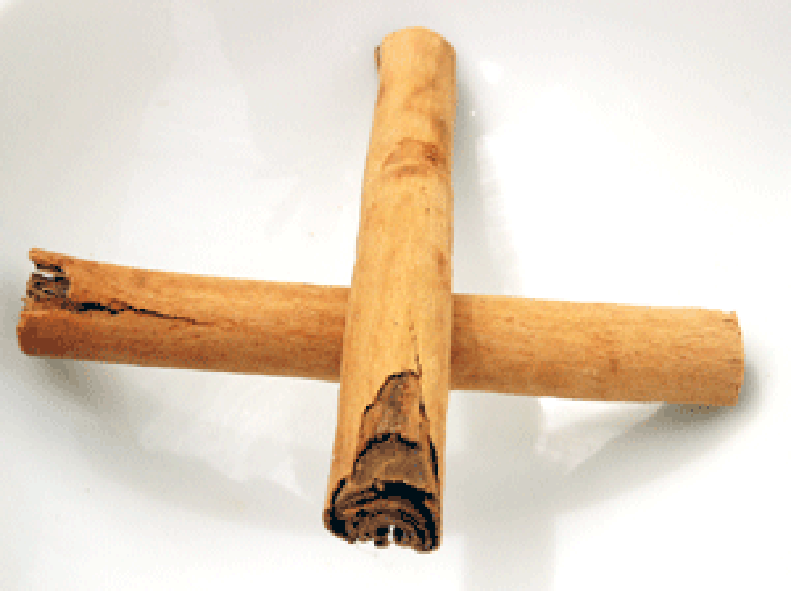 Cinnamon quills, the
rolled inner bark of
Cinnamomum
zeylanicum..
Cinnamon quills, the
rolled inner bark of
Cinnamomum
zeylanicum..
Welcome to the summary page for FabulousFusionFood's Spice guide to Cinnamon along with all the Cinnamon containing recipes presented on this site, with 1584 recipes in total.
This is a continuation of an entire series of pages that will, I hope, allow my visitors to better navigate this site. As well as displaying recipes by name, country and region of origin I am now planning a whole series of pages where recipes can be located by meal type and main ingredient. This page gives a listing of all the spice-based recipes added to this site.
These recipes, all contain Cinnamon as a major flavouring.
Cinnamon (also known as Celylon Cinnamon) is the dried inner bark of Cinnamomum zeylanicum a small evergreen tree reaching about 15m tall and a member of the Lauraceae (laurel) family (which also includes Bay, Avocado and Sassafrass) which is a native of Sri Lanka and Southern India. Cinnamon itself is prepared by growing the tree for two years and then coppicing it. The following year a dozen or so shoots will form from the roots. These shoots are then stripped of their bark which left to dry naturally. Only the thin (0.5 mm) inner bark is used; the outer woody portion is removed, leaving metre long cinnamon strips which curl into rolls ("quills") on drying; each dried quill being formed from the bark of a number of shoots packed together. These quills are then cut into 5–10cm long strips for sale.
Even today the best cinnamon comes from Sri Lanka though the tree is now grown in a number of locations around the globe. Cinnamon needs to be distinguished from the related spice, Cassia which is the whole bark of Cinnamomum aromaticum. This is sometimes sold as cinnamon (most often in the US) and may be distinguished from true cinnamon as 'Indonesian cinnamon'. Cassia actually has a stronger flavour than cinnamon and is harder and woodier, as well as being much thicker as it's formed the entire bark of the tree. True cinnamon — due to its relative thinness — will easily be reduced to a powder either in a pestle and mortar or in a coffee grinder. But cassia is much tougher and more fibrous and can actually damage a coffee grinder if you attempt to render it into a powder in one.
Cinnamon is generally used as a flavouring for sweet foods such as cakes and desserts. But it also makes a wonderful aromatic addition to fish-based stews. Cinnamon has also been found to have antioxidant behaviour and the essential oil (which provides the flavour) has antimicrobial abilities, suggesting that cinnamon may extend he shelf-life of foods. Cinnamon is also one of the classical spices of the ancient world.
In comparison with other cinnamons or cassia, true cinnamon is strongly aromatic, sweet, pleasant, warm and but hardly bitter or astringent. The essential oil of cinnamon bark (max. 4%) is dominated by the two phenylpropanoids cinnamaldehyde (3-phenyl-acrolein, 65 to 75%) and eugenol (4-(1-propene-3-yl)-2-methoxy-phenol, 5 to 10%). Other phenylpropanoids (safrole, coumarin [max. 0.6%] cinnamic acid esters), mono- and sesquiterpenes, although occurring only in traces, do significantly influence the taste of cinnamon. Another trace component relevant for the quality is 2-heptanone (methyl-n-amyl-ketone). The slime content of the bark is rather low (3%).
Interestingly, true cinnamon was unknown in the West until the 16th century. Its main use is in teas, infusions and sweet dishes. In the West, its use has largely been in decline since the late 18th century, with vanilla being the main replacement.
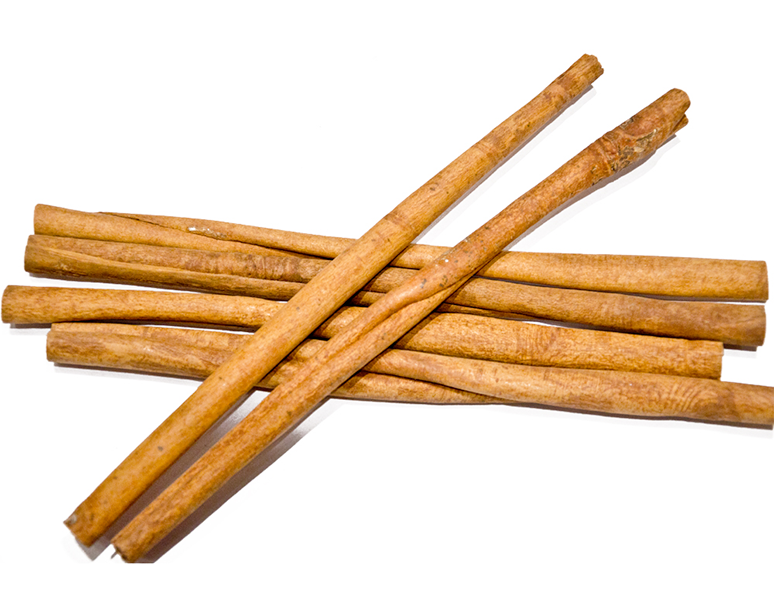
Indonesian cinnamon, also known as Java cassia, Fagot cassia, Padang cinnamon (Cinnamomum burmannii) is sometimes sold as a replacement or substitute for true cinnamon. In this case it's the stem bark that's harvested. This does form quills, but it's thicker and coarser than true cinnamon quills (see image).
It is strongly aromatic, like Ceylon cinnamon, it has fairly low levels of bitterness and astringency but is darker than true cinnamon when powdered and it lacks the interesting aromatic overtones that are a feature of true cinnamon.
The plants is of Malesian distribution. It was first cultivated in Western Sumatra (sumatra barat), in the region around the city Padang. Still now, most Indonesian cinnamon is grown in Sumatra.
The essential oil from Indonesian cinnamon bark (1 to 4%) is dominated by cinnamaldehyde, but does not contain eugenol. Slime content is 8%.
This is a continuation of an entire series of pages that will, I hope, allow my visitors to better navigate this site. As well as displaying recipes by name, country and region of origin I am now planning a whole series of pages where recipes can be located by meal type and main ingredient. This page gives a listing of all the spice-based recipes added to this site.
These recipes, all contain Cinnamon as a major flavouring.
Cinnamon (also known as Celylon Cinnamon) is the dried inner bark of Cinnamomum zeylanicum a small evergreen tree reaching about 15m tall and a member of the Lauraceae (laurel) family (which also includes Bay, Avocado and Sassafrass) which is a native of Sri Lanka and Southern India. Cinnamon itself is prepared by growing the tree for two years and then coppicing it. The following year a dozen or so shoots will form from the roots. These shoots are then stripped of their bark which left to dry naturally. Only the thin (0.5 mm) inner bark is used; the outer woody portion is removed, leaving metre long cinnamon strips which curl into rolls ("quills") on drying; each dried quill being formed from the bark of a number of shoots packed together. These quills are then cut into 5–10cm long strips for sale.
Even today the best cinnamon comes from Sri Lanka though the tree is now grown in a number of locations around the globe. Cinnamon needs to be distinguished from the related spice, Cassia which is the whole bark of Cinnamomum aromaticum. This is sometimes sold as cinnamon (most often in the US) and may be distinguished from true cinnamon as 'Indonesian cinnamon'. Cassia actually has a stronger flavour than cinnamon and is harder and woodier, as well as being much thicker as it's formed the entire bark of the tree. True cinnamon — due to its relative thinness — will easily be reduced to a powder either in a pestle and mortar or in a coffee grinder. But cassia is much tougher and more fibrous and can actually damage a coffee grinder if you attempt to render it into a powder in one.
Cinnamon is generally used as a flavouring for sweet foods such as cakes and desserts. But it also makes a wonderful aromatic addition to fish-based stews. Cinnamon has also been found to have antioxidant behaviour and the essential oil (which provides the flavour) has antimicrobial abilities, suggesting that cinnamon may extend he shelf-life of foods. Cinnamon is also one of the classical spices of the ancient world.
In comparison with other cinnamons or cassia, true cinnamon is strongly aromatic, sweet, pleasant, warm and but hardly bitter or astringent. The essential oil of cinnamon bark (max. 4%) is dominated by the two phenylpropanoids cinnamaldehyde (3-phenyl-acrolein, 65 to 75%) and eugenol (4-(1-propene-3-yl)-2-methoxy-phenol, 5 to 10%). Other phenylpropanoids (safrole, coumarin [max. 0.6%] cinnamic acid esters), mono- and sesquiterpenes, although occurring only in traces, do significantly influence the taste of cinnamon. Another trace component relevant for the quality is 2-heptanone (methyl-n-amyl-ketone). The slime content of the bark is rather low (3%).
Interestingly, true cinnamon was unknown in the West until the 16th century. Its main use is in teas, infusions and sweet dishes. In the West, its use has largely been in decline since the late 18th century, with vanilla being the main replacement.
Indonesian Cinnamon
Indonesian cinnamon, also known as Java cassia, Fagot cassia, Padang cinnamon (Cinnamomum burmannii) is sometimes sold as a replacement or substitute for true cinnamon. In this case it's the stem bark that's harvested. This does form quills, but it's thicker and coarser than true cinnamon quills (see image).
It is strongly aromatic, like Ceylon cinnamon, it has fairly low levels of bitterness and astringency but is darker than true cinnamon when powdered and it lacks the interesting aromatic overtones that are a feature of true cinnamon.
The plants is of Malesian distribution. It was first cultivated in Western Sumatra (sumatra barat), in the region around the city Padang. Still now, most Indonesian cinnamon is grown in Sumatra.
The essential oil from Indonesian cinnamon bark (1 to 4%) is dominated by cinnamaldehyde, but does not contain eugenol. Slime content is 8%.
The alphabetical list of all Cinnamon recipes on this site follows, (limited to 100 recipes per page). There are 1584 recipes in total:
Page 1 of 16
| 'West Indian' Mulled Wine Origin: Fusion | American Apple Pie Origin: America | Apple Sauce Origin: Britain |
| Äppelkuch (Luxembourg Apple Cake) Origin: Luxembourg | Amish Apple Grunt Origin: Amish | Apple, Pear and Cinnamon Crumble Origin: Britain |
| 7-Up Lemon Cheesecake with Strawberry Glaze Origin: American | Amour Caché (Hidden Love Cake) Origin: Martinique | Apricot Chutney Origin: Britain |
| A German Custard Pudding Sauce Origin: Britain | Anadl y Ddraig (Dragon's Breath) Origin: Welsh | Aprikosen-Torte (Apricot Torte) Origin: Germany |
| Aad Maas (Goan Pork Rib Curry) Origin: India | Anardana Gosht (Lamb Curry with Pomegranate) Origin: India | Arepa di Pampuna (Pumpkin Pancakes) Origin: Aruba |
| Accra Banana Peanut Cake Origin: Ghana | Andhra Kodi Kura (Andhra Chicken Curry) Origin: India | Arepa di Pampuna (Pumpkin Pancakes) Origin: Bonaire |
| Adobo Sauce Origin: Mexico | Angelica Muffins Origin: Britain | Arepa di Pampuna (Pumpkin Pancakes) Origin: Curacao |
| Advieh (Iranian Spice Mix) Origin: Iran | Angels on Horseback with Prunes Origin: Britain | Arequipe Origin: Colombia |
| Advieh Ash (Persian Soup Spice Blend) Origin: Iran | Antiguan Curry Powder Origin: Antigua | Arkansas Cheesecake Origin: American |
| Advieh Khoresh (Persian Stew Blend) Origin: Iran | Antiguan Jerk Seasoning Origin: Antigua | Armjanskij sup chechevicy (Armenian Lentil Soup) Origin: Armenia |
| Advieh Polow (Persian Rice Spice Blend) Origin: Iran | Antiguan Papaya Pie Origin: Antigua | Arni Ttavas (Oven-roasted Lamb with Onions) Origin: Cyprus |
| Advieh Torshi (Persian Pickle Spice Blend) Origin: Iran | Antiguan Rice Pudding Origin: Antigua | Aromatic Lamb with Ginger and Potatoes Origin: Ireland |
| Afalau Sur Bach wedi Piclo (Pickled Crabapples) Origin: Welsh | Antillean Crème Patissière Origin: Saint Barthelemy | Arroz a la Cubana (Cuban-style Rice) Origin: Philippines |
| African Stew Curry Powder Origin: West Africa | Apfel-Rosinen Risotto (Apple and Raisin Risotto) Origin: Namibia | Arroz con Dulce (Puerto Rican Coconut Rice Pudding) Origin: Puerto Rico |
| Agua de Jamaica (Jamaican-style Iced Hibiscus Tea) Origin: Mexico | Api con Pastel Origin: Bolivia | Arroz con Leche (Ecuadorian Rice Pudding) Origin: Ecuador |
| Aijet Beythat (Spiced Eggs) Origin: Saudi Arabia | Apple and Cinnamon Muffins Origin: Britain | Arroz con Leche Origin: Mexico |
| Air Fryer Banana Bread Origin: Britain | Apple and Cream Pie Origin: American | Arroz con Leche Origin: Uruguay |
| Air Fryer Bread and Butter Pudding Origin: Britain | Apple and Pear Harvest Pie Origin: South Africa | Arroz con Leche (Rice with Milk) Origin: Colombia |
| Air Fryer Brownies Origin: Britain | Apple and Pear Tarte Tatin Origin: France | Arroz con leche sin azúcar de absorción rápida (Sweet Rice Pudding, made by Rapid Absorption) Origin: Spain |
| Air Fryer Carrot Cake Origin: Britain | Apple and Potato Cake Origin: Ireland | Arroz de Coco e Papaia (Rice with Coconut and Papaya) Origin: Angola |
| Air Fryer Carrot Muffins Origin: America | Apple and Redcurrant Pie Origin: Britain | Arroz doce (Sao Tomean Rice Pudding) Origin: Sao Tome |
| Air Fryer Honey-glazed Ham Origin: Britain | Apple and Rhubarb Compote Origin: Britain | Aruba Curry Powder Origin: Aruba |
| Air Fryer Oat Biscuits Origin: Britain | Apple and Tamarillo Compote Origin: British | Aseed Origin: Yemen |
| Air Fryer Quick Christmas Cake Origin: Britain | Apple Butter Origin: American | Ashkenazi Charoset Origin: Jewish |
| Ak-Ni Korma Origin: India | Apple Cake Origin: Britain | Assabeh Tamr (Date Fingers) Origin: Arabic |
| Al Machboos (Emirati Spiced Rice With Chicken) Origin: UAE | Apple Cake Origin: Ireland | Assegas n Tajin s Ifrawen (Camel tagine with dried apricots) Origin: Western Sahara |
| Al Rangina (Dates in Butter Sauce) Origin: Saudi Arabia | Apple Cake Cupcakes Origin: British | Aşure (Noah's Pudding) Origin: Northern Cyprus |
| Aliter Laseratum (Another Hing Sauce) Origin: Roman | Apple Charlotte Origin: Britain | Aurangabadi Naan Qaliya Origin: India |
| Altdeutsche Brotchen (Old-German Muffins) Origin: Germany | Apple Cheesecake Origin: Britain | Authentic Mole Poblano Origin: Mexico |
| Alu Kesel (Sri Lankan Ash Plantain Curry) Origin: Sri Lanka | Apple Juice Caramels Origin: Britain | Autumn Cheesecake Origin: Britain |
| Amaretto Cheesecake II Origin: American | Apple Pear Flapjacks Origin: Canada | Awaze Tibs (Ethiopian Beef and Peppers) Origin: Ethiopia |
| Ambasha Origin: Ethiopia | Apple Pie Origin: Britain | Azevias de Batata Doce (Sweet Potato Pockets) Origin: Portugal |
| Ambul Thial (Pickled Fish Curry) Origin: Sri Lanka | Apple Pie Smoothie Origin: American | |
| Ambul Thial (Pickled Fish) Origin: Sri Lanka | Apple Rose Tarts Origin: Britain |
Page 1 of 16