FabulousFusionFood's Spice Guide for Garlic Home Page
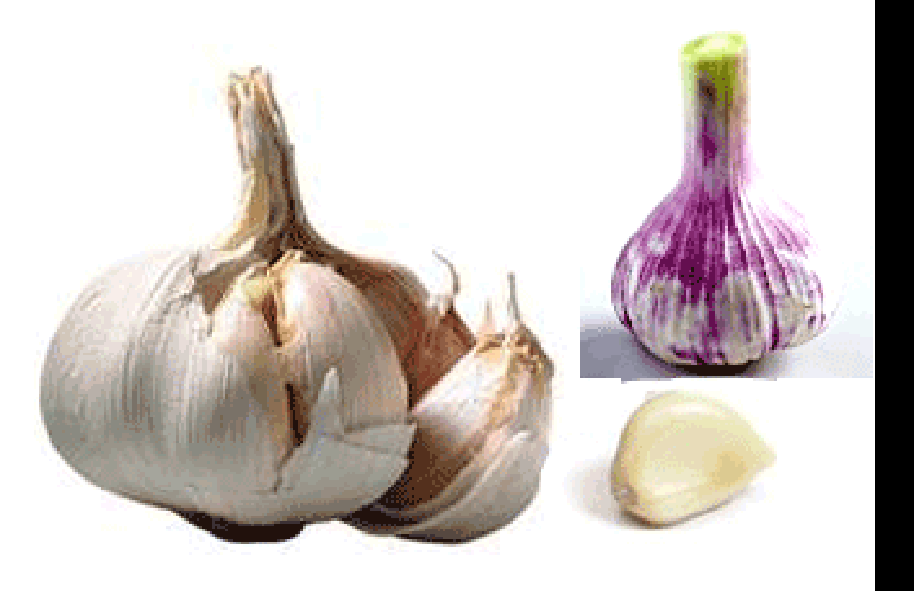 The bulb of
Allium
sativum show
dried, raw and a
single clove..
The bulb of
Allium
sativum show
dried, raw and a
single clove..
Welcome to the summary page for FabulousFusionFood's Spice guide to Garlic along with all the Garlic containing recipes presented on this site, with 4579 recipes in total.
This is a continuation of an entire series of pages that will, I hope, allow my visitors to better navigate this site. As well as displaying recipes by name, country and region of origin I am now planning a whole series of pages where recipes can be located by meal type and main ingredient. This page gives a listing of all the spice-based recipes added to this site.
These recipes, all contain Garlic as a major flavouring.
Garlic, Allium sativum is probably one of the world's most ubiquitous spices. It is a member of the Amaryllidacea (amaryllis) family of flowering plants and belongs to the genus Allium. It's close relatives being onions, shallots, chives, wild bear garlic and rakkyo. Today it is grown world wide and the cultivars are sterile (they are dependent on humans for planting an individual bulbule from which a new plants grow).
As a result of the long cultivation of this plant (they have been in cultivation for at least 6000 years), the precise origin of the pant is not known. However, the greatest number of allium spices growing in the wild occur in central Asia. As such it is assumed that garlic originates from this region. Phylogenetic analysis suggests that garlic is descended from the wild species, Allium longisuspis which grows wild in central and south-western Asia.
Garlic has long been a staple of the Mediterranean region of Europe and is a common seasoning in Asia, Africa and the remainder of Europe. It was known to the Egyptians as a culinary and medicinal plant and the builders of the pyramids had their daily allocation of garlic.
The 'head of garlic', familiar to anyone who cooks with this spice is actually a bulb composed of a cluster of bulbules. A single bulbule is typically referred to as a 'clove of garlic'.
Garlic is a particularly pungent spice, though the pungency disappears after frying in oil (or baking for a lengthy period). The pungency and distinctive aroma of garlic is due to the large number of sulfur-containing compounds within each clove. The most important of these (at least for the taste of garlic) being allicin (diallyl disulphide oxide) which is generated enzymatically from the precursor allilin (S-2-propenyl-L-cysteine sulfoxide) upon cell damage (which is why chopping garlic releases the distinctive aroma). Howerver, allicin spontaneously deactivates to diallyl disulphide when left open to the air, which is why minced garlic quickly loses its pungency if not used immediately.
Garlic will grow in a wide variety of conditions, which is why it has been introduced world-wide and, today, is employed by just about every major cuisine.
The Romans and Greeks used garlic commonly, and it was given as part of soldiers' rations. In Britain, its use was much less common and only grew in popularity after the 1550s (though garlic is mentioned in the Forme of Cury [1390]).
The English word, Garlic (gārlēac) is believed to be Germanic in origin, with the first element gar being derived from the word for 'spear', referring to the pointed leaves. The second element, -lek has a cognate in the word 'leek' and refers to the family (onion or leek). Thus garlic is the 'spear-leafed leek'. The word 'clove', referring to an individual bulbules of garlic refers to the divisibility of the garlic bulbs and is derived from the verb 'to cleave'.
Garlic has a strong and characteristic odour, which is markedly different in fresh and fried state. The pungency of fresh garlic (see also negro pepper for pungent spices) vanishes after cooking or frying. Garlic contains a wealth of sulfur compounds; most important for the taste is allicin (diallyl disulphide oxide), which is produced enzymatically from alliin (S-2-propenyl-L-cysteine sulfoxide) if cells are damaged; its biological function is to repel herbivorous animals. Allicin is deactivated to diallyl disulphide; therefore, minced garlic changes its aroma if not used immediately. In the essential oil from steam distillation, diallyl disulphide (60%) is found besides diallyl trisulphide (20%), diallyl sulfide, ajoene and minor amounts of other di- and polysulphides. Sulfur compounds of this kind are typical for the onion family; see also bear’s garlic, onion and chives.
Though typically cooked in Europe (exceptions being Aïoli and Tzatzike), raw garlic is commonly used in the cuisines of China and Vietnam. In Thailand, garlic is often fried until crisp and is then used to garnish dishes.
One point to not is that one of the most common garlic cultivars, Elephant Garlic is not actually a true garlic at all, rather it is a cultivar of the wild leek, Allium ampeloprasum that develops large bulbils at the base.
This is a continuation of an entire series of pages that will, I hope, allow my visitors to better navigate this site. As well as displaying recipes by name, country and region of origin I am now planning a whole series of pages where recipes can be located by meal type and main ingredient. This page gives a listing of all the spice-based recipes added to this site.
These recipes, all contain Garlic as a major flavouring.
Garlic, Allium sativum is probably one of the world's most ubiquitous spices. It is a member of the Amaryllidacea (amaryllis) family of flowering plants and belongs to the genus Allium. It's close relatives being onions, shallots, chives, wild bear garlic and rakkyo. Today it is grown world wide and the cultivars are sterile (they are dependent on humans for planting an individual bulbule from which a new plants grow).
As a result of the long cultivation of this plant (they have been in cultivation for at least 6000 years), the precise origin of the pant is not known. However, the greatest number of allium spices growing in the wild occur in central Asia. As such it is assumed that garlic originates from this region. Phylogenetic analysis suggests that garlic is descended from the wild species, Allium longisuspis which grows wild in central and south-western Asia.
Garlic has long been a staple of the Mediterranean region of Europe and is a common seasoning in Asia, Africa and the remainder of Europe. It was known to the Egyptians as a culinary and medicinal plant and the builders of the pyramids had their daily allocation of garlic.
The 'head of garlic', familiar to anyone who cooks with this spice is actually a bulb composed of a cluster of bulbules. A single bulbule is typically referred to as a 'clove of garlic'.
Garlic is a particularly pungent spice, though the pungency disappears after frying in oil (or baking for a lengthy period). The pungency and distinctive aroma of garlic is due to the large number of sulfur-containing compounds within each clove. The most important of these (at least for the taste of garlic) being allicin (diallyl disulphide oxide) which is generated enzymatically from the precursor allilin (S-2-propenyl-L-cysteine sulfoxide) upon cell damage (which is why chopping garlic releases the distinctive aroma). Howerver, allicin spontaneously deactivates to diallyl disulphide when left open to the air, which is why minced garlic quickly loses its pungency if not used immediately.
Garlic will grow in a wide variety of conditions, which is why it has been introduced world-wide and, today, is employed by just about every major cuisine.
The Romans and Greeks used garlic commonly, and it was given as part of soldiers' rations. In Britain, its use was much less common and only grew in popularity after the 1550s (though garlic is mentioned in the Forme of Cury [1390]).
The English word, Garlic (gārlēac) is believed to be Germanic in origin, with the first element gar being derived from the word for 'spear', referring to the pointed leaves. The second element, -lek has a cognate in the word 'leek' and refers to the family (onion or leek). Thus garlic is the 'spear-leafed leek'. The word 'clove', referring to an individual bulbules of garlic refers to the divisibility of the garlic bulbs and is derived from the verb 'to cleave'.
Garlic has a strong and characteristic odour, which is markedly different in fresh and fried state. The pungency of fresh garlic (see also negro pepper for pungent spices) vanishes after cooking or frying. Garlic contains a wealth of sulfur compounds; most important for the taste is allicin (diallyl disulphide oxide), which is produced enzymatically from alliin (S-2-propenyl-L-cysteine sulfoxide) if cells are damaged; its biological function is to repel herbivorous animals. Allicin is deactivated to diallyl disulphide; therefore, minced garlic changes its aroma if not used immediately. In the essential oil from steam distillation, diallyl disulphide (60%) is found besides diallyl trisulphide (20%), diallyl sulfide, ajoene and minor amounts of other di- and polysulphides. Sulfur compounds of this kind are typical for the onion family; see also bear’s garlic, onion and chives.
Though typically cooked in Europe (exceptions being Aïoli and Tzatzike), raw garlic is commonly used in the cuisines of China and Vietnam. In Thailand, garlic is often fried until crisp and is then used to garnish dishes.
One point to not is that one of the most common garlic cultivars, Elephant Garlic is not actually a true garlic at all, rather it is a cultivar of the wild leek, Allium ampeloprasum that develops large bulbils at the base.
The alphabetical list of all Garlic recipes on this site follows, (limited to 100 recipes per page). There are 4579 recipes in total:
Page 1 of 46
| Ćevapčići Origin: Serbia | Adobo Seasoning Origin: Britain | Air Fryer Dry Rub Chicken Wings Origin: Britain |
| Ćevapi Origin: Bosnia | Adobo Valentine Lamb Origin: American | Air Fryer Hasselback Potatoes Origin: Britain |
| A Bengal Currie Origin: Britain | Adobong Pato a la Moja (Duck Adobo with Pineapple and Dates) Origin: Philippines | Air Fryer Lamb Chops Origin: Britain |
| A Chinese Balloon Origin: Fusion | Advieh Mahi (Persian Fish Spice Blend) Origin: Iran | Air Fryer Liver and Sausage Curry Origin: Britain |
| A Messe of Greens Origin: Britain | Advieh-spiced Persian Meatballs Origin: Iran | Air Fryer Meat-stuffed Mushrooms Origin: Britain |
| Aad Maas (Goan Pork Rib Curry) Origin: India | Afghan Kofta Curry Origin: Afghanistan | Air Fryer Moroccan Spiced Chicken Wings Origin: Britain |
| Aaloo Gosht (Mutton Curry with Potatoes) Origin: Pakistan | Afghan Roast Chicken Spice Blend Origin: Afghanistan | Air Fryer Omelette Origin: Britain |
| Abadejo a la Pimienta Verde (Pollock with Green Pepper) Origin: Spain | Afghan-spiced Roast Chicken Origin: Afghanistan | Air Fryer Pancakes Origin: Britain |
| Abbacchio alla Cacciatora Origin: Italy | Afghani Chicken Curry Origin: Pakistan | Air Fryer Pork Chops Origin: Britain |
| Abbacchio alla scottadito (Barbecued Milk-fed Lamb Chops) Origin: Vatican City | African All Purpose Seasoning Origin: Nigeria | Air Fryer Roast Potatoes Origin: Britain |
| Abbachio al Forno (Italian Roast Baby Lamb) Origin: Italy | African Chicken (Macanese One-pan Chicken Curry) Origin: Macau | Air Fryer Sausage Rolls Origin: Britain |
| Abobora de Camarao (Prawn Abobora) Origin: Angola | African Chicken Wings Origin: African Fusion | Air Fryer Spicy Pork Belly Origin: Britain |
| Accent Herbs Origin: Caribbean | African Hot Sauce Origin: sub-Saharan Africa | Air Fryer Spinach Origin: Britain |
| Accras de Morue Origin: French Guiana | Afrikaanse Yakhni Origin: South Africa | Air Fryer Steak and Fries Meal Origin: America |
| Accras de Morue (Salt Cod Fritters) Origin: Saint Barthelemy | Agatoke (Plantain and Vegetable Porridge) Origin: Burundi | Air Fryer Stuffed Mushrooms Origin: Britain |
| Accras de Morue (Salt Cod Fritters) Origin: Sint Maarten | Agneau au Cari (Lamb Curry) Origin: Reunion | Air Fryer Tater Tots from Scratch Origin: America |
| Accras de Morue (Salt Cod Fritters) Origin: Saint-Martin | Agneau Provençal au Jus Menthe Verte (Roast Lamb Provençal with Mint Gravy) Origin: France | Air Fryer Tomato or Marinara Sauce Origin: Britain |
| Acelgas con Jamón (Ham with Chard) Origin: Spain | Aguají (Plantain Soup) Origin: Dominican Republic | Air Fryer White Fish Origin: Britain |
| Achaari Jhinga (Indian Pickled Prawns) Origin: India | Agushi Soup (Ghanaian Egusi Soup) Origin: Ghana | Air-fryer Fajitas Origin: Britain |
| Achapa (Walnut Lobio) Origin: Abkhazia | Ah Mè Thar Hin (Myanmar Beef Curry) Origin: Myanmar | Aji Chombo (Panamanian Hot Sauce) Origin: Panama |
| Achard de pahua confit (Achard of Confit of Pahua) Origin: Tahiti | Ah Mè Thar Hin (Beef Curry) Origin: Myanmar | Ají Criollo (Ecuadorian Hot Sauce) Origin: Ecuador |
| Achards de Legumes (Vegetable Achards) Origin: New Caledonia | Ahlu Hin (Potato Curry) Origin: Myanmar | Ají de Tamarillo (Ecuadorian Tree Tomato Hot Sauce) Origin: Ecuador |
| Achari Murgh (Achari Chicken) Origin: Britain | Ai Manas (Chilli Sauce with Eggs) Origin: East Timor | Aji Verde (Spicy Peruvian Green Sauce) Origin: Peru |
| Achari Roast Chicken Origin: Pakistan | Ailes de Poulet au Riz et Poivron (Chicken Wings with Rice and Chillies) Origin: Senegal | Ajlouke de Carottes (Carrot Starter) Origin: Tunisia |
| Achiote Paste Origin: Mexico | Aioan Chua Noeung Phset Kretni (Stir-fried Chicken with Mushrooms) Origin: Cambodia | Ajlouke et Potiron (Pumpkin Dip) Origin: Tunisia |
| Achiote Paste Origin: Nicaragua | Air Fryer Beef Wellington Origin: Britain | Ajo Blanco (White Garlic Sauce) Origin: Spain |
| Achu and Ndza Nikka (Cameroonian Achu Yellow Soup) Origin: Cameroon | Air Fryer Broccoli Origin: Britain | Ajvar (Aubergine and Pepper Dip) Origin: Serbia |
| Adaka Roti Origin: Sri Lanka | Air Fryer Chicken Kiyiv Origin: Britain | Ak-Ni Korma Origin: India |
| Adana Kebap Origin: Turkey | Air Fryer Chicken Livers Origin: Britain | Akoho sy Voanio (Chicken in Coconut Milk) Origin: Madagascar |
| Adenydd Cath Fôr gyda Saws Tartar Cyflym (Fried Skate Wings with Quick Home-made Tartar Sauce) Origin: Welsh | Air Fryer Courgette Noodles Origin: Britain | Akutekarsh (Chicken with Nut Sauce) Origin: Abkhazia |
| Adjika (Abkhazian Paprika Sauce) Origin: Abkhazia | Air Fryer Crisp Chicken Wings with Korean Barbecue Sauce Origin: Britain | Al Machboos (Emirati Spiced Rice With Chicken) Origin: UAE |
| Adjika II (Paprika Sauce) Origin: Abkhazia | Air Fryer Crisps Origin: Britain | Alaskan Goose Barnacles Origin: America |
| Adobo de Pollo Origin: Peru | Air Fryer Crispy Fish Origin: Britain | |
| Adobo Sauce Origin: Mexico | Air Fryer Crispy Sichuan Duck Origin: Britain |
Page 1 of 46