FabulousFusionFood's Nut-based Recipes 43th Page
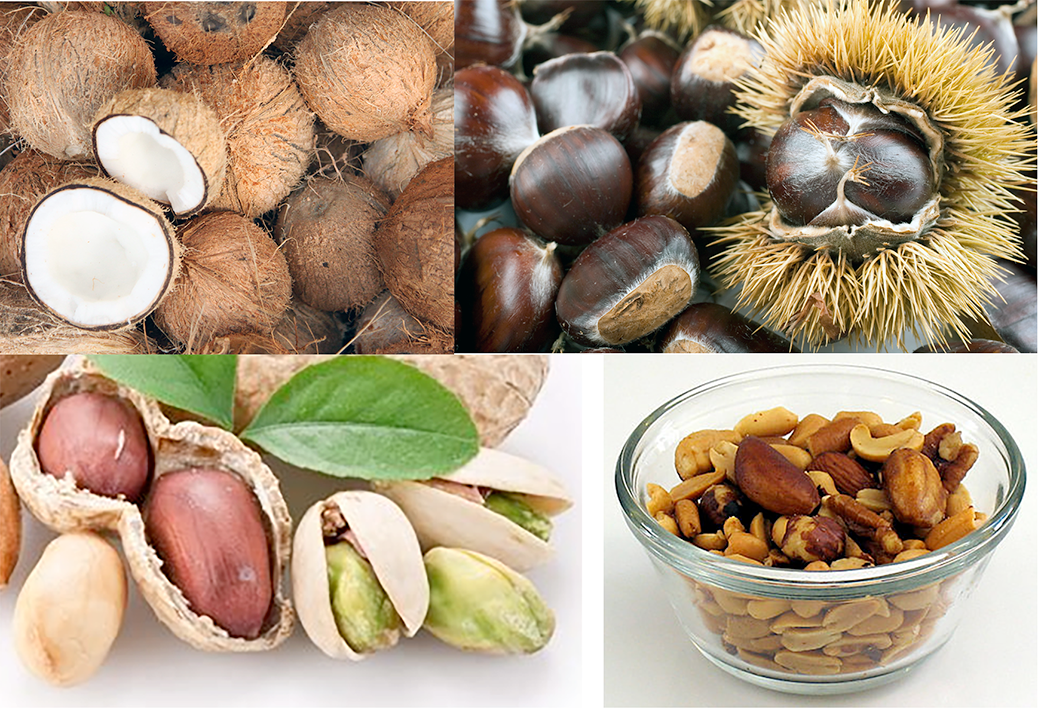
Different nuts: coconut, sweet chestnuts, peanuts, pistachios, bowl of mixed nuts. Different nuts. Clockwise: coconuts, sweet chestnuts, bowl of mixed nuts,
peanuts and pistachios.
Welcome to FabulousFusionFood's Nut-based Recipes Page —A nut is a fruit consisting of a hard or tough nutshell protecting a kernel which is usually edible. In general usage and in a culinary sense, many dry seeds are called nuts. In a botanical context, "nut" implies that the shell does not open to release the seed (indehiscent).


Most seeds come from fruit that naturally free themselves from the shell, but this is not the case in nuts such as hazelnuts, chestnuts, and acorns, which have hard shell walls and originate from a compound ovary. The general and original usage of the term is less restrictive, and many nuts (in the culinary sense), such as almonds, pistachios, and Brazil nuts, are not nuts in a botanical sense. Common usage of the term often refers to any hard-walled, edible kernel as a nut. Nuts are an energy-dense and nutrient-rich food source.

Botanically, a nut is a fruit with a woody pericarp developing from a syncarpous gynoecium. True nuts include, for example, chestnut, hazelnut and filbert. Culinarily, the term 'nut' is used much more widely, and includes examples of drupes (such as pecans and almonds) or seeds (such as pine nuts and peanuts).

Also widely known as nuts are dry drupes, which include pecans, almonds, macadamia (Macadamia integrifolia), candlenut (Aleurites moluccanus) and the water caltrop (Trapa bicornis). A drupe is an indehiscent fruit that has an outer fleshy part consisting of the exocarp, or skin, and mesocarp, or flesh, which surround a single pit or stone, the endocarp with a seed (kernel) inside. In a dry drupe, the outer parts dry up and the remaining husk is part of the ovary wall or pericarp, and the hard inner wall surrounding the seed represents the inner part of the pericarp.

Walnuts and hickories (Juglandaceae) have fruit that are difficult to classify. They are considered to be nuts under some definitions but are also referred to as drupaceous nuts.

In common use, a "tree nut" is, as the name implies, any nut coming from a tree. This most often comes up regarding food allergies; a person may be allergic specifically to peanuts (which are not tree nuts but legumes), whereas others may be allergic to the wider range of nuts that grow on trees.

The sweet potato arrived in Europe with the Columbian exchange. It is recorded, for example, in Elinor Fettiplace's Receipt Book, compiled in England in 1604.

Nuts are eaten by humans and wildlife. Because nuts generally have a high oil content, they are a significant energy source. Many seeds are edible by humans and used in cooking, eaten raw, sprouted, or roasted as a snack food, ground to make nut butters, or pressed for oil that is used in cooking and cosmetics.

Nuts used for food are a common source of food allergens. Reactions can range from mild symptoms to severe ones, a condition known as anaphylaxis, which can be life-threatening. The reaction is due to the release of histamine by the body in response to an allergen in the nuts, causing skin and other possible reactions. Many experts suggest that a person with an allergy to peanuts should avoid eating tree nuts, and vice versa.

The nuts linked to from this page are: acorn; almond; beech nuts; betel nut; brazil nut; bush mango; filbert; ginkgo nut; kola nut; candlenut; cashew; chestnut; coconut; hazelnut; macadamia; ogbono; palm nut; peanut; pecan; pine nut; pistachio; walnut.

The alphabetical list of all the nut-based recipes on this site follows, (limited to 100 recipes per page). There are 4553 recipes in total:

Page 43 of 46


To fricasey rabbits, lamb,
sweetbreads, or tripe

     Origin: British
To Make Buns
     Origin: British
Tobago Curry Conch with Dumplings
     Origin: Trinidad
To Fricasey White Meat
     Origin: Britain
To make Cakes of Almonds in thin
slices

     Origin: British
Tobago Curry Crab and Dumplings
     Origin: India
To hash a calf's head
     Origin: British
To Make Cheap Baked Rice Pudding
     Origin: British
Toffee Apple Cupcakes
     Origin: British
To hash a calf's head white
     Origin: British
To Make Cheeſe-cakes
     Origin: England
Toffee Apple Slices
     Origin: China
To hash cold mutton
     Origin: British
To make cheesecakes
     Origin: Britain
Tofu Katsu Curry
     Origin: Fusion
To make a boiled rice pudding
     Origin: Britain
To make Collar'd Beef
     Origin: British
Tofu Laver and Leek Croquettes
     Origin: Ireland
To make a brown fricasey
     Origin: British
To make drie Gingerbread
     Origin: Britain
Tom Brown
     Origin: Nigeria
To make a Cake with Almonds
     Origin: British
To make fine Pan-cakes fryed without
Butter or Lard

     Origin: British
Tom Brown Porridge
     Origin: Ghana
To Make a Cheap Rice Pudding
     Origin: British
To Make Force-meat Balls
     Origin: British
Tomato and Almond Soup
     Origin: British
To make a Chicken-Pie
     Origin: British
To make Furmity
     Origin: British
Tomato and Peanut Relish
     Origin: Zambia
To make a Chiveridge Pudding.
     Origin: England
To make ginger-bread
     Origin: British
Tombrown
     Origin: Cameroon
To make a florentine of veal
     Origin: Britain
To make ginger-bread cakes
     Origin: British
Tongabezi Chicken Curry
     Origin: Zambia
To make a French Pudding.
     Origin: England
To make jumballs
     Origin: Britain
Tongan Taro Fritters
     Origin: Tonga
To make a grand Sallet of minced
Capon, Veal, roast Mutton, Chicken or
Neats tongue.

     Origin: British
To make Leach
     Origin: British
Topfenkuchen
(Pot Cakes)
     Origin: Germany
To make a Hasty-Pudding in a Bag.
     Origin: England
To make mackeroons
     Origin: Britain
Topoi
     Origin: Rotuma
To make a Hasty-Pudding otherways.
     Origin: England
To make mince pies the best way
     Origin: Britain
Torrejas SalvadoreƱas
     Origin: El Salvador
To make a Jelly of Almonds as white as
Snow.

     Origin: England
To make Mrs. Shellyes Cake
     Origin: British
Torta alle Noci
(Italian Walnut Cake)
     Origin: Italy
To Make a Marchpane
     Origin: Britain
To make Pancakes.
     Origin: England
Torta di Castagne e Choccolato
(Chocolate and Chestnut Torte)
     Origin: Italy
To Make a Pretty Cake
     Origin: British
To make plum-porridge for Christmas
     Origin: British
Torta Galesa
(Teisen Gymreig)
     Origin: Welsh
To make a quaking pudding
     Origin: Britain
To Make Portugal Cakes II
     Origin: British
Torta Navideña
(Christmas Cake)
     Origin: Ecuador
To make a Quaking Pudding either
boil'd or baked.

     Origin: England
To Make Sausages
     Origin: British
Torta Negra Galesa
(Welsh Black Cake)
     Origin: Welsh (Patagonia)
To make a Quaking Pudding.
     Origin: England
To make Shropshire pie
     Origin: British
Torta Plava zaguna
(Blue Lagoon Cake)
     Origin: Slovenia
To make a Rice Pudding to bake.
     Origin: England
To make Snow Cream otherways with
Almonds.

     Origin: England
Tortas de Aceite
(Sesame Seed and Aniseed Biscuits)
     Origin: Spain
To make a Shaking Pudding.
     Origin: England
To make Umble-Pies.
     Origin: England
Tortelleti, of green Pease, French
Beans, or any kind of Pulse green or
dry.

     Origin: British
To make a Tart of Spinage
     Origin: British
To make very good wigs
     Origin: British
Tortellini di Natale
(Christmas Tortellini)
     Origin: Italy
To make a Yorkshire Christmas Pie
     Origin: British
To Make White Fricasey
     Origin: Britain
Torth Fraith
(Mottled Bread)
     Origin: Welsh
To make almond cheesecakes
     Origin: Britain
To mince veal
     Origin: British
Torth Frith Llandudno
(Llandudno Fruit Cake)
     Origin: Welsh
To Make Almond Cream otherways.
     Origin: England
To Roast a Hare
     Origin: British
Tortilla de Calabaza
(Egusi Seed Omelette)
     Origin: Equatorial Guinea
To Make Almond Cream otherways.
     Origin: England
To roast a rabbit hare fashion
     Origin: British
Tortillas de Platanos
(Plantain Tortillas)
     Origin: Costa Rica
To Make Almond Cream.
     Origin: England
To Souse a Young Pig
     Origin: British
Toto-kena Misy Anana sy Voanjo
(Greens with Peanuts and Minced Beef)
     Origin: Madagascar
To make an Almond Pudding
     Origin: British
To Sowce a Pigge
(Collar of Brawn)
     Origin: England
Tottenham Cake
     Origin: England
To make an Almond Pudding.
     Origin: England
To toss up cold veal white
     Origin: British
Tourment d'Amour
(Love's Torment)
     Origin: Saint Barthelemy
To make an excellent aromaticall
Hyppocras

     Origin: Britain
Toasted Almond Ice Cream
     Origin: British
To Make Banbury Cakes
     Origin: British
Toasted Oat and Raisin Biscuits
     Origin: Britain

Page 43 of 46